Screening & Assessments
Screen every applicant in minutes. Build multi-test assessments and let Wetest rank candidates automatically.
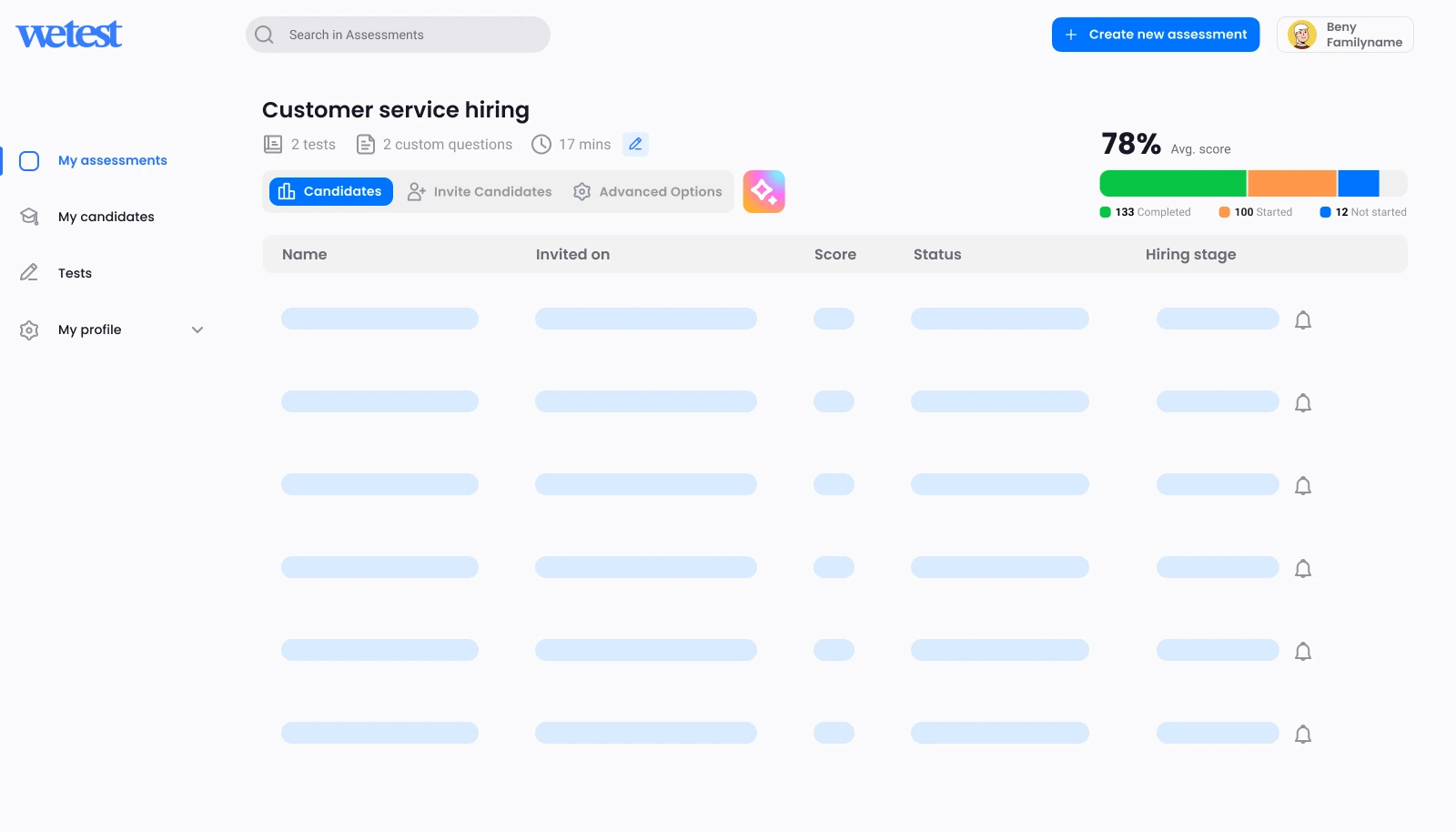
Use science‑backed skills tests to find support reps who stay calm, solve issues, and represent your brand well. Screen, rank, and shortlist candidates in minutes, not days.
Start with Free plan · Setup in under 5 minutes


Customer support teams need to fill seats quickly, handle variable volume, and still protect customer experience. That is hard to do when all you have are CVs, gut feel, and rushed interviews.
One bad support hire can burn through around $18,000 in recruiting, training, rework, and replacement.
About 70% of what matters in support, like tone, empathy, and how agents respond when customers are stressed, never shows up on polished CVs.
Spotting a weak hire can take more than 25 hours of listening to calls, reviewing chats, and checking CSAT before it is clear they are not a fit.
Traditional screening tells you where candidates have worked, not how they treat customers.
With Wetest, candidates complete role‑relevant tests such as Customer Service, Customer Support, Communication, and Situational Judgment, so you see how they respond to realistic queries, complaints, and tricky requests.
You get evidence of empathy, clarity, and problem‑solving before they ever talk to your users.
Support hiring is often urgent, but rushing interviews leads to costly mis‑hires. Wetest lets you invite applicants to a structured online assessment as soon as they apply, automatically scores answers, and ranks candidates on the skills that matter for your team.
Recruiters and support leaders can go from application to interview‑ready shortlist in a fraction of the time, without skipping quality checks.
Different team leads often interview very differently, which makes support quality uneven. With Wetest, every candidate for a given role goes through the same set of assessments, scored with the same criteria.
That consistency makes hiring decisions easier to explain, helps you compare candidates across locations or shifts, and keeps your support bar aligned even as you grow.
Customer support is more than “being nice.” It is understanding issues quickly, navigating systems, following policies, and keeping communication clear when queues are full.
Wetest lets you combine tests like Time Management, Cognitive Ability, and Verbal Ability with support‑specific tests so your hiring process mirrors the complexity of day‑to‑day work, not just ideal scenarios.


Wetest combines science-backed tests, AI proctoring, and instant analytics — so you can screen every candidate fairly and hire with confidence.
Screen every applicant in minutes. Build multi-test assessments and let Wetest rank candidates automatically.
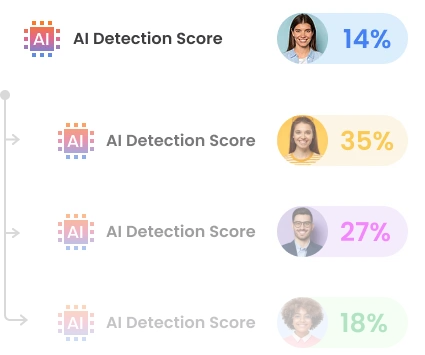
Catch AI and cheating in real time. Every result comes with a trust score you can rely on.
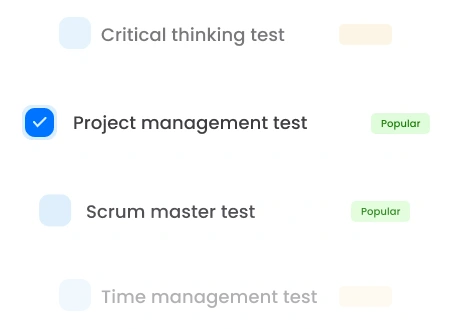
200+ science-backed tests. Cover skills, cognitive ability, language, and personality.
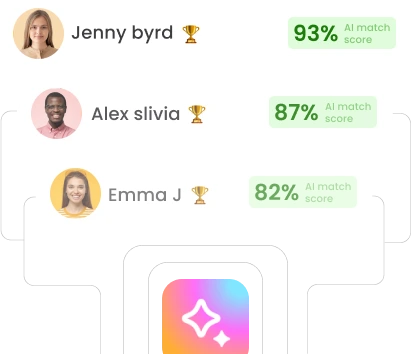
AI picks your top candidates. Wetest surfaces the best-fit applicants automatically — ranked and ready to hire.
Plug into your hiring stack. Native links to Greenhouse, Lever, Workday, and 20+ more.

Wetest can support hiring across a wide range of customer support and service roles, including:
To see how candidates handle common support scenarios, choose the right actions, and use a calm, service‑first tone across channels.
Customer Support RepresentativesTo evaluate how they respond to complaints, show empathy, and balance customer satisfaction with company policies.
Customer Support RepresentativesTo measure written and verbal clarity, so you know they can explain solutions in a way customers actually understand.
Customer Support RepresentativesTo test how they prioritize tickets, manage multiple conversations, and keep work moving when queues are busy.
Customer Support RepresentativesTo reveal how they respond when policies are unclear, customers push for exceptions, or multiple issues collide at once.
Technical Support SpecialistsTo assess how candidates approach troubleshooting, ask the right questions, and guide customers through step‑by‑step resolutions.
Technical Support SpecialistsTo check whether they can interpret logs, error messages, or basic metrics when digging into technical issues.
Technical Support SpecialistsTo understand how they weigh different explanations, avoid jumping to conclusions, and choose sensible next steps.
Technical Support SpecialistsTo see how quickly they learn new product areas, connect symptoms to possible causes, and adapt as your stack evolves.
Technical Support SpecialistsTo ensure they can read and apply technical documentation accurately, then translate it into plain language for customers.
Customer SuccessTo understand how candidates think about customer workflows, requirements, and business impact when advising on solutions.
Customer SuccessTo see how they balance short‑term requests with long‑term value, renewals, and relationship health.
Customer SuccessTo evaluate how clearly they write updates, recap calls, and set expectations with customers and internal teams.
Customer SuccessTo test how they organize onboarding steps, follow through on commitments, and coordinate across stakeholders.
Customer SuccessTo assess how they handle discounts, scope changes, or tricky conversations while protecting both the customer relationship and your business.
Support Team LeadsTo assess how leaders coach agents, set expectations, and make decisions that keep service quality and people's health in balance.
Support Team LeadsTo check their understanding of basic people topics like performance, feedback, and workplace policies.
Support Team LeadsTo evaluate how they manage initiatives such as process changes, tool rollouts, or training programs alongside daily operations.
Support Team LeadsTo see how quickly they interpret dashboards, reports, and trends in ticket volumes or CSAT to make better decisions.
Support Team LeadsTo measure how clearly they deliver feedback, share changes, and align multiple shifts or locations on the same standards.
To see how candidates handle common support scenarios, choose the right actions, and use a calm, service‑first tone across channels.
To evaluate how they respond to complaints, show empathy, and balance customer satisfaction with company policies.
To measure written and verbal clarity, so you know they can explain solutions in a way customers actually understand.
To test how they prioritize tickets, manage multiple conversations, and keep work moving when queues are busy.
To reveal how they respond when policies are unclear, customers push for exceptions, or multiple issues collide at once.
To assess how candidates approach troubleshooting, ask the right questions, and guide customers through step‑by‑step resolutions.
To check whether they can interpret logs, error messages, or basic metrics when digging into technical issues.
To understand how they weigh different explanations, avoid jumping to conclusions, and choose sensible next steps.
To see how quickly they learn new product areas, connect symptoms to possible causes, and adapt as your stack evolves.
To ensure they can read and apply technical documentation accurately, then translate it into plain language for customers.
To understand how candidates think about customer workflows, requirements, and business impact when advising on solutions.
To see how they balance short‑term requests with long‑term value, renewals, and relationship health.
To evaluate how clearly they write updates, recap calls, and set expectations with customers and internal teams.
To test how they organize onboarding steps, follow through on commitments, and coordinate across stakeholders.
To assess how they handle discounts, scope changes, or tricky conversations while protecting both the customer relationship and your business.
To assess how leaders coach agents, set expectations, and make decisions that keep service quality and people's health in balance.
To check their understanding of basic people topics like performance, feedback, and workplace policies.
To evaluate how they manage initiatives such as process changes, tool rollouts, or training programs alongside daily operations.
To see how quickly they interpret dashboards, reports, and trends in ticket volumes or CSAT to make better decisions.
To measure how clearly they deliver feedback, share changes, and align multiple shifts or locations on the same standards.
From role setup to final shortlist, Wetest streamlines every step of candidate screening, allowing you to create an assessment and identify top talent in minutes.
Choose the role, required skills, difficulty level, and whether you need AI proctoring, custom branding, or role-specific test questions.
Create assessmentChoose from ready-to-use tests for behavioral and role-specific skills.
Send branded assessment links, track completion, and let candidates complete structured screening from any device.
Invite candidatesEfficiently invite multiple candidates by uploading a bulk list.
Upload your listGenerate a link to share your assessment.
Copy assessment linkThe provided email address will be used solely for sending the assessment invitation.
Name Last name Email InviteReview ranked results, skill breakdowns, completion data, and proctoring signals so your team can move the right people forward.
View results
Your questions about smarter Customer Support Teams hiring, answered.
A customer support skills assessment is an online test that helps employers measure how candidates communicate, solve problems, and handle realistic customer scenarios before inviting them to interviews.
Pre‑employment testing helps teams quickly identify service‑minded candidates, reduce mis‑hires that frustrate customers, and spend less time on interviews with clearly unqualified applicants.
Common focus areas include communication, empathy, active listening, problem‑solving, time management, policy judgment, and basic technical comfort with your tools.
Many teams send assessments shortly after an application or short pre‑screen, so only candidates who pass move on to live interviews or role‑plays.
Most support assessment stacks are designed to be completed in under 30–40 minutes, so candidates can finish them in one sitting without slowing your hiring down.
Yes. By filtering out weak candidates upfront, you can reserve role‑plays, shadowing sessions, and panel interviews for people who have already demonstrated strong support skills.
Structured, scenario‑based tests focus on how candidates think and respond, not on where they have worked before, which can make it easier to spot strong talent from diverse backgrounds.
You can assess frontline agents, technical support, customer success, and support leadership roles by combining different tests from the library into role‑specific assessments.
Short, relevant tests that mirror real support work usually improve the experience by showing candidates exactly what the job is like and avoiding long, unfocused interview processes.
Wetest turns results into clear score profiles and rankings, so hiring managers can see at a glance which candidates handle customers well, think clearly under pressure, and are worth moving forward.

Launch a Wetest customer support assessment, invite your next batch of applicants, and quickly see who is ready to represent your brand on the front line.