
HR Self-Service: What It Is and Why Your Company Needs It
Human resources
Bonica
March 1, 2025
HR has evolved from using lots of paper to using modern digital tools. Human resources have actually transformed into a strategic function powered by technology.
Recent surveys show that over 70% of US employees now prefer self‐service HR tools.
Eighty-four percent of business leaders also agree that a good employee experience is crucial for organizational success.
HR departments managed everything on paper traditionally. This approach slowed down daily operations and left little room for strategic planning.
Companies have begun using electronic systems that replaced manual processes these days.
HR Self-Service has grown from a simple electronic payroll to a complete system that combines all HR functions.
HR Self-Service empowers employees and HR teams at the same time. The self-service tools bring a dramatic reduction in repetitive administrative work.
The industry reports suggest that companies reduce administrative burdens by up to 40%. HR teams are able to focus on talent development and culture building now.
Global spending on HR software is projected to grow over the next few years.
Table of Contents
Key Takeaways
- HR Self-Service allows employees to handle their own HR tasks and reduces the administrative workload.
- The integration of cloud technology and AI analytics makes processes smoother and improves data accuracy.
- Instant access to records and HR services makes everything more transparent and keeps employees engaged.
- Digital platforms help companies focus on strategic planning.
HR Self-Service Basics
It refers to a digital platform that enables employees to manage many of their own HR tasks without intervention.
HR Self-Service uses web portals and mobile access to provide instant access to services.
Traditional HR systems required employees to fill out physical forms and even make face-to-face visits to update personal data or apply for leave.
These methods were leading to delays in processing and communication. An HR Self-Service system empowers employees to update their profiles and track their attendance and leave online.
This approach speeds up routine processes and improves data accuracy. It also reduces the burden on HR professionals.
The employee portal serves as a central hub where users securely log in to view and update their information and even participate in performance reviews.

Mobile access ensures that employees interact with HR services anytime and anywhere.
Integrated workflows enable communication between HR functions to ensure that any change an employee makes is immediately updated everywhere in the system.
The evolution of HR delivery has been dramatic. HR tasks were manually executed and were vulnerable to human error. Now companies have migrated to automated HR systems.
This shift has been accelerated by cloud solutions that offer real-time data access and scalability. These modern systems now integrate AI to predict employee needs.
Companies like SHRM and Namely advocate that HSS systems reduce routine inquiries by up to 40%.
AI tools in these platforms offer personalized recommendations and even predict future staffing needs.
How HR Self-Service Works
It is built on HRIS integration and cloud computing.
Modern Human Resource Information Systems are designed to unify employee data and HR functions into one database to be accessed from a single portal.
This integration ensures that all HR data remains current and accurate.
Cloud computing supports these systems by offering scalable and real-time access to HR data.

Employees and managers no longer need to rely on local servers or outdated spreadsheets. This means that employee benefits and performance metrics are available 24/7.
Artificial intelligence improves the HR Self-Service portal through chatbots and personalized dashboards.
AI guides employees in submitting leave requests or updating banking information. Modern portals are intuitive and responsive to help users manage their tasks with ease.
Workflow Automation
The platforms are engineered to connect all functions. The real-time data update eliminates the need to enter the same information twice and ensures that every department works with the same information.
Modern HR systems use strong API integrations and middleware to connect the self-service portal with older systems and other business applications.
This interconnectedness creates a single source of truth for all HR data. HR teams generate reports and make decisions easily.
This integration also works with performance management systems. Employee feedback and reviews in the portal are automatically collected and analyzed.
Companies using these systems have reported improvements in HR efficiency.
Key Benefits of HR Self-Service

HR Self-Service cuts down on manual steps. The risk of mistakes and duplicated work decreases in this way. Employees no longer have to wait days for routine approvals or corrections as well.
This efficiency improves operational speed. Staff also receive feedback on their requests immediately.
Employee Engagement
These platforms change the traditional approach toward a more employee-centric model.
Employees independently view their pay stubs and track leave balances anytime at home or on the go.
Employees are always informed about their work information.
Transparency is vital in building trust. Employees know they can quickly resolve queries without waiting for HR intervention.
Quick resolution of common issues and an easy platform encourage more frequent use.
Providing such digital empowerment leads to a stronger employer brand.
Cost Savings and Data Accuracy
Automating HR processes helps companies use their resources better. It reduces the need for a large administrative staff and cuts overhead costs.
Industry benchmarks show that companies achieve better ROI with reduced processing times and minimized errors.
The centralized nature of HR Self-Service platforms improves the accuracy and reliability of records.
Corrections happen automatically and the risk of non-compliance is greatly reduced. Accurate data is essential for following labor laws and company policies.
The Strategic Impact of HR Self-Service

It is no longer just an operational tool. HR Self-Service is a strategic driver that changes company culture and brings innovation.
These solutions help companies better manage their workforce and constantly improve HR performance.
Changing Company Culture
HR Self-Service helps create a workforce that is independent and comfortable with using technology. Employees feel capable of managing their own HR needs these days.
HR teams focus more on employee well-being. This encourages accountability as employees take ownership of their HR interactions. It reinforces a culture of openness.
A tech-savvy employee adapts more readily to digital tools.
ROI and HR Efficiency
Modern HSS centralizes employee records and simplifies workflows to improve operations.
Key performance indicators such as reduced ticket volume and faster onboarding times along with quicker hiring are common benefits observed by companies using these systems.

Analytics and decision-making are among these improvements as well.
Advanced HR analytics enable companies to monitor trends in employee turnover and performance.
Good reports and accurate data help companies see how they’re doing compared to others and find ways to improve.
Innovation in HR
Self-service portals create a workplace that allows for human-centric strategies that were previously out of reach for traditional HR.
HR professionals gain more time to focus on leadership training and strategic workforce planning.
Innovative HSS systems offer talent mobility and performance improvement. Platforms use employee data to recommend specific training when a team needs more support.
HR Self-Service modernizes HR processes to help companies remain agile in a business environment.
Best Practices for HSS

Digital HR offers huge potential but realizing that potential requires careful planning. Companies that make good use of these platforms will see the highest return on their investment.
Stakeholder Engagement and Employee Training
Digital HR transformation begins with stakeholder engagement and employee training. Getting key users involved early on creates people who will love the system and help others use it as well.
When companies involve important employees and HR leaders, it creates a collaborative environment. This makes it easier for people to accept the changes because they see how the new tools make work easier.
Video tutorials and hands-on practice sessions help users to understand the portal.
System Integration

Integration with existing HR systems is crucial for successful HR Self-Service implementation. This connection allows real-time data flow between key HR functions.
Customizing the portal to match company workflows makes the system more user-friendly and effective. Using relevant keywords helps potential users find the system.
Overcoming Common Challenges
Moving to HR Self-Service can be difficult. Some employees will resist the change! You should communicate clearly and manage the transition.
Start with pilot programs and get feedback early. Having a help desk and good troubleshooting resources makes the change easier.
Explain clearly how the new system will save time and improve accuracy.
Sharing success stories and measurable results also helps convince people it’s a good move.
Trends in HR Self-Service

The future of HR Self-Service is defined by rapid technological evolution. Emerging trends are set to revolutionize the way companies manage human resources.
AI and Predictive Analytics
These technologies improve key HR functions. AI predicts things like who might leave the company and who has high potential. It can even offer personalized career advice.
This helps HR teams plan ahead and fill talent gaps.
AI can help find the best job candidates as well. This approach leads to better decisions and a measurable return on investment.
The Next Generation of Digital HR
The future of HR Self-Service is mobile and wearable as more people work remotely these days.
Modern HR portals are designed to be user-friendly on phones and tablets. Employees easily manage tasks.
Wearable tech is also becoming more common.
AI chatbots are making it easier for employees to get quick answers to their HR questions. These trends are making HR more efficient.
Preparing for Tomorrow
The key to staying ahead in HR is continuous innovation. Companies need a smart digital HR strategy that accepts new technologies.
Investing in cloud HR systems is essential as is ensuring they can integrate with existing HR solutions.
The future of HR is personalized. This approach helps companies adapt to changing regulations and market conditions.
Companies will need to use advanced analytics and mobile-first designs soon.
A Quora Rundown
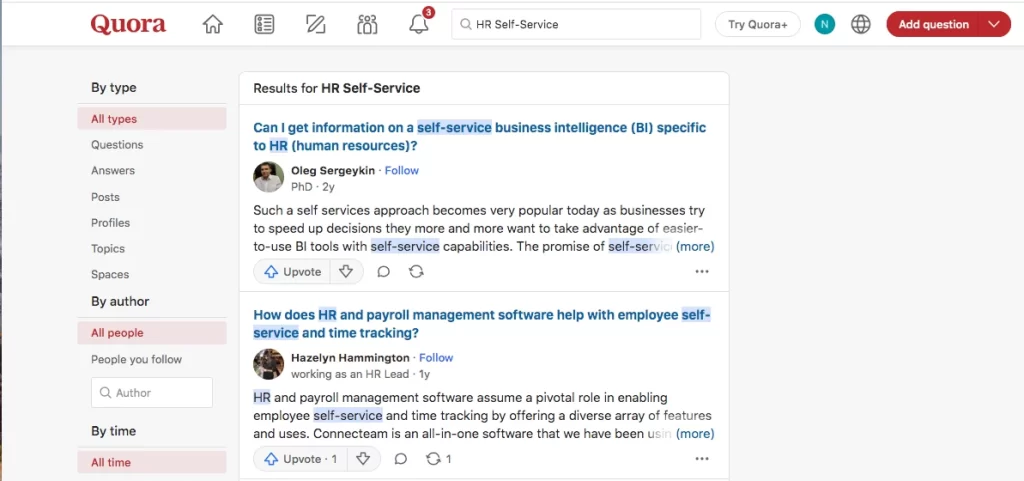
Quora users have offered practical perspectives on the good and bad of digital HR!
Self-Service Functionality
“HR software can significantly improve employee self-service options by providing a user-friendly platform that allows employees to access and manage their own HR-related tasks,” explains SkizzleHR.
He believes being able to view payslips and tax documents along with log work hours helps a lot.
Rakesh Kumar makes an interesting comparison to how consumers act: “The employee self-service is not new. However, it is a very good HR function for both employers and employees. Just like internet banking or self-service checkouts in supermarkets, it offers convenience at work.”
He points out that with its features HR software ensures accuracy.
Engagement Through Digital Tools
Sayantan Pal notes HR software improves employee engagement and productivity.
He writes, “Automated workflows and self-service portals mean employees handle their own business, whether updating info or checking out benefits” Sayantan emphasizes that employees enjoy a more transparent experience. He adds that integrated platforms create a culture of immediate response and collaboration.

Frank Barnes says HR Self-Service is like self-checkout at the store. It’s efficient and saves money.
He explains, “Employee Self Service reduces ongoing costs by allowing the company to have fewer employees doing the service work, freeing them up to work on more advanced projects.”
Operational Efficiency
Hazelyn Hammington works as an HR Lead. She discusses the role of HR software in operational efficiency.
She notes that time tracking and schedule management support internal record keeping.
Brant Serxner adds that HR Self-Service platforms provide a “greater variety of services without significantly increasing front-end/customer service costs.” Brant also talks about how robots and AI could do even more of the routine work.
Usability Challenges
Sue Lingard stresses that the key factor in any HR Self-Service solution is user adoption. “It’s all about usability and ensuring that employees see the point of using the system,” Sue argues that even the most advanced HR software can fall short if it’s not intuitive enough.
Hannah Wright offers a perspective useful for small companies. She says that good online HR software should work for all size companies and points out how flexible modern HR tools are.

“It doesn’t matter if you’re a 2-person company or a 100-person company,” Hannah explains, “a well-designed system will save you time and eliminate the headache of managing HR with spreadsheets or paper files.”
Conclusion
By automating routine tasks HR Self-Service systems reduce administrative burdens and error rates.
This increased efficiency allows HR teams to devote more time to improve.
Industry studies report that companies using digital HR solutions see up to a 40% reduction in routine inquiries.
Companies that want a competitive advantage should look into HR Self-Service platforms.
The future of HR is inherently digital. The potential for self-service platforms to transform HR functions is boundless.
Hire the best candidates
with Wetest.
Create pre-employment assessments in minutes to screen candidates, save time, and hire the best talent.
Try for free