
Internship Completion Letter: Format, Samples, and Writing Tips
Human resources
Bonica
July 8, 2025
An internship completion letter is basically the official nod that an intern has wrapped up their gig with your company. It’s not just some boring admin piece of paper! It’s proof they picked up skills, knocked out projects, and actually contributed while they were here.
Why care? Well, for interns, that letter can make or break landing their next role or snagging a scholarship. And for you, issuing solid letters shows you’re serious about helping people grow, and it makes your company look good to future talent.
Whoever worked closest with the intern, like their supervisor, internship coordinator, or someone in HR, writes it. Sure, it’s addressed to the intern, but expect future bosses or schools to peek at it too.
Table of Contents
Understanding the Purpose of Completion Letters

Learn why these letters matter for both interns and organizations beyond basic documentation.
Key Benefits for Interns Seeking Future Employment
Think of a solid internship completion letter as a stamp of approval from someone in the trenches. It’s third‑party proof that you really did the work and picked up real skills.
When recruiters see your skills are backed up by a pro, your resume instantly looks way better. In that letter, your supervisor confirms what you did, highlights your big wins (like cutting project times or making things better), and vouches for how well you fit in. Having that solid proof in your portfolio or on LinkedIn is what really helps you stand out.
Candidates with similar grades and coursework suddenly pale next to someone who can show, “Yep, here’s a manager who says I rocked it for three months.” That formal nod could be the edge you need to stand out from the crowd.
The 2025 stats show that if you have a completion letter for your internship, you’re in a much better position to get hired.
Interns are 25% more likely to land a full-time job within just six months of graduating, and you’re about 85% more likely to find a job than someone who didn’t intern.
How Organizations Benefit from Providing Quality Letters
When companies invest time in creating meaningful completion letters, they’re investing in their own reputation and talent pipeline. Benefits include:
– Strengthening relationships with educational institutions
– Enhancing your employer brand among emerging talent
– Creating goodwill with former interns who may become future employees
– Demonstrating your commitment to professional development
Companies that always send out detailed, personalized completion letters often get better applicants for their next internships.
Legal and Professional Considerations to Keep in Mind
You have to keep them factual. That means only writing about what the intern actually did, without using fuzzy, general praise.
Before sending, get HR or legal to check your draft so you don’t overstate anything. It’s also smart to compare your letter with any official evaluations to make sure all the feedback matches.
Privacy is another big factor. If the intern worked on sensitive projects, double‑check company policy and rules before dropping in too many specifics.
And don’t forget your organization’s guidelines around reference letters. Some places have tough rules about who can sign off and what they can say. Get those details right! You’ll have a completion letter that truly celebrates the intern’s work.
Recent Statistics on Internship Impact in 2025
2025 stats from Forbes and Novoresume show that interns have a much easier time landing a full-time job within six months of finishing school.
They’re about 25% more likely to get hired than people who skipped the internship.
StandOut CV even says you’re 85% more likely to get an offer just by having one on your resume.
It pays off literally, because paid interns end up making almost 60% more money starting out.
NACE reported that way more seniors did internships this year. It shows why getting a good completion letter matters so much when you’re trying to level up.
Essential Elements of an Effective Completion Letter

Make your letter professional, structured, and complete with all the right components.
Professional Header and Formatting Requirements
Start with your company letterhead, complete with logo, address, and contact details. Right below, add today’s date in “Month Day, Year” format. If you have the intern’s mailing info, include their name and address next.
Next, slot in a clear subject line—something like “Completion of Marketing Internship Program.” Greet the reader with a proper salutation.
For the main part, single-space all paragraphs and leave a blank line between sections. At the very end, sign off formally: add your handwritten or digital signature, then type your name and job title.
This neat, professional layout instantly shows that the letter is official and taken seriously.
Key Information to Include in Every Completion Letter
Start by briefly confirming that the intern has successfully completed the program and explain why you’re writing.
Next, describe the main tasks they handled and the projects they tackled.
After that, detail the primary tasks they managed and the projects they undertook. Next, spotlight their achievements, the skills they acquired, and the specific ways they contributed value.
After that, you just… give a quick, clear rundown of how they did overall. And then, seriously, thank them for helping out and make sure they know you’d totally recommend them down the road.
This whole setup? It just makes it so easy for whoever’s reading the letter to quickly see what the intern actually accomplished, you know?
How to Structure Your Letter for Maximum Impact
A well-organized letter follows this proven structure:
1. Introduction: Confirm the internship completion and provide context
2. Body – Part 1: Outline specific responsibilities and projects
3. Body – Part 2: Highlight achievements, skills, and contributions
4. Body – Part 3: Provide overall performance assessment
5. Conclusion: Express appreciation and offer future endorsement
6. Signature: Include your signature, printed name, and contact information
This logical flow ensures readers quickly grasp the intern’s experience and capabilities.
Step-by-Step Guide to Writing a Compelling Letter

Follow a clear writing process to craft impactful and personalized internship letters.
Crafting a Clear and Professional Introduction
Getting these internship completion letters to hit home and feel personal? You should ditch the super strict process. Your first paragraph is where the whole vibe of the letter kicks off.
A good start, it just… blurts out why you’re even writing it, right away. And then you confirm the intern’s name, their job title, and the exact dates they were there. Oh, and don’t forget to throw in the department or the team they hung out with.
A quick intro to your company, too, that’s a nice touch, especially if whoever’s reading it has no clue who you are. Try to keep that bit pretty quick, maybe like three or four sentences, tops.
Describing Internship Responsibilities Effectively
This next part is all about laying out what the intern did during their stint with your company. So, you’ll use those action verbs to describe their responsibilities, like “managed,” “created,” and “analyzed.”
Aim for, say, 4-6 primary duties or ongoing stuff. Be sure to drop in specific projects or big initiatives they contributed to. And, yeah, mention any relevant tools, software, or methods they utilized.
Just be clear about their role, but try not to get too hung up on overwhelming technical details, okay?
For example, you could write: “During her internship, Jane managed our company’s social media accounts, created weekly content calendars, analyzed campaign performance metrics, and developed promotional materials for three major product launches.”
Highlighting Specific Skills and Achievements
This is where your letter transforms from a simple verification to a powerful endorsement. Focus on:
– Quantifiable achievements whenever possible (increased engagement by 27%)
– Technical and soft skills demonstrated consistently
– Positive contributions to team dynamics or company culture
– Special recognition or praise received during the internship
This section should include specific examples that illustrate the intern’s capabilities:
“Jane’s analysis of our Instagram performance led to strategy adjustments that increased engagement by 32% within one month. Her exceptional attention to detail, creative problem-solving, and ability to work under tight deadlines were particularly valuable during our July product launch.”
Writing a Strong and Supportive Conclusion
End your letter with a paragraph that:
– Provides an overall assessment of the intern’s performance
– Expresses gratitude for their contributions
– Offers a general recommendation or endorsement
– Includes your willingness to provide further information if needed
For example:
“Jane consistently exceeded expectations and made significant contributions to our marketing team. We are grateful for her dedication and professionalism throughout the internship. I confidently recommend Jane for future opportunities in digital marketing and would be happy to provide additional information about her excellent performance if needed.”
Customizing Your Letter for Different Industries

Adapt your wording, achievements, and skills to match the expectations of specific fields.
Industry-Specific Language to Include or Avoid
Tailoring your language to the industry demonstrates your understanding of the professional context:
Technology Sector:
– Include: Specific programming languages, development methodologies, platforms
– Avoid: Vague terms like “computer work” or “tech support”
Financial Services:
– Include: Regulatory frameworks, analytical methods, financial instruments
– Avoid: Overstating involvement in client financial decisions
Healthcare:
– Include: Relevant protocols, patient care approaches (while maintaining privacy)
– Avoid: Clinical terminology that might imply medical qualifications beyond their role
Creative Industries:
– Include: Design software, creative methodologies, portfolio contributions
– Avoid: Claiming full creative ownership of company projects
Using appropriate industry terminology shows you understand the professional landscape while enhancing the letter’s credibility.
How to Tailor Accomplishments to Relevant Fields
Different industries value different types of achievements:
Engineering:
– Focus on: Problem-solving examples, technical improvements, efficiency gains
– Quantify: Time saved, resources conserved, performance improvements
Marketing:
– Focus on: Campaign results, content performance, audience engagement
– Quantify: Growth percentages, conversion rates, reach metrics
Business Administration:
– Focus on: Process improvements, coordination successes, resource management
– Quantify: Cost savings, time efficiencies, improved workflows
Research:
– Focus on: Methodological contributions, data collection, analysis support
– Quantify: Sample sizes, accuracy improvements, research milestones
Tailoring achievements to field-specific values makes them more meaningful to future employers in that industry.
Addressing Specialized Skills and Competencies
When you’re discussing an intern’s skills, you want to focus on the ones that are important for their job.
If they learned some industry-standard software like AutoCAD ,if they were doing engineering, or the whole Adobe Creative Suite for a design internship, you should spell that out and explain how they used it.
Mention any certifications or special training they finished, like a safety workshop or a coding bootcamp, and just note if they really understood the rules or best practices in that area.
Emphasize how they totally connected their school stuff with real-life work, whether that was making things run smoother, doing complicated analyses, or just making sure everything was up to code.
A Quora Rundown
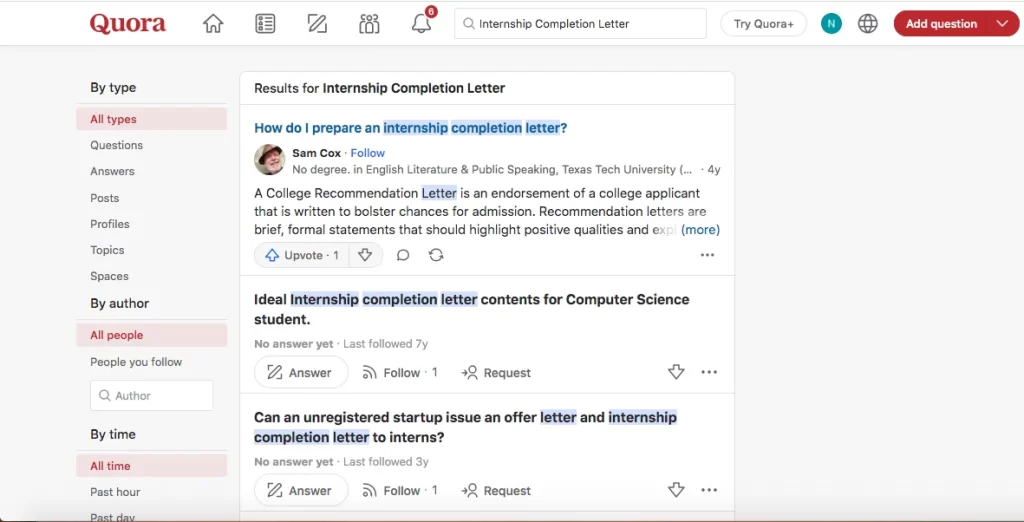
Here is a synthesis of real Quora users’ advice, refocused on preparing, requesting, and using an internship completion letter.
Timing Your Request and Setting the Tone
Meghana K emphasizes that asking for your certificate is your right but reminds you to remain gracious,
Meghana K: “Well, if you have completed the internship, it is your right to ask for your certificate. That doesn’t mean you get to ask rudely. They must have forgotten with excessive work. … write your reason for wanting it right now. If you have your own sensible reasons and worked fine, then surely they will understand you!”
Bill Florin urges interns to act while performance is fresh.
“Get the letter as soon as possible while your performance is still fresh in the mind of your supervisor.”
Framing Your Request as a Collaboration
Bill Florin also provides a simple script,
“I have enjoyed working with you, and I hope you have valued my performance and contributions. May I ask for a letter of recommendation I can use in the future to build my resume?” I’ve greatly appreciated your guidance on the Summer Marketing Campaign. Could I please request an internship completion letter that highlights our work together?”
Nitika Sharma discusses the importance of researching company culture to set the right tone,
“Be mindful of your tone in the rest of the letter or email. Here the research you did previously is going to be helpful. You will have an idea whether the work culture is formal or casual and accordingly you can pitch yourself!”
Using Stories to Strengthen Your Case

Sam Cox (though speaking about recommendation letters) insists on narrative over laundry lists,
“Though it is easy to write a laundry‑list of positives, it is better to tell a story. Simply put, try to show rather than tell why the applicant will be a success…If possible, could you include the story of how we turned around the Q2 deliverable under tight deadline? That example meant a lot to me.”
Dealing with Missing or Delayed Letters
Barun Kumar recommends using existing communications if no formal letter is provided,
“For supporting your claim you can very well produce the initial offer or communication letter for internship sent to you by the company. And tell them the true story if asked. While awaiting my formal completion letter, please find my original internship offer and my final project summary.”
Sharique Khan reminds us that certificates aren’t everything,
“Certificates hardly matters. … So better focus on your learnings and not certificates. It never affects your career.”
Following Up and Persistence
Meghana K advises periodic follow‑ups if the letter hasn’t materialized,
“In case you still don’t receive anything, then ask them when it is possible to get a certificate. … write at regular intervals, just as a reminder and nothing more than that. I hope you’re well. I’m checking in on my previous request for the internship completion letter. Please let me know if there’s anything else I can provide.”
Building Your Career Archive
Bill Florin labels this practice as “becoming your own historian”:
“Intelligent career management includes becoming your own historian, the person who gathers evidence of success, saves it, and uses it in the future.”
Archive emails praising your work and project dashboards.
Expert Tips to Make Your Completion Letter Stand Out

Enhance your letter with performance metrics, personal touches, and polished writing.
Incorporating Meaningful Performance Metrics
Numbers transform vague praise into concrete evidence of capability:
– Include percentage improvements where applicable (e.g., “increased conversion rates by 15%”)
– Mention quantities that demonstrate scope (e.g., “managed a database of 5,000+ customer records”)
– Reference time efficiency (e.g., “completed project 2 weeks ahead of schedule”)
– Note resource management achievements (e.g., “executed campaign 10% under budget”)
Even in roles where metrics aren’t obvious, look for ways to quantify impact: number of projects completed, team members supported, or clients assisted.
Balancing Professionalism with Personal Touch
The most memorable letters combine formal validation with authentic human connection:
– Include one specific anecdote that illustrates the intern’s character or work ethic
– Mention qualities that aren’t on a resume but matter in the workplace (resilience, curiosity, adaptability)
– Reference how they fit into the team culture or responded to challenges
– Express genuine appreciation for specific contributions
For example: “Beyond her technical abilities, Emma’s positive attitude during our office relocation demonstrated remarkable adaptability. She volunteered to help teams transition their workstations and created an inventory system that we continue to use today.”
Common Mistakes to Avoid in Completion Letters
Even well-intentioned letters can miss the mark. Avoid these pitfalls:
– Generic language: Phrases like “good team player” without specific examples
– Inflated praise: Exaggerated claims that undermine credibility
– Focusing only on tasks: Listing responsibilities without mentioning outcomes
– Inclusion of irrelevant details: Personal information not related to professional performance
– Technical jargon overload: Using specialized terms that most readers won’t understand
– Grammatical errors or typos: Mistakes that reduce the letter’s professional impact
Additional pitfalls include failing to use electronic signatures in digital versions, which can question authenticity, and not including verifiable contact details for follow-up inquiries.
Take time to review the letter carefully—it reflects on both the intern and your organization.
4 Professional Templates for Different Internship Scenarios

Use these ready templates to save time and ensure industry-appropriate language.
Sample Letter for Technical and Engineering Internships
“`
[Company Letterhead]
[Date]
RE: Completion of Engineering Internship – [Intern Name]
To Whom It May Concern:
This letter confirms that [Intern Name] successfully completed a [duration] engineering internship with [Company Name] from [start date] to [end date]. [Intern Name] worked with our [specific engineering team] on [brief description of projects].
During this period, [Intern Name]’s responsibilities included:
• Assisting with [specific technical responsibility]
• Conducting [type of analysis/testing]
• Developing [specific components/code/designs]
• Collaborating with the team on [project name]
[Intern Name] demonstrated strong technical skills in [specific technical areas] and successfully [specific achievement with metrics if possible]. Their work on [specific project] was particularly valuable, as it [describes impact].
[Intern Name] consistently displayed excellent problem-solving abilities, technical aptitude, and teamwork throughout the internship period. Their contributions were valuable to our engineering team, and they successfully applied classroom knowledge to real-world engineering challenges.
We are pleased to confirm the successful completion of this internship and wish [Intern Name] success in their future endeavors. Please contact me if you require any additional information.
Sincerely,
[Signature]
[Your Name]
[Your Title]
[Contact Information]
“`
Template for Marketing and Creative Field Internships
“`
[Company Letterhead]
[Date]
RE: Completion of Marketing Internship – [Intern Name]
To Whom It May Concern:
This letter confirms that [Intern Name] successfully completed a [duration] marketing internship with [Company Name] from [start date] to [end date]. As part of our [specific marketing team], [Intern Name] contributed to multiple campaigns for our [types of clients/products].
Key responsibilities included:
• Creating content for [specific platforms/channels]
• Assisting with [specific marketing activities]
• Analyzing [specific metrics/data]
• Supporting the team during [event/campaign name]
[Intern Name] demonstrated exceptional creativity in [specific example] and contributed significantly to [specific project] which resulted in [measurable outcome]. Their ability to [specific skill] proved especially valuable during our [specific campaign/initiative].
Throughout the internship, [Intern Name] consistently displayed strong communication skills, creative thinking, and marketing instincts. They quickly adapted to our fast-paced environment and delivered high-quality work that met or exceeded our expectations.
I am pleased to confirm [Intern Name]’s successful completion of this internship program and would recommend them for future opportunities in marketing. Please feel free to contact me should you require additional information.
Sincerely,
[Signature]
[Your Name]
[Your Title]
[Contact Information]
“`
Format for Business and Administrative Positions
[Company Letterhead]
[Date]
RE: Completion of Business Administration Internship – [Intern Name]
To Whom It May Concern:
This letter confirms that [Intern Name] successfully completed a [duration] business administration internship with [Company Name] from [start date] to [end date]. [Intern Name] worked within our [specific department], supporting key administrative and business operations.
During the internship period, [Intern Name]’s responsibilities included:
• Managing [specific administrative tasks]
• Assisting with [specific business processes]
• Preparing [types of documents/reports]
• Coordinating [specific activities/meetings]
[Intern Name] demonstrated exceptional organizational skills by [specific example with results]. Their work on [specific project] was particularly valuable and resulted in [specific improvement/outcome].
Throughout their time with us, [Intern Name] consistently exhibited professionalism, attention to detail, and a proactive approach to problem-solving. They quickly became a reliable member of our team and contributed to improving several of our administrative processes.
I am pleased to confirm the successful completion of this internship and would not hesitate to recommend [Intern Name] for similar roles in the future. Please contact me if you require any additional information.
Sincerely,
[Signature]
[Your Name]
[Your Title]
[Contact Information]
“`
Healthcare and Scientific Research Internship Examples
[Institution Letterhead]
[Date]
RE: Completion of Healthcare Research Internship – [Intern Name]
To Whom It May Concern:
This letter confirms that [Intern Name] successfully completed a [duration] research internship with the [Department/Lab Name] at [Institution Name] from [start date] to [end date]. [Intern Name] worked under my supervision on research related to [brief description of research area].
Key responsibilities during this internship included:
• Assisting with [specific research protocols/procedures]
• Collecting and organizing [type of data]
• Conducting literature reviews on [specific topics]
• Supporting [specific laboratory/clinical procedures]
[Intern Name] demonstrated exceptional attention to detail while [specific achievement], which contributed significantly to our research on [specific project]. Their work was conducted with precision and adherence to all relevant protocols and ethical guidelines.
Throughout the internship, [Intern Name] displayed scientific curiosity, methodical thinking, and the ability to work effectively in a research environment. They quickly mastered [specific techniques/procedures] and showed genuine interest in advancing our understanding of [research area].
I am pleased to confirm the successful completion of this internship and believe [Intern Name] has developed valuable skills for a career in healthcare research. Please contact me should you require any additional information about their performance.
Sincerely,
[Signature]
[Your Name]
[Your Title]
[Contact Information]
“`
Digital vs. Physical Letters: What Works Best Today?

Choose the right format based on the intern’s needs and context.
Email Format Considerations for Digital Delivery
Digital letters require special attention to ensure they maintain professionalism:
– Use a clear, specific subject line: “Internship Completion Letter – [Name] – [Department]”
– Begin with a formal salutation, even in email format
– Maintain professional formatting with proper paragraphs and spacing
– Consider sending a PDF attachment on letterhead rather than plain email text
– Include a professional signature block with your contact information
– Ensure any hyperlinks (to portfolios, projects, etc.) are properly functioning
– Include electronic signatures for validity and attach the letter as a PDF
Remember that digital letters may be forwarded or shared, so maintain appropriate formality throughout.
When to Provide a Printed Letter on Company Letterhead
Physical letters still have their place in professional documentation:
Go with a printed, signed copy when the intern asks for one, especially if they need it for their records or school paperwork.
Some academic programs require original documentation, so double-check if that applies. In certain industries—like law, government, or finance—a formal letter on paper still carries more weight. It’s also the better choice for things like visa applications or any legal use.
And if the internship was part of a competitive or high-profile program, a polished hard copy can add that extra touch of credibility.
A physical letter on high-quality letterhead makes a strong impression and demonstrates investment in the intern’s future.
Creating Multi-Format Letters for Different Purposes
The most supportive approach is providing multiple formats:
– Official PDF on letterhead for electronic submissions and records
– Signed physical copy for the intern’s professional portfolio
– LinkedIn recommendation that captures key points from the letter
– Simplified version for quick reference or email introductions
Discuss with the intern which formats would be most useful for their specific goals, and consider preparing customized versions if they’re applying to diverse opportunities.
Frequently Asked Questions About Completion Letters (FAQs)
Get answers to common questions about timing, formatting, and who should sign the letter.
When Should an Internship Letter Be Issued?
Timing matters when issuing completion letters:
Try to get that letter out pretty quickly—within a week or two of the internship wrapping up is ideal. If you can, finish it before their exit interview or last check‑in.
That way, they’ve got time to request edits if they need the letter for job or school applications right away. And if the internship ties into a course, aim to send it before the semester ends so they can use it for credit.
Bottom line: don’t let more than thirty days slide by, or the details might start to blur.
Promptness shows respect for the intern’s career development needs.
Who Should Sign the Official Completion Letter?
The signatory affects the letter’s weight and credibility:
Start by naming the direct supervisor who spent the most time guiding the intern—this person’s firsthand perspective carries the most weight.
You can then add the department head or program director to lend extra authority, especially if they oversee the broader scope of the internship. Including an HR representative helps verify the dates and official status, which is useful for anyone checking the facts.
For top‑tier internships or standout performers, it’s not unusual to see a company executive’s signature, signaling prestige. In rare cases, you might even combine signatures from multiple levels—supervisor, department lead, and HR—to give a fuller picture of the intern’s experience from different angles.
The most effective letters come from someone who can speak directly to the intern’s work and capabilities.
How have hybrid and remote internship opportunities changed in 2025?
NACE’s 2025 report shows that 61.3% of employers plan hybrid experiences for interns, blending in-person and remote work.
For remote or hybrid internships, completion letters should explicitly note the modality and highlight virtual collaboration skills acquired.
Best practices include using secure digital platforms for signatures and providing verifiable PDF versions to maintain credibility in remote hiring processes.
How to Request Changes to an Unsatisfactory Letter?
If you receive a completion letter that doesn’t accurately reflect your internship:
Before you dive into edits, kick things off by saying thanks and showing you value their work. Point out exactly what’s missing or off—don’t just say “fix this,” spell out the gap and back it up with a quick example.
If a fact needs tweaking, cite the source or detail that proves it. Rather than vague directions like “make this stronger,” offer a sentence or two they can swap in. Keep the tone polite and aware that everyone’s busy.
You could even volunteer to draft your suggestions yourself and let them review your version. That way, you’re helpful, clear, and respectful of their time.
Most supervisors want to provide helpful documentation and will appreciate constructive feedback.
How have completion letter digital formats evolved in 2025?
Electronic signatures are now widely accepted for internship completion letters, using platforms like DocuSign to ensure authenticity and efficiency.
Competitors’ guides emphasize PDF attachments in emails for easy sharing.
For remote internships, digital formats are preferred, as they allow quick verification and reduce environmental impact.
Conclusion
A well-crafted internship completion letter serves as more than just documentation—it’s a powerful career advancement tool. For interns, these letters provide third-party validation of your skills and accomplishments that can set you apart in competitive job markets. For organizations, they reflect your commitment to developing talent and building positive relationships.
Remember that the most effective letters balance formal verification with specific examples, quantifiable achievements, and authentic personal touches. Whether digital or physical, these documents should be professionally presented, carefully crafted, and customized to highlight industry-relevant skills.
As you move forward, use your completion letter strategically—include it with job applications, reference it in interviews, and add key points to your resume and LinkedIn profile. What you’ve accomplished deserves recognition, and a strong completion letter ensures your internship experience continues to benefit your career long after the position ends.
Hire the best candidates
with Wetest.
Create pre-employment assessments in minutes to screen candidates, save time, and hire the best talent.
Try for free