Diversity Management: What It Is and Why It Matters in the Workplace
Human resources
Bonica
April 25, 2025
Diversity management is a practical approach to creating an inclusive workplace. It actively recognizes differences in race and gender as well as religion and even thought.
This process makes sure companies follow equal opportunity rules.
A diverse workplace makes employees more engaged. It also gives managers a chance to have better talent management.
Diversity training and employee resource groups help to break down barriers. They are designed to create an environment where every team member has the chance to contribute.
Businesses that successfully use these strategies see a boost in market competitiveness. This is because diverse teams bring together different experiences and ideas. This leads to unique problem-solving methods and innovative products.
Companies known for their corporate responsibility enjoy improved brand reputation. They have higher customer loyalty as well.
Having people from different backgrounds gives you ideas about new markets. Diversity management ensures that hiring and career development practices are fair.
Key Takeaways
- Diversity management is a strategic approach that builds an inclusive workplace.
- It is a core element of corporate culture that brings innovation and creative problem-solving.
- Inclusive recruitment and continuous diversity training lead to a more engaged workforce.
- Diversity improves brand reputation and delivers measurable financial returns.
- Leaders must invest in diversity management as a long-term strategy to ensure sustainable growth.
Table of Contents
Evolution of Diversity

Diversity management has come a long way from being seen as a simple legal requirement to becoming a key strategic asset.
Companies were focused on meeting equal opportunity standards and following compliance rules. The main goal was to adhere to government regulations.
This focus changed from meeting legal mandates to building an inclusive workplace.
Diversity management is now a tool for improving innovation and business performance.
Compliance to Culture
Diversity efforts were limited to basic diversity training programs designed to tick regulatory boxes.
Companies followed these programs to avoid lawsuits, with little thought given to the deeper benefits of a diverse workforce.
Many businesses have begun to see that diverse teams bring fresh ideas and unique perspectives.
Diversity management is now embedded in the strategy of modern companies. Modern practices emphasize inclusive workplace practices and comprehensive diversity programs.
Historical Milestones
Policies like Landmark legislation set legal standards and made a gradual change in how businesses viewed diversity.
Companies began to integrate diversity into their corporate responsibility efforts. Historical milestones have thus made it easy for advanced diversity initiatives.
The evolution of diversity management remains dynamic. This evolution shows that diversity fuels innovation and improves talent retention.
Effective Diversity Management

Diversity management depends on different factors. Each of them plays a role in building an inclusive workplace.
Recruitment Practices
Companies are putting more energy into recruiting in ways that reach out to underrepresented groups.
They’re stepping up their talent search by writing straightforward job descriptions and using targeted postings that speak directly to potential applicants.
This fresh approach brings in more candidates.
Many companies are now tapping into social media, and others team up with local community groups to make sure their hiring process is welcoming. They’re building teams that reflect a genuine mix of experiences and cultures.
Workplace Policies

Companies create an environment where every employee does their best just by developing inclusive policies.
Practices like flexible work arrangements and clear anti-discrimination rules bring a positive work culture.
Many companies are now establishing employee resource groups and mentoring programs that provide support for all team members.
Continuous Learning and Bias Training
This is key to keeping all employees informed and aware of the subtle biases that affect teamwork.
Ongoing training sessions help to build empathy among team members. Topics are about cultural awareness and the benefits of a diverse team. Strategies to overcome unconscious bias are also among them.
Participating employees in these programs improve their personal growth and help to create a more respectful workplace.
Business Benefits of Diversity

One major advantage is its role in bringing creativity. Diverse teams bring together people with different backgrounds. This mix of perspectives encourages creative thinking.
Companies that work on training people about diversity get way better services.
Another benefit is the boost in employee engagement. These companies’ employees feel more connected. This results in improved performance and greater loyalty among staff.
Inclusive recruitment and supportive workplace policies are among the strategies in keeping team members motivated.
Employees who feel that their voices are heard stay with the company longer.
The financial returns from effective diversity management are also compelling.
Companies enjoy measurable improvements in their bottom line. A wider talent pool helps businesses find new market opportunities and reach a better customer base.
Many companies now track key performance indicators that measure the success of their diversity strategies.
Data and case studies show that companies with diverse teams perform better financially.
Emerging Trends

Companies are moving well beyond tokenism to make diversity a true part of their organizational DNA.
Many leaders are now embedding diversity into every level of the business. Diversity management is no longer an add-on. It is now integrated into strategy and everyday operations.
One powerful emerging trend is intersectionality. It shows that every employee has multiple layers of identity. Addressing how different parts of people’s identities connect allows companies to create diversity programs. Intersectionality leads to improved employee engagement.
Another notable trend is neurodiversity.
Companies are increasingly aware that cognitive differences offer unique strengths to the team. They are developing specialized strategies to support individuals with autism and ADHD.
Digital transformation and artificial intelligence are revolutionizing diversity management. Modern technology now reduces workplace bias.
Cultural Dynamics

Companies work in lots of different places and have teams all over the world. This means that cultural diversity is a bigger deal than ever.
Companies grab talent from everywhere. It’s really important to make plans that connect different cultures. Businesses need ways to talk to each other across different time zones and languages.
Using online meeting tools helps teams connect no matter where they are. Companies also do better with cross-cultural training. Focusing on cultural diversity makes company policies respect everyone’s views.
Leaders make a place where everyone feels included by encouraging people to share their own experiences.
Laws and how society works are also super important for shaping diversity. Local and worldwide rules play a big part.
Lots of places have laws about diversity that companies have to follow. These legal rules make sure workplace policies don’t discriminate.
How society thinks and local customs change how diversity is handled around the world. Companies need to pay attention to local traditions and what people expect.
Changing diversity plans to fit local cultures is a must these days.
Organizational Change

Effective diversity management starts at the top. Inclusive leadership is the key to making real change.
Leaders should support diversity and inspire their teams to accept an inclusive culture.
Leading with Inclusion
Top management brings diversity by adopting inclusive leadership models. This means leaders must be open and approachable.
Simple actions like engaging with employee resource groups and listening to feedback from team members show genuine commitment.
Leaders should speak openly about diversity to encourage a culture where every voice is heard.
This approach helps attract diverse talent. Leaders make better decisions by making diversity a priority.
Culture of Belonging

It is a practical way to ensure sustainable organizational change. This builds an environment where every employee feels included.
Practical strategies set clear goals for diversity by holding regular team meetings to discuss diversity progress and celebrating cultural differences.
Companies also use surveys and feedback tools to understand what employees need to feel supported.
Companies encourage collaboration by making a real effort to create a welcoming atmosphere. This focus on inclusion allows a diverse workforce to become a cohesive team.
Employee Resource Groups
The ERGs provide a space for employees to share their experiences with others who have similar interests.
These groups help employees feel more involved.
Mentorship programs are also a valuable tool. They pair experienced leaders with emerging talent from diverse backgrounds.
These programs help empower diverse voices and ensure that all employees have access to the guidance.
Mentorship builds a pipeline of future leaders who are professionals in diversity management.
A Quora Rundown
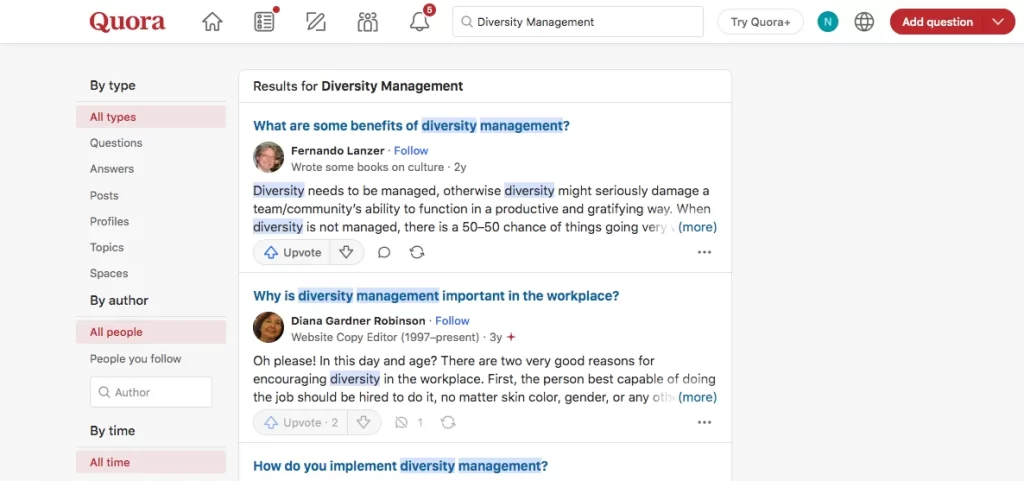
Quora users’ responses shed light on fresh perspectives not yet fully covered.
Welcoming Environment
Glenn Riley states, “When businesses embrace diversity, it sends a message to consumers that they are an inclusive company that cares about more than just profit. This can help attract new customers and create a more positive image for the business.”
His emphasis on a welcoming culture touches on the human side of diversity management.
Karen L Singer Zander writes, “Once upon a time Wisconsin was full of Lutheran farmers… The new hires that weren’t white, Lutheran, or related to farmers weren’t given the tools, training, or mentoring to be successful, so they quit. Diversity management allows individuals in charge to understand when their expectations are antiquated…”
Karen’s story reminds us that diversity management is a necessary evolution from outdated practices.
Balancing Merit and Inclusion

Steve W offers a perspective on the balance between merit and diversity!
“In my view, that’s all fine, provided all positions are filled based on merit and a person’s ability to add value. I’ve always hired on this principle… Hiring people just because they are coloured, gay, disabled or whatever is a pointless box tick that will damage the organisation as they may not be the best hire compared to others…”
Steve’s controversial comment and his skepticism invite companies to refine their hiring processes so that diversity is achieved without compromising on quality.
Gary Pennington reinforces the value of impartiality!
“To be a successful manager, you need to be impartial and assess any situation this way. If you understand about diversity, then you can hold this impartiality better with good moral standing. You will also be a more approachable person in the workplace, too.”
Critiques on Diversity Management
Not all voices on Quora are in favor of current diversity practices. Some critics warn about the potential downsides of overly rigid diversity policies.
Andras Ivan offers a sharply critical take!
“They are desperate to show the world how accepting and inclusive they are. Because if they dare not to, all of the people who will not have any business with them will say bad things about them. You have to fit the standards of these people whom you never had contact, or else…”
This post shows the tension between genuine diversity management and efforts that seem performative. Andras’s perspective challenges companies to consider whether their initiatives are truly effective or merely symbolic.
The Radical Individualist offers another critical voice!
“Diversity cannot be ‘managed.’ As soon as someone attempts to manage diversity, diversity becomes artificial. It becomes a creation, rather than an organic happening… A bunch of people agreeing on some things, disagreeing on others, asking questions and seeking answers, rather than proselytizing on their essential ‘correctness, ’ just might make a worthwhile diverse group.”
This perspective challenges the idea that diversity initiatives can be controlled.
Conclusion
Having an inclusive workplace improves employee engagement and talent acquisition. Inclusive recruitment brings supportive workplace policies to build an environment where every team member feels better.
Companies that invest in diversity management enjoy a stronger brand image and improved marketing.
Diversity hiring and equal opportunity initiatives meet legal and ethical standards and bring long-term success.
Now is the time for leaders to act! Accept diversity as a core element of your corporate strategy.
Hire the best candidates
with Wetest.
Create pre-employment assessments in minutes to screen candidates, save time, and hire the best talent.
Try for free