Bonica
May 19, 2023
Companies identified as more diverse and inclusive are about 30% more likely to outperform their competitors.
Yet many hiring processes still quietly filter out qualified people because of bias or narrow ideas about who “fits” the role.
Diversity hiring is a way to change that. It focuses on skills and potential instead of labels, opens your doors to candidates from different backgrounds, and helps your team reflect the customers you serve.
In this article, we look at what diversity hiring really means and how to apply it in your workplace with clear, practical steps.
Table of Contents
What Is Diversity Hiring?
Diversity hiring is a recruitment strategy aimed at eliminating conscious and unconscious biases that can prevent qualified candidates from being hired.
The emphasis is clearly on testing a candidate’s ability to fill a particular role rather than on the personal qualities of each candidate who plays a role in the hiring manager’s decision-making process.
Diversity hiring allows employers to hire different employees regardless of gender, age, religion, etc. This gives all candidates an equal chance at employment and helps employers focus on people’s abilities and make better hiring decisions.
In other words, diversity hiring means paying particular attention to processes that eliminate bias related to a candidate’s age, race, gender, religion, sexual orientation, and other personal characteristics unrelated to job performance.
Moreover, diversity hiring means actively seeking applicants from diverse backgrounds, taking steps to make the talent acquisition process more inclusive and protect equal opportunity for all candidates during the recruitment process.
It is also interesting to know that regarding the workforce and work environment, “diversity” was once a jargon for “people of color” or African American, Asian, or Hispanic descent.
This change in definition reflects a tumultuous history of underrepresentation of business and government leaders, widening wage disparities in the workplace, and diverse communities fighting discrimination.
Why Is Diversity Hiring Important?
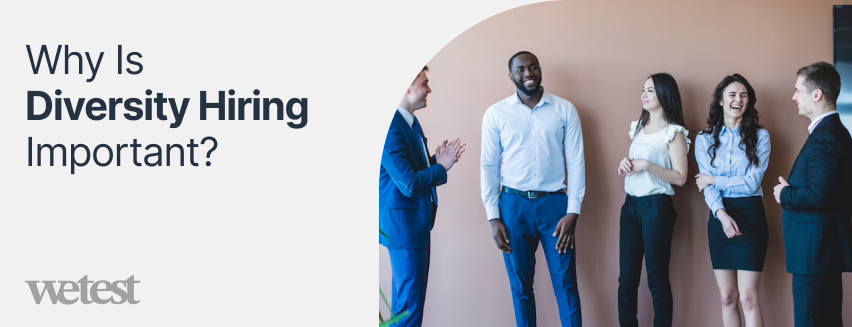
Diversity hiring is more than just giving candidates equal opportunities. Today, diversity and inclusion are central topics in most workplaces.
But it’s not just about creating the perfect male-to-female ratio; there are solid reasons for using a diverse hiring strategy when hiring, which we will examine below.
In my experience, the biggest shift comes when leaders stop seeing diversity hiring as a compliance box and start treating it as a way to build teams they would actually trust in a crisis. That mindset change is what keeps the strategy alive when the pressure or trends fade.
It Provides You With A Bigger Talent Pool
When companies use a diverse recruitment strategy to recruit their forces, they have more candidates and can hire the best and most skilled people among them.
It Brings You Brand Awareness
Hiring different people with the help of diverse recruitment makes you famous among job candidates and customers, which ultimately gives your brand a better name among other brands and is noticed.
Increase Creativity And Brings Innovation
Diverse hiring makes different people of different races, genders, nationalities, etc., work in your team, which increases creativity and improves innovation because each person has a different perspective, lifestyle, way of working, and culture.
Your Employees Will Better Understand Customer’s Needs
Another reason for the importance of diverse recruitment is that it makes different people with different cultures and styles better identify and understand your customers’ needs. In this way, you can be sure that your employees can satisfy your customers in any condition and need.
Increases Your Employees’ Happiness And Satisfaction
Diverse recruitment makes your employees with any background and conditions happy and satisfied to work alongside others in your company. This issue also increases productivity among employees.
Business Benefits Of Diversity Hiring
I’ve seen teams transform simply because one new hire felt safe enough to challenge an old habit. Diversity hiring isn’t about a perfect mix on a slide; it’s about creating the conditions where those different voices are heard and taken seriously.
- Access to more ideas and perspectives than a single‑profile team.
- Sharper decisions and more creative solutions by seeing risks and opportunities from multiple angles.
- Higher employee loyalty when people see colleagues who share similar backgrounds or experiences.
- Better retention and growth as employees feel recognized and supported.
- Lower long‑term hiring and training costs because people stay longer.
- Stronger teams that perform better together.
- A brand that feels fair, modern, and attractive to both candidates and customers.
Diversity Hiring In Real‑World Situations
Imagine a company that is always hiring from the same two universities. The CVs looked great, but projects kept stalling because everyone approached problems in the same way.
When they rewrote job ads, opened roles to new channels, and added a more diverse interview panel, they started meeting candidates with different life stories, skills, and perspectives.
Within a year, one of those hires led a product change that unlocked a new customer segment they hadn’t even considered before.
Or think of a small business in a mixed neighborhood that only had one type of employee. Customers from other backgrounds often felt misunderstood or ignored.
After the owner changed the job description language, trained managers on bias, and actively reached out to underrepresented candidates, the team became more reflective of the community.
Service improved, complaints dropped, and word‑of‑mouth started bringing in new clients who felt someone there finally “got” them.
Candidate Experience In Diversity Hiring
Diversity hiring is not only about who gets a job; it also shapes how candidates feel throughout the process. When people see inclusive language in job ads, a mix of interviewers, and clear criteria for decisions, they are more likely to trust the process, even if they do not get an offer.
On the other hand, if candidates hear biased questions, see no one like them on the panel, or receive vague rejections, they may feel the company only talks about diversity on paper. Those experiences travel quickly through personal networks and review sites, which can either strengthen or damage your reputation.
Pay attention to simple details, like explain why you are using certain assessments, share how decisions are made, and invite feedback after the process. A respectful, transparent experience shows candidates that diversity hiring is real, not just a slogan, and encourages them to apply again or recommend your company to others.
How To Apply Diversity Hiring In The Workplace

So far, we have learned about diversity hiring and its importance; this section will examine how you can have diverse employment in your company or work environment.
1- Set Clear Diversity Hiring Goals
One of the easiest ways to increase diversity and inclusion in your hiring process is to set measurable goals. Setting goals allows you to chart your progress over time and record areas that need more work.
Setting a diversity hiring goal does not necessarily mean aiming for a specific number of employees or a particular mix of diversity in leadership positions. However, such specific goals are easier to measure and clarify your hiring goals.
2- Build Diverse Interview Panels And Hiring Teams
Involving the diverse workforce already working in your company is a great way to demonstrate your commitment to diversity when hiring. When deciding who to interview with applicants, ensure your interview panel includes a dynamic cross-section of your employees.
You can also use our professional network of existing employees to find a diverse pool of candidates.
3- Train Managers And Recruiters To Reduce Bias
When everyone in your organization understands what behaviors support diversity and inclusion efforts, your chances of attracting and retaining a diverse workforce increase. Both managers and employees can benefit from training to recognize unconscious bias and prevent discrimination in the workplace.
Interviewer training helps recruiters, and others understand how to prevent discrimination during hiring. Regular manager training also increases your knowledge of the latest hiring trends, such as the expansion of no-box and pay raise laws.
4- Use Multiple Candidate Sources And Channels
One of the ways to help you implement a diverse hiring strategy in your workplace is to use more than one source to find skilled candidates.
Use different channels where people share their resumes so you can access a wider talent pool and more skilled candidates.
5- Write Inclusive, Gender‑Neutral Job Descriptions
The way job descriptions are written can inadvertently deter different candidates from applying. For example, “strong” and “competitive” discourage female candidates from using. This is because these words are perceived as peculiar to men. Conversely, terms such as “sensitive” discourage male candidates from submitting applications.
Make job descriptions gender-neutral to ensure that a diverse pool of hard-working, talented applicants is recruited.
6- Apply Diversity Principles At Every Hiring Stage
One of the ways that will help you implement diverse hiring in the workplace is to use diversity in all hiring stages, such as job advertisements, reviewing resumes, face-to-face interviews, etc., so that you can hire diverse people and take advantage of such a strategy.
7- Standardize And Review Interview Questions
Check the interview questions so they don’t ask about race, place of birth, sexual orientation, etc., so they feel comfortable during the interview.
It may be helpful to have a series of questions to ask each candidate, screened to eliminate coded language and other potential unconscious biases and triggers.
8- Create A Safe, Respectful Workplace For Everyone
When you use a diverse recruitment strategy to hire your employees, you must provide a safe environment for them.
That is, the work environment should be such that behaviors such as sexual or racial behaviors do not take place.
In order to make these things a law so that all people comply with them, you can impose fines for such behaviors, train employees how not to behave like this, or even encourage them in different ways so that they know that they should be aware of the differences and respect each other.
9- Reach Out To Overlooked But Qualified Candidates
Sometimes people may send you resumes with good resumes and skills but need more confidence or have been rejected by other companies.
If you encounter such cases, try to contact these people and invite them for an interview, taking care to do this without pitying them.
In fact, by doing this, you are allowing them the same chance as others for an interview or even getting a job.
10- Actively Include Underrepresented Candidates In Your Talent Pool
There are people who, besides a great resume, have good skills and qualifications but may have different physical conditions. As a result, they may not be able to send resumes to any company, or even some companies will not cooperate with them.
If you want a diverse work environment where everyone has an equal position, don’t forget these candidates; reach out to them and tell them that you want to work with them and have the necessary conditions for them to work in your company.
By following the above, you can apply a diverse recruitment strategy in your work environment and make sure that you hire people with the skills and experience necessary to work in your organization who will feel better because you ignored their differences and have better performance.
How To Track Your Diversity Hiring Progress
Diversity hiring only works if you can see whether your efforts are changing anything. Instead of guessing, use a few simple numbers to track progress over time.
Start with the hiring funnel. Look at who is applying, who is invited to interviews, and who is getting offers and joining the company. If the diversity drops sharply at any stage, that is a sign something in your process is filtering people out.
Then check what happens after hire. Monitor retention, promotions, and internal moves for different groups to see whether people feel they can grow. If one group leaves faster or is rarely promoted, you may have inclusion problems, not just recruiting gaps.
Finally, set clear goals and review them regularly. For example, you can decide to increase the diversity of interview panels or shortlists within a year and compare your data every quarter. The aim is not to chase perfect numbers but to make steady, visible progress.
Personally, I don’t believe any single metric can tell you if your diversity hiring is “right.” The most honest signals are in how people talk about their experience, who stays, and whether someone from a different background can see a future for themselves in your company.
Legal And Ethical Considerations In Diversity Hiring
Diversity hiring has to stay fair and lawful. The aim is to remove unfair barriers and give every qualified person a real chance, not to choose or reject someone because of their race, gender, age, disability, religion, or other personal traits.
When you change your hiring process, keep job requirements tied to the actual work and apply them the same way to everyone. Avoid questions about private topics like health, family plans, or personal beliefs unless they are truly needed and handled according to local rules.
Honesty matters too. If you say you care about diversity, your process should show it: clear criteria, respectful messages, and similar treatment for all candidates. This protects people, reduces risk for your company, and builds trust with employees who want to know that opportunities are genuinely open to them.
Common Misconceptions About Diversity Hiring
Many people still have doubts about diversity hiring, and a few common misconceptions keep coming up again and again:
- Diversity hiring is just about quotas or ratios.
- Diversity hiring means we have to lower our standards.
- Diversity hiring is only relevant for large corporations.
The real goal is to widen access so more qualified people are seen and evaluated fairly. A strong diversity hiring strategy keeps performance expectations the same while reducing bias in ads, sourcing, and interviews.
In small teams, each hire has a bigger impact, so one biased decision can shape the entire culture. Adding even one different perspective in a five‑person company can change how the whole business listens, reacts, and grows.
Conclusion
Diversity hiring is not a side project or a trend. It is a different way of making decisions about applicants. When you open your process to candidates from varied backgrounds and reduce bias at each stage, you give your company a better chance to find real talent and build teams that can handle complex, changing markets.
You do not have to fix everything at once. Start small: rewrite one job ad in more inclusive language, add one more diverse person to an interview panel, or standardize one set of interview questions. Watch what changes, then extend those steps to more roles.
As you track who applies, who gets interviewed, and who joins and grows in your company, you will see patterns that tell you where to improve. Over time, those small, consistent adjustments will turn diversity hiring from an idea into a normal part of how you recruit, manage, and grow your business.
FAQs
What Is The Difference Between Diversity Hiring And Inclusive Hiring?
Diversity hiring focuses on bringing people from different backgrounds into your workforce, while inclusive hiring ensures those people are treated fairly and can succeed once they join.
Does Diversity Hiring Mean Lowering Standards For Candidates?
No. Diversity hiring keeps the same job requirements and performance standards; it removes bias so more qualified people are considered for the role.
How Can Small Businesses Start Diversity Hiring With Limited Resources?
Small businesses can start by rewriting job ads, using more diverse job boards, standardizing interview questions, and tracking who applies and gets hired to spot bias.
What Are The Biggest Mistakes Companies Make With Diversity Hiring?
Common mistakes include treating diversity as a numbers goal, not involving leaders, ignoring inclusion after hire, and failing to measure the impact of changes.
How Can We Measure Whether Our Diversity Hiring Efforts Are Working?
You can track the diversity of applicant pools, interview slates, new hires, promotions, and retention, and compare those numbers against clear workforce goals.
Hire the best candidates
with Wetest.
Create pre-employment assessments in minutes to screen candidates, save time, and hire the best talent.
Try for free