Best Employee Engagement Platforms in 2026 (Top Tools Compared)
Employee relations
Bonica
March 17, 2026
Employee engagement is one of those topics that sounds simple, but quickly becomes complex once you’re responsible for it. Most organizations know it matters, yet many still struggle to understand what employees think and feel on a day-to-day basis.
This is where employee engagement platforms come into play, and they matter more than ever in 2026. They give companies a structured way to collect feedback, spot patterns, and turn employee input into something useful, instead of letting it get lost in spreadsheets or one-off surveys.
In this article, we compare the best employee engagement platforms for 2026. The goal is not to crown a single “winner,” but to look at the strengths, limitations, and practical use cases of the most popular tools available today, so you can decide what makes sense for your organization.
Table of Contents
What Is an Employee Engagement Platform?
An employee engagement platform is a human resources tool designed to help organizations collect, organize, and monitor feedback from their employees.
For many companies and businesses, especially those who value their employees, it’s an extremely helpful way to stay connected to their workforce.
In most cases, these platforms are managed by the HR team and offered through a subscription model, often referred to as “Software as a Service.”
But what is the main reason companies should use such tools? The core goal of an employee engagement platform is to strengthen employee engagement and increase overall satisfaction.
By gathering feedback in a clear and structured format, the platform gives HR and leadership an accessible, real-time view of how employees are feeling.
This makes employee engagement platforms a powerful resource for organizations that want to build stronger relationships with their people and respond more effectively to their needs.
Why Using an Employee Engagement Software Platform Matters More Than Ever?
An employee engagement software platform can be a great help to the HR department, management, and employees of an organization.
It assists in making the input of employees more visible and actionable, rather than allowing feedback to remain scattered and unused. When employee engagement is improved, it usually translates into commitment, focus, and productivity.
An employee engagement software platform also assists in finding out where the organization needs to improve and grow. By analyzing the feedback of employees over time, organizations can identify trends, detect problems early, and understand what impacts employee engagement at work.
Platforms are most valuable when they go beyond surface-level data, and creating effective employee commitment surveys helps organizations understand not just how employees feel, but why those feelings exist.
Based on the platform, it also helps in making decisions about new initiatives and organizational changes. Information from software platforms such as employee engagement surveys helps to prioritize actions that have the potential to create maximum impact, rather than acting on assumptions or intuition.
What Is Changing in Employee Engagement in 2026?
Employee engagement is changing fast, as various factors and trends affect it, and so are the expectations around engagement platforms. Across the market, a few clear shifts are influencing how organizations assess tools and decide what they need.
Engagement Tools are Blending into Daily Work
Standalone platforms that require separate logins are losing traction. Instead, engagement is happening through:
- More integration into Microsoft Teams, Slack, and Workday.
- Real-time feedback and recognition.
- Manager actions embedded directly into existing workflows.
Engagement tools that are a natural extension of how people work are seeing greater adoption.
AI Is Moving Beyond Automation
By 2026, AI won’t just be about running surveys or neatly packaging feedback into dashboards. It’s starting to do something more meaningful:
- Spot patterns in how people actually behave.
- Read signals from collaboration and performance.
- Flag early insights that help leaders act before problems grow.
Not every vendor is there yet—but the trajectory is obvious. AI-driven insight is quickly shifting from a “nice to have” differentiator to the baseline leaders now expect.
Equity and Frontline Access are Now Critical
Buyers in 2026 are paying closer attention to whether platforms work equally well for everyone. This includes:
- Mobile-first, multi-language experiences.
- Localized rewards and recognition.
- Global compliance support.
- Accessibility for frontline, shift-based, and distributed teams.
Engagement software is no longer judged only by how it serves office employees, but by how inclusive it is across roles and regions.
Skills-based Organizations Need Stronger Signals
As organizations rethink how work gets done, many are moving away from rigid job titles and toward skills-based models. But the data they rely on hasn’t kept up. Traditional engagement surveys and static skill profiles don’t show how people actually build skills or collaborate in real work.
To close that gap, vendors are beginning to experiment with:
- Passive signals drawn from real work.
- Behavioral and collaboration data.
- Continuous feedback loops over time.
The goal isn’t more data for its own sake. It’s a clearer, more accurate picture of skills, performance, and internal mobility as they develop in the flow of work.
Reporting is Becoming More Practical and Less Complex
Shiny dashboards alone don’t impress organizations anymore—especially when they’re difficult to use. By 2026, buyers expect employee engagement platforms to deliver more than surface-level sophistication.
- Clear, readable reports.
- Actionable insights instead of raw data.
- Easy sharing with managers and leadership.
The focus is shifting from “more data” to better clarity, helping teams understand what’s happening without needing advanced analytics skills.
Culture Is Being Observed in Real Time
Organizations are moving away from managing culture only through annual surveys. Instead, they want systems that offer:
- Visibility into values in action.
- Early signs of burnout or disengagement.
- Indicators of strong team dynamics.
- Ongoing culture trends as work happens.
Buyers are looking for platforms that reflect real behavior and everyday interactions, not just summarized survey results.
Flexibility and Scalability Influence Buying Decisions
As organizations change size, structure, or ways of working, engagement tools need to adapt with them. Many buyers now evaluate platforms based on:
- How easily they scale across teams and regions.
- Whether features can be added or removed over time.
- How well the platform supports both small teams and larger organizations.
Employee engagement software is increasingly expected to grow alongside the organization, rather than forcing teams into a fixed setup.
Best 21 Employee Engagement Platforms in 2026 with Comparison Table
Here is a completely updated list of your best choices of the top 21 employee engagement platforms in 2026.
First, check out the following side-by-side comparison table for a quick review, and then continue reading for more information, as we’ve analyzed each tool in detail so you can decide which one is the best for your company.
| Platform | Standout Features | Best For | Pricing | Scalability |
| Culture Amp | Deep analytics, action planning, and pulse & 360 feedback. | Mid-large enterprises focused on data-driven engagement. | Custom/quote | Enterprise-ready |
| Lattice | Engagement + OKRs + feedback workflows. | HR and leadership teams. | Starts ~$8-11/user/mo | SMB → Enterprise |
| 15Five | Performance & engagement check-ins, manager coaching. | People-centric performance. | Starts ~$4-10/user/mo | SMB → Enterprise |
| Bonusly | Peer recognition and rewards. | Recognition-focused teams. | ~$3-5/user/mo | Small → Mid |
| Workvivo | Engagement feed and internal communications. | Hybrid and remote teams. | Custom pricing | Mid → Large |
| Empulse | Surveys, rewards, gamification, and analytics. | All-in-one engagement suit. | Tiered (contact sales) | SMB → Large |
| Officevibe | Pulse surveys, team reports, and anonymous feedback. | Small-mid remote teams. | ~$5/user/mo | Small → Mid |
| TINYpulse | Quick pulse checks and sentiment dashboards. | Simple feedback focus. | Custom/quote | SMB → Mid |
| WorkTango | Predictive analytics + recognition. | Large enterprise engagement. | Custom pricing | Enterprise |
| Qualtrics EmployeeXM | AL analytics and enterprise feedback. | Deep experience insights. | From ~$1,500/yr+ | Enterprise |
| Vantage Circle | Rewards, wellness, perks, analytics. | Engagement and well-being. | Custom pricing | SMB → Large |
| Achievers | Global rewards and recognition. | Global recognition programs. | Custom pricing. | Enterprise |
| SurveySparrow | NPS and conversational surveys. | Feedback-center engagement. | Varies by plan. | SMB |
| Microsoft Viva Glint | M365 integration and action planning. | Microsoft ecosystem orgs. | Custom. | Enterprise |
| Workday Peakon Employee Voice | Continuous listening and HRIS. | Very large enterprises. | Enterprise pricing. | Enterprise |
| SAP SuccessFactors Employee Sentral | HR suite with engagement tools. | End-to-end HR and engagement. | Enterprise pricing. | Enterprise |
| UKG Pro | HR management and workforce engagement. | Frontline and deskless teams. | Custom. | Enterprise |
| Connecteam | Mobile-first engagement + frontline app. | Deskless and mobile teams. | ~$3.20/user/mo | SMB → Mid |
| Mo (Recognition App) | Lightweight recognition and rewards. | Budget-friendly engagement. | Custom/low cost. | Small |
| Thrive Sparrow | Modern surveys and recognition. | Cost-effective engagement. | ~$2-5/user/mo | Small → Mid |
| Nailted | Advanced analytics and engagement practices. | Culture-first teams. | Custom. | Mid |
| Appauz | Recognition and rewards marketplace. | Motivation and celebration. | Custom. | SMB |
Now, let’s review each tool in more detail:
Culture Amp
Culture Amp comes up a lot when teams talk about employee engagement tools. It’s generally known for being more research-heavy than many of the alternatives.
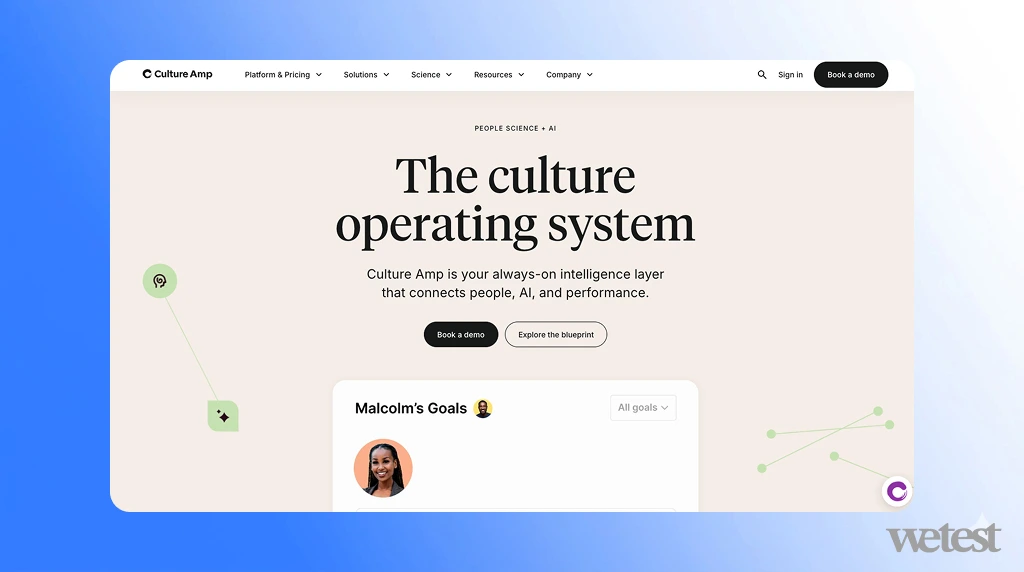
In 2026, it’s mostly used by organizations that want more than a quick survey or a high-level score. The platform is built to help teams understand what’s changing in engagement and dig into the reasons behind it, not just report on results.
What Culture Amp does well is connect employee feedback with benchmarks and follow-up actions. That makes it easier for HR teams to decide what to focus on next, instead of staring at charts and trying to interpret them.
Pros
- Surveys based on established research and benchmarks.
- Useful insight into engagement and retention patterns.
- Practical guidance for managers on what to do next.
Cons
- Can feel like too much for smaller teams.
- Not a great fit if you’re looking for something very lightweight or quick to set up.
Lattice
Lattice doesn’t treat engagement as a separate thing. It’s more folded into everything else around people management.
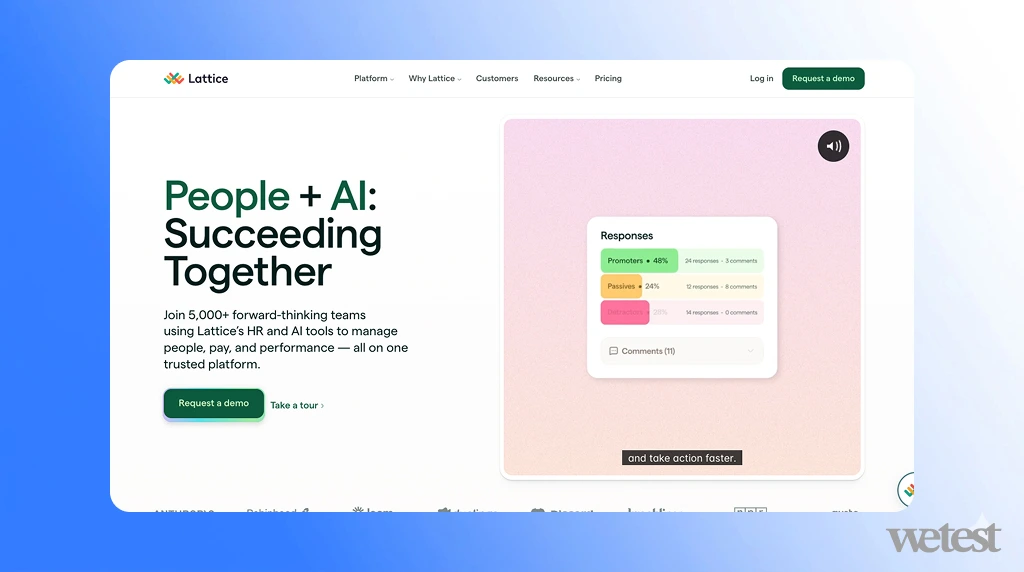
A lot of teams use it because engagement data shows up right next to performance reviews, goals, and career conversations. So it’s not just survey results sitting somewhere else.
The practical upside is that managers don’t have to jump between tools. They see engagement signals in the same place they’re already doing one-on-ones, feedback, and goal tracking, which makes it easier to respond in the moment.
Pros
- Strong connection between engagement, performance, and OKRs.
- High manager adoption due to intuitive design.
- Engagement insights tied to real employee outcomes.
Cons
- Engagement features may feel secondary for survey-first needs.
- Pricing increases as additional modules are added.
15Five
15Five is built around regular communication between managers and employees. The idea is that engagement improves when those conversations often happen, not just during an annual survey.
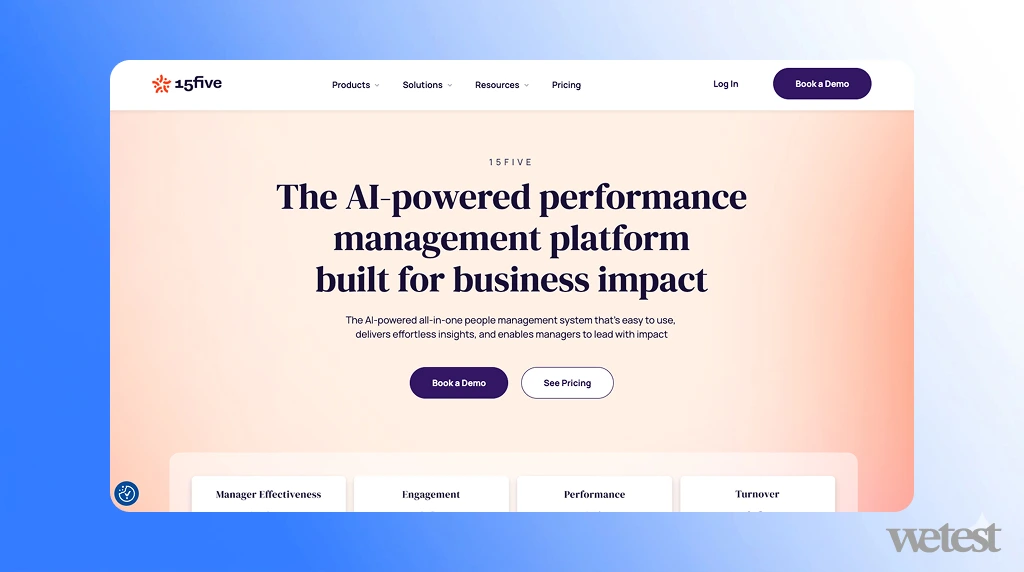
Instead of relying on one-off engagement surveys, the platform leans heavily on weekly check-ins, ongoing feedback, and structured one-on-ones. That’s the core of how it works.
In 2026, this tends to work best for organizations that are putting real effort into manager quality and leadership development. Engagement and retention are treated as outcomes of better management, not separate initiatives.
Pros
- Works well for continuous feedback and regular check-ins.
- Strong emphasis on manager effectiveness.
- Engagement feels tied into everyday work, not a separate process.
Cons
- Requires consistent manager participation.
- Less suitable for companies seeking deep analytics only.
Bonusly
Bonusly is one of those tools that keeps things simple. At its core, it’s all about recognition and making sure people feel seen at work. Employees can give each other quick shoutouts in real time, which helps reinforce positive habits and keeps company values top of mind, without making it a big deal.
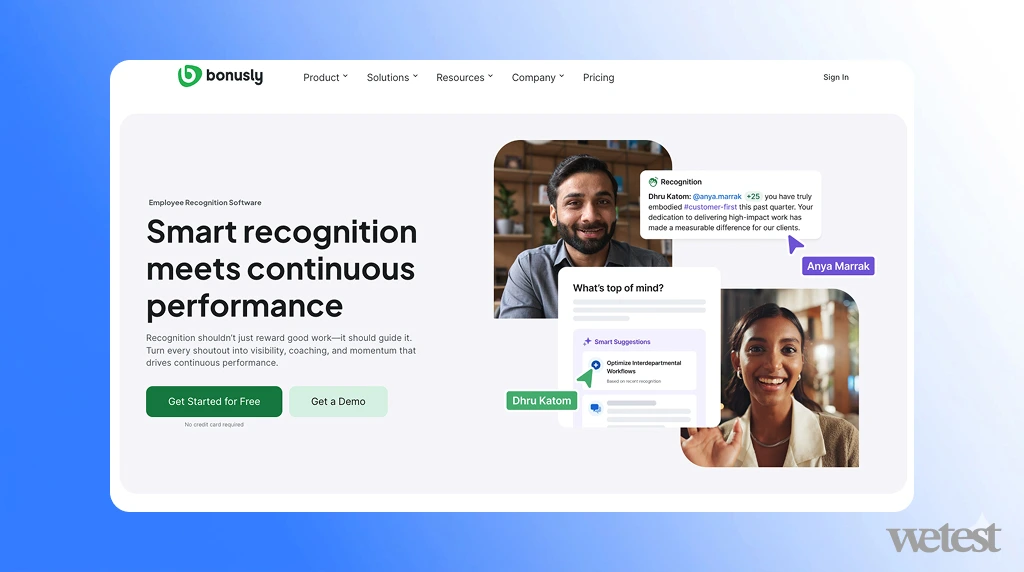
Because Bonusly lives inside tools teams already use every day, like Slack or Microsoft Teams, recognition happens naturally. It doesn’t feel like another HR process or something people are being pushed to do.
For HR teams and business owners, Bonusly is an easy way to encourage peer-to-peer appreciation and build stronger connections across the team. Over time, those small moments of recognition can add up and help create a healthier, more motivated work environment.
Pros
- Makes everyday recognition feel normal and easy.
- Works smoothly with Slack and Microsoft Teams.
- Teams usually pick it up fast.
Cons
- Reporting and analytics aren’t very deep.
- On its own, it doesn’t replace a full engagement platform.
Workvivo
Workvivo acts as a social layer for internal communication and engagement. Instead of traditional surveys, it emphasizes storytelling, community updates, and shared wins that help employees feel connected to the organization.
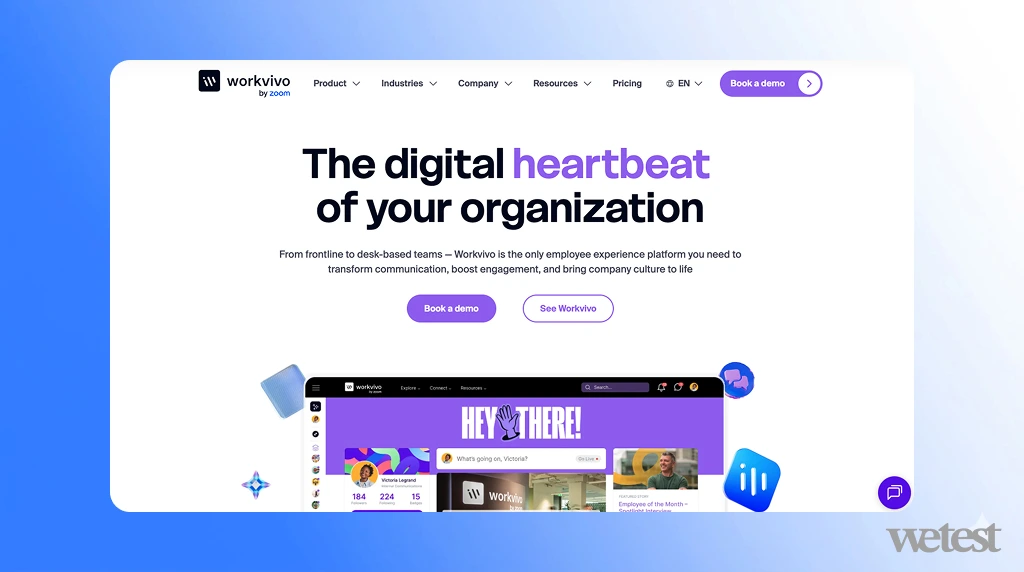
This makes Workvivo effective for remote and hybrid teams in 2026.
Pros
- Strong sense of community and belonging.
- High engagement through social-style interaction.
- Effective for distributed teams.
Cons
- Less focused on deep engagement measurement
- Can feel heavy for small organizations
Empuls
Empuls offers a broad engagement ecosystem that combines feedback, rewards, recognition, and wellness initiatives in one platform. Its all-in-one nature appeals to companies that want flexibility without managing multiple vendors.
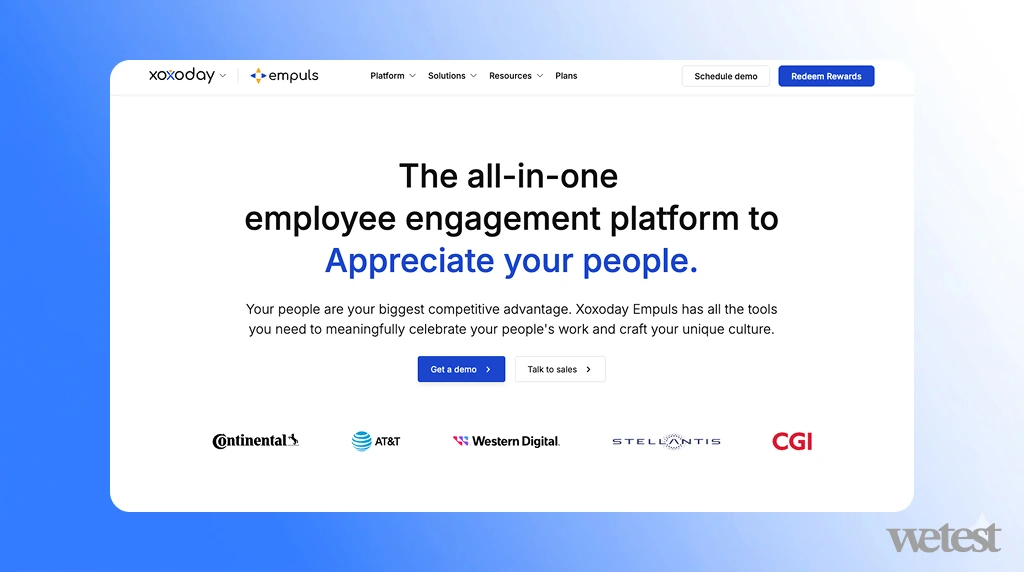
Gamification features also help maintain participation over time.
Pros
- Covers multiple engagement use cases.
- Gamification boosts employee participation.
- Flexible modular setup.
Cons
- Interfaces may feel busy initially.
- Requires thoughtful configuration.
Officevibe
Officevibe is designed to keep engagement simple and consistent. Its weekly pulse surveys help teams regularly check sentiment without overwhelming employees, while manager guidance helps close the feedback loop quickly.
Pros
- Easy to set up and use.
- Frequent pulse surveys with actionable insights.
- Encourages honest, anonymous feedback.
Cons
- Limited customization for advanced needs.
- Not ideal for large enterprises.
TINYpulse
TINYpulse focuses on short, low-effort feedback cycles that reduce survey fatigue. Its simplicity makes it especially appealing for smaller teams or companies new to engagement measurement.
Pros
- High response rates.
- Very easy to use.
- Effective for continuous listening.
Cons
- Basic analytics.
- Fewer enterprise-level features.
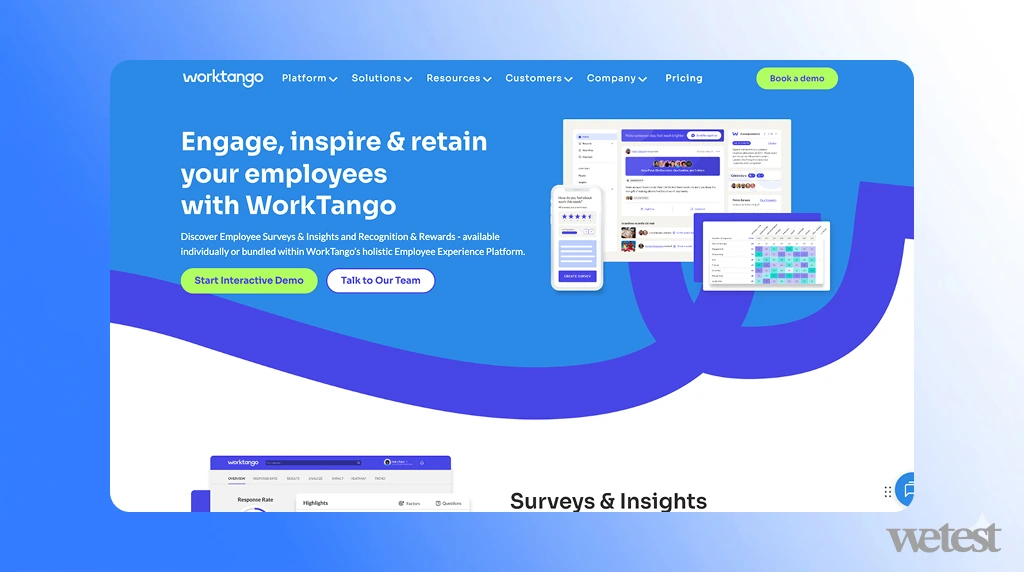
WorkTango
WorkTango blends engagement analytics with recognition, helping organizations understand not just engagement levels but the behaviors driving them. It’s designed for companies managing complex cultures across teams and regions.
Pros
- Strong mix of analytics and recognition.
- Suitable for global organizations.
- Actionable leadership insights.
Cons
- Enterprise pricing.
- Longer implementation time.
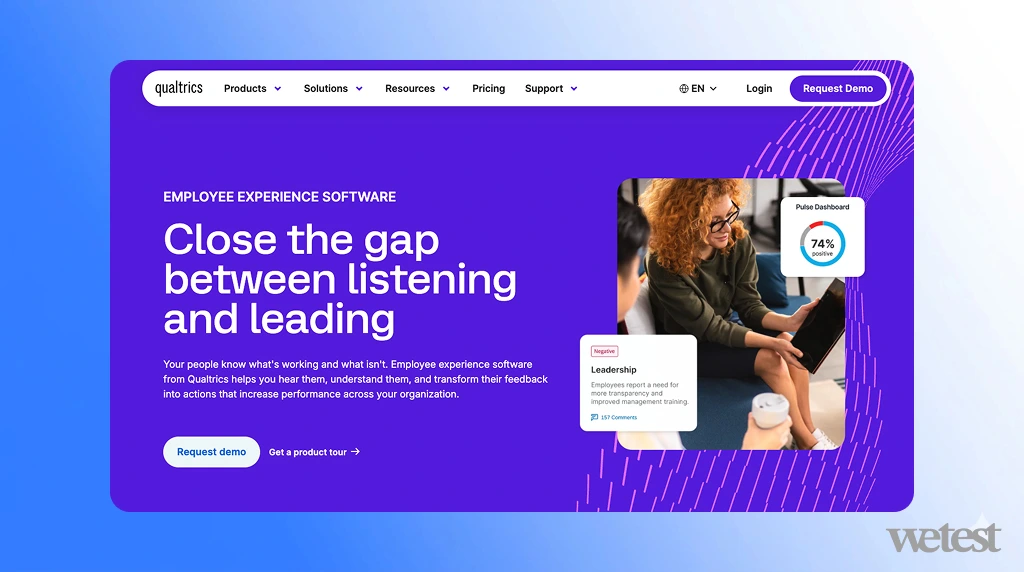
Qualtrics EmployeeXM
Qualtrics EmployeeXM operates at the enterprise level, connecting engagement data with the entire employee lifecycle. Its advanced analytics and predictive modeling help organizations act before engagement issues escalate.
Pros
- Advanced AI-driven insights.
- Highly customizable surveys.
- Predictive engagement analytics.
Cons
- Steep learning curve.
- Overkill for small teams.
Vantage Circle
Vantage Circle ties engagement to tangible rewards, perks, and wellbeing initiatives. Employees don’t just give feedback, they see real benefits tied to engagement programs.
Pros
- Strong rewards and perks ecosystem.
- Engagement linked to wellbeing.
- Global reach.
Cons
- Limited deep analytics.
- Less survey-centric.
Achievers
Achievers specializes in recognition at scale, making it particularly strong for global organizations. Recognition is visible, consistent, and aligned with company values.
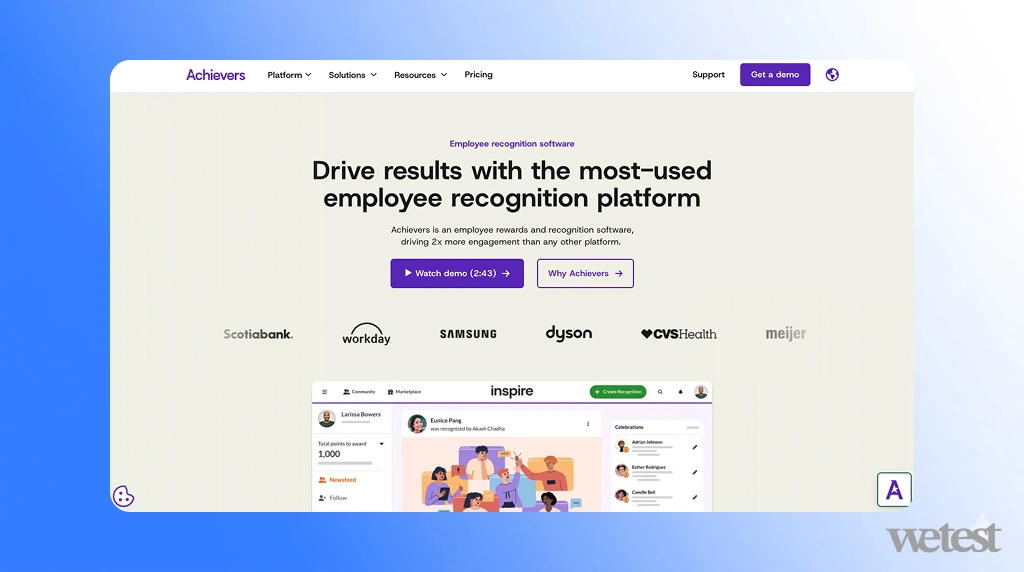
One thing about Achievers is that they claim to help organizations see up to 5x the results in engagement, retention, and productivity in the shortest time possible.
Pros
- Excellent global recognition capabilities.
- Strong culture alignment.
- Scales well internationally.
Cons
- Recognition-focused.
- Limited engagement analytics.
SurveySparrow
SurveySparrow is known for its conversational survey format, which feels more natural than traditional forms.
This design often results in higher response rates, especially across remote teams. They offer a 14-day free trial and you can cancel your subscription at any time.
Pros
- Conversational survey experience.
Strong multilingual support. - Flexible survey logic.
Cons
- Requires configuration for engagement use.
- Not a full engagement suite.
Microsoft Viva Glint
Viva Glint integrates engagement insights directly into the Microsoft ecosystem, reducing friction and increasing adoption for organizations already using Microsoft 365.
Some of its popular features include: Technical deep dive, holistic insights, and team conversations; all every organization in each size needs to better manage their workforce.
Pros
- Seamless Microsoft integration.
- Research-backed surveys.
- Strong manager guidance.
Cons
- Limited outside Microsoft environments.
- Less flexible than standalone tools.
Workday Peakon Employee Voice
Peakon emphasizes continuous listening and predictive engagement insights, making it ideal for large enterprises navigating frequent change.
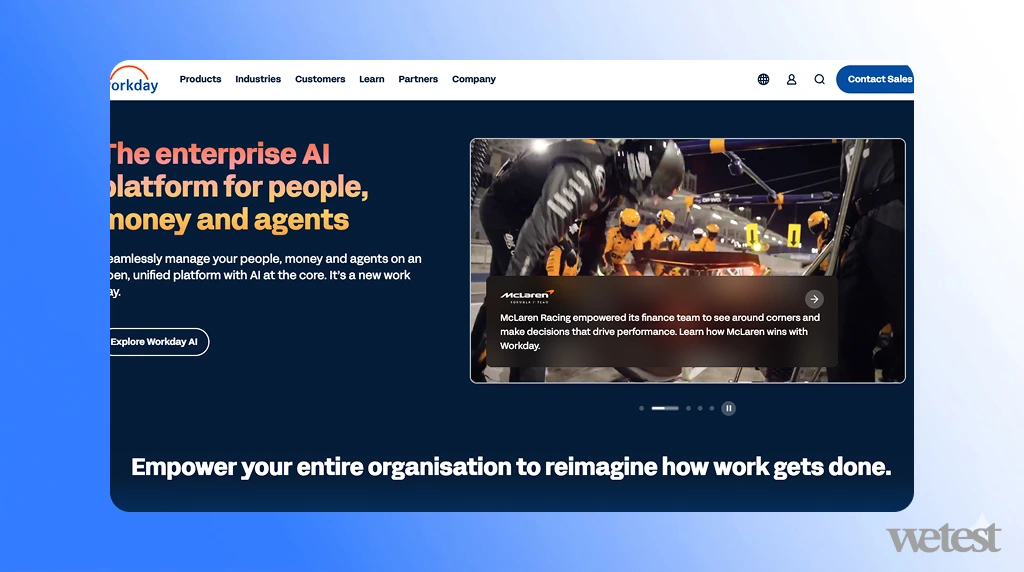
According to their website, their tool allows you to better understand your employees’ needs while boosting engagement.
Intelligent tech, personalized dashboards, and advanced analytics are some of the helpful features of this tool.
Pros
- Continuous engagement tracking.
- Predictive analytics.
- Strong scientific methodology.
Cons
- Enterprise complexity.
- Best suited for Workday users.
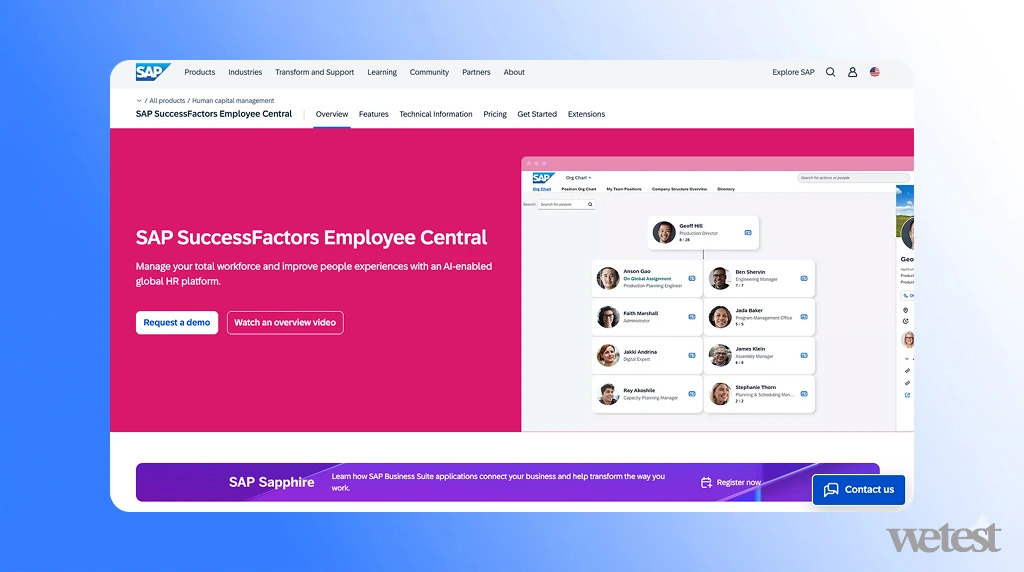
SAP SuccessFactors Employee Central
SAP SuccessFactors integrates engagement within a broader HCM ecosystem. It’s most effective for organizations already using SAP for core HR operations.
Pros
- Deep integration with SAP HCM.
- Centralized people data.
- Enterprise scalability.
Cons
- Engagement features are less flexible.
- Heavy system for engagement-only needs.
UKG Pro
UKG Pro combines workforce management and HR with engagement and listening tools. In 2026, it’s especially relevant for organizations balancing operational efficiency with employee experience.
Some of its notable features include talent management, scheduling, payroll, human resources, and employee engagement. UKG Pro is suitable for businesses in different sizes; including small, midsize, and enteprise.
Pros
- Strong workforce management integration.
- Good fit for hourly and hybrid workforces.
- Centralized employee data.
Cons
- Engagement features are not standalone.
- Limited customization compared to niche tools.
Connecteam
Connecteam is designed for frontline and deskless workers, offering a mobile-first engagement experience that includes communication, feedback, and recognition.
They claim to be the world’s number 1 employee engagement software! And based on user’s reviews, it can be approved that they offer a complete tool that helps businesses meet their needs.
As the platform’s name suggests, it gives HR teams and managers all the tools they need to stay connected with their employees, which simplifies everyday work.
Pros
- Excellent for deskless teams.
- Mobile-first design.
- High adoption rates.
Cons
- Limited advanced analytics.
- Less relevant for office-based teams.
Mo
Are you a busy manager looking for new ways to keep your team members motivated and encouraged? Mo is the employee engagement tool that meets all your needs; in less than 6 months!
Mo focuses on lightweight, human-centered recognition. It’s ideal for teams that want to encourage appreciation without heavy processes or reporting.
One of the best features this platform offers is that it automates milestones and special moments. How? It helps you to celebrate any happy moment, such as your employees’ birthdays or work anniversaries.
Pros
- Simple and human recognition experience.
- Quick to roll out.
- Encourages frequent appreciation.
Cons
- Minimal analytics.
- Not designed for strategic engagement.
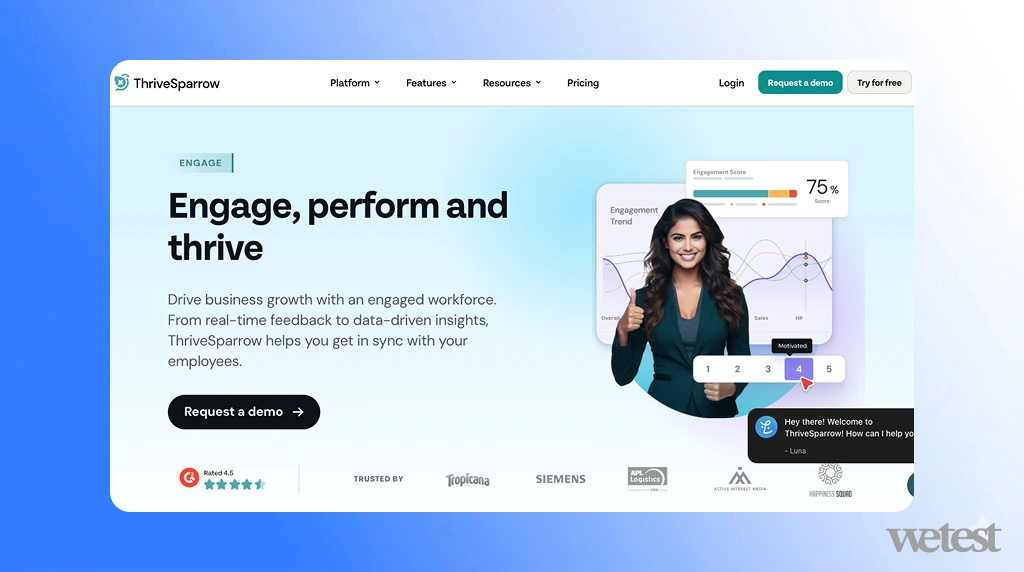
ThriveSparrow
ThriveSparrow combines engagement surveys with recognition and performance insights. It’s designed for modern, fast-growing organizations looking for actionable feedback.
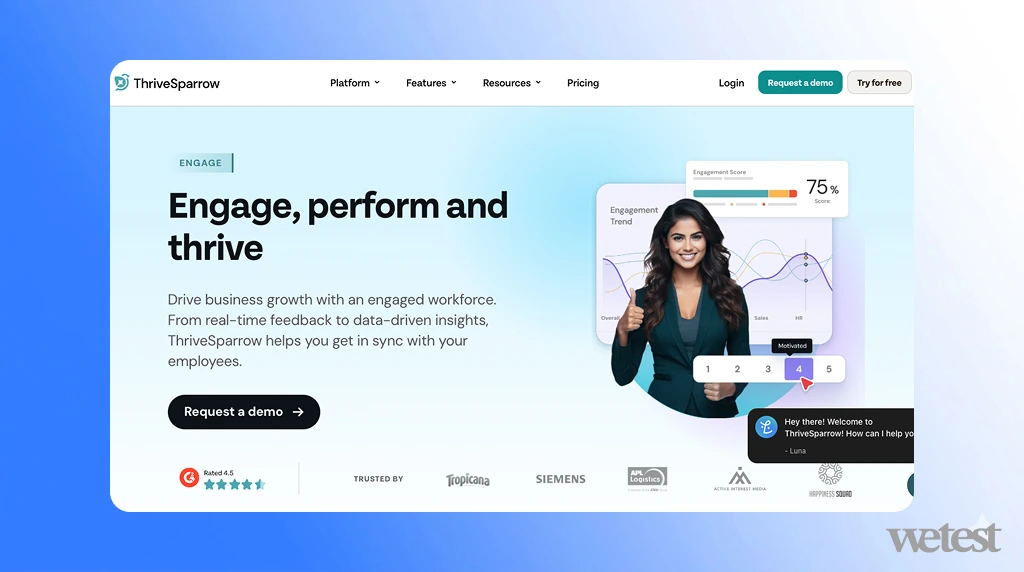
If you want to effectively grow your business, you need an engaged workforce, and that’s what ThriveSparrow helps you with, as it offers useful features, such as action plans, QR code share, pulse surveys, AI sentiment analysis, and multilingual surveys.
Pros
- Clean, modern user experience.
- Combines feedback and recognition.
- Actionable engagement insights.
Cons
- Smaller ecosystem.
- Less suitable for large enterprises.
Nailted
Nailted can be named as one of the most powerful employee engagement platforms that works based on AI. It is fully customizable and automated to create a feedback culture, boost employee engagement, and keep employee satisfaction as high as possible.
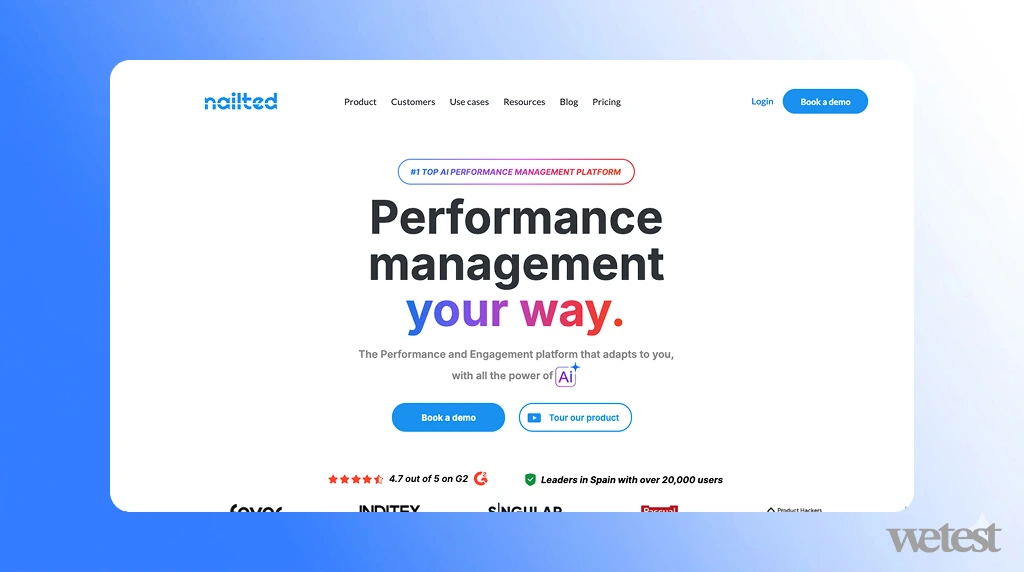
This tool focuses on continuous feedback and employee sentiment tracking, especially for tech-forward teams. It emphasizes simplicity and real-time insights.
Pros
- Simple and intuitive feedback loops.
- Good for continuous listening.
- Strong for distributed teams.
Cons
- Limited advanced analytics.
- Smaller feature set.
Applauz
Applauz centers around recognition, rewards, and engagement programs that encourage participation and morale. It’s often used by organizations looking to boost motivation through incentives.
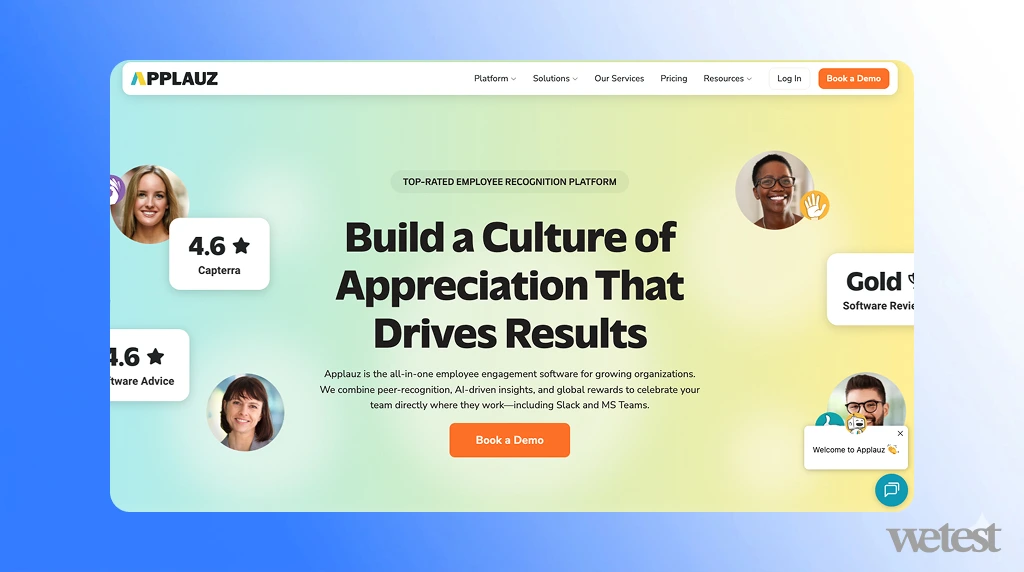
The platform offers valuable features to help companies keep their employees satisfied and create an engaged workplace. Some of these features include full program onboarding support, celebrating work anniversaries, personalized program strategy and consultation, and service awards.
Pros
- Strong recognition and rewards focus.
- Easy employee participation.
- Good for morale-building initiatives.
Cons
- Limited survey depth.
- Less strategic engagement analytics.
Who Are Employee Engagement Platforms Best For?
Employee engagement platforms aren’t one-size-fits-all, they shine when they meet the right audience. In 2026, these tools are particularly valuable for organizations that want to understand, motivate, and retain their employees more effectively.
These platforms are best for:
- Mid-sized to large organizations: Companies with growing teams often struggle to stay connected. Engagement platforms help track morale, gather feedback, and maintain a positive culture across departments and locations.
- Remote and hybrid teams: Distributed workforces benefit from real-time feedback, recognition, and social engagement tools that keep everyone aligned and connected.
- HR and people operations teams: Engagement platforms give HR professionals actionable insights, saving time on manual surveys and helping design targeted initiatives for retention and culture.
- Managers and team leaders: These tools make it easy to understand team sentiment, identify areas for improvement, and take proactive steps to boost engagement.
- Organizations focused on culture and retention: If keeping employees motivated, aligned, and appreciated is a priority, these platforms help turn data into action and measure results over time.
Employee engagement platforms are best for any organization that wants to actively listen to its workforce, respond meaningfully, and build a culture where employees feel seen, heard, and motivated.
Choosing the right platform also depends on how workforce dynamics influence engagement and performance, especially in organizations with a mix of remote, frontline, and knowledge-based roles.
How Much Does an Employee Engagement Software Cost in 2026?
There is no single answer to how much employee engagement software costs. Pricing varies a lot between vendors, and most platforms do not publish fixed prices.
In practice, most employee engagement platforms fall into a few common pricing structures.
Per-user, per-month pricing
This is one of the most widely used pricing models. The organization pays a fixed monthly fee for each employee included in the platform.
The downside is that usage is not always taken into account. Companies pay the same amount whether employees actively participate or barely log in.
In this setup, pricing is tied to headcount, not outcomes, and the vendor’s revenue does not change based on adoption or engagement levels.
Shared-success pricing
Some platforms price their software based on actual participation. Instead of charging for access alone, costs are connected to real activity inside the platform.
Workhuman is a common example. Their pricing is triggered when rewards are redeemed, which means organizations only pay when employees actively engage.
As engagement increases, costs scale naturally. This model also aligns the vendor’s success with the customer’s success, since adoption and participation directly affect revenue. Workhuman is currently the only provider that backs this approach with an ROI guarantee.
Flat-rate pricing
With flat-rate pricing, the company pays one fixed fee for the platform, usually within a defined employee range.
This model can make sense for smaller organizations or teams with stable headcounts. It is less flexible for companies that grow quickly, add locations, or need additional functionality later on.
Tiered pricing
Tiered pricing offers multiple packages with different feature sets and support levels. Organizations select a plan based on their current needs.
This structure works well for companies building their engagement programs over time. However, it can become costly if essential features sit in higher tiers or if upgrades are needed sooner than expected.
Other costs that often come up
Beyond the base price, some employee engagement software includes additional costs, such as:
- onboarding or implementation fees,
- integrations with HR systems or collaboration tools,
- advanced analytics or AI features,
- consulting or ongoing support.
These items are not always obvious at the start but can affect the total cost over time.
How to Choose the Right Employee Engagement Tool
Choosing the right employee engagement tool can feel overwhelming, especially with so many platforms promising to boost culture, productivity, and retention. The key is to focus on what will actually work for your organization, rather than chasing every feature or trend.
Define Your Goals
Start by clarifying what you want to achieve. Are you aiming to understand employee sentiment better, enhance recognition programs, or track team collaboration over time?
Knowing your priorities helps you focus on features that truly matter and avoid tools you won’t fully use.
Integration with Existing Systems
A tool works best when it fits seamlessly into the way your teams already operate. Platforms that integrate with HR systems, Slack, Microsoft Teams, or performance management tools reduce friction and make adoption easier.
Employees and managers are far more likely to engage when the platform feels like part of their daily workflow.
Reporting and Analytics
Clear, actionable insights matter more than fancy dashboards. Look for platforms that highlight trends over time, spot engagement gaps, and provide early signals of potential issues. Your goal is to help managers make informed decisions quickly, without needing advanced data skills.
Scalability and Flexibility
Organizations grow and evolve, and your engagement tool should do the same. Flexible platforms allow you to scale across teams and regions, adjust recognition programs, and customize surveys or workflows as needs change. This ensures the platform continues to deliver value over time.
Usability and Vendor Support
Even the most advanced features won’t matter if employees don’t use the tool. Focus on usability,intuitive interfaces, mobile-friendly design, and straightforward navigation.
Equally important is vendor support, including onboarding, training, and guidance on driving adoption. Strong support can be the difference between a tool that sits unused and one that truly improves engagement.
Key Features to Look for In an Employee Engagement Platform
Choosing the right employee engagement platform means finding one that not only collects feedback but also helps you act on it. In 2026, the most effective tools combine insights, recognition, and ease of use.
Here are the key features to prioritize:
- Pulse Surveys & Feedback: Frequent, lightweight surveys to track real-time sentiment.
- Recognition & Rewards: Easy peer and manager recognition to boost morale.
- Analytics & Reporting: Actionable insights to spot trends and measure progress.
- Mobile-Friendly Design: Access from anywhere, ideal for remote and deskless teams.
- Integration & Flexibility: Works with your HRIS, communication tools, and team workflows.
Look for platforms that turn data into action; tools that help you understand, motivate, and retain your employees while strengthening your culture.
Benefits of Implementing Employee Engagement Platforms in 2026
Employee engagement platforms are no longer “nice-to-have” — in 2026, they’re essential tools for building strong, productive, and motivated teams. When implemented correctly, these platforms deliver measurable benefits that go beyond simple surveys.
Key benefits include:
- Better Employee Insights: Real-time feedback and analytics give leaders a clear picture of how employees feel, what motivates them, and where challenges lie.
- Higher Engagement and Retention: Frequent recognition and meaningful feedback keep employees motivated, reducing turnover and improving loyalty.
- Stronger Company Culture: Platforms help reinforce values, celebrate achievements, and create a sense of belonging across teams, locations, and remote setups.
- Data-Driven Decision Making: Actionable insights allow HR and management to implement targeted initiatives rather than guessing what employees need.
- Improved Performance: Engaged employees are more productive, collaborative, and aligned with organizational goals.
Implementing an employee engagement platform helps organizations listen, act, and grow, turning employee feedback into real results for culture, productivity, and retention.
Best Practices for Using an Employee Engagement Software
Having an employee engagement software is just the first step, the real value comes from how you use it. In 2026, the most successful organizations don’t just collect feedback; they turn it into action, recognition, and measurable results. Follow these best practices to get the most from your engagement platform:
- Start Small and Stay Consistent
Begin with short, focused surveys or weekly check-ins instead of overwhelming employees with long questionnaires. Regular, consistent feedback builds a habit and improves response rates.
- Act on Insights Quickly
Feedback only matters if you respond to it. Share results transparently with teams and implement changes based on the data. Employees are far more likely to engage when they see their input leads to real action.
- Combine Recognition with Feedback
Pair engagement surveys with recognition programs. Celebrating wins, both big and small, reinforces positive behaviors and strengthens the connection between employees and company values.
- Segment and Personalize Your Approach
Tailor feedback and engagement initiatives for teams, roles, or locations. Personalized insights make employees feel heard and increase the relevance of your engagement programs.
- Communicate Transparently
Explain why you’re collecting feedback, what you’re measuring, and what actions you plan to take. Transparency builds trust, encourages honest responses, and improves overall engagement.
- Leverage Analytics Strategically
Use dashboards, trend analysis, and predictive tools to identify patterns, risks, and opportunities. Data should guide decision-making, but human judgment is still essential to interpret and act on insights effectively.
- Integrate Engagement Into Daily Workflows
Embed your software into communication tools, HR platforms, or team collaboration apps. The easier it is for employees to participate, the higher your engagement rates will be.
For larger organizations, success often depends on ownership, which is why forming an employee engagement committee can help ensure insights are reviewed, actions are assigned, and engagement efforts don’t lose momentum over time.
Common Mistakes Companies Make When Implementing Employee Engagement Tools
Even the best employee engagement tools can fail if organizations don’t handle implementation carefully. Here are the most common mistakes to watch out for:
- Focusing on features instead of goals
Getting excited about dashboards, AI analytics, or gamified recognition is easy. But fancy features won’t help if they don’t align with your company’s engagement objectives. Define what success looks like first, then pick features that directly support those goals.
- Neglecting employee buy-in
Tools don’t work if employees don’t use them. Skipping communication, training, or early adoption campaigns often leads to low participation. Employees need to understand how the platform benefits them, and managers need guidance on using it to drive real engagement.
- Poor integration with existing workflows
Treating engagement tools as standalone platforms creates friction. Employees may need to log in separately or switch between multiple apps. Look for software that integrates with everyday workflows, like HR systems, Slack, Microsoft Teams, or performance platforms, to make engagement part of daily routines.
- Overlooking manager involvement
Managers are critical to adoption. Rolling out a platform without training them to interpret feedback, recognize employees, and take action often causes engagement efforts to stall.
- Ignoring continuous monitoring
Engagement isn’t a one-time project. Implementing a platform and running a single survey isn’t enough. Continuous attention, feedback loops, check-ins, and adjustments based on insights, is essential to maintain momentum.
- Skipping measurement and follow-up
Not tracking usage, adoption, or the impact of initiatives can make the platform ineffective. Regularly reviewing engagement metrics and acting on insights ensures the tool drives real results.
Treat your employee engagement platform as a long-term investment. Involve leadership, communicate clearly, and encourage adoption to turn software into meaningful engagement.
Conclusion
Choosing the right employee engagement platform in 2026 can transform the way your organization listens, recognizes, and supports its people. The tools we’ve covered, from Culture Amp and Lattice to Thrive Sparrow and Appauz, all offer unique ways to measure engagement, reinforce company culture, and drive meaningful action.
The key isn’t just selecting a platform; it’s how you implement it. By following best practices, focusing on the right features, and acting on insights consistently, you can turn employee feedback into real improvements in morale, productivity, and retention.
Remember, an engagement platform is more than software; it’s a strategy for building a motivated, connected, and high-performing workforce. Start small, listen actively, celebrate achievements, and scale your approach over time.
The payoff is an organization where employees feel heard, valued, and inspired to do their best work.
FAQs
What is an employee engagement platform?
An employee engagement platform is software designed to help organizations gather feedback, measure engagement, recognize achievements, and improve overall workplace culture.
Why should my company use an employee engagement platform?
It helps you understand employee sentiment, increase retention, boost productivity, and foster a positive workplace culture through actionable insights.
How much do employee engagement platforms cost in 2026?
Costs vary depending on features and company size, ranging from affordable per-user subscription plans for small teams to enterprise pricing for large organizations with advanced analytics.
Can engagement platforms work for remote teams?
Yes! Most platforms are mobile-friendly and cloud-based, making it easy for remote or hybrid teams to give feedback, receive recognition, and stay connected.
How do I measure the effectiveness of an engagement platform?
Track participation rates, feedback response trends, changes in employee satisfaction scores, and improvements in retention, productivity, and culture over time.
Hire the best candidates
with Wetest.
Create pre-employment assessments in minutes to screen candidates, save time, and hire the best talent.
Try for free