Understanding the Three Main Types of Resume Format
Employment
Bonica
March 14, 2025
A resume is your personal marketing tool and a first impression. Just about 3% of resumes result in an interview! The right resume gives you opportunities, and the wrong one closes your job search. Learning how to organize a resume is key.
The foundation is its format. The way information is structured influences how employers perceive your experience.
There are many creative approaches to resume design. Three formats dominate professional use: chronological, functional, and combination.
The choice of format depends on the career field. The right format shows your abilities and meets the specific needs of your target industry.
A chronological resume emphasizes progressive accomplishments. Functional resumes prioritize skills over job history and are suitable for career changers.
The combination resume offers a hybrid approach. It combines elements of both styles to provide a more complete view of your skills.
Table of Contents
Overview of Resume Formats

The format serves as the blueprint, shaping how your experiences are presented to potential employers.
Each format is tailored to a different career. Choose the format that fits your goals.
Chronological Resume
This is the most common resume format. It organizes your work history in reverse chronological order. It starts with your most recent role and working backward.
Its structured approach emphasizes career consistency.
Recruiters appreciate its straightforward layout, which allows them to quickly assess your accomplishments.
Functional Resume
A functional resume shifts the focus from work history to abilities.
This format benefits career changers! Those with employment gaps!
This format does it by minimizing job titles and emphasizing skill categories. A functional resume shows how your expertise fits the role you’re applying for.
Combination Resume
True to its name, it merges elements of both formats.
It typically begins with a summary of key skills and a reverse work history.
This format is versatile and offers a comprehensive view of your qualifications. It’s a great choice for those in technical fields where skills and experience weigh the same.
Tailoring to Your Needs
Align the structure with your professional story. A chronological resume is perfect for traditional industries like finance or healthcare. Functional resumes cater to those reentering the workforce after a break.
The combination format is a winning option for individuals looking to balance skills and work history.
Consider the job requirements and the impression you want to create. Your resume format should work for you, framing your strengths and minimizing potential concerns.
Detailed Analysis of Each Format
Let’s get into the details.
Chronological Resume
The chronological resume, as the most traditional format, is favored by recruiters for its clarity.
Structure
A chronological resume begins with a header with contact information, followed by a professional summary or objective statement.
This is succeeded by a detailed work history.
Each job entry includes the job title, company name, location, and employment dates, along with bullet points of responsibilities.
Additional sections, such as education, certifications, and skills, follow the work history.
The order is designed to show experience as the primary qualification.
Pros
Professionals with progressive roles in the same industry and job seekers without employment gaps choose this structure.
The reverse chronological order makes it easy for the scanner to follow the progression.
Applicant Tracking Systems (ATS) like chronological resumes due to their straightforward structure.
As I mentioned above, hiring managers do not spend a lot of time on each resume, so this format, being the most commonly used one, helps them scan and interpret quickly.
The chronological resume effectively conveys a sense of reliability.
Cons
This format is being used widely, but it is still not suitable for every situation!
Chronological resumes inadvertently draw attention to periods of unemployment.
Also, those transitioning to a new field struggle to show relevant skills using this format.
Imagine candidates with varied job histories! Their experiences don’t align with a specific path, and they find this structure limiting.
Avoid using a chronological resume if your most recent roles are unrelated to your target position or if you have some kind of gaps.
In such cases, a functional or combination format would be better.
Functional Resume
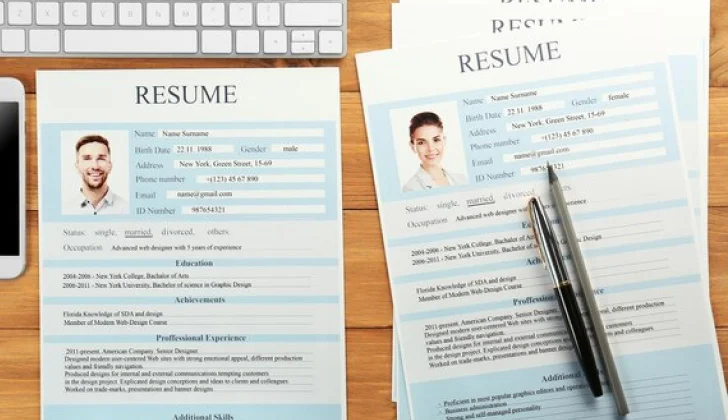
The functional resume takes a skills-based approach. It puts abilities front and center while downplaying the timeline. This format shifts the focus to skills and accomplishments.
Structure
A functional resume begins similarly to other formats. It starts with a header that has the candidate’s name and contact information. Then, it introduces career highlights and goals.
The core of the functional resume is a skills section. It categorizes them by themes like leadership and communication.
Under each skill category, bullet points show examples of how these skills have been applied.
Work history is there in a simple list of roles and dates without detailed descriptions.
The resume concludes with certifications and any additional sections like volunteer experience or awards.
Pros
The functional resume is great for those transitioning to a new field. It allows you to focus on skills rather than unrelated past roles.
Candidates use it to show their relevant coursework, internships, and soft skills. It enables them to highlight the capabilities most relevant to the job.
This format also makes gaps less noticeable and provides flexibility to tailor content to job requirements.
A functional resume helps you prioritize what you can do over where and when you’ve worked. It creates a compelling narrative for you.
Cons
Hiring managers view this format as an attempt to mask gaps or a lack of experience!
Many Applicant Tracking Systems prioritize chronological information, so this format will not score as well during screenings.
Another limitation is that accomplishments seem less impressive without specific job examples.
You should avoid using a functional resume if you have a relevant work history that directly aligns with your target job. Also, ignore this format if the job posting requests a detailed chronological work history.
Combination Resume

This format mixes chronological and functional formats! It’s a versatile choice for you.
This hybrid structure offers flexibility with a clear employment timeline.
Structure
A combination resume also begins with a header featuring the candidate’s info.
Then, you have a professional summary that briefly outlines qualifications.
The skills and accomplishments will be organized into categories. This section shows expertise relevant to the job. Bullet points are there again to explain how abilities have been used in past roles.
It’s presented in reverse chronological order and includes job titles, company names, and employment dates, often with brief descriptions of notable achievements. Any relevant extracurricular activities typically follow.
This format provides a holistic view of your qualifications.
Pros
Those with extensive work histories who also want to emphasize specific skill sets use this format.
I recommend it to professionals in IT or engineering to show their skills and past project experience in the best way.
Being able to highlight skills without downplaying work history is a big advantage. It combines the ATS-friendly structure of chronological resumes with the skill focus of functional formats.
You can also customize it to emphasize what’s most relevant to the job posting. This balance ensures that recruiters easily understand your qualities.
Cons
This format isn’t perfect for every situation. Repeating skills from the functional section in the work history makes the resume seem repetitive or too lengthy.
It needs to be formatted well to be clear and easy to read. This is while writing a polished combination resume takes more effort than other formats.
Avoid using a combination resume if you’re an entry-level with limited experience or skills.
Also, don’t use it if the job posting requires concise resumes.
Visual and Creative Resume Formats

Creative resumes feature graphic elements and multimedia components. They are making a strong impression in specific industries.
These visual formats capture attention through unique presentations.
They have advantages in certain contexts. Their use must be in alignment with industry norms.
Graphic and Creative Resumes
Graphic resumes have infographics, charts, and icons to present information visually.
In fields like advertising, they act as portfolio pieces that show creativity.
Their typography and color schemes reflect branding skills. Infographics are also used for skills ratings, career timelines, or project highlights.
Creative resumes are in PDF formats with hyperlinks to external resources or even video formats with a short film showing the personality. There are also web-based styles designed as an extension of the candidate’s resume.
These formats make the difference for roles where creativity is paramount. Hiring managers in these industries appreciate such. You are showing your proficiency in design tools at first glance!
In conservative fields such as academia, these resumes may appear overly informal. Overuse of visuals also makes critical information harder to find in any case.
A Quora Rundown
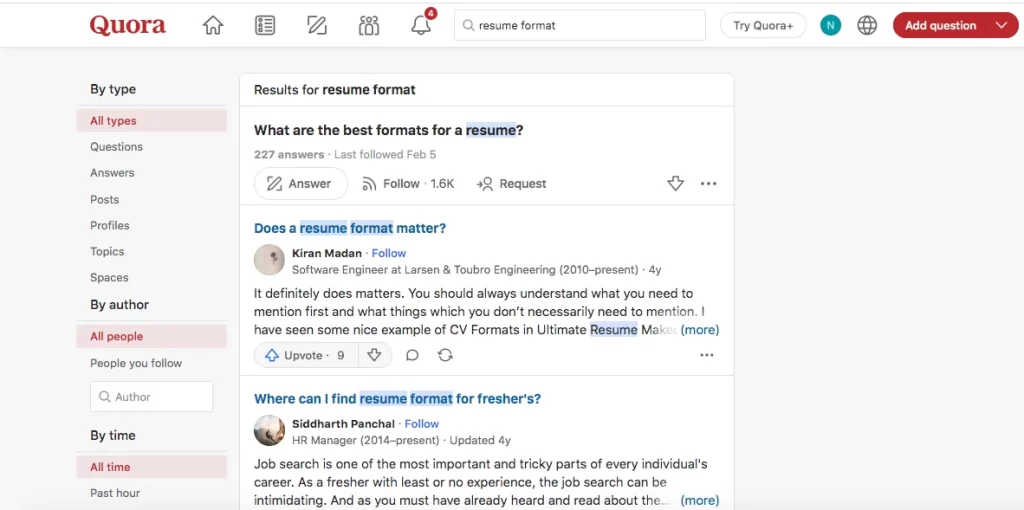
Reading Quora discussions always helps us learn about resume formats from normal users and experts.
Some of those users provide practical tips that go beyond the basics.
The Value of Targeted Resumes
Krystal Yates stresses the practicality of tailored resumes written specifically for individual job applications.
While this approach improves alignment with job descriptions, she notes that it is time-intensive for active job hunters.
Fernando Pessagno echoes this with targeted resumes, discussing their strategic advantage in competitive fields.
They believe targeted resumes offer a direct appeal to recruiters.
Cultural Differences in Resume Expectations
Roni Holzer introduces a global perspective! He points out how resume expectations differ across cultures.
In some countries, resumes are concise, but others appreciate detailed storytelling.
Holzer suggests a hybrid approach that balances brevity with detail to show key achievements. He considers adaptability in diverse environments.
Graphical Resumes
Gayle Laakmann McDowell critiques graphical resumes! She warns job seekers about the risks.
She says these visual formats focus too much on looking good and not enough on the content. So, they are harder to skim and less effective for ATS.
McDowell suggests using multiple columns to make important information easy to see.
Context is Key
Ed Han offers a new perspective by rejecting the best format!
He says the best resume format depends on the person’s situation and what they want to achieve.
Contextual adaptability, Han suggests, is the hallmark of a winning resume.
Length

Both McDowell and Holzer agree on the importance of conciseness! They recommend that resumes should stay in one or two pages.
Recruiters don’t have much time to read long resumes.
They recommend focusing on the most important achievements and removing anything that isn’t relevant. Every word should have a purpose.
Conclusion
Following a template or sticking to a standard format is not enough for writing a nice resume.
Whether you prefer a chronological format for steady career progression or experiment with a functional or hybrid approach, I recommend that you write it in a way that speaks to your strengths and aligns with the job you are targeting.
Personalization is always important. Your resume should be a reflection of where you’ve been and where you want to go.
Consider using tools like Google Docs templates as well. They can save you time and effort.
Once you’ve chosen a format, review it critically and test its compatibility with ATS.
Hire the best candidates
with Wetest.
Create pre-employment assessments in minutes to screen candidates, save time, and hire the best talent.
Try for free