
Bonica
September 29, 2023
So, you’re entering the world of nursing after graduating and getting your license. Maybe you’re asked about your skills, you don’t know what to write in the skills section on your CV, or you simply want to know what abilities and skills you should have as a nurse!
Whether you’re a nurse, looking to start your career or you just want to enhance your skills and become better at your job, we’ve got you covered!
Today, we’re going to tell you all about the soft skills, hard skills, and technical skills you should obtain as a nurse. These are all you need to get the job you want and help your team thrive!
Going to nursing school is not enough in this competitive job market and you should show that you’re the best among many candidates. You should be professional, knowledgeable, and have the essential nursing skills.
But the question is what are these skills?
Let’s find out!
Table of Contents
What Are Nursing Skills and Why Are They Important?
When you’re applying for a job, you should know that there are some specific skills that every employer is looking for in candidates. These include soft and hard skills that help you provide great care, attract patient’s trust, and help the team get the best outcomes.
Here are some skills that employers seek in their ideal candidate:
Essential Soft Skills for Nurses
Nursing isn’t just about medical and health-related knowledge. It’s actually about the art of compassionate care!
So, if you want to make it big as a nurse, you need these soft skills:
Communication Skills
As a nurse, the first thing you have to do perfectly is to communicate sympathetically. Nurses are the ones who give medical information to patients and their families and have the most interaction with them.
Interpersonal Skills
A very crucial soft skill for a nurse is the ability to build a meaningful relationship with the patients! You need to know how to connect with them and make them feel valued!
Teamwork Skills
The most important goal in every medical facility is to have better patient outcomes. However, it’s impossible without teamwork. Patient care is not a job that you can do alone. You’ll be a part of a team, trying to help people through their hard times!
Empathy

Empathy means the ability to understand the feelings of others. Most patients are in their hard times and they need empathy very much.
As a nurse, you should put yourself in the patient’s shoes. You should know what they need, and show them compassion! You’ll be their emotional support!
Attention to Detail
In healthcare, precision is crucial!
Nurses must pay attention to detail since they have to administer medications accurately and record patient information correctly
Don’t forget that even the smallest oversight can have big consequences!
Time Management
There are days in hospitals when you have multiple tasks and responsibilities at hand, and not being able to manage the time correctly, can come with serious consequences!
You should be able to provide care to all the patients under your supervision. So, you have to work on your time management skills!
Ethics and Professionalism
A non-negotiable skill for nurses is maintaining high ethical standards and being a professional. You should be able to recognize and respect the patient’s autonomy, beware of the nursing code of ethics, and be a trustworthy person in care!
Essential Hard Skills for Nurses
There are some hard and technical skills that employers pay attention to when hiring a nurse. Let’s learn about the important ones.
Basic Care Techniques and Knowledge
Nurses must have a strong knowledge of basic medical procedures, such as wound care, medication administration, and vital sign monitoring.
Without this skill, you can’t become a nurse!
Urgent Care and Emergency Care
You need to be professional in urgent and emergency care. There will be high-pressure situations at your work, where you need to step up confidently and help with emergency care.
So, take a look at the emergency care protocols and prepare yourself for critical moments.
Patient Transport
Moving patients safely and comfortably is a very important skill. You should know how to transfer patients between beds, wheelchairs, and stretchers safely.
Patient and Family Education
You’re going to be the person who has the most contact with the patient and their family. You should know how to educate them on the patient’s situation and how to manage it.
You should educate them on medical conditions, treatment plans, and the modifications they must make in their lifestyle.
Patient Safety
Patient safety is the key hard skill for a nurse. You learn this in nursing school, but you need to keep your knowledge of it up to date.
At your job as a nurse, you’ll be responsible for identifying potential risks and ensuring that patients are protected from harm.
You should also know all about infection control, fall prevention, and medication safety measures.
Technology Skills
In today’s healthcare environment, technology has become a key skill for nurses. You should know how to use various medical devices, electronic health records (EHRs), and telemedicine tools to provide efficient care as emphasized in the AUAMED md program.
Keep yourself updated with the latest technological advancements!
Example of Nursing Skills List for a Resume

Your resume is the first thing that attracts the attention of employers. You should be able to list everything that a professional resume has and don’t forget about those skills that are important to employers.
Here, we created you a checklist so you don’t forget anything before sending your CV!
Nursing Resume Checklist
Contact Information
First of all, write your name, phone number, email address, and professional social media profiles. Having a LinkedIn account helps a lot.
Objective or Summary
Write a summary of your career goals and who you are. Don’t make it long or very short. You can follow this example:
“Dedicated registered nurse with 3 years of experience, passionate about improving patient outcomes, and proficient in wide range of medical procedures.”
Licensure and Certifications
List all relevant licenses and certifications, including your Registered Nurse (RN) license, Advanced Practice Nurse (APN) certification, and any specialized certifications.
If you have attended any other course, that could be very helpful. Enter everything that you’ve learned and got a certificate for.
Education
Detail your nursing degree, institution, graduation date, and any academic honors or awards. If you have done any student or volunteer work at the university, don’t forget to mention it.
Clinical Experience
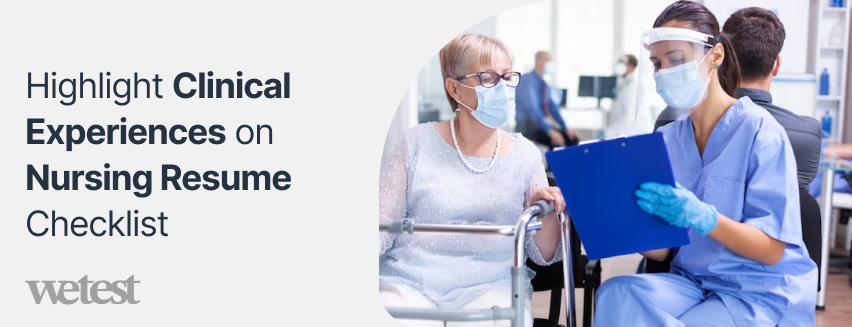
Don’t forget to highlight your clinical experiences, such as internships, rotations, and any other areas of practice (e.g., pediatric nursing, critical care).
Nursing Skills
Create a dedicated section to showcase your nursing skills. Use bullet points to list both soft skills and hard skills. Don’t forget important skills like communication skills, interpersonal skills, technical skills, wound care, emergency care, and others we talked about.
Work History
If you have worked before, write it on your resume. Start with the most recent nursing position and list them in order. Remember to describe your responsibilities, achievements, and contributions in each position.
Don’t go too long though! Be precise and short!
Professional Memberships
If you’re a member of nursing organizations like American Nurses Association or other associations, mention them on your CV!
References
Include references from nursing supervisors, educators, or colleagues. Include their contact info, and give them a heads up before submitting your resume.
How to Improve Nursing Skills
So, you think you need to improve your nursing skills! Actually, you should always be after improvement since the world of healthcare is so changing! Here are some techniques for enhancing your skills as a nurse!
Communication Skills
Practice active listening to truly understand patient concerns. Then, ask for their feedback. You can also ask your colleagues to watch you and tell you what you can do better.
It’s also helpful to take courses in therapeutic communication. These courses are designed for healthcare professionals like you to master empathy and compassion.
Interpersonal and Teamwork Skills
Engage in role-playing exercises to build rapport with patients. Yeah! It’s a great way to learn teamwork!
You can also attend workshops on conflict resolution, volunteer for group projects, or develop leadership skills.
Basic Care Techniques and Knowledge
Stay updated with the latest medical guidelines. You can also go for advanced certifications in areas like advanced life support (e.g., ACLS, PALS).
Urgent Care and Emergency Care
Start by participating in emergency response training and simulations. Work closely with experienced nurses in high-pressure environments. It really makes you ready for real situations!
Patient Transport
Before dining it in real life, practice safe patient handling techniques to prevent injuries. There are some efficient transfer methods based on different conditions that you can learn. You can also ask a experienced colleague for mentoring you!
How to Highlight Your Nursing Skills in a Job Search
When searching for a job in nursing field, you should show that you have the required skills and have abilities that make you a better choice than any other competitor.
Take these steps when you’re in the process of job-finding, and you’ll be employed in no time!
Start with the Right Format
Crafting the Perfect Resume
Use a clean and professional resume template. You can find these templates online or use ready-made templates on Microsoft Word. make sure that your contact information is up-to-date.
Organize your resume into clear sections: Contact Information, Education, Licensure, Clinical Experience, Nursing Skills, Work History, Professional Memberships, and References.
Remember that you can tailor your CV to the job description. So, read it carefully and see what skills and abilities they’re looking for specifically. Add it to your resume!
Don’t forget to write your hard and soft skills in bullet points so they catch the eyes of the employer!
Genius, isn’t it?
Tailor Your Cover Letter
Crafting an Impactful Cover Letter
You’ll need a cover letter and not just a usual cover letter! There are things you need to do so you can craft the perfect letter that shows who you are and why you’re the best addition to the team!
Address the cover letter to the hiring manager by name, if possible. Express your enthusiasm for the specific nursing position and facility. This shows that you know where and why you’re applying to. It also tells the hiring manager how passionate you are!
Highlight relevant skills and experiences that align with the job description. It is important to read the job discription carefully before writing the cover letter!
Conclude the letter with a call to action, expressing your eagerness for an interview.
Be Prepared for Your Interview
Excelling in the Interview
The interview is the final, and presumably the most important, step! Before you go to the interview session, research the healthcare facility and its values.
Prepare answers to common nursing interview questions, emphasizing your skills and experiences. Try to showcase your soft and hard skills while answering questions.
Highlight things like your ability to be an active and empathetic listener. Also, have specific examples ready to show your hard skills.
At the end, it is very important that you ask insightful questions. These questions must be about the facility and the nursing team.
Frequently Asked Questions
What are the most critical nursing skills for a successful career?
The most important nursing skills are a strong communication, empathy, clinical competence, and time management. You need these skills to provide excellent patient care.
How can I enhance my nursing skills?
Continuously seek learning opportunities through workshops, courses, and certifications. Actively participate in clinical experiences and ask for mentorship from experienced nurses.
What are the different types of nursing degrees available?
Some available nursing degrees are Associate Degree in Nursing (ADN), Bachelor of Science in Nursing (BSN), Accelerated Nursing Program, Master of Science in Nursing (MSN), Doctor of Nursing Practice (DNP), and Ph.D. in Nursing. There are also many independent courses.
How do I choose the right nursing specialty?
You should choose your nursing specialty based on your interests, strengths, and goals you have in mind. You can also research and ask professors to help you decide.
What should I do before an interview as a nurse?
Read the job description carefully, try to know the answers to the common questions, make some examples ready for your soft and hard skills, and research the medical facility before your interview.
Conclusion
Being a nurse means that you’re a helpful person, and you’re passionate about saving lives and helping people! This means that you may have some required skills naturally.
Are you a kind and empathetic person? Do you easily connect with people? Then, you’ve got what it needs!
But this is not enough! There are soft skills like interpersonal skills and teamwork skills that you should also work on!
Remember, hard skills are equally important as well! You need to show the hiring managers that you have the technical skills and you know how to transport patients and educate them and their families!
Don’t forget to tailor your resume for each job and at the end, check it with the checklist we prepared for you. Make sure you have every item on your resume! Also, pay attention to your cover letter since it has a great effect on the hiring manager’s decision!
By following our guide in this article, you’ll excel in your nursing career. But most importantly, you’ll save countless individuals and communities! Remember, what you do is valuable and our dedication is what keeps people healthy.
Hire the best candidates
with Wetest.
Create pre-employment assessments in minutes to screen candidates, save time, and hire the best talent.
Try for free