
Professional Tips to Tender Your Resignation Gracefully
Employee relations
Bonica
January 31, 2025
According to studies, people change jobs about four to five times in the first 10 years of their careers. Job change may be a part of every person’s professional and personal growth path, and people may decide to change jobs for various personal, economic, or environmental reasons.
It is almost impossible to continue the first career until the end of the professional life. A graceful resignation means leaving your previous job in a way that maintains respect between you and your former employer and colleagues. This will allow you to have positive relationships with them in the future.
Although resigning can sometimes be done in awkward and maybe even unpleasant circumstances, luckily there are some tricks that will help you.
In this post, after explaining each of these steps that will help you make your resignation the best possible, we will share examples of graceful resignations with you. Keep reading to learn more.
Table of Contents
Key Takeaways
How to tender a resignation nicely?
- Read your employment contract. It is very important to know the exact conditions included in the employment contract.
- Write a formal and professional resignation letter. The text of the letter should be respectful and you should follow the basic steps of a graceful resignation.
- If possible, announce your resignation in person to your manager or employer. This shows your respect and responsibility and will have a positive effect on your future relationships.
- State the reasons for your resignation. Be honest and general about these reasons, but don’t be negative about the company or your other colleagues.
- Help train your potential successor. This shows that you are committed to the implications of your resignation.
- Maintain relationships with your former colleagues and employers. Having strong and positive relationships will have a good impact on your future career.
What is a Graceful Resignation?
People may be dissatisfied with their jobs for various reasons and decide to change them. Dissatisfaction with environmental conditions, insufficient or disproportionate income due to the difficulty of work, long or unscheduled working hours, personal problems, or the desire to discover new work opportunities and acquire new skills can all be reasons for people to resign.
Although resigning may seem difficult and unpleasant at first glance, both for the employee and the employer, doing it in a respectful and graceful way will preserve the employee’s relationship with his former work group in addition to respect and commitment.
As your work experience grows, maintaining these connections will help you build a wide network of professional relationships over time. These connections will help you to have new job positions, and if needed, you can use the experience and advice of your former colleagues.

Consider having letters of recommendation. They greatly increase your chances of getting hired for job positions, and to have strong letters of recommendation from your former employers, you need to maintain positive and productive relationships.
On the other hand, as much as having useful connections can have a positive effect on your future employment conditions, having a bad background and negative comments from your former employers and colleagues can easily destroy your future employment opportunities.
Therefore, a correct, respectful, and graceful resignation is very important in determining the future path of your career. Resignation should be done so that your cooperation with your previous work group ends, but at the same time, mutual respect and commitment between you are fully preserved.
Tips for a Perfect Resignation
Now, let’s examine the steps of a professional and respectful resignation and the details of each one together.

Planning Before Resignation
Before taking any practical action, you must first make sure that your decision to resign is final. In any career situation, conditions may be temporarily difficult and the employee may be under pressure for a while. But these conditions may not be permanent and therefore, you should make sure that your reason for resigning is not fleeting emotions or temporary pressures.
Try to resign at a proper time. Choose a time when your absence will cause the least damage to your portfolio and projects. For example, resigning in the middle of a heavy project or before an important inspection is not a good time, and your absence may cause serious problems.

Also, update your resume and portfolio before announcing your resignation. This will help you get a more accurate view of your current skills and future possible working conditions and to find more suitable job positions.
Considering the set of background conditions for resignation, in addition to increasing the chances of your resignation being accepted by your employer or boss, will make the process of moving you and replacing the next person with the least amount of problems. This shows your responsibility towards your job and will have a very positive effect on the opinion of your current and future employers.
Writing an Official Resignation Letter
Write your resignation letter as professionally and formally as possible. Use formal language and a respectful tone and avoid exaggeration. Make sure that your letter has a letterhead and date, and that the recipient’s address is addressed to your employer or boss.
Specify the exact date of your termination in your resignation letter. Before determining the end date of cooperation, read your employment contract carefully to make sure whether there is a clause to determine this period or not. If not, it is usually enough to announce your resignation two weeks before leaving the career.
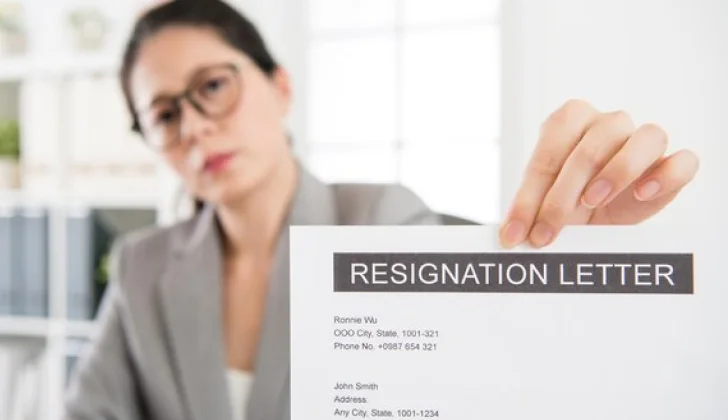
Appreciate the opportunity to work with the company in your resignation letter and thank your manager or employer and co-workers for their help and support. This shows that you value and respect them and leaving your job will not change that.
Focus on your positive experiences and achievements at the company. Avoid any negative comments about the company or co-workers. Don’t make your departure look critical, or even worse like you’re trying to destroy someone with your resignation.
In your resignation letter, mention that you are ready to cooperate in training the replacement person so that he can learn his duties faster and more accurately. This shows that you are committed to your job even after resigning and prefer not to disrupt the company’s work routine after you leave.
Resignation Announcement in Person
Never resign in absentia! Absentee resignation is a disrespectful act that can cause negative feelings and thoughts in your employer or boss.
Before others, first, announce your resignation directly to your manager. It is disrespectful to share your decision to quit before your manager. In addition, by directly raising your problem with your boss and negotiating, you may change your decision to resign and regret it.
When announcing your resignation to your boss, your tone should be respectful and professional. Control negative emotions and do not allow them to be reflected in your sentences. Do not argue with your boss and do not enter into additional details and margins.

Be clear in your speech. Do not make up stories and honestly explain the real reasons for your resignation. Of course, if these reasons are personal or emotional, you don’t have to go into detail about them. A general and honest explanation is the best explanation.
After announcing your resignation and the reasons for it, listen carefully to the words of the manager or employer and if they ask you any questions, answer them honestly. The issues that caused your dissatisfaction may be resolved with these negotiations and there is no need to resign.
We emphasize again that it is very important to maintain your relationship with your former manager or employer and your former colleagues even after resigning. This requires a respectful and committed approach in any situation.
Regular Transmission of Duties
After your manager or employer accepts your resignation, the replacement process begins. First, document the work done and the output of each, the important and key information, and the list of future projects and file them either in writing or electronically.
In this way, in addition to the clarity of the conditions at the time of handing over your responsibility, your replacement will not be confused when starting his work.

If your replacement is chosen, train him. Help your replacement become acquainted with your work duties and responsibilities and properly understand your work conditions. Transfer the archived files and documents to him and teach him the documentation procedure needed for your work.
Collaborate with your colleagues as much as possible to complete your projects. If you have time constraints and can’t stay on task until projects are finished, make sure your team project tasks are properly completed or passed on to other people.
Maintaining a Professional Demeanor
That’s right! You have resigned and the last day of your cooperation with the company is coming soon! But try to maintain a professional demeanor until your last day on the job.
Maintain your discipline and work routine until the last day and perform your duties according to your usual schedule. Your last impression is what colleagues and employers will remember most, so it’s important to leave on a positive note.
Show up at work on time. Participate less in non-work discussions, don’t get caught up and avoid gossip.

Don’t let your communication with your colleagues change even on the last day. Maintain intimacy and respect and make room for continued communication after the breakup. Say goodbye to your colleagues on the last day and wish them success and happiness. Try not to miss anyone and say goodbye even to your less close colleagues.
Although with your resignation, your work in this company may have come to an end, but your relationship with your employer and colleagues will continue differently. The more respectfully and sincerely you leave the career, the stronger and more effective the relationship will be maintained in the future.
Pursuing Official Affairs
Settle your accounts with the company on your last working day. Then, go to the HR department and make sure that your salary, benefits, and insurance are paid until your last day of work.
Track the payment of your salary and benefits in the financial and accounting section. Make sure nothing is missed and all your benefits are calculated and paid, including potential bonuses and overtime hours. After confirming the deposit to your bank account, you can sign the financial settlement and tax settlement forms.

Be very careful when signing all forms and documents related to resignation. Read all the clauses on the forms, then sign and submit the form.
If necessary, request the HR department to issue you a work certificate for the time you have been employed in the company. This certificate is considered part of your work history in your resume and will have a positive impact on your next job applications.
If possible, ask your employer, boss and senior colleagues to write letters of recommendation for you. Having letters of recommendation increases your chances of being accepted into more sensitive job positions.
Samples of Formal Resignation Letters
After reviewing resignation tips, let’s practice with real-world examples. A professional has been working at an advertising company for four years. They need to resign due to an upcoming marriage and a relocation to a new city. Below are two resignation letter samples with different tones and levels of detail suitable for such circumstances.

Example one: Brief and to the Point
[Date]
[Manager’s Name]
[Job Title]
[Company Name]
[Company Address]
Subject: Resignation Letter
Dear [Manager’s Name],
I sincerely announce my resignation from my position at [Company Name] due to my marriage and the need to relocate to [City Name]. My last working day will be [Date].
I am grateful for the opportunity to work at [Company Name] and for the valuable experiences I have gained. I will do my best to transfer tasks and support the team during this transition.
Sincerely,
[Your Name]
[Signature]
Example two: Detailed and Appreciative
[Date]
[Manager’s Name]
[Job Title]
[Company Name]
[Company Address]
Subject: Resignation Letter
Dear [Manager’s Name],
I regret to inform you that I am resigning from my position at [Company Name] due to marriage and the need to relocate to [City Name]. My last working day will be [Date].
During my [Duration of Employment] at [Company Name], I had the privilege of collaborating with a highly professional team, for which I am deeply grateful. The dynamic and challenging environment at [Company Name] was truly rewarding, and I consider [Project Name or Achievement] one of my proudest accomplishments here.
I will do my utmost to facilitate the handover process and assist in training a replacement.
Wishing [Company Name] continued success.
Sincerely,
[Your Name]
[Signature]
Final Thoughts
How to resign gracefully from a job? Every career starts one day and ends one day. The end of your association with your workgroup can come in many different scenarios, one of which is your resignation.
At the time of resignation, remember that your resignation only means the end of your direct cooperation as an employee with your company, not the end of all your mutual relationships, and that your relationship with your employer, boss and colleagues will continue in other forms even after your resignation.
The most important principle in a graceful resignation is to maintain respect. In all stages of resignation, show your utmost respect to the company, your employer and your colleagues and have a friendly relationship with everyone. Be committed and professional until your last working day in the company. Be organized and do your tasks as much as possible according to your regular schedule and routine.
Submit your resignation in person to your employer or supervisor. When announcing your resignation, be completely formal, calm and respectful and be as honest as possible about the reason for your resignation. State your reasons clearly and avoid negativity and criticism.
Be responsible and show that you are committed to your job by helping your colleagues and your replacement adjust to the new position.
By following a professional approach, you can resign gracefully and sustain strong connections for the future. Even after the termination of cooperation, you will have good relations with your colleagues and your former employer, which can be useful for you in the future.
Hire the best candidates
with Wetest.
Create pre-employment assessments in minutes to screen candidates, save time, and hire the best talent.
Try for free