Salary Calculation Formula: How to Accurately Calculate Pay
Salary guides
Bonica
June 24, 2025
Want perfect paychecks without the headache? It’s not magic, it’s about mastering salary calculations. Getting the formulas right is crucial – it keeps your employees happy and avoids costly payroll errors.
This guide is your go-to resource for accurate salary calculations. If you’re running payroll, working in HR, or just curious about your own pay, you’ll find straightforward, actionable formulas that ensure you get it right every single time. Let’s unlock the power of accurate paychecks!
Table of Contents
Basics of Salary Calculation

You need to understand the core parts that make up a salary. Mastering these basics is crucial; they’re the foundation for accurate calculations.
Key Components That Make Up a Salary Package
A salary package isn’t just a single number. It’s a carefully structured combination of:
– Base salary – The fixed amount an employee receives regularly
– Allowances – Additional payments for specific purposes (transportation, housing, etc.)
– Bonuses – Performance-based or periodic extra payments
– Benefits – Non-monetary compensations like health insurance or retirement plans
Each component follows different calculation rules and tax treatments. For instance, some allowances might be tax-exempt while others are fully taxable.
To create effective compensation packages, first decide which elements align with your organization. Then, determine precisely how each will be calculated to stay within your budget.
Difference Between Gross Pay and Net Pay
Understanding the distinction between gross and net pay is crucial:
Gross Pay = Base Salary + Allowances + Bonuses + Other Additions
Net Pay = Gross Pay – (Taxes + Deductions + Withholdings)
This difference explains why the salary in an offer letter looks different from what lands in an employee’s bank account. Employees care most about net pay—their take-home money—while employers must accurately track gross pay for tax and compliance purposes.
The gap between these numbers can be substantial, sometimes reducing gross salary by 20-30% depending on tax brackets and deduction amounts.
Why Accurate Salary Calculation Matters for Businesses
Accurate salary calculations aren’t just good practice—they’re essential for business success:
– Prevents costly legal penalties from compliance violations
– Builds employee trust through consistent, error-free payments
– Enables precise budgeting and financial forecasting
– Reduces administrative time correcting payroll mistakes
– Minimizes turnover by ensuring fair and transparent compensation
Even small errors compound over time. A mere 2% miscalculation for a $50,000 salary means an annual discrepancy of $1,000—either shorting your employee or your business.
Step-by-Step Guide to Basic Salary Calculation Formulas

Now let’s break down the core formulas you’ll need for standard salary calculations.
How to Calculate Hourly Rate from Annual Salary
Converting an annual salary to an hourly rate is essential for overtime calculations and comparing different compensation structures:
Hourly Rate = Annual Salary ÷ (Working Hours Per Week × 52 Weeks)
For a standard 40-hour workweek:
Hourly Rate = Annual Salary ÷ 2,080
For example, a $60,000 annual salary converts to an hourly rate of $28.85 ($60,000 ÷ 2,080).
For part-time employees, adjust the denominator to reflect their actual working hours:
Hourly Rate (Part-time) = Annual Salary ÷ (Part-time Hours Per Week × 52)
Computing Monthly Pay from Different Base Rates
Depending on how the base rate is defined, you’ll use different formulas to calculate monthly pay:
Monthly from Annual: Annual Salary ÷ 12
Monthly from Bi-weekly: Bi-weekly Pay × 26 ÷ 12
Monthly from Hourly: Hourly Rate × Hours Per Week × 52 ÷ 12
For salaried employees, the monthly calculation is straightforward. For hourly workers, ensure you account for typical hours worked to get an accurate monthly estimate.
5 Essential Formulas Every Payroll Professional Should Know
1. Gross Pay Calculation:
– For hourly: Hours Worked × Hourly Rate
– For salary: Annual Salary ÷ Pay Periods
2. Overtime Pay:
– Standard Formula: Regular Hourly Rate × 1.5 × Overtime Hours
– Double-time: Regular Hourly Rate × 2 × Double-time Hours
3. FICA Taxes:
– Social Security: Gross Pay × 6.2% (up to annual wage base)
– Medicare: Gross Pay × 1.45% (plus 0.9% for high earners)
4. Federal Income Tax Withholding:
– Based on W-4 information and IRS tax tables
5. Net Pay Calculation:
– Gross Pay – All Taxes – All Deductions
Master these formulas, and you’ll handle about 80% of routine payroll scenarios effectively.
Factoring in Time-Based Compensation Elements

Time-based elements add complexity to salary calculations but ensure employees are fairly compensated for their work schedules.
Calculating Regular Hours vs. Overtime Pay Correctly
Regular hours form the foundation of employee compensation:
Regular Pay = Regular Hours × Regular Pay Rate
Pay at least one and a half times the normal rate for any hours over 40 in a week.
Overtime Pay = Overtime Hours × Regular Rate × 1.5
Incorrect overtime calculation represents an expensive payroll violation. Ensure the regular rate for overtime includes all required compensation. Consider non-discretionary bonuses and shift differentials as well.
How to Account for Shift Differentials and Premiums
Shift differentials reward employees for working less desirable hours:
Total Shift Pay = Regular Hours × (Base Rate + Differential Rate)
Differentials typically range from 5-15% of base pay, with night shifts commanding higher premiums than evening shifts.
For employees who work partial shifts with differentials:
Mixed Shift Pay = (Regular Hours × Base Rate) + (Differential Hours × Differential Rate)
Track differential hours separately in your payroll system to ensure accurate calculations.
Weekend and Holiday Pay Calculation Methods Explained
Weekend and holiday pay calculations vary by company policy but typically follow these approaches:
Weekend Premium Method: Regular Rate × Premium Multiplier × Weekend Hours
– Example: $20/hour × 1.5 × 8 hours = $240
Holiday Pay Method: Regular Daily Rate × Holiday Multiplier
– Example: $160 daily rate × 2 = $320 holiday pay
If an employee works on a holiday:
Total Holiday Worked Pay = Regular Holiday Pay + (Hours Worked × Premium Rate)
Document your weekend and holiday pay policies clearly to avoid confusion and ensure consistent application.
Handling Deductions and Withholdings Accurately

Deductions transform gross pay into net pay, making their accurate calculation essential for both compliance and employee satisfaction.
Tax Withholding Calculations: Federal, State, and Local
Federal tax withholding follows IRS guidelines based on Form W-4 information:
1. Determine adjusted gross income
2. Account for standard or itemized deductions
3. Apply the appropriate tax bracket percentage
4. Adjust based on W-4 allowances and additional withholding requests
State taxes vary significantly by location. Some states use a flat rate:
State Withholding (Flat) = Taxable Wages × State Tax Rate
Others use progressive brackets similar to federal taxes.
Local taxes may include city, county, or school district taxes, usually calculated as a percentage of wages earned within that jurisdiction.
Always use current tax tables and rates, as these change annually.
Computing Mandatory Deductions for Social Security and Medicare
FICA taxes consist of Social Security and Medicare contributions:
Social Security = Gross Wages × 6.2% (up to the annual wage base—$160,200 in 2023)
Medicare = Gross Wages × 1.45% (all wages)
For high-income employees, add the Additional Medicare Tax:
Additional Medicare Tax = Wages Above Threshold × 0.9%
– Thresholds: $200,000 (single), $250,000 (married filing jointly)
Employers match what you pay into Social Security and the regular Medicare contribution. But here’s an interesting twist! They don’t match that extra Medicare tax some higher earners have to pay.
Voluntary Deductions: Health Insurance, Retirement, and Others
Voluntary deductions occur after calculating mandatory withholdings:
Health Insurance Premiums: Usually a fixed amount per pay period, possibly with pre-tax treatment
Retirement Contributions:
– Percentage method: Gross Pay × Contribution Percentage
– Fixed amount method: Set dollar amount per pay period
Other Common Deductions:
– Life insurance premiums
– Flexible spending accounts
– Health savings accounts
– Union dues
– Wage garnishments (which follow specific legal requirements)
Track pre-tax versus post-tax deductions carefully, as they affect taxable income differently.
Special Salary Calculation Scenarios to Consider

Standard formulas won’t cover every situation. Here’s how to handle special compensation scenarios.
Commission-Based Pay: Formulas and Best Practices
Commission structures vary widely but typically follow these patterns:
Straight Commission: Sales Amount × Commission Rate
– Example: $10,000 in sales × 5% = $500 commission
Tiered Commission: Different rates for different sales levels
– Example: 3% on first $10,000, 5% on $10,001-$20,000, 7% on $20,001+
Base Plus Commission: Base Salary + (Sales Amount × Commission Rate)
– Example: $2,000 base + ($30,000 × 4%) = $3,200 total
For accurate commission calculations:
– Define clear measurement periods
– Document when commission becomes earned versus paid
– Establish rules for returns, cancellations, and commission recovery
– Create transparent tracking systems accessible to sales employees
Calculating Salaries for Part-Time and Temporary Workers
Part-time employee calculations require proportional adjustments:
Part-Time Salary = Full-Time Equivalent Salary × (Part-Time Hours ÷ Full-Time Hours)
For temporary workers, calculate pay based on:
– Duration of assignment
– Hours per week
– Hourly rate or equivalent
Temporary Worker Pay = Hourly Rate × Hours Worked
Accurate differentiation between employees and independent contractors is essential. Misclassification leads to legal liabilities.
How to Handle Pay for Paid Time Off and Leave
PTO calculations depend on your accrual system:
Annual PTO Accrual = (PTO Days Per Year × Hours Per Workday)
Per-Pay-Period Accrual = Annual PTO Hours ÷ Number of Pay Periods
When employees use PTO:
PTO Pay = Regular Pay Rate × PTO Hours Used
For partial days:
Partial PTO = Regular Pay Rate × Partial-Day Hours
Different types of leave (vacation, sick, parental) may have different accrual rates and rules, so track each category separately.
Advanced Compensation Calculation Techniques

Beyond basic pay, these advanced elements create competitive compensation packages.
Performance-Based Bonus Calculation Methods That Work
Effective bonus calculations tie rewards directly to measurable performance:
Percentage-of-Salary Bonus: Base Salary × Bonus Percentage
– Example: $75,000 × 10% = $7,500 bonus
Target-Achievement Bonus: Target Bonus × (Achievement ÷ Goal)
– Example: $5,000 × (110% ÷ 100%) = $5,500 bonus
Profit-Sharing Bonus: Company Profits × Allocation Percentage × Individual Factor
– Example: $500,000 profits × 15% allocation × 2% individual share = $1,500
For maximum effectiveness:
– Set clear, measurable performance metrics
– Establish bonus calculation formulas upfront
– Communicate regularly about progress toward goals
– Ensure timely payouts after performance periods end
Equity Compensation: Stock Options and RSU Calculations
Equity compensation requires specialized calculations:
Stock Option Value: (Market Price – Grant Price) × Number of Shares
Restricted Stock Units: Number of Vested Units × Current Share Price
When calculating equity compensation:
– Track vesting schedules carefully
– Understand tax implications for different equity types
– Calculate the impact of equity on total compensation
– Document fair market value at relevant dates
Many companies use specialized equity management software to handle these calculations and ensure compliance with SEC regulations.
Making Sense of Retroactive Pay and Adjustments
Retroactive adjustments correct past payment errors:
Retroactive Pay Increase: ((New Rate – Old Rate) × Hours Worked in Retroactive Period)
Missed Overtime: (Overtime Hours × Overtime Rate) – Amount Already Paid
For salary corrections spanning multiple pay periods, calculate each period separately using the rates and rules applicable at that time.
Document all retroactive calculations thoroughly, showing:
– Original amounts paid
– Corrected amounts
– Difference being paid
– Reason for adjustment
Common Salary Calculation Mistakes to Avoid

Even experienced professionals make these common payroll errors. Here’s how to prevent them.
Why Manual Calculations Often Lead to Costly Errors
Manual calculations introduce numerous risk points:
– Transcription errors when entering numbers
– Formula mistakes in spreadsheets
– Overlooking rate changes or tax updates
– Inconsistent application of policies
– Calculation fatigue leading to mental errors
These seemingly small mistakes compound over time. A single decimal point error can lead to thousands in overpayments or underpayments.
Reduce manual calculation risks by:
– Using automated systems with built-in validation
– Implementing multi-level review processes
– Creating standardized calculation templates
– Regularly auditing calculation outputs
Misclassification Issues That Affect Salary Calculations
Employee misclassification creates serious calculation errors:
– Exempt vs. Non-exempt: Incorrectly classifying employees as exempt denies them overtime pay they’re legally entitled to receive
– Employee vs. Contractor: Misclassifying employees as contractors avoids tax withholdings but creates significant legal liability
– Full-time vs. Part-time: Miscategorizing employment status affects benefit eligibility and related calculations
To prevent misclassification:
– Regularly review job descriptions against FLSA criteria
– Consult with employment law experts for borderline cases
– Document classification decisions and supporting rationale
– Update classifications when job duties change significantly
How to Spot and Fix Payroll Calculation Discrepancies
Effective payroll auditing catches errors before they become problems:
1. Compare hours worked against time records
2. Verify overtime calculations against hourly rates
3. Check tax withholdings against current tables
4. Reconcile benefit deductions with enrollment records
5. Confirm commission calculations against sales data
When you find discrepancies:
– Determine the root cause (system issue, human error, policy misinterpretation)
– Calculate the correct amount and the variance
– Process corrections promptly
– Implement preventive measures to avoid recurrence
Tools and Software for Accurate Salary Calculations

The right tools transform salary calculations from burdensome to effortless.
Comparing Top Payroll Software Solutions for Businesses
Modern payroll software automates complex calculations and compliance requirements:
For Small Businesses (1-50 employees):
– Gusto: User-friendly interface with strong tax compliance features
– QuickBooks Payroll: Seamless integration with QuickBooks accounting
– Square Payroll: Excellent for businesses using Square POS systems
For Mid-sized Organizations (51-500 employees):
– ADP Workforce Now: Comprehensive HR and payroll functionality
– Paychex Flex: Scalable platform with strong compliance support
– Paylocity: Modern user experience with robust reporting
For Large Enterprises (500+ employees):
– Workday: Enterprise-grade HCM with advanced payroll capabilities
– UKG Pro: Comprehensive human capital management suite
– SAP SuccessFactors: Global payroll management with strong compliance
Key features to evaluate:
– Calculation automation capabilities
– Tax filing and compliance support
– Integration with time tracking and benefits systems
– Report customization options
– Mobile accessibility
Excel Formulas That Streamline Compensation Calculations
For organizations not ready for dedicated payroll software, Excel offers powerful calculation tools:
Basic Payroll Formula:
=IF(C2>40, (40*B2)+(C2-40)*B2*1.5, C2*B2)
This calculates regular pay plus overtime for hours over 40.
Tax Withholding Formula:
=IF(B2*C2*52>X, (B2*C2*Y%), (B2*C2*Z%))
Where X is the tax bracket threshold and Y/Z are tax rates.
Commission Calculation:
=IF(B3>10000, B3*0.05, B3*0.03)
Applies different commission rates based on sales thresholds.
To enhance Excel-based payroll:
– Use named ranges for tax rates and thresholds
– Create separate worksheets for different calculation components
– Implement data validation to prevent input errors
– Use conditional formatting to highlight exceptions
When to Invest in Advanced Payroll Systems
Consider upgrading your payroll technology when:
– Calculation errors become frequent despite reviews
– Manual processes consume excessive administrative time
– Compliance issues arise from missed regulatory changes
– Growth increases payroll complexity beyond current capabilities
– Integration needs exceed your current system’s capacity
Modern cloud-based systems typically cost $4-15 per employee per month but deliver ROI through:
– Reduced error-related costs
– Lower compliance risk exposure
– Decreased administrative overhead
– Better payroll data analytics
– Improved employee experience
Legal Compliance in Salary Calculations

Compliance isn’t optional—it’s essential for avoiding costly penalties and litigation.
Understanding FLSA Requirements for Pay Calculations
The Fair Labor Standards Act (FLSA) establishes fundamental pay calculation requirements:
– Minimum wage compliance for all hours worked
– Overtime payment at 1.5× regular rate for hours over 40 in a workweek
– Inclusion of all compensation when determining regular rate
– Proper calculation of working time, including certain preliminary and postliminary activities
FLSA violations carry substantial penalties:
– Back wages for affected employees
– Liquidated damages equal to back wage amounts
– Potential criminal charges for willful violations
– Legal fees and administration costs
Ensure FLSA compliance by:
– Maintaining accurate time records
– Calculating overtime correctly
– Understanding exemption requirements
– Including all required compensation in regular rate calculations
State-Specific Regulations That Impact Salary Formulas
State laws often exceed federal requirements, creating additional calculation obligations:
– Higher Minimum Wages: Many states set minimum wages above the federal $7.25/hour
– Daily Overtime: Some states require overtime after 8 hours in a day (California, Alaska)
– Meal and Rest Breaks: States like California require precise tracking and payment for missed breaks
– Final Paycheck Timing: States have varying requirements for final pay timing after termination
For multi-state employers, create state-specific calculation rules in your payroll system to ensure compliance with each jurisdiction’s requirements.
Ensuring Pay Equity Through Proper Calculation Methods
Pay equity compliance requires systematic calculation approaches:
1. Perform regular pay equity analyses comparing compensation across gender, race, and other protected categories
2. Calculate compa-ratios to identify internal equity issues
3. Analyze pay differences to determine if they’re justified by legitimate factors
4. Implement remediation calculations when unjustified discrepancies are found
Ensure your calculations account for:
– Base pay comparisons within similar roles
– Total compensation including bonuses and equity
– Career progression rates and opportunities
– Starting salary determination methods
Document all pay decisions with clear justification to defend against potential equity challenges.
A Quora Rundown
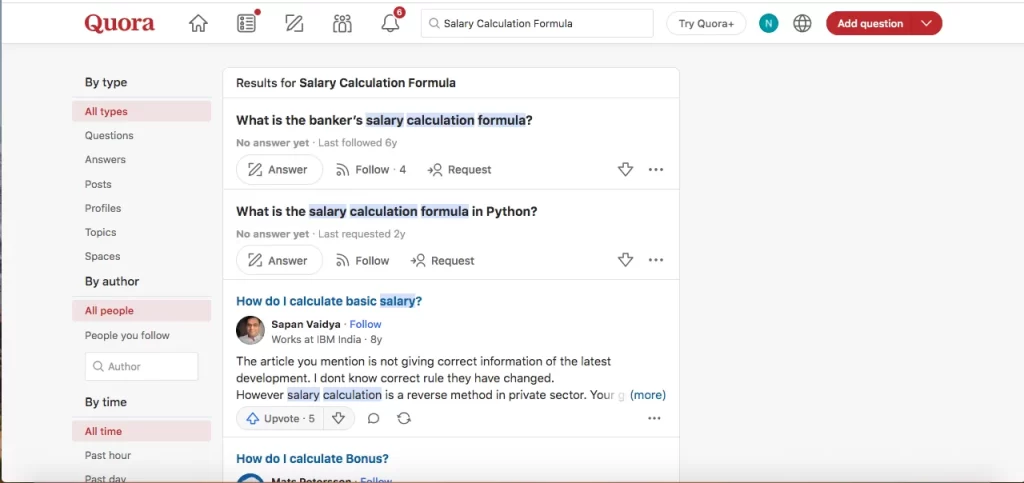
Here’s a consolidated overview of how Quora users tackle hourly-to-salary and related calculations.
U.S. Hourly‑to‑Salary Conversions
James Smith (Landlord and Real Estate Investor) notes,
“For salaried roles in the U.S., multiply your hourly rate by 2,080—8 hours a day × 5 days a week × 52 weeks—because salaried employees are paid through holidays, sick days, and vacations.”
R. Frawley (with 50+ years paying taxes) adds,
“If you know someone’s annual salary, divide by 2,000 (40 h/week × 50 weeks). For monthly, convert to annual first (× 12) then divide by 2,000. Remember, take‑home is roughly 70% of gross, depending on taxes and deductions.”
U.K. Working Days Approach
Dominic O’Sullivan notes,
“In the U.K. the norm is 260 working days—adjust for unpaid breaks—and multiply your daily hours by that. Always check if holidays or annual leave are included in your hourly rate.”
Contractor Rule of Thumb
Peter Gillon stresses,
“Contractors charging £300/day can estimate their salaried equivalent by doing (daily rate ÷ 10) × 2. Eg. 300 ÷ 10 = 30; 30 × 2 = £60k per year, which often factors in paid holidays, pension, and small bonuses.”
Commission and Piecework
Chris Pentecost discusses,
“To estimate a commission‑based salary, multiply your weekly sales by your commission rate, then by weeks worked. Eg. \$5,000/week × 10% = \$500; × 50 weeks = \$25,000. Add any hourly wages separately.”
On piecework,
“Ensure your piece‑rate meets minimum wage, then for overtime, either multiply the piece rate by 1.5 for overtime hours or divide total piece pay by hours and add any premium.”
Monthly vs Annual vs Hourly Pay Schedules

R. Frawley states,
“If paid bi‑weekly (26 periods) or semi‑monthly (24 periods), convert to annual first (× 26 or × 24), then divide by 2,000 to get an hourly estimate.”
Dennis Urban (Former Tax Preparer) adds,
“To find your hourly rate from a weekly salary, divide gross pay by 40. For bi‑weekly, divide by 80; for monthly, divide by 160. If you’ve worked overtime, add OT hours to the denominator.”
Contractor to Full‑Time Employee
Cliff G. notes,
“To propose a salary from your contract rate, multiply your hourly rate by your expected annual hours and brand it as a ‘total-comp’ target. In reverse, take your desired salary, add \~15%, then divide by 52 weeks and 40 hours for an hourly ask.”
Conclusion
Creating an effective salary calculation system isn’t just about formulas—it’s about building a comprehensive approach that ensures accuracy, compliance, and fairness.
Best Practices for Regular Payroll Audits
Implement these audit procedures to maintain calculation accuracy:
– Conduct pre-payroll reviews before each processing cycle
– Perform quarterly compliance checks against current regulations
– Randomly sample 5-10% of payroll calculations for detailed review
– Compare actual versus budgeted payroll costs to identify anomalies
– Reconcile payroll tax payments with calculated withholdings
Creating Transparent Salary Calculation Documentation
Clear documentation supports consistent calculations:
– Develop a comprehensive payroll procedures manual
– Create calculation worksheets for complex scenarios
– Document all pay policies in plain language
– Maintain a change log for salary structures and policies
– Provide calculation breakdowns with each paycheck
Future Trends in Compensation Calculation Technology
Stay ahead with these emerging calculation technologies:
– AI-powered payroll anomaly detection
– Continuous calculation models replacing periodic processing
– Blockchain-based payment verification systems
– Real-time tax calculation and compliance updates
– Employee self-service calculation simulators
Accurate salary calculations aren’t just a legal obligation—they’re the foundation of trust between employers and employees. By implementing the formulas and best practices in this guide, you’ll create a payroll system that delivers precise, compliant compensation while reducing administrative burden.
The right numbers matter. Calculate with confidence.
Hire the best candidates
with Wetest.
Create pre-employment assessments in minutes to screen candidates, save time, and hire the best talent.
Try for free