Production Manager Job Description: Roles, Skills, and Responsibilities
Employment
Bonica
March 7, 2025
A production manager plays an important role in ensuring that operations run efficiently. This position exists across various sectors.
Production managers are the backbone of any operation. They oversee the entire production process to meet deadlines and optimize resources.
The production manager has many different responsibilities. They combine strategic planning with hands-on management.
They are responsible for coordinating the efforts of diverse teams. This coordination ensures that every stage of production aligns with customer expectations. The stakes are high! Quality issues or inefficiencies have significant financial consequences for a business.
Production managers are crucial for handling the challenges we face today. Imagine adapting to technological advancements or managing global supply chains! Their ability to balance these demands while keeping costs in check makes them irreplaceable.
They are also leaders and problem solvers. They motivate teams and troubleshoot issues that arise during production. Their role demands a unique blend of skills, including analytical thinking and a deep understanding of production processes.
Why is this role so crucial? They are key to turning raw materials into finished products.
Their decisions impact the customer satisfaction and the company’s competitive edge. Businesses risk wasting resources and missing opportunities if they don’t have their oversight.
Table of Contents
Defining the Production Manager Role
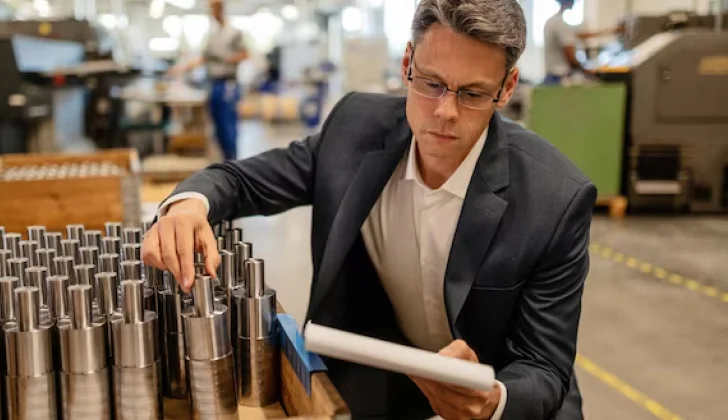
These professionals oversee the entire production process. They ensure that every component runs efficiently and meets established standards.
They plan and organize production schedules to manage resources and teams. The smooth operation of a business depends heavily on the work of production managers.
The role involves transforming ideas and plans into tangible outcomes. Production managers are tasked with setting goals.
They work together with other departments to make sure production matches the company’s goals. They need to make sure the quality is good while also finishing things on time.
Their responsibilities change depending on the type of business.
Manufacturing
In manufacturing, they focus on overseeing machinery and optimizing assembly lines.
The production manager makes sure raw materials become finished products on time and that all safety and quality rules are followed.
Media Production
Production managers coordinate complex projects involving multiple teams in media and entertainment. Their role centers around scheduling and budgeting.
Construction
In the construction industry, they are responsible for managing resources such as labor and materials. They ensure compliance with building codes.
They connect the management and the workers on the ground. Being able to anticipate problems and adapt to changes is key.
Production managers also face increasing pressure to adopt sustainable practices and manage teams in diverse locations. These additional dimensions add complexity to the role.
Key Responsibilities

These professionals are responsible for managing every part of the production process.
Planning Production Schedules
They create detailed production schedules. These schedules outline every step of the process.
Production managers assess the workload and break it down into manageable tasks.
They also plan for unexpected events, like late deliveries or broken equipment.
Assessing Resource Requirements
Understanding the scope of a project is critical.
Production managers evaluate the resources needed. They consider materials, manpower, and equipment.
They collaborate with various departments to ensure the availability of resources and identify any potential gaps.
Budgets and Timescales

Production managers estimate costs for everything to make sure projects stay within financial limits.
They also negotiate with suppliers and clients to agree on realistic budgets and timelines. This process requires finding a balance between keeping costs down and maintaining high quality.
Safety Regulations
Production managers are responsible for implementing and monitoring safety protocols to protect employees and minimize risks.
This includes regular inspections and training sessions.
They should ensure processes adhere to regulatory requirements.
Production Processes
Production managers oversee the entire process. They monitor each stage of production and make adjustments to maintain efficiency.
They identify the materials required for production and negotiate contracts to secure resources at competitive prices. Timely purchasing and inventory management are essential to prevent production delays.
Equipment maintenance is a priority for production managers. They set up schedules for maintenance and make sure all the machines are working their best.
Production managers work with buyers, marketing, and sales to meet customer needs and keep stakeholders informed.
Managing the Work of Junior Staff
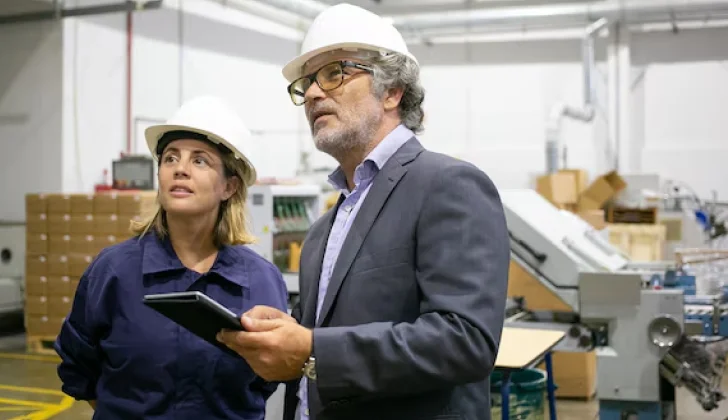
Production managers supervise junior staff and delegate tasks. They provide guidance as building a motivated and skilled team is an ongoing responsibility.
Training Sessions
Production managers help companies to keep up with technological advancements and industry trends.
They organize training sessions for their teams. This continuous learning keeps employees adaptable and capable of handling evolving challenges.
Responsibilities are deeply interconnected. Planning production schedules is directly related to figuring out what resources are needed and managing money. Likewise, keeping equipment maintained helps production run smoothly and stay on schedule.
Production managers must also be adaptable problem-solvers. When unexpected issues arise, they must think critically and act swiftly to resolve them.
They face the challenge of balancing competing priorities. Production managers must keep production cost-effective without compromising on quality!
Evolving Expectations in the Role
The role of a production manager continues to evolve. New expectations like the integration of automation and digital tools have added new dimensions to their responsibilities.
Production managers now have to manage new technologies, like AI systems that watch production or online equipment tracking.
Modern production managers are tasked with adopting environmentally friendly practices. Reducing waste and conserving energy are important nowadays.
Essential Skills and Qualifications
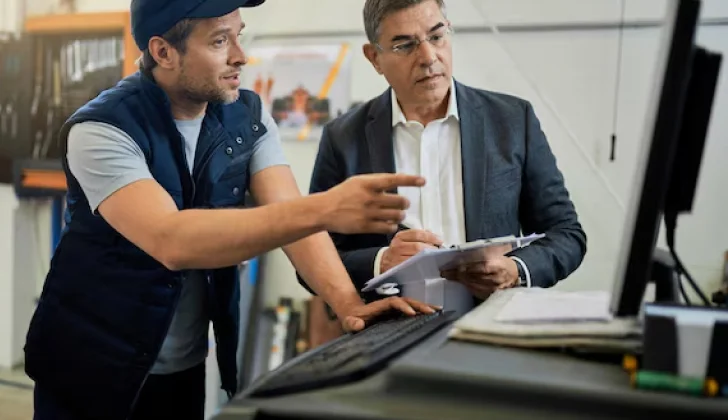
This role demands a combination of leadership qualities and problem-solving abilities to manage complex production environments.
Technical Proficiency
Production managers must know the details of the work process along with machinery and materials.
This technical expertise enables them to spot areas that aren’t working well and make improvements.
Being familiar with lean manufacturing principles and JIT production gives them a leg up.
Team Management Abilities
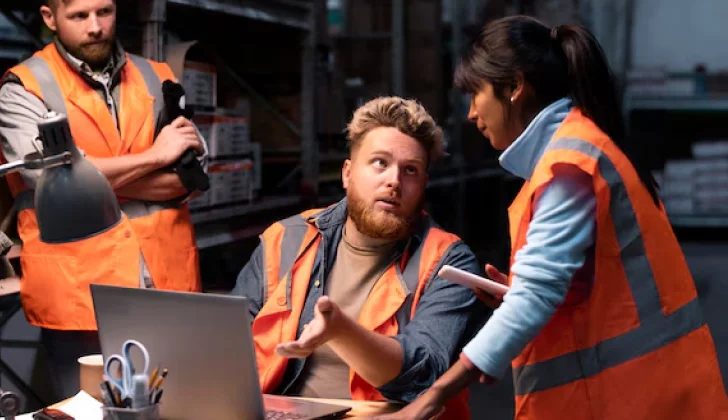
These professionals are responsible for guiding diverse teams.
Effective team management requires the ability to inspire trust and collaboration. Production managers also need to handle disagreements and give helpful feedback.
Problem-Solving
Unexpected challenges are inevitable. It could be a supply chain delay, an equipment failure, or even a quality control issue.
Production managers must think critically and act decisively.
Strong problem-solving skills allow them to analyze situations and develop practical solutions.
They should have the ability to make the right decisions under pressure.
Quality Standards and Regulations
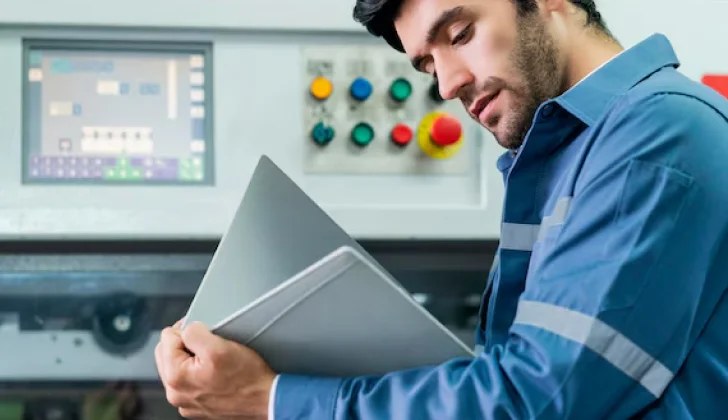
Production managers need to know the industry’s quality standards, like ISO standards, to make sure customers are happy with the products.
Knowing health and safety rules well is essential for making a safe workplace, lowering risks, and following the law.
Relevant Software Tools
Modern production management relies heavily on technology.
Familiarity with software tools like ERP systems and project management software along with data analytics platforms is essential for monitoring performance.
ERP systems help them coordinate what they have in stock and how they buy supplies efficiently.
Educational Background

The specific educational requirements for production managers vary by industry.
A bachelor’s degree is often the minimum qualification. Having a higher degree or some certifications gives you a competitive edge.
Certifications such as Six Sigma, CPIM, or PMP show expertise in professional development.
Continuous education is equally important. It helps production managers stay updated on emerging technologies.
Challenges Faced by Production Managers
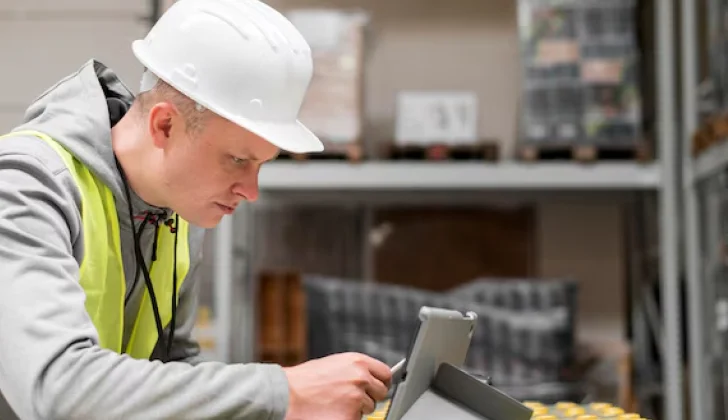
The role of a production manager is not without its complexities. These professionals face unique challenges that test their adaptability.
The constant evolution of technology is a double-edged sword for production managers.
Automation and artificial intelligence enhance efficiency but staying updated on these technologies and integrating them into existing workflows is a formidable task.
Production managers must continuously learn. They should evaluate the latest tools while ensuring their teams are trained.
Globalization expands the scope of operations daily. Production managers oversee teams in different time zones and cultural contexts.
Coordinating activities and maintaining communication is a difficult challenge.
Maintaining quality standards while managing costs is one of the most delicate balancing acts for production managers.
Businesses demand competitive pricing. This means we need to control costs very carefully but cutting corners negatively affects product quality and harms the brand’s reputation.
Production managers must find innovative solutions. Optimizing workflows and negotiating better supplier contracts bring new challenges.
The global supply chain is becoming more easily disrupted by political problems and natural disasters. These disruptions lead to delays and increased costs. Overcoming these challenges requires planning in advance.
A Quora Rundown
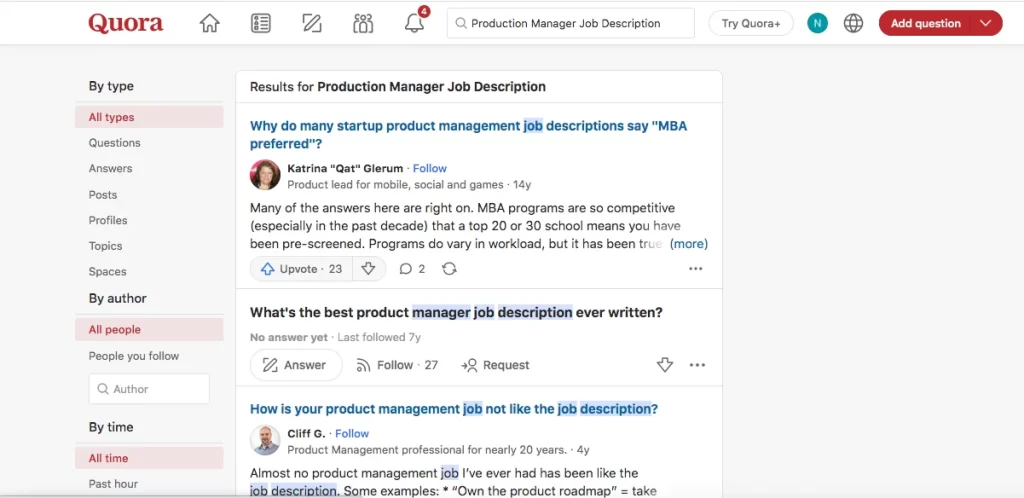
Stories from Quora users show that production managers have a lot of different responsibilities.
Manufacturing Processes
Production managers are at the core of manufacturing operations. As D. Chaudhari mentions, their primary duties include planning and controlling all steps of the production process to ensure the cost-effective delivery of products.
Michael Nichols emphasizes the importance of meeting production quotas and ensuring seamless operations. “It is your responsibility to get the products assembled/made, in the box, and on the truck,” he notes.
Leadership
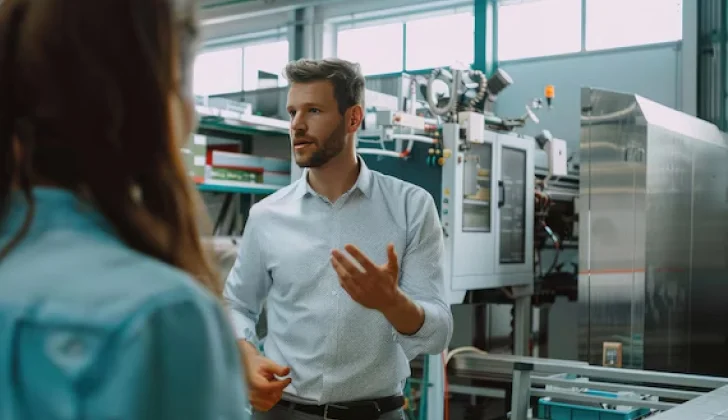
Akhil Menon points out that responsibilities include supervising the production team and assigning tasks as well as organizing job training and conducting performance evaluations.
Chaudhari also says that it’s very important for managers to be able to resolve conflicts and make good decisions and that they need to create a good working environment.
Swara Patil’s perspective introduces the interpersonal dynamics. Production managers must act as figureheads.
Quality Assurance
Martin Mirsky explains that managers are responsible for quality control and cost improvements.
Chang Liu compares the role to that of a movie producer. “You are in charge of at least quality, cost, and manufacturing,” Liu states.
Coordination with Teams
Agilemania believes the production manager’s important role is collaborating with diverse teams.
They also talk about how important it is to create a plan for launching products and managing how they get to customers. Agilemania elaborates on the necessity of creating a go-to-market strategy.
Radha Dhavan also notes the strategic role of production managers in monitoring schedules.
Strategic Expertise

Akhil Menon and Khush Raj Singh both stress the importance of preventive maintenance and optimizing labor deployment.
Singh adds that managers must act swiftly to address any issues, as delays lead to losses.
Innovation
Chang Liu’s analogy of a product manager as a chief architect shows the innovative aspects of the role.
Managers must adapt to changing market conditions and implement creative solutions to production challenges. They must also balance technical and human factors.
Employee Development
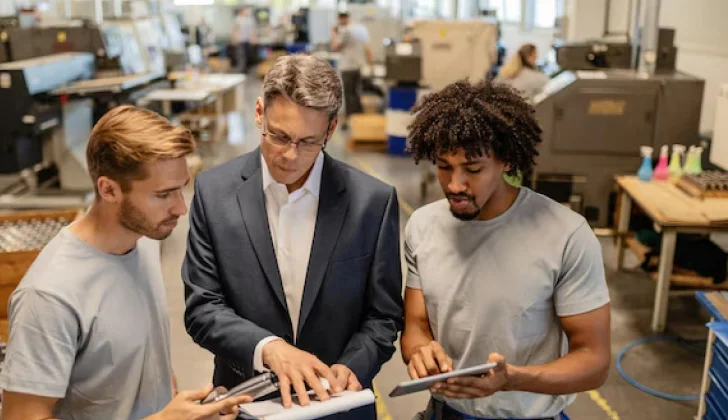
Training and development are repeating themes among Quora users.
Managers must ensure their teams are equipped to handle tasks. As noted by Manish Noola, understanding team strengths and weaknesses is essential.
Interpersonal skills are extremely important. As Patil describes, managers are disseminators of information. They bring transparency and alignment.
Abdullah Rao points out that production managers must stay updated with industry trends.
Continuous learning is critical for production managers.
Conclusion
Production managers play a role in ensuring smooth operations and meeting production targets.
They act as the bridge between planning and execution. Production managers balance efficiency and resource allocation.
The production manager’s responsibilities expand daily. They need a mix of technical expertise and strategic thinking.
The key is to develop problem-solving and adaptability. Keeping up with new technologies will help professionals succeed in this constantly changing field.
Hire the best candidates
with Wetest.
Create pre-employment assessments in minutes to screen candidates, save time, and hire the best talent.
Try for free