Understanding Pay Equity Analysis: A Simple Guide for Fair Compensation
Human resources
Bonica
September 5, 2025
Want to make sure everyone at your company is paid fairly? Forget the outdated notion of pay equity as a mere legal hurdle. It’s a genuine competitive advantage.
Companies that prioritize fair compensation build more engaged workforces. It’s simply the smart thing to do. Pay equity analysis feels so intimidating for many business leaders.
The complex statistics and methodological questions easily lead to procrastination. But here we offer a solution.
We’ll demystify pay equity analysis by providing actionable steps. You’ll gain practical insights to make your compensation practices fair and aligned with your core values.
Table of Contents
Pay Equity Analysis and Its Importance

Pay equity analysis isn’t just another HR buzzword—it’s a systematic approach to ensuring fair compensation across your organization.
The Definition and Purpose of Pay Equity Analysis
Pay equity analysis identifies and fixes unfair pay differences for employees doing similar jobs.
It examines disparities based on gender, race, age, and other protected characteristics to ensure equal pay for equal work. But more than that, it’s an equity investment in your workforce one that yields returns in engagement, reputation, and performance.
Research from McKinsey shows a business advantage, finding that companies with high gender diversity are 25% more likely to have better profits.
A comprehensive analysis answers critical questions like:
– Are employees in similar roles receiving comparable compensation?
– Do unexplainable pay gaps exist between demographic groups?
– Can differences in pay be justified by legitimate business factors like experience or performance?
Key Legal Requirements for Pay Equity Compliance
Pay equity isn’t just good practice—it’s often legally required. While requirements vary by location, several key regulations apply in many jurisdictions:
– The Equal Pay Act (U.S.) prohibits wage discrimination based on sex for substantially equal work
– Title VII of the Civil Rights Act bans compensation discrimination based on race, color, religion, sex, or national origin
– State-specific laws like California’s Equal Pay Act, which has stricter standards than federal regulations
The legal landscape continues to evolve, with increased reporting requirements emerging worldwide. A clear example of this in action is the UK. Companies with 250 or more employees are obligated to publish their gender pay gap data every year.
The cost of non-compliance can be severe. In 2021, Google agreed to pay $3.8 million to settle allegations of pay discrimination—a reminder that even tech giants aren’t immune to equity issues.
Business Benefits Beyond Compliance and Risk Mitigation
While legal compliance is crucial, the benefits of pay equity analysis extend far beyond avoiding lawsuits:
1. Enhanced Talent Acquisition: Job seekers increasingly research company pay practices. A recent Glassdoor survey found 67% of job seekers consider pay transparency a key factor when evaluating potential employers.
2. Improved Retention: When employees believe they’re paid fairly, they’re 4.5x more likely to be highly engaged and 2.1x more likely to recommend their company, according to Gartner research.
3. Stronger Company Culture: Fair pay practices show your commitment to your stated values. This builds trust throughout the organization.
4. Better Decision-Making: The data from equity analyses provides insights that improve hiring, promotion, and compensation strategies.
As Salesforce CEO Marc Benioff noted after his company invested $8.7 million to address pay disparities: “Equal pay for equal work is not just the right thing to do, it’s the smart thing to do.”
5 Essential Components of a Comprehensive Pay Equity Analysis

To conduct an effective pay equity analysis, you need a methodical approach that includes these five critical elements.
Gathering Accurate Compensation and Employee Data
Your analysis is only as good as your data. You’ll need comprehensive information including:
– Base salary
– Bonuses and incentives
– Stock options and equity grants
– Benefits with monetary value
– Employee demographics (gender, race/ethnicity, age)
– Job titles and levels
– Tenure and experience
– Education and certifications
– Location/geography
Data quality issues can derail your entire analysis. Common challenges include:
– Missing information for certain employees
– Inconsistent job titles for similar roles
– Outdated performance metrics
– Inaccurate or incomplete demographic information
Pro tip: Before beginning your analysis, dedicate time to clean your data. This might mean standardizing job titles, filling information gaps, or correcting obvious errors.
Defining Appropriate Comparison Groups and Job Categories
Not all jobs are comparable. A critical step is establishing appropriate groupings for meaningful comparisons.
The standard approach involves:
1. Creating job families: Group positions that require similar skills, responsibilities, and qualifications.
2. Establishing comparison factors: Identify which elements make positions “substantially similar” in your organization.
3. Setting minimum group sizes: For statistical validity, most analyses require at least 5-10 employees per comparison group.
Example: Rather than comparing all “managers” across an organization, you might compare “Marketing Managers Level 2” separately from “Engineering Managers Level 2,” as these roles likely have different market rates despite sharing a general title.
When groups are too small for meaningful statistical analysis, consider broadening categories while maintaining comparability, or using simplified comparisons that don’t rely on complex statistics.
Statistical Methods for Analyzing Compensation Disparities
You don’t need a statistics Ph.D. to conduct pay equity analysis, but understanding basic methods is helpful:
Multiple regression analysis is the gold standard, allowing you to control for legitimate factors affecting pay (experience, performance, etc.) while identifying unexplained disparities.
A simple analysis might include:
1. Calculating raw pay gaps between demographic groups
2. Adjusting for key factors like experience, tenure, and performance
3. Identifying remaining “unexplained” gaps that may indicate bias
For smaller organizations, simpler approaches like matched-pair analysis (comparing similar employees side-by-side) might be more appropriate than complex statistical models.
When interpreting results, focus on both:
– Statistical significance (is this gap likely due to chance?)
– Practical significance (is this gap large enough to matter?)
Identifying Legitimate Business Factors vs. Discrimination
Not all pay differences indicate discrimination. The key is distinguishing between legitimate business factors and potentially problematic disparities.
Common legitimate factors include:
– Experience and tenure
– Education and specialized certifications
– Performance and productivity
– Geographic location and market rates
– Special skills or competencies
– Shift differentials
Red flags that may indicate discrimination:
– Unexplained pay gaps after accounting for legitimate factors
– Patterns of disparity that align with protected characteristics
– Inconsistent application of compensation policies
– Subjective decision-making without clear documentation
Remember: The burden is on employers to demonstrate that pay differences are based on factors other than protected characteristics.
Documenting Your Methodology and Decision-Making Process
Thorough documentation is your best defense in case your pay practices are questioned.
Key elements to document include:
– Data sources and collection methods
– Comparison groupings and justification
– Statistical approaches and formulas used
– Factors considered in the analysis
– How you determined which disparities required remediation
– Remediation decisions and implementation
Keep records of:
– All analyses performed
– Meeting notes about pay decisions
– Justifications for individual compensation packages
– Changes made as a result of your analysis
Pro tip: Consider conducting your analysis under attorney-client privilege to protect sensitive findings while developing your remediation strategy.
How to Conduct Your First Pay Equity Analysis

Ready to dive in? Here’s your roadmap for implementing your first comprehensive pay equity review.
Step-by-Step Process for Implementing Equity Reviews
1. Form your analysis team
Identify key stakeholders from HR, legal, and finance who will participate in the process.
2. Define your analysis scope
Determine whether you’ll analyze the entire organization at once or phase in departments over time.
3. Gather and clean your data
Collect all necessary compensation and employee information, ensuring it’s accurate and complete.
4. Establish comparison groups
Group employees by substantially similar work, considering job content rather than just titles.
5. Select your analysis methodology
Choose appropriate statistical approaches based on your organization’s size and complexity.
6. Run your initial analysis
Calculate unadjusted pay gaps, then incorporate legitimate business factors.
7. Identify unexplained disparities
Flag pay differences that can’t be justified by business factors.
8. Develop remediation strategies
Create a plan to address unjustified pay gaps.
9. Implement changes
Put your remediation plan into action with appropriate adjustments.
10. Document everything
Maintain detailed records of your methodology, findings, and actions taken.
11. Establish ongoing monitoring
Set a schedule for regular reviews to maintain equity over time.
Tools and Software Options for Different Organization Sizes
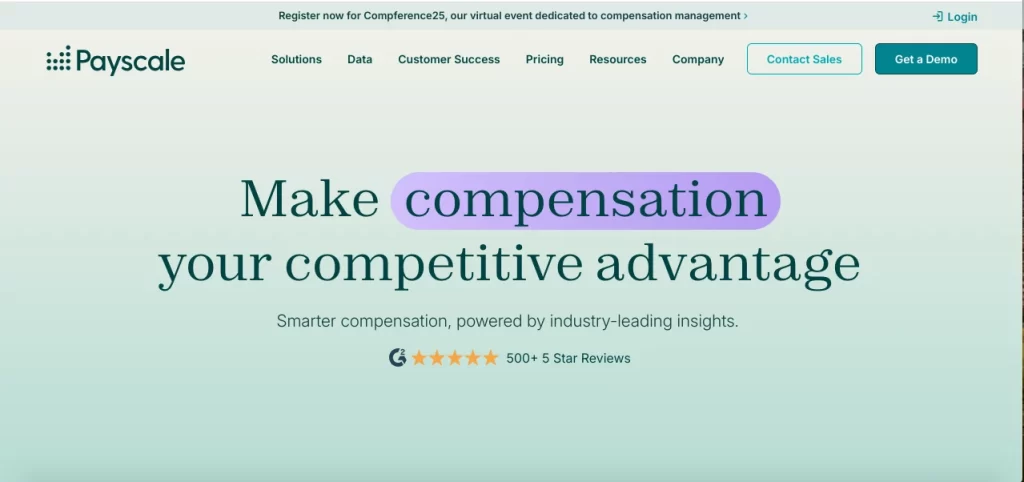
The right tools depend on your organization’s size and complexity:
For small businesses (under 100 employees):
– Excel spreadsheets with basic formulas
– Free or low-cost HR software with compensation modules
– DIY analysis templates available from organizations like SHRM
For mid-sized companies (100-1,000 employees):
– Dedicated compensation management platforms like PayScale or Salary.com
– Statistical software like SPSS or R (with appropriate expertise)
– Semi-automated tools that combine data management with analysis capabilities
For large enterprises (1,000+ employees):
– Enterprise-grade solutions like WorkDay’s Pay Equity tool or SAP SuccessFactors
– Custom analytics platforms built with tools like Tableau or Power BI
– Comprehensive services that combine software with consulting support
Remember: Even the best software requires human judgment to interpret results and determine appropriate actions.
When to Involve External Experts vs. Internal Teams
Most organizations benefit from a combination of internal knowledge and external expertise:
Consider using internal teams when:
– You have staff with statistical analysis skills
– Your organization is relatively small with straightforward compensation structures
– You’re conducting preliminary assessments before a more comprehensive review
– Confidentiality concerns make external involvement challenging
Bring in external experts when:
– Your organization lacks statistical expertise
– You need attorney-client privilege protection
– Your analysis might reveal significant legal exposure
– You operate in multiple jurisdictions with complex requirements
– You want an objective, third-party perspective
Law firms specializing in employment law, compensation consulting firms, and specialized pay equity consultants can all provide valuable external expertise.
Setting Realistic Timelines for Analysis Completion
Pay equity analysis isn’t an overnight project. Plan for these timeframes:
Preparation phase: 2-4 weeks
– Assembling your team
– Determining methodology
– Gathering initial data
Analysis phase: 3-8 weeks
– Cleaning and organizing data
– Running statistical analyses
– Identifying potential issues
Remediation planning: 2-4 weeks
– Determining appropriate adjustments
– Budgeting for changes
– Getting leadership approval
Implementation: 1-3 months
– Making compensation adjustments
– Communicating with affected employees
– Documenting actions taken
For your first analysis, plan for the entire process to take 3-6 months. Subsequent reviews will move faster as you refine your methodology and data collection processes.
Effective Strategies for Pay Gap Remediation

Take action once you’ve identified pay disparities. Here’s how to implement effective solutions.
Immediate Actions for Critical Pay Disparities
When you find significant unexplained pay gaps, prioritize:
1. Direct compensation adjustments
– Implement immediate salary increases for underpaid employees
– Consider one-time bonuses to address cumulative impacts of past disparities
2. Legally-sound implementation
– Consult with legal counsel before executing adjustments
– Document the business justification for each change
– Never reduce higher salaries to achieve equity (level up, don’t level down)
3. Prioritization framework
– Address largest disparities first
– Focus on gaps affecting multiple employees in a protected class
– Remediate gaps that have existed for extended periods
Example approach: “When we found a 7% unexplained gender pay gap in our marketing department, we implemented immediate adjustments bringing affected employees to within market range, with further adjustments planned over two pay cycles.”
Long-Term Solutions for Sustainable Pay Equity
Immediate fixes are just the beginning. To maintain equity, implement:
1. Structured compensation systems
– Develop clear salary bands with defined progression criteria
– Establish objective criteria for bonuses and incentives
– Implement formal processes for salary reviews and adjustments
2. Policy revisions
– Eliminate salary history questions from hiring processes
– Standardize negotiation protocols to reduce subjective outcomes
– Create transparent promotion criteria and timelines
3. System improvements
– Implement regular compensation audits (at least annually)
– Track promotion rates and time-in-role by demographic groups
– Monitor starting salaries for new hires across demographics
Major companies like Adobe, Starbucks, and Intel have achieved sustainable equity by combining immediate remediation with these long-term structural changes.
Budgeting for Pay Adjustments Without Breaking the Bank
Pay equity doesn’t have to derail your finances if you approach it strategically:
1. Phased implementation
– Address critical gaps immediately
– Plan remaining adjustments over 2-3 pay cycles
– Align major adjustments with annual compensation reviews
2. Creative compensation levers
– Consider accelerated review schedules for underpaid employees
– Use spot bonuses while implementing permanent adjustments
– Explore equity grants or additional benefits as part of adjustment strategy
3. Long-term budgeting
– Create a dedicated equity adjustment budget line
– Incorporate equity review into annual compensation planning
– Reduce future costs by addressing issues earlier
A practical example: Salesforce implemented a $3 million adjustment in their first equity review, but found only $1.6 million needed in the second year as their systems improved—demonstrating that costs typically decrease over time.
Communicating Changes to Management and Employees
Transparency builds trust, but requires careful messaging:
1. Executive communication strategy
– Present findings with context and benchmarking data
– Highlight business benefits alongside compliance requirements
– Provide clear cost projections and implementation timelines
2. Manager enablement
– Train managers before implementing changes
– Provide talking points for questions from their teams
– Equip them to explain adjustments without creating legal exposure
3. Employee communication
– Consider transparency levels that work for your culture
– Focus on commitment to fair practices rather than past issues
– Explain ongoing commitment to regular review and adjustment
Most organizations benefit from a balanced approach—acknowledging the commitment to equity without discussing specific disparities that might create liability or privacy concerns.
Common Challenges in Pay Equity Analysis
Even with the best intentions, you’ll likely encounter obstacles. Here’s how to overcome them.
Handling Small Sample Sizes and Statistical Limitations
When groups are too small for robust statistical analysis:
1. Alternative approaches
– Use simplified cohort analysis instead of complex regression
– Consider matched-pair comparisons for very small groups
– Aggregate data over multiple years to increase sample size
2. Qualitative assessments
– Conduct structured reviews of compensation decisions
– Document factors considered in individual pay determinations
– Look for patterns across decisions even when statistics aren’t viable
3. Conservative remediation
– When in doubt due to small samples, lean toward adjustment
– Implement structured decision-making to prevent future disparities
– Combine smaller groups where appropriate for broader analysis
Remember: Courts recognize that small sample sizes create statistical challenges, but still expect good-faith efforts to ensure equity.
Addressing Historical Compensation Decisions and Legacy Issues
Past practices can create persistent equity issues:
1. Handling “inherited” inequities
– Focus on current equity rather than assigning blame
– Document the historical context while implementing fixes
– Consider whether current decision-makers perpetuated historical issues
2. Addressing time-based compounding
– Recognize that small initial disparities grow over time
– Consider compensation history when determining appropriate remediation
– Implement catch-up adjustments that account for lost progression
3. Cultural change
– Acknowledge past approaches that may have contributed to disparities
– Create new norms around compensation discussions
– Celebrate progress while maintaining focus on continued improvement
Companies like Intel have successfully addressed historical issues by combining immediate adjustments with cultural transformation around pay practices.
Navigating Multiple Jurisdictions and Legal Requirements
For organizations operating across regions:
1. Compliance mapping
– Identify all applicable laws and regulations
– Create a hierarchy prioritizing the most stringent requirements
– Develop jurisdiction-specific supplements to corporate-wide analysis
2. Localized approaches
– Adjust comparison groups to reflect local market realities
– Consider location-specific legitimate factors (e.g., cost of living)
– Implement different remediation timelines based on local requirements
3. Coordinated implementation
– Maintain global equity principles while respecting local requirements
– Create centralized oversight with local implementation teams
– Document jurisdiction-specific considerations and approaches
Global companies like Microsoft conduct both worldwide analyses and country-specific reviews to manage this complexity effectively.
Balancing Transparency with Privacy Concerns
Finding the right level of disclosure is challenging:
1. Transparency tiers
– Share aggregate results more broadly than individual data
– Consider different disclosure levels for executives, managers, and employees
– Align transparency with your overall culture and communications approach
2. Privacy safeguards
– Anonymize data in reports and presentations
– Limit access to individual compensation information
– Establish clear data handling protocols for analysis teams
3. Legal considerations
– Consult counsel on communication strategy
– Balance transparency benefits against potential liability
– Consider conducting initial analysis under attorney-client privilege
Companies like Buffer take radical transparency approaches (publishing all salaries publicly), while others like Apple maintain more confidentiality while still addressing equity issues.
Beyond the Analysis: Creating Lasting Pay Equity

A one-time analysis isn’t enough. Here’s how to build pay equity into your organization’s DNA.
Implementing Fair Compensation Policies and Practices
Systemic changes prevent future disparities:
1. Structured decision frameworks
– Implement clear compensation bands with objective criteria
– Create standardized processes for starting salary determinations
– Develop formal guidelines for merit increases and promotions
2. Reducing negotiation impacts
– Consider no-negotiation policies for starting salaries
– Establish equal access to negotiation guidance
– Require documentation of all exceptions to standard offers
3. Eliminating bias-prone practices
– Remove salary history questions from hiring processes
– Implement structured performance evaluation systems
– Require diverse interview panels and compensation committees
Companies implementing these practices, like Gitlab (which publishes its entire compensation calculator online), report significantly reduced pay disparities over time.
Training Managers on Bias-Free Decision Making
Managers control many compensation decisions:
1. Targeted training programs
– Conduct specific training on compensation biases
– Provide real-world examples relevant to your industry
– Include scenario-based practice with feedback
2. Decision support tools
– Create compensation decision guides and worksheets
– Implement approval processes for significant deviations
– Provide market data to support objective decision-making
3. Accountability mechanisms
– Review patterns in manager decisions during talent reviews
– Include equity outcomes in manager performance evaluations
– Recognize managers who exemplify fair practices
Research shows that combining training with structural support produces better results than training alone—managers need both awareness and tools.
Establishing Regular Review Cycles for Ongoing Compliance
Make equity analysis a routine practice:
1. Scheduled analysis calendar
– Conduct comprehensive reviews annually
– Implement quarterly spot-checks on high-risk areas
– Align with compensation planning cycles
2. Continuous monitoring systems
– Track real-time metrics on new hire compensation
– Monitor promotion rates and pay changes by demographic group
– Implement alerts for potential disparity patterns
3. Integration with business processes
– Build equity checks into acquisition due diligence
– Include equity impact assessments in reorganizations
– Incorporate equity reviews in annual budget planning
Organizations with mature equity programs, like Salesforce, integrate these processes so deeply that equity analysis becomes as routine as financial auditing.
Measuring Success: KPIs for Pay Equity Programs
Track your progress with clear metrics:
1. Primary indicators
– Unexplained pay gap percentages by protected category
– Percentage of employees requiring equity adjustments
– Total investment in remediation annually
2. Supporting metrics
– Time-to-promotion by demographic group
– Starting salary comparisons for new hires
– Distribution of performance ratings across demographics
3. Business impact measures
– Employee engagement scores relating to compensation
– Retention rates across demographic groups
– Recruitment success for underrepresented populations
Leading organizations set public targets, with companies like Citigroup and Mastercard publishing their progress annually to create accountability.
Frequently Asked Questions About Pay Equity Analysis
Let’s address the most common questions about implementing pay equity programs.
How Often Should Companies Conduct Pay Equity Reviews?
Best practice: Conduct comprehensive analyses annually, with ongoing monitoring throughout the year.
Factors affecting frequency include:
– Company size and growth rate (faster-growing companies need more frequent reviews)
– Recent mergers or talent acquisitions (which may introduce inconsistent practices)
– Changes in compensation structure or job architecture
– New legal requirements in your operating jurisdictions
Microsoft, Adobe, and other leading companies conduct annual comprehensive reviews with quarterly check-ins to catch emerging issues early.
Is Pay Equity Analysis Required by Law?
The answer varies by location:
– In the US, federal laws prohibit pay discrimination but don’t explicitly require formal analyses (though they provide a strong defense if claims arise)
– Several states (California, New York, Massachusetts) have laws encouraging or requiring pay analyses
– Countries like the UK, France, and Iceland mandate pay gap reporting or analysis for companies above certain sizes
Even where not legally required, conducting analysis provides an affirmative defense in many jurisdictions if discrimination claims arise.
The trend is moving toward greater legal requirements, making proactive analysis increasingly important.
What’s the Difference Between Pay Equity and Pay Equality?
These related concepts are often confused:
Pay equality refers to providing equal pay for identical work—paying two people with the exact same job the same amount.
Pay equity is broader, focusing on fair compensation for work of comparable value, even when job titles or departments differ. It examines whether pay differences can be explained by legitimate business factors rather than protected characteristics.
Example: Pay equality would ensure all Level 2 Accountants receive the same salary. Pay equity ensures that differences in their salaries are based on factors like experience or performance, not gender or race.
How to Explain Pay Equity Initiatives to Stakeholders
Tailor your message to different audiences:
For executives:
– Focus on risk mitigation and competitive advantage
– Present industry benchmarks showing peer company actions
– Provide clear cost projections and implementation timelines
For managers:
– Emphasize their role in maintaining equitable practices
– Provide tools and guidelines for making fair decisions
– Explain how equity supports team performance and retention
For employees:
– Connect equity efforts to company values and mission
– Focus on the commitment to fair treatment rather than past issues
– Explain the process without creating unrealistic expectations
Successful communications typically emphasize forward-looking commitments while acknowledging the ongoing nature of equity work.
A Quora Rundown
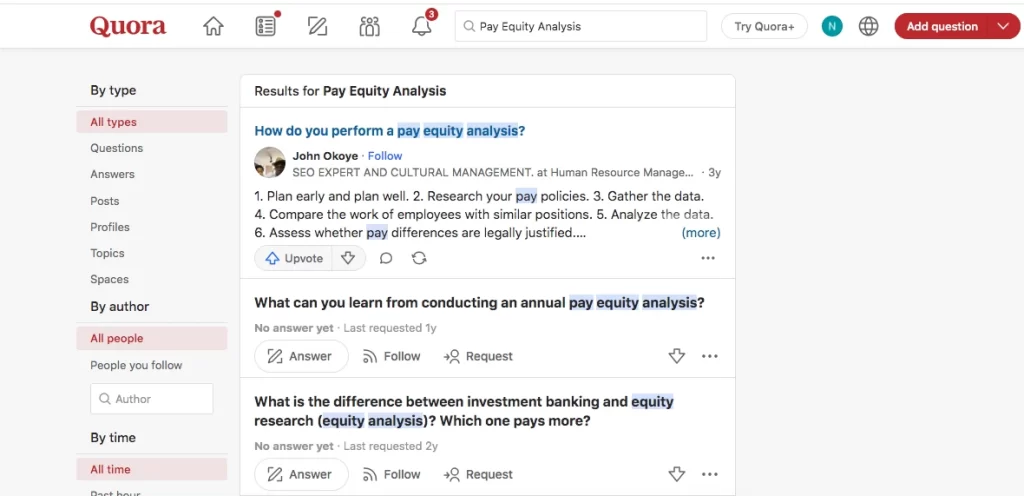
Here’s a synthesis of Quora users’ insights who’ve shared their practical tips.
Strategic Planning and Early Research
John Okoye is an SEO expert. He suggests, “Plan early and plan well. Research your pay policies. Gather the data. Compare the work of employees with similar positions. Analyze the data. Assess whether pay differences are legally justified.”
John’s checklist shows that mapping out policies ensures you won’t find major gaps only after deployment.
Biased Hiring Practices
Quora users stress that pay equity begins at recruitment.
Jen Dewar is a marketing consultant. He notes, “Never ask for a candidate’s salary history. … Following salary history bans, employers increased pay for job changers by about five percent. But women saw an eight percent increase, and Black employees saw a 13 percent increase.”
Removing salary history questions prevents legacy pay gaps from following new hires. Jen also warns:
“Reconsider asking for salary expectations. … Women ask for lower salaries than men 65% of the time. … Black women in tech earn 89 cents for every dollar their White, male counterparts earn.”
Bridging the Opportunity Gap
Pay gaps come from unequal advancement.
Jen Dewar believes, “Women hold nearly half of entry-level roles, but only 38% of manager roles, and 21% of C-suite roles. … White men hold 35% of entry-level roles, 44% of manager roles, and 66% of C-suite roles. This opportunity gap … is a major contributor to pay gaps.”
Transparency Controls
Negotiation dynamics skew outcomes even in equitable bands.
Jen Dewar notes, “Limit salary negotiations. 70% of men and women negotiate initial offers, but 7% more men succeed. Women of color are 19% less likely than a White man to receive a raise when they ask, and men of color are 25% less likely.”
Job Grades and Bands
Another layer of protection is clear compensation frameworks.
Jen Dewar adds, “Build job grades and salary bands. Using salary bands and job grades to set compensation targets will help you make more fair, strategic compensations decisions.”
Conclusion
Pay equity analysis isn’t just a compliance exercise—it’s a powerful tool for building a stronger, more engaged workforce while reducing legal risk.
By implementing the systematic approach outlined in this guide, organizations of any size can identify and address compensation disparities, creating fairer workplaces where employees are valued for their contributions rather than their demographics.
Remember that pay equity is a journey, not a destination. Even the most equitable organizations must maintain vigilance as hiring decisions, market changes, and organizational shifts create new potential for disparities.
Start where you are, use the tools available to you, and commit to continuous improvement. Your employees, your culture, and ultimately your business results will reflect the effort invested in getting compensation right.
Hire the best candidates
with Wetest.
Create pre-employment assessments in minutes to screen candidates, save time, and hire the best talent.
Try for free