
Notice Period Buyout Meaning: What It Is and How It Works
Human resources
Bonica
August 5, 2025
Have you ever bounced from a job before you served your whole notice period? If so, you might’ve had a notice period buyout happen to you.
This is getting more common in workplaces, affecting tons of career changes every year, but a lot of pros just don’t fully grasp how it all works.
In today’s super speedy job market, where moves happen fast and companies have to protect their interests, notice period buyouts have become this crucial tool for both employers and employees.
So, whether you’re thinking of ditching your current position or you’re an employer managing staff departures, knowing about buyouts can save you time, money, and unnecessary stress.
Let’s just dive into everything you need to know about notice period buyouts – from the basic concepts to negotiation strategies that can help both sides of the employment relationship.
Table of Contents
What Is a Notice Period Buyout? Understanding the Basics

A notice period buyout lets you fast‑track your exit by paying out the notice rather than serving it.
Definition and Core Concepts of Notice Period Buyouts
You know how a notice period buyout works? It’s basically a money arrangement where, like, either an employer or an employee just pays to skip the notice period they’re contractually supposed to do.
So, instead of working through your last two weeks, or four weeks, or even three months, the person who’s starting the early separation just pays a sum.
That amount typically equals the salary you would’ve earned during that time. Think of it as a fast-forward button for employment changes.
Instead of just dragging your feet through those last days or weeks at work, a buyout just gives you this super clean break, and it can benefit everyone.
The whole idea here really depends on both sides agreeing – you both gotta say okay for it to work right. It’s not about forcing anyone’s hand, but more about finding a way that respects the contract stuff while also giving you some flexibility.
Common Scenarios Where Buyouts Are Typically Used
Notice period buyouts shine in several common workplace scenarios:
– When an employee receives an offer from a new employer who needs them to start immediately
– During company restructuring when positions are eliminated but quick transitions are needed
– In situations where maintaining the employee on premises might create security concerns
– When there’s minimal work left for the departing employee to complete
– During sensitive leadership transitions where a clean break makes more sense
For instance, in tech companies, a developer might receive a buyout offer when leaving for a competitor, as the employer may prefer to limit access to proprietary code rather than having them continue working during the notice period.
Difference Between Buyouts and Standard Notice Periods
You know how normal notice periods work? They’re just transition times. The employee keeps doing their job, passing on info, finishing projects, and helping bring in or train the person taking over.
You still get your regular salary and benefits, then. But buyouts? Nah, those just stop the working relationship immediately or fast. This difference is a big deal because buyouts totally change how you leave a company and how soon you can move to your next opportunity.
Okay, so the main differences here? You’ve got the work stopping right then and there versus actually keeping on working.
Money-wise, it’s about getting one big payment all at once versus just your normal paychecks. Benefits just stop immediately in a lot of cases. Plus, there’s that whole not being physically at the office part. And often, it means you can just start your new job way sooner.
The Legal Framework Behind Notice Period Buyouts

Your contract’s clauses and local employment laws set the rules for any buyout arrangement.
Employment Contract Terms That Allow for Buyouts
The foundation for any notice period buyout lies in your employment contract. Most well-drafted agreements include specific language about notice periods and potential buyout options.
Key contract elements that govern buyouts typically include:
– The required notice period length (usually based on position level and tenure)
– Whether buyouts are explicitly permitted
– Calculation methods for buyout amounts
– Any conditions that must be met for buyout eligibility
– Approval processes for buyout requests
Without these provisions, buyout situations become murky and potentially contentious. That’s why examining your contract’s exact wording is the first step in understanding your buyout options.
Many modern employment contracts now include specific buyout clauses that outline the process in detail, reflecting the growing prevalence of this practice in today’s workplace.
Legal Rights of Employers and Employees During Buyouts
When you’re doing a buyout, you respect specific rights that both the employees and the employers have. Employees? They’re entitled to get the full buyout money that was agreed on, and they’re protected from being forced into a buyout if it’s not written in their contract.
They still get protection under employment laws until their actual last day, and they have rights to stuff they earned before, like vacation days or bonuses.
Employers, though, have the right to protect all their secret info and client relationships, and they can totally make people stick to those non-compete and non-solicitation agreements.
They also get to say no to buyout requests if they’re not contractually obligated, and they’re protected from people just suddenly leaving and messing up the business.
Regional Variations in Notice Period Buyout Regulations
Notice period rules change a lot across different regions and countries. In the UK and a bunch of Commonwealth countries, those legal notice periods are super strictly enforced, and buyouts must typically include all benefits that would have accrued during the notice period.
The United States, with its predominantly at-will employment system, has fewer legal requirements but still makes you follow contractual notice provisions if they exist.
European countries often have more complex regulations, with some even needing regulatory approval for certain types of buyout arrangements, especially for executives or when large numbers of employees are involved.
For instance, Germany requires minimum notice periods based on length of service, ranging from four weeks to seven months, making buyouts potentially way more expensive than in other regions.
Always check the specific laws in your jurisdiction, ’cause compliance stuff can significantly impact buyout structures and costs.
5 Key Benefits of Notice Period Buyouts for Employees

From extra cash to career acceleration, buyouts unlock several distinct advantages for departing staff.
Financial Advantages When Accepting a Buyout Offer
Accepting a buyout can create significant financial upside for employees:
1. Double-dipping potential: Receiving a lump-sum buyout payment while starting your new job immediately can effectively double your income during that period
2. Tax planning opportunities: A lump sum payment might be taxed differently than regular income in some jurisdictions
3. Immediate access to funds: Rather than waiting for regular pay periods, you receive the entire amount upfront
4. Potentially enhanced severance: Some companies offer more than the strict contractual minimum to ensure a smooth transition
5. Negotiation leverage: The company’s desire for a quick exit can sometimes result in better financial terms
One banking professional I interviewed received a three-month notice period buyout plus started his new position immediately, effectively earning five months of salary in just two months.
How Buyouts Can Accelerate Your Career Transition
Beyond the money, buyouts offer valuable career acceleration benefits:
– Start your new role sooner without losing income
– Avoid the awkwardness of working while everyone knows you’re leaving
– Use any gap time for professional development or certification
– Prevent your current employer from delaying your transition
– Create a clean break that helps you mentally transition to your new role
This acceleration factor is particularly valuable in fast-moving industries where timing can make the difference between securing a premier role and missing out entirely.
Reducing Workplace Tension During Employment Changes
Nobody brings up how awesome buyouts are for your mental peace. They get rid of that super weird time when you know your last day is coming, but you’re still just there, not doing much.
And they prevent your coworkers from getting annoyed that they’re stuck picking up your work. You won’t have to fret as much about dealing with secret company stuff as you’re making your exit.
It helps you avoid those awkward talks with customers who don’t know what’s up. And it just makes the whole goodbye process way shorter and less of a bummer.
How Employers Benefit from Offering Notice Buyouts

Companies use buyouts strategically to protect data, maintain employee morale, and streamline transitions.
Cost-Benefit Analysis of Employee Buyout Programs
Smart employers evaluate buyouts through a rigorous cost-benefit lens:
The direct costs include:
– The buyout payment itself (typically equivalent to notice period salary)
– Any additional incentives offered to facilitate a smooth transition
– Administrative costs of processing the buyout
These costs are weighed against potential benefits:
– Reduced security risks from departing employees with access to sensitive information
– Prevention of declining productivity during notice periods
– Protection of client relationships that might be compromised
– Faster restructuring and organizational change implementation
– Morale improvements among remaining team members
When properly structured, buyout programs can deliver significant net positive value, particularly for roles with access to proprietary information or client relationships.
Managing Workflow Disruptions Through Strategic Buyouts
Workflow continuity remains a primary concern during employee transitions. Buyouts give employers powerful tools to manage these disruptions:
– Immediately redistribute critical responsibilities rather than waiting for the notice period to end
– Fast-track replacement hiring without awkward overlap periods
– Implement succession plans immediately rather than gradually
– Create clean cutoff points for project ownership and accountability
– Adjust team structures without maintaining redundant positions
By controlling the timing and circumstances of departures, employers can minimize operational disruptions that often accompany standard notice periods.
Protecting Company Data and Client Relationships
Perhaps the most compelling reason employers offer buyouts is risk mitigation:
– Immediately revoke access to sensitive systems and information
– Prevent potential data exfiltration during notice periods
– Maintain control over client relationship transitions
– Reduce opportunities for competitive intelligence gathering
– Protect trade secrets and proprietary methodologies
For roles with significant access to intellectual property or client relationships, these protections often justify buyout costs many times over. One financial services firm estimated that their buyout program prevented at least three major client defections annually, saving millions in revenue.
A Quora Rundown
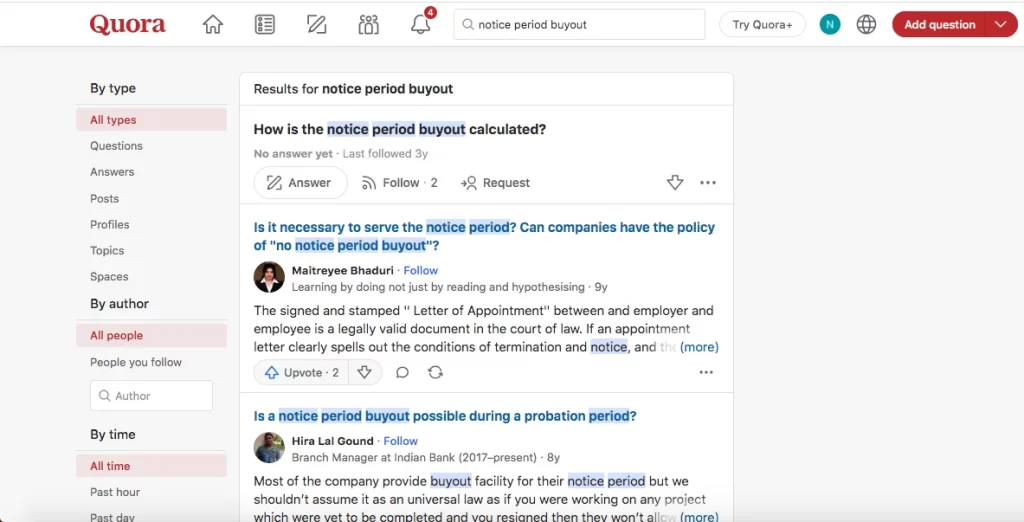
Below is a synthesis of real-world insights from Quora contributors on how companies execute notice period buyouts.
Partial Reimbursements and Formal Settlements
Ramees Mohammed and Dhanalakshmi Girish both describe scenarios where the employee fronts a partial notice‑period payment and then seeks reimbursement.
Ramees Mohammed: “The employee serves partial notice with the releasing organization. After settling in their final paperwork, they present that settlement calculation sheet to the hiring organization, which reimburses them directly. The employee then pays their former employer in full to finalize relief.”
Dhanalakshmi Girish: “If the current company accepts payment for the unserved period, the hiring company issues a demand draft for the exact amount directly to the releasing organization. Most organizations follow this straightforward Option 1.”
Joining Bonuses and Salary Top‑Ups
Several users highlight that, rather than direct reimbursement, new employers roll notice‑period costs into a “joining bonus”,
Ramees Mohammed: “Regardless of the notice‑cost settlement, the hiring organization may pay a joining bonus equivalent to the buy‑out amount—this is usually negotiated alongside salary.”
Sama: “Mostly in urgent‑hire cases, companies buy out the one‑month notice by paying the equivalent salary to the old employer on behalf of the new hire, enabling immediate start.”
This approach lets the new company bundle recruitment incentives together.
Structured Repayment Agreements and Tenure Clauses

Parimal J Gunjikar and Abhishek Gupta shed light on buy‑out agreements tied to future service commitments.
Parimal J Gunjikar: “If the payable amount is heavy, the new employer issues payment via demand draft—often secured by an agreement—and typically requires a two‑year minimum tenure. Leaving early triggers a prorated refund: after one year, 50% of the buy‑out cost must be repaid.”
Abhishek Gupta: “In some contracts, instead of notice‑period salary, the new employer covers a bond amount for early resignation. They pay either you or your former company directly, covering any dues so you can join unencumbered.”
HR vs. Hiring Managers
Amey Talekar offers an on‑the‑ground view of who approves these buy‑outs.
Amey Talekar: “ Contrary to popular belief, the hiring manager—not HR—often determines buy‑out decisions. They weigh factors such as the vacancy’s urgency, the cost of leaving the role open, and their department’s budget. HR simply executes the paperwork once the manager signs off.”
Negotiation Tactics for Early Release
Crowly Mathew, Chris Cox, and an Anonymous user share creative tactics for employees to negotiate an early exit:
Anonymous: “Before resigning, ask to be taken off your project, citing disengagement. Once off‑project, submit your resignation and claim personal reasons—like loan repayments—to justify an earlier release. Always volunteer to train your replacement to sweeten the deal.”
Chris Cox: “Speak frankly: ‘Either I buy out my notice today, or I simply walk away.’ You can’t be forced to work, and many companies actually place you on garden leave.”
Crowly Mathew Arackal: “Early release is often granted as a favor. If you resign, you forfeit the notice pay unless the employer explicitly pays it. Use goodwill gestures—like documenting handovers—to tip the balance.”
Bonded Service and Risk Mitigation

Several HR professionals warn of hidden clauses and risks if you don’t read your agreement closely.
Sama: “Some contracts include ‘bond’ clauses that penalize early exit more than mere notice‑period pay. Always confirm if you’re dealing with salary buy‑outs or bond reimbursements.”
Vikas Mewara: “Your offer letter may specify probation and notice buy‑out options. Once HR tells you the exact amount, you can either pay upfront or deduct it at full‑and‑final settlement—just be aware it can take 45 days to process.”
Timeline Expectations and Documentation
Several answers converge on the importance of precise timing and paperwork:
Vikas Mewara: “Once everything is agreed, your last working day is finalized in writing. The HR team will guide you on payment timing—some require advance payment, others wait until your very last day.”
Stephen Wilson: “If the employer terminates you immediately, they must still pay out your full notice salary. You may even negotiate a further lump‑sum to avoid unfair‑dismissal claims.”
Ria Puri: “When dependencies exist, buy‑out amounts commonly equal two months’ salary, though each employer’s rules differ. Always get the final terms in your appointment or offer letter.”
Step-by-Step Process: How Notice Period Buyouts Work

A clear roadmap ensures both parties agree on timing, payment, and legal formalities.
Initiating the Buyout Conversation Professionally
Initiating a buyout conversation, whether as an employer or employee, requires considerable tact. Begin by scheduling a private meeting specifically for this discussion.
Come prepared with knowledge of the contract terms and company precedents. Frame the conversation around mutual benefits rather than personal convenience.
Use non-confrontational language that emphasizes partnership. Be prepared to explain your reasoning clearly and concisely.
Finally, listen actively to concerns and objections without becoming defensive.
The most successful buyout discussions begin with phrases like: “I’d like to explore an option that might benefit both of us during this transition” rather than demands or ultimatums.
Calculating the Typical Buyout Payment Amount
Most buyout calculations follow a straightforward formula:
Base Buyout Amount = Base Salary ÷ 12 × Notice Period (in months)
However, several factors can adjust this amount:
– Whether benefits continuation is included in the calculation
– Treatment of variable compensation like bonuses or commissions
– Pro-rating for partial months
– Tax considerations and gross-up provisions
– Additional incentives for immediate departure
For example, an employee earning $120,000 annually with a three-month notice period would typically receive a base buyout of $30,000, but the actual amount might adjust based on these factors.
Documentation and Agreements Required for Buyouts
Proper documentation is crucial for preventing future disputes and ensuring clarity.
Essential documents typically include a formal buyout agreement detailing payment terms and amounts, confidentiality agreements or reinforcement of existing clauses, return of company property acknowledgments, and final release of claims in some jurisdictions.
A specific timeline for payment and employment termination is also vital, as is documentation of any continuing obligations (like non-competes).
These documents should be reviewed by legal counsel before signing, as they often contain binding provisions that extend beyond the employment relationship.
Negotiating a Fair Notice Period Buyout Package

Effective negotiation combines market research, leverage points, and crafted fallback positions.
7 Essential Elements of a Strong Buyout Agreement
When negotiating your buyout, ensure these critical elements are addressed:
1. Clear financial terms including exact payment amount and timing
2. Treatment of accrued but unused benefits (vacation, sick leave, etc.)
3. Continuation of health insurance and other benefits
4. References and employment verification procedures
5. Non-disparagement provisions that protect both parties
6. Clear definition of any continuing obligations
7. Tax treatment and reporting requirements
Missing any of these elements can create significant problems later, particularly around benefits continuation and reference provisions.
Tactics for Improving Your Buyout Negotiation Position
To strengthen your negotiating position, consider these proven approaches. Research company precedent by discreetly inquiring about previous buyout arrangements.
Understand your leverage points, particularly if you’re leaving for a competitor. Be prepared to explain the mutual benefit of a clean break.
Consider timing your departure during critical business periods when your leverage may be higher. Be willing to offer knowledge transfer documentation to smooth the transition.
Always prepare fallback positions if your initial proposal is rejected.
And finally, remain professional throughout the process, regardless of the outcome.
Remember that buyout negotiations are not zero-sum games—the best outcomes create value for both parties through creative problem-solving.
When to Consider Legal Consultation for Buyouts
Seek legal advice in these specific situations:
– When buyout amounts exceed $10,000
– If your employment contract contains complex restrictive covenants
– When the buyout involves waiving significant legal rights
– If you’re being pressured to accept unfavorable terms
– When international or cross-border issues complicate the arrangement
– If the buyout is part of a larger severance or workforce reduction
A one-hour consultation with an employment attorney can prevent costly mistakes and identify opportunities for improving terms that far outweigh the legal fees involved.
Potential Pitfalls to Avoid in Buyout Situations

Watch out for tax traps, lingering non‑competes, and unclear reference terms that can bite later.
Tax Implications of Receiving Buyout Payments
When you get a buyout, there are some big tax things you need to know about. Getting all your money at once might put you in a higher tax bracket for that year, so you pay more tax.
Also, some places tax buyout money differently than your normal pay. If they keep your benefits going, that might be taxed differently than just getting cash.
Sometimes, if you get the money split between two different tax years, it can save you money. And watch out, because your boss might not take out the right amount of taxes from your buyout check.
Consult with a tax professional before finalizing any substantial buyout to understand these implications. One financial executive saved over $12,000 by structuring his buyout payment to split between two tax years.
Understanding Non-Compete and Confidentiality Constraints
Buyouts don’t typically eliminate ongoing obligations:
– Non-compete agreements generally remain in force regardless of buyout
– Confidentiality obligations continue indefinitely in most cases
– Customer and employee non-solicitation provisions remain enforceable
– Intellectual property assignments are permanent
– Return of company property requirements still apply
Review these continuing obligations carefully, as violation could trigger legal action despite having accepted a buyout. The courts have consistently upheld these provisions even when employment ends earlier than planned.
Impact on Future Employment References and History
You really need to think about what a buyout means for your work story and what future bosses will hear.
You should find out what the company will say about why you left when someone calls them. Make sure to get your start and end dates clear for when people check your past jobs.
Figure out what exactly they’ll tell other companies when asked. Think about how future employers might see this buyout on your record.
And come up with a clear, consistent story for your whole work history.
These reference issues can affect future opportunities, making it crucial to address them explicitly during buyout negotiations rather than discovering problems later.
Real Examples: Successful Notice Period Buyout Stories

These case studies illustrate creative compromises and win‑win outcomes across multiple sectors.
Case Studies from Various Industries and Positions
These real-world examples illustrate successful buyout strategies:
Technology Sector
A software engineer with a two-month notice period negotiated a full buyout plus an additional two weeks’ pay in exchange for creating detailed documentation of his current projects. This benefited both parties—he started his new job sooner, while his employer received better transition materials than typically created during notice periods.
Financial Services
An investment advisor facing a three-month notice period negotiated a 50% buyout (1.5 months’ salary) in exchange for not joining a direct competitor for six months. This creative compromise protected the firm’s client relationships while giving the advisor freedom to pursue other opportunities immediately.
Healthcare Administration
A hospital administrator received a full one-month notice period buyout but agreed to be available for phone consultations during that time. This arrangement provided the clean break she needed while ensuring continuity for critical projects.
Lessons Learned from Challenging Buyout Negotiations
Even when it’s hard to get a buyout done, you still learn a lot. If you ask for too much at the start, talks usually just stop.
Getting emotional almost never makes things better. It’s way smarter to focus on what’s good for everyone; that usually works out best.
Writing everything down stops people from getting confused later. Sometimes, if things are stuck, having a neutral person come in can get talks going again.
And when the usual ways don’t work, that’s when clever new ideas often pop up.
One retail executive initially faced rejection of his buyout request but succeeded by offering to train his replacement during evening hours while still leaving immediately—a creative solution that addressed his employer’s primary concern.
Long-term Career Impact After Accepting Buyouts
The long-term effects of buyouts vary significantly:
Positive outcomes often include:
– Accelerated career progression by starting new roles sooner
– Preserved professional relationships through clean transitions
– Reduced stress during career changes
– Financial advantages from overlapping compensation
Potential negative consequences include:
– Perception issues if buyouts become a pattern in your career
– Complicated employment verification processes
– Potential industry reputation effects in small specialized fields
The key determinant of long-term impact appears to be how professionally the buyout is handled by both parties rather than the buyout itself.
Frequently Asked Questions About Notice Period Buyouts
Get quick answers to the most common buyout myths, eligibility concerns, and process questions.
Can Employers Force Employees to Accept Buyouts?
No, employers cannot typically force employees to accept buyouts unless specifically permitted by the employment contract. Buyouts require mutual agreement in most jurisdictions.
If your contract doesn’t explicitly allow for imposed buyouts, your employer must either:
– Negotiate terms you’re willing to accept
– Allow you to work the notice period as specified
– Pay you for the notice period while releasing you from work obligations
Some contracts do contain “garden leave” provisions that allow employers to remove you from the workplace while continuing payment during notice periods, but this differs from a true buyout.
How Buyouts Affect Unemployment Benefit Eligibility
Figuring out if you can get unemployment after a buyout can be pretty complicated.
In a lot of places, the buyout money might count like you’re still getting paid your regular salary. This often means you can’t get unemployment checks until after that buyout money is all “used up”.
Some areas even make them spread out the buyout money over what would have been your notice period.
Leaving on your own with a buyout might be seen differently than getting fired when it comes to getting benefits. So, having clear papers about why you left is super, super important.
Check with your local unemployment office before finalizing buyout arrangements if benefits eligibility is a concern. The rules vary significantly by location and specific circumstances.
Addressing Common Misconceptions About Buyouts
Let’s clear up some frequent buyout myths:
Myth 1: Buyouts are always equal to the full notice period salary.
Reality: While this is common, buyout amounts are negotiable and may be more or less than the notice period equivalent.
Myth 2: Accepting a buyout means forfeiting unused vacation time.
Reality: Accrued vacation is typically paid out separately from buyouts in most jurisdictions.
Myth 3: Buyouts automatically release you from non-compete agreements.
Reality: Most non-compete agreements remain in force regardless of how employment ends.
Myth 4: Employers must offer buyouts when requested.
Reality: Unless specified in your contract, buyouts remain optional for both parties.
Myth 5: Buyout payments aren’t taxable income.
Reality: Buyout payments are almost always taxable, though the specific treatment may vary.
Conclusion: Making Informed Decisions About Buyouts
In conclusion, making informed decisions about buyouts necessitates a comprehensive evaluation.
When considering such an offer, individuals should weigh: their immediate financial needs and cash flow situation, the anticipated timeline for securing a new position, the nature of their relationship with their current employer, the complexity involved in transitioning their responsibilities, the specific tax implications based on their situation, and their broader career narrative and the buyout’s integration within it.
The optimal decision is inherently subjective, varying significantly for each individual and their unique circumstances.
Final Checklist Before Accepting a Buyout Offer
Before signing on the dotted line:
– Calculate the true financial impact including tax effects
– Understand all continuing obligations post-employment
– Confirm the exact payment timing and method
– Verify how references and employment verification will be handled
– Review all documentation carefully, ideally with legal advice
– Get all terms in writing with appropriate signatures
– Clarify the return of company property process
This methodical approach prevents surprises and ensures you’ve considered all relevant factors.
Resources for Additional Support and Information
Making informed decisions about buyouts requires careful evaluation.
When considering one, weigh these key factors: your immediate financial needs and cash flow situation, the timeline for starting a new position, your relationship with your current employer, the complexity of transitioning your responsibilities, tax implications based on your personal situation, and your career narrative and how the buyout fits into it.
The correct decision is highly individualized, varying significantly for each person and scenario.
Hire the best candidates
with Wetest.
Create pre-employment assessments in minutes to screen candidates, save time, and hire the best talent.
Try for free