Bonica
July 30, 2023
Hello there! If you’ve found your way here, it’s probably because you’re trying to understand what an employee release form is.
Maybe you’re offered one or asked to draft or sign one. Well, today, we’re going to discuss this in straightforward language.
You need to sign some forms when you want to end an employee-employer relationship. One, is the employee release form, a significant legal document for both the employer and the employee.
By the end of this article, you’ll understand employee release forms, their purpose, and why they’re so important in the workplace. Let’s take a closer look!
Table of Contents
Understanding Employee Release Forms
Defining an Employee Release Form
An employee release form is a legal document used between an employer and an employee when the employment relationship ends. It’s designed to protect both sides from potential disputes.
To put it simply, this form is a formal, legal way of saying, “Let’s part ways and not engage in any future legal issues.”
Usually, in an employee release form, the employee agrees not to sue the company or bring up any legal claims, and in return, they usually receive something (like a severance package or final paycheck).
The Purpose and Importance of Release Forms
Why are these forms so important? Well, they serve a crucial role in ensuring smooth transitions when an employment relationship ends.
Here’s why:
Protection for the Employer
This form shields the employer from possible future lawsuits or legal disputes from the employee. This is a significant advantage today, where legal claims can be quite expensive and damaging.
Benefits for the Employee
In agreeing not to take any legal action, the employee often gets a benefit (like a severance package). This can be especially helpful in easing their transition to a new job.
Clarity and Peace of Mind
The form also provides clarity for both parties about what they can expect post-employment. This can help ensure a less stressful and more peaceful end to the employment relationship.
Circumstances Where an Employee Release Form is Needed

When do you actually need one of these forms? Although this document is most commonly used when an employee leaves the company, there are other scenarios where it can be beneficial too.
Job Termination Scenario
You’ll almost always sign one of these forms when you say goodbye to a job!
When an employment relationship ends, whether due to layoffs, firings, or the employee choosing to leave, an employee release form can ensure that both parties understand the terms of the separation and agree not to engage in any future legal disputes.
Asset or Equipment Usage
Imagine you’re an employer who provides employees with equipment or assets to perform their job (like a company car, laptop, or software). An employee release form can set the conditions for the return of these assets at the end of employment.
To make this process easy, companies use tracking systems such as QR codes for quick verification which can be linked to an asset record for instant update. Tools like Uniqode’s free QR code generator help create such scannable asset tags.
This helps protect your company’s property and makes the process clear and easy to understand for the employee.
Work-Related Incidents

This release form might come into play if an employee gets injured at work or is involved in a work-related incident.
It could ensure the employee won’t bring any future claims against the company in exchange for compensation, such as coverage of medical expenses.
Interactions with Third-Parties
Sometimes, an employee might need to interact with third parties on behalf of the company; for instance, to represent the company at an industry event.
An employee release form in these circumstances can protect the company from any liabilities arising from these interactions. This way, your interactions are your responsibility and not the company’s!
Media and Image Release Forms
Ever noticed pictures of employees on a company’s website or marketing materials? Your company may use one to create a friendly image of its teams. In this scenario, you should sign an employee release form to let them use your image!
The document grants the company permission to use an employee’s image, voice, or other personal material in various media.
Work and Task Release Forms
Employees may be required to perform potentially risky tasks in specific job roles. A work and task release form can outline the nature of the task and the risks involved.
By signing this form, the employee acknowledges those risks and often releases the employer from certain liabilities if an incident occurs.
An In-Depth Look at Important Release Form Terms

What are the key components that make up these forms?
Understanding these elements is crucial in fully comprehending your signing and its implications.
Key Elements of a Release Form
Generally, an employee release form should have the following components:
Parties Involved
This is usually the first part of the form, specifying who the agreement is between (typically the employer and the employee).
Recitals
These statements explain the background of the agreement, such as the reason for the termination of employment.
Release of Claims
The core part of the form is where the employee agrees to give up any right to sue the employer for specific claims.
Consideration
This is what the employee receives in return for signing the form. It could be severance pay, continued health benefits, or other compensation.
Confidentiality Clause
If included, this section requires the employee to keep certain information confidential, such as the terms of the agreement or trade secrets.
Non-Disparagement Clause
This prevents the employee from making damaging statements about the employer after their employment ends.
Revocation Period
Some forms offer a period during which the employee can change their mind and revoke their agreement.
Signature and Date
The form concludes with a section for the employee and employer (or their representative) to sign and date, indicating their agreement to the terms.
Understanding Complex Clauses
Struggling with complex legal clauses in the employee release form?
Here’s a brief explanation of some common complex clauses you might encounter:
Covenant Not to Sue
This is an agreement that the employee won’t file a lawsuit against the employer on issues specified in the form.
Indemnity Clause
This clause requires the employee to compensate the employer for any loss suffered due to the employee’s actions that are against the agreement’s terms.
Non-Compete Clause
This clause prevents the employee from starting a business or working for a competitor that could harm the employer’s business interests, usually for a specified period and within a certain geographical area.
Samples of Employee Release Forms
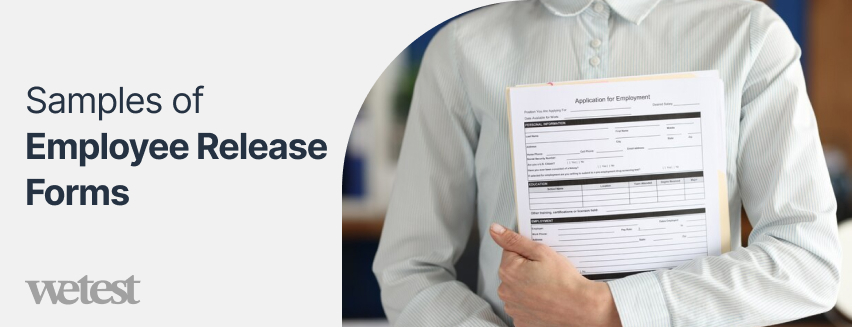
Getting a real-world look at some sample forms can help clarify all the explanations we’ve covered. So, let’s take a look at examples of a few types of employee release forms.
Keep in mind that these are simplified examples for illustrative purposes. The forms you might receive from your company are more complex and should always be prepared or reviewed by a legal professional.
Sample of a Job Termination Release Form
EMPLOYEE TERMINATION RELEASE FORM
This agreement is entered into between [Employer’s Name], hereinafter referred to as the “Employer,” and [Employee’s Name], hereinafter referred to as the “Employee.”
The Employee’s employment with the Employer will terminate on [Date].
In consideration of a severance payment of [Amount], the Employee agrees to release and forever discharge the Employer, its agents, and representatives from all claims and demands arising out of their employment relationship.
Signed this [Date],
__________________ __________________
Employer’s Name Employee’s Name
Personal Property Release Form Sample
This agreement is entered into between [Employer’s Name], hereinafter referred to as the “Employer,” and [Employee’s Name], hereinafter referred to as the “Employee.”
The Employer hereby provides the Employee with [Property] for the purpose of employment duties.
Upon termination of employment, the Employee agrees to return the said property in good condition.
Agreed and signed this [Date],
__________________ __________________
Employer’s Name Employee’s Name
Sample of a Liability and Legal Release Form
This agreement is entered into between [Employer’s Name], hereinafter referred to as the “Employer,” and [Employee’s Name], hereinafter referred to as the “Employee.”
The Employee agrees to release and hold harmless the Employer from any and all claims or liability related to [Specific Incidents or Conditions].
In return, the Employee receives [Consideration, e.g., Compensation, Benefits].
This agreement is signed and effective as of [Date],
__________________ __________________
Employer’s Name Employee’s Name
The Legal Aspects of Release Forms

What makes employee release forms legally enforceable? When should you consider not signing one? And most importantly, what are your rights and potential risks?
Here are the answers:
Legal Enforceability of Release Forms
Employee release forms are legally binding documents. It means that once signed, both parties must abide by the terms outlined in the form. However, for a release form to be enforceable, it must meet a few criteria:
Consent
The employee must sign the form voluntarily, without coercion or duress. So, if your employer is forcing you to sign a release form, you can take them to court!
Also, a release form signed under pressure and without consent has no legal effect.
Consideration
The employee must receive something of value (like a severance package) in exchange for signing the form.
Comprehension
The employee must fully understand the terms of the agreement.
Lawfulness
The terms of the agreement must be legal. For instance, an agreement to waive rights to pursue illegal activity would not be enforceable.
When Not to Sign a Release Form

While release forms can be a standard part of many employment relationships, there may be situations when you should think twice:
If the terms are unclear or unfair
You should fully understand what you’re agreeing to. If the language is too complex or the terms seem unfair, it may be best to hold off signing until you can consult with a legal professional.
If you’re being rushed
Don’t let anyone rush you into signing. You should have enough time to read and understand the document, ask any questions, and seek legal advice. You can ask for up to three days to ensure you want to sign and fully understand the document.
If you have ongoing claims
If you’re considering legal action or have ongoing claims against your employer, signing a release form could limit your options. It’s essential to seek legal advice before signing in these situations.
We highly recommend that you don’t sign any release form in case you have a claim against the company or any manager or you’re thinking of beginning one.
Understanding Your Rights and Risks as an Employee
Remember, signing an employee release form often involves giving up certain rights, like the right to sue your employer in the future.
But you also have rights when it comes to these forms:
Right to review
You have the right to review the form, ask questions, and seek clarification about anything you don’t understand.
Right to legal counsel
You always have the right to consult with a lawyer before signing any legal document, including a release form. If you’re unsure about any terms or potential implications, seeking legal advice’s often a good idea.
At the same time, you should be aware of the potential risks. For example, signing a release form usually means you’re forfeiting your right to bring future legal action against your employer related to your employment.
Understanding these legal aspects can help you navigate the process of dealing with employee release forms more confidently and protect your interests more effectively.
Frequently Asked Questions

What protections does a release form offer to an employer?
An employee release form primarily protects the employer from potential legal claims an employee might bring. This could range from allegations of wrongful termination to disputes related to workplace injuries.
As an employee, should I always sign a release form upon termination?
Not necessarily. Whether you should sign a release form depends on your specific circumstances, and you should not feel obligated to sign without understanding what you are agreeing to. You have the right to review the document, ask questions, and even consult with a lawyer if you wish.
Can I negotiate the release form with my employer?
Yes, like many legal agreements, the terms of an employee release form can often be negotiated before signing. If you’re uncomfortable with any terms or think the compensation isn’t fair, it’s within your rights to discuss these issues with your employer or have a legal professional do so on your behalf.
What happens if I don’t sign a release form?
If you choose not to sign a release form, you maintain your rights to bring legal action against your employer for any issues the form covers. However, you may also forfeit certain benefits, like severance pay, that are contingent upon signing the form.
Are there any potential hidden clauses in a release form?
Release forms can contain a variety of clauses. Understanding some might not be easy if you’re unfamiliar with legal jargon. Clauses to look out for include non-compete, non-disparagement, confidentiality, and arbitration agreements.
When might a release form be legally unenforceable?
A release form might be legally unenforceable if it doesn’t meet specific legal requirements. For instance, if you were coerced into signing, if you didn’t receive anything of value in return, or if the form involves illegal terms or objectives, it may not be enforceable.
Are there any situations where a release form is unnecessary?
Yes. For example, if an employee leaves on good terms with no disputes or potential claims, an employer might choose not to use a release form. However, it’s generally up to the employer’s discretion, and many choose to use release forms as a precautionary measure.
Final Words
So, have you talked to your employee or employer about the release form? Do you know how to modify it now and what to look for in the text?
It was a long way that we explored to understand the various aspects of employee release forms. A path that taught us what are the advantages of using this form and what are the cons.
Now you know that these forms shouldn’t be used to force employees into unfair agreements, and they can’t evade the employer’s legal responsibilities.
Remember, both parties should fully understand the terms and consult a legal professional before signing.
These forms help set clear expectations, protect rights, and minimize potential disputes between you and your employer. However, it’s crucial that they’re used in a way that respects the rights and interests of you both.
Received a release form and concerned about it?
Don’t worry!
Understanding what they are, when they’re used, their different types and their legal aspects can help you do better at these agreements.
Wish you luck signing the release form, whether you’re an employee or an employer!
Hire the best candidates
with Wetest.
Create pre-employment assessments in minutes to screen candidates, save time, and hire the best talent.
Try for free