

Bonica
July 24, 2026
Hiring a digital marketing manager is a risky decision. If you hire the wrong person, your campaigns might become bogged down, your advertising budget is squandered and nobody is held accountable for your growth. So, how do you hire the right applicant to work for you? It’s easy: have clear objectives and test for real skills.
In this guide you’ll find out how and what to look for when hiring a digital marketing manager, the skills that are important and how to write a solid job description, where to look for candidates, and how to utilize interviews and digital marketing skills tests to find the right person.
A structured process is important. A mis-hire can cost up to 30% of an employee’s first-year earnings, according to the U.S. Department of Labor, so you need to take every step to avoid guesswork.
Table of Contents
What Is a Digital Marketing Manager?
A digital marketing manager determines which channels are important, creates digital campaigns, monitors digital outcomes, and enables various teams to collaborate towards a common goal.
To employers, this role provides clarity. With a single person in charge, you don’t have to worry about having all the teams going in different directions.
That’s why the role needs to be aligned to a business objective from the outset.
Do you find becoming a digital marketing manager difficult? Yes, it can be. Typical skills include hands-on experience, data skills, channel knowledge, and communication.
What Does a Digital Marketing Manager Actually Do?
A digital marketing manager determines which channels are important, creates digital campaigns, monitors digital outcomes, and enables various teams to collaborate towards a common goal.
This is a great way for your team to go from no coordination to better decision making.
In practice they may:
Develop the strategy by determining which mix of the above is required for your website’s success.
Organize writers, designers, agencies, freelancers, sales and marketing tools and implement the plan accordingly.
Monitor performance of the data on KPIs such as leads, conversion rate, CAC, ROAS, traffic, and revenue impact.
If the paid ads drive traffic and generate leads, but not the leads you were hoping for, for instance, a good digital marketing manager is not going to “run more ads.” They would look at the landing page, audience targeting, offer, tracking setup, and follow-up process.
As an optional feature, you can invite the desired candidates to discuss how to improve one not very successful campaign. They will show their thought process, prioritization, and communication under stress.
Does this position cause you stress? Sometimes. Digital marketing is moving quickly. Managers face situations of last minute changes, insufficient clarity on data, and pressure to produce results.
The professional ones can easily tell the difference between work that is urgent and work that is important and are able to communicate trade-offs and guide the team to the next smart move.
Why and When Should You Hire a Digital Marketing Manager?
Digital marketing managers are essential when marketing becomes too big, too disorganized, or just too expensive to be done based on random plans.
The “why” is easy to explain: you need someone to get marketing to produce business outcomes.
This translates to improved paid ad ROI, higher SEO and content results, cleaner campaign reporting, and savvy budget decisions.
This will vary by stage, the “when.” You should consider hiring whenever:
You need an “insider” to help your agency establish priorities, monitor outcomes, and help safeguard your budget.
You can see no correlation between your marketing activity and pipeline, sales, or leads.
Everyone runs a few of the channels, but no one has the plan, numbers, or next steps.
Check your last 3 campaigns. What went well, what didn’t go well, and what should be done next? Otherwise, the marketing might need to be more clearly owned, and that’s where a digital marketing manager can be a smart hire.
Who Should You Hire: Manager, Marketer, Growth Marketer, or Agency?

Choosing between a manager, marketer, growth marketer, or agency matters because each one solves a different problem.
Hire the wrong type, and you may get activity without strategy or enough execution.
Option | Best for | Watch out for |
Digital Marketing Manager | Leading strategy, budget, campaigns, and reporting | May still need specialists for deep channel work |
Digital Marketer | Hands-on work like SEO, ads, email, or social | May not be ready to own the full plan |
Growth Marketer | Testing funnels, improving conversion, and finding faster growth | May focus less on brand or long-term content |
Agency | Getting access to a team of experts | Less internal control and slower feedback |
Think about what is missing in your business:
No clear direction? Hire a manager.
Too much execution work? Hire a marketer.
Need faster experiments? Hire a growth marketer.
For example, if your agency sends monthly reports but no one inside your company knows what to do with them, a digital marketing manager can bridge that gap. They turn outside work into internal decisions.
Types of Digital Marketing Managers You Can Hire
Different companies need different types of digital marketing managers. The right choice depends on your main growth problem.
Need more qualified leads? You may need a B2B demand generation manager.
Need better ad results? A performance marketing manager may be a better fit.
These are the most common types:
Performance Marketing Manager: They are responsible for paid ads, ROAS, CAC, and conversion rate.
SEO & Content Marketing Manager: Develops organic traffic via search, content planning, and keyword strategy.
Social Media Marketing Manager: is responsible for managing the brand, campaigns, engagement, and community growth.
Email or Lifecycle Marketing Manager: Makes email flows, retention, onboarding and repeat purchases better.
B2B Demand Generation Manager: develops campaigns to develop a sales pipeline.
E-commerce Marketing Manager: Optimize product sales, shopping campaigns, promotions and customer journeys.
Full-Stack Digital Marketing Manager: handles several channels, usually for startups or smaller teams.
This helps you avoid hiring a “general” manager when your real problem is specific.
For example, if organic traffic is flat, hiring someone strong in paid ads will not fix the issue.
How to Hire a Digital Marketing Manager: Step-by-Step
Hiring a digital marketing manager should not be based on guesswork. A clear process helps you find someone who can plan, execute, measure, and improve your marketing.
Here is a simple way to do it.
1. Define the business problem first
Do you need more leads? Better paid ad ROI? Stronger SEO? Cleaner reporting? A better link between marketing and sales?
Write down your top three goals, such as:
Increase qualified leads
Lower cost per lead
Grow organic traffic
This helps you avoid hiring the wrong person.
2. Set your budget and hiring model
Decide whether you need a full-time employee, freelancer, part-time support, local hire, remote hire, or international candidate.
Each option changes cost, control, and communication.
A full-time manager gives you more ownership. A freelancer may fit short-term work. Remote or international hiring can widen your talent pool, but it needs clearer communication rules.
Also consider the cost of getting it wrong. A poor hire can waste budget, delay campaigns, and create extra work for your team.
3. Write a clear job description
Your job description should explain the real job, not list every marketing skill possible.
Instead of saying, “Must have digital marketing experience,” write:
“You will manage paid campaigns, improve landing page conversion, report on CAC and ROAS, and work with sales to improve lead quality.”
4. Source candidates from the right places
Try LinkedIn, referrals, marketing job boards, freelance platforms, recruiting partners, and niche marketing communities.
The right channel depends on the role. Senior hires often come from referrals or specialist recruiters. Remote and international roles need a wider search. Project-based work may fit freelance platforms.
5. Use skill tests before final interviews
Interviews matter, but they do not always show real ability. Some candidates sound great but struggle with data, funnels, or campaign decisions.
A better approach is to use a short assessment before final interviews, so you can see how candidates handle real marketing decisions.
For this role, a B2B digital marketing assessment is a strong fit because it checks how candidates approach strategy, lead generation, funnel performance, campaign optimization, and marketing-sales alignment.
6. Compare candidates with a scorecard
Do not choose only based on who interviews best.
Score each candidate from 1 to 5 on:
Area | What to Check |
Strategy | Can they choose the right priorities? |
Analytics | Can they explain the numbers? |
Execution | Can they turn plans into campaigns? |
Communication | Can they explain results clearly? |
Leadership | Can they work with teams and agencies? |
Business thinking | Can they tie campaigns to the pipeline? |
A scorecard helps you make a fairer decision.
7. Plan the first 90 days
Give the new hire access to analytics, ad accounts, CRM data, past reports, campaign history, content plans, and sales feedback.
A strong first goal could be:
“Audit our current marketing performance and present the top five opportunities within 30 days.”
This gives the manager direction from day one and helps you see how they think, prioritize, and communicate.
Interview Questions for Hiring a Digital Marketing Manager

Good interview questions should show how candidates think, not just what tools they have used. This helps you avoid hiring someone who gives polished answers but cannot handle real marketing problems.
Use these questions in groups, and ask follow-ups like: “Why?” “What would you check first?” “What would you do next?”
First-week thinking
If you joined our team tomorrow, what would you want to review first?
What would you need from us in your first week to understand our marketing performance?
If our reporting looked messy, how would you clean it up without slowing the team down?
Strategy and prioritization
If we had a budget for only one channel next quarter, how would you choose it?
What would make you stop a campaign, even if it was getting clicks?
How would you decide between quick wins and long-term growth work?
Data and problem-solving
If traffic increased but leads dropped, what would you investigate first?
If paid ads had a high ROAS but poor lead quality, what would you do?
What marketing metric do companies often overvalue, and why?
Team and communication
How would you explain poor campaign results to leadership?
How would you handle a disagreement with sales about lead quality?
If a designer, writer, and ad specialist all had different priorities, how would you align them?
A useful interview tip: give candidates one real but simple business scenario from your company. Their answer will show whether they can link marketing activity to sales outcomes.
How to Write a Digital Marketing Manager Job Description
Before writing the job description, define your hiring goals.
A good job description should explain what the person will own, not just list random skills.
Include:
Role summary: what the digital marketing manager will lead.
Main goals: lead generation, SEO growth, paid ad ROI, reporting, or revenue growth.
Key responsibilities: campaign planning, channel management, analytics, and team coordination.
Required skills: tools, channels, data skills, and communication.
Success metrics: conversion rate, traffic, qualified leads, or pipeline.
Work details: salary range, location, remote options, and reporting line.
This matters because clear job posts filter candidates before interviews. Someone who only wants to run social media ads may not apply if the role clearly requires SEO, analytics, and sales alignment.
Clarity saves time.
It also helps candidates understand whether they are truly a fit. For example, instead of saying “manage marketing campaigns,” say “own monthly campaign planning, report on ROAS, and improve lead quality with sales.”
Required Skills and Qualifications for a Digital Marketing Manager
A strong digital marketing manager needs more than tool knowledge.
They need the right mix of strategy, data, execution, and communication. This helps you avoid hiring someone who can run tasks but cannot lead campaigns or improve results.
Core marketing skills
They should understand campaign planning, SEO, paid ads, email marketing, content, social media, analytics, budget control, and conversion tracking.
They do not need to be a deep expert in every channel, but they should know how each one supports business growth.
Data and reporting skills
Look for someone who can read campaign numbers and explain what they mean.
Experience with tools like Google Analytics, Google Ads, Meta Ads Manager, HubSpot, Semrush, Ahrefs, or Looker Studio is also useful.
Team and leadership skills

A good digital marketing manager can set priorities, explain trade-offs, work with sales and design teams, manage vendors, and keep projects moving, all of which a leadership and management test can help you evaluate.
This matters because digital marketing touches several teams, not just one person.
Role-specific strengths
The “extra” skills depend on your company. A SaaS company may need B2B demand generation. An e-commerce brand may need lifecycle marketing, product campaigns, and CRO experience.
These skills are easier to verify with a short work sample or role-based assessment, not just a resume.
How Much Does It Cost to Hire a Digital Marketing Manager?
The cost of hiring a digital marketing manager depends on the person’s experience, location, work model, and the results you expect them to deliver.
A full-time manager usually costs more than a freelancer, but they also bring more long-term ownership.
The real question is not only “How much will this hire cost?” It is “How much marketing budget, time, and revenue could we lose if we hire the wrong person?”
Average Digital Marketing Manager Salary and Hiring Costs
Hiring Type | Cost Structure | Best For |
Full-time manager | Salary + benefits | Long-term strategy |
Part-time manager | Monthly or hourly pay | Small teams needing senior guidance |
Freelancer/contractor | Hourly or project-based | Short-term campaigns or audits |
Remote manager | Salary or contract pay | Wider talent pool |
International hire | Market-based pay | Flexible budgets |
Agency-supported hire | Retainer + internal cost | Access to multiple specialists |
What Affects Digital Marketing Manager Hiring Costs?
The salary is only one part of the total cost.
The final price also depends on the person’s experience, how you hire them, what they are expected to own, and the extra costs that come with recruiting, onboarding, and tools.
Experience level: Senior managers cost more, but they usually need less training and can own a strategy faster.
Location and hiring model: Local, remote, international, full-time, part-time, and freelance hires all come with different price ranges.
Specialization: Paid ads, SEO, e-commerce, lifecycle marketing, and B2B demand generation skills can affect cost.
Scope of work: A manager who owns strategy, reporting, budget, vendors, and team coordination will cost more than someone focused on one channel.
Recruiting costs: Job ads, recruiter fees, screening time, and interviews add to the total cost.
Tools and onboarding: Analytics tools, ad platforms, CRM access, training, and setup time should be included.
Cost of a bad hire: The wrong person can waste ad budget, misread data, and delay campaigns.
Local, Remote, or International Digital Marketing Manager: Which Should You Hire?
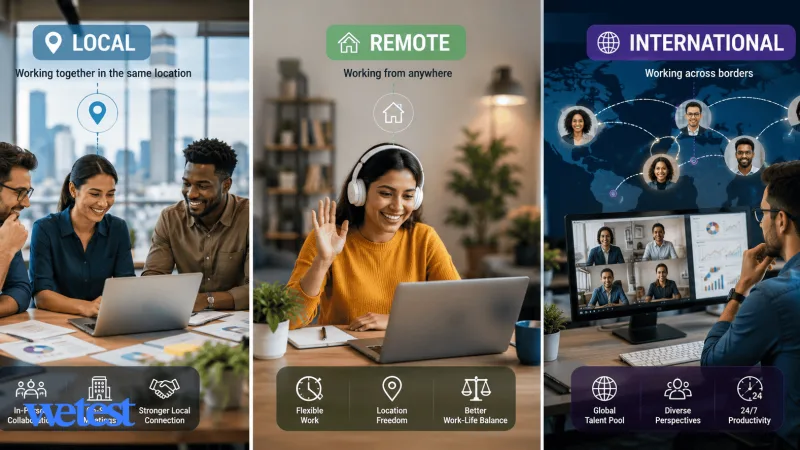
Your hiring model impacts cost, communication, and how well the manager understands your market. But do not choose by location first. Decide based on the work they need to own.
If your campaigns depend on local culture, events, partnerships, or in-person sales alignment, a local digital marketing manager may be safer.
If the role is mostly strategy, analytics, reporting, SEO, paid ads, or email, remote hiring can give you access to stronger talent outside your city.
If budget flexibility matters, an international hire can work well too, as long as they understand your target customers.
The real question is: where are your buyers?
If you sell to U.S. customers, your manager does not always need to live in the U.S., but they should understand U.S. search behavior, ad costs, buying habits, and sales cycles.
Before choosing, check:
Does the role need local market knowledge?
Will they work closely with sales or leadership?
Can your team manage async communication?
Do they understand your target country and customers?
Can you test their skills before hiring?
This helps you avoid hiring someone affordable but misaligned with your market.
Where to Find Digital Marketing Manager Candidates
You can find digital marketing manager candidates on LinkedIn, marketing communities, job boards, referral networks, freelance platforms, and recruiting agencies.
Use LinkedIn and referrals for senior or full-time candidates. Try niche marketing communities if you need someone with specific experience in SEO, paid ads, email, ecommerce, or B2B demand generation.
Use freelance platforms for short-term projects or audits. For hard-to-fill roles, a recruiting agency may help you reach candidates who are not actively applying.
But the source is only the first filter.
A strong profile does not always mean strong performance. Before moving someone forward, check their past results, work samples, and ability to explain real marketing decisions.
How to Screen and Evaluate Digital Marketing Manager Candidates
The right candidate is the one who can prove they understand your goals, your channels, and your numbers.
Use a simple screening flow:
Check results: Look for clear wins, like lower CAC, higher ROAS, more qualified leads, or stronger conversion rates.
Match channel fit: If you need SEO growth, look for SEO proof. If you need better ads, look for paid media proof.
Review work samples: Ask for reports, dashboards, campaign summaries, or landing page examples.
Use a consistent rating system, so the same standards are used to judge every candidate.
This helps you avoid gut-feeling hires and choose the person with the strongest evidence.
What Your Digital Marketing Manager Should Achieve in the First 90 Days
The first 90 days should prove whether your new digital marketing manager can understand the business, find problems, and turn ideas into action.
The 30-60-90 rule for managers is simple: the first 30 days are for learning, the next 30 are for planning and early improvements, and the final 30 are for execution and measurable progress.
Use it like this:
First 30 days: audit campaigns, analytics, ad accounts, SEO, email, content, CRM data, and past reports. They should learn what is working and what is not.
Days 31–60: build a focused plan, fix tracking issues, improve reporting, and choose quick wins.
Days 61–90: launch priority campaigns, test improvements, report results, and set the next growth plan.
This helps you avoid a slow or unclear onboarding process.
For example, ask them to present the top five marketing opportunities by day 30. That gives you a clear view of how they think, prioritize, and connect marketing work to business goals.
Common Mistakes That Lead to Bad Digital Marketing Hires
Bad digital marketing hires happen when companies hire for tools instead of outcomes.
Someone may know Google Ads, SEO, or email platforms, but still fail to prove which channels drive qualified leads.
That is often the biggest problem in digital marketing: unclear measurement. If you cannot see which campaigns bring qualified leads, sales, or pipeline, it becomes easy to waste budget.
Avoid these mistakes:
Hiring without clear goals or KPIs
Choosing a candidate only because they know popular tools
Ignoring analytics and reporting skills
Overvaluing clicks, impressions, or followers
Skipping skill tests or work samples
Expecting one person to be an expert in every channel
For example, if a candidate says they “grew traffic,” ask what happened next. Did leads improve? Did sales increase? Did the conversion rate change?
Conclusion
Hiring a digital marketing manager should not feel like a gamble. By now, you know what to look for, how to screen candidates, which questions to ask, and how to avoid costly hiring mistakes.
The next step is simple: test before you hire.
Do not rely only on resumes, polished interviews, or big claims. A strong candidate should be able to explain campaign decisions, read performance data, connect marketing work to business goals, and prioritize the right channels.
With Wetest’s marketing hiring assessments, you can compare candidates in a more structured way before making the final decision.
Hire the person who can prove how they think, not just the one who sounds confident in the interview.
FAQs
What is the 3-3-3 rule for marketing?
It means 3 seconds to grab attention, 30 seconds to build interest, and 3 minutes to deliver deeper value.
How long does it take to hire a digital marketing manager?
Usually 3 to 6 weeks. Senior or niche roles can take longer.
Should a digital marketing manager know how to code?
Not deeply. Basic knowledge of HTML, tracking pixels, tags, and landing pages is helpful.
Can one digital marketing manager handle all marketing channels?
They can oversee many channels, but they usually cannot be a deep expert in all of them.
Should I hire a junior or senior digital marketing manager?
Hire junior for execution support. Hire senior for strategy, reporting, and team management.
What should be included in a digital marketing manager portfolio?
Campaign examples, reports, dashboards, results, and a clear explanation of their role and impact.
What KPIs should a digital marketing manager report on?
Traffic, leads, conversion rate, CAC, CPL, ROAS, pipeline, revenue impact, and retention.
Hire the best candidates
with Wetest.
Create pre-employment assessments in minutes to screen candidates, save time, and hire the best talent.
Try for free