
Bonica
October 14, 2025
One wrong classification can cost your business thousands in back wages, and it happens more often than you think. Employee classification affects everything about your workplace. It determines how much you pay people. It shapes their daily schedules. And most importantly, it keeps you from getting in legal trouble.
The Fair Labor Standards Act makes two main employee types: exempt (they don’t get overtime) and non-exempt (they do get overtime). That simple difference has a ton of complex rules behind it.
Getting classification wrong costs a ton of money and creates legal problems. In FY2023, the U.S. Department of Labor’s Wage and Hour Division recovered about $212 million in back wages across all statutes, including roughly $24.5 million for misclassified workers alone.
Those numbers just show how serious a mistake that can be. A lot of business owners think a job title determines classification. A ‘manager’ title doesn’t automatically make someone exempt. The law looks at their real job duties, how much they make, and how you pay them.
Classification is under the spotlight now more than ever. Although a 2024 federal rule raising salary thresholds was struck down in court, the Department of Labor is still enforcing the 2019 levels, $684 per week for standard exemptions and $107,432 per year for highly compensated employees, while states such as California, Colorado, and New York continue to impose even higher thresholds or daily overtime rules.
This guide will help you accurately classify employees under federal and state wage laws to reduce risk and ensure fair pay practices. The stakes are high. Misclassification can lead to back pay and lawsuits. But correct classification creates clear expectations and legal protection for your business.
Table of Contents
What Exempt and Non-Exempt Mean
When you’re trying to figure out how to classify employees correctly, the terms ‘exempt’ and ‘non-exempt’ are the foundation for following all the wage and hour rules in the US.
These classifications come straight from the FLSA, and they decide if a worker gets overtime pay and other wage protections.
Getting these categories right is key to controlling payroll costs and managing company risk.
Exempt Employees
An exempt employee is ‘exempt’ from the federal overtime pay and minimum wage provisions of the FLSA. What that means is, unlike non-exempt staff, they don’t legally have to get paid overtime even if they work more than 40 hours in a week.
Employers may choose to offer bonuses or additional benefits to exempt employees, but the law does not require them to do so
To be correctly called exempt, these employees have to nail two huge tests. The salary basis and threshold test.
Exempt workers are paid a consistent salary at or above the federal minimum amount.
Their primary job duties must meet the criteria of one of the recognized exemption categories under the FLSA.
Exempt employees are most commonly found in executive, administrative, professional, computer-related, outside sales, or highly compensated roles that involve independent judgment or advanced expertise.
The exempt tag can mean they get more freedom with their schedule, but it also means they end up working longer hours without extra pay. That’s why companies really need to weigh both the legal compliance stuff and how the employee feels when they use this classification.
Non-Exempt Employees

Non-exempt employees are covered by the protections of the FLSA. This is the group that makes up most of the American workforce, and it includes staff in jobs where their hours are tracked closely.
By federal law, non-exempt workers must receive at least the applicable minimum wage and overtime pay at one and one‑half times their regular rate for all hours worked over 40 in a workweek, plus daily overtime where required by state law.
While most non-exempt employees are paid hourly, it’s a huge mistake to think that all salaried employees are automatically exempt. If a salaried person doesn’t pass those duties and salary tests, they still have to be called non-exempt and stay eligible for overtime.
For the company, misclassifying non-exempt employees can cost a fortune. For the staff, having the right non-exempt status is what guarantees they get fair pay for those extra hours and protects them against wage theft.
Exempt status is about your job role and responsibility, but non-exempt status is all about wage protections and the time you actually work.
Legal Framework and Tests for Classification
Getting the difference between exempt and non-exempt employees is the law. The rules for this stuff are mostly based on the Fair Labor Standards Act, which is a federal law they passed way back in 1938 to protect workers from unfair pay practices.
This gives companies clear criteria they have to use when they’re deciding if a staff member qualifies as exempt.
The FLSA and Core Tests for Exemption
The FLSA is what lays down the law for how staff are classified. To be exempt, workers have to pass three main tests.
- Salary Basis Test
The employee has to get a fixed salary that doesn’t change based on how much or how good their work is. They don’t get paid based on the hours they clock.
- Salary Level Test
Their salary has to be at least the minimum amount set by federal law. That number changes over time, and some states have even higher minimums. Companies have to use whichever standard is better for the employee.
- Duties Test
This is the trickiest part. The worker’s main job tasks have to fit into one of the official exemption categories.
An executive manages two or more employees, has hiring and firing power, and directs work.
Administrative work is office or non-manual, related to business operations, and requires a lot of independent judgment.
Professional jobs need advanced knowledge in areas like law, medicine, or teaching.
Computer-Related Roles is for highly skilled IT pros who design, analyze, or create systems.
Outside Sales staff are mainly focused on selling things or services away from the company’s office.
Highly Compensated Employees are people who earn above a much higher salary threshold, and they get some simplified rules.
If an employee doesn’t meet all of these tests, they must be called non-exempt.
State Variations and Compliance Challenges
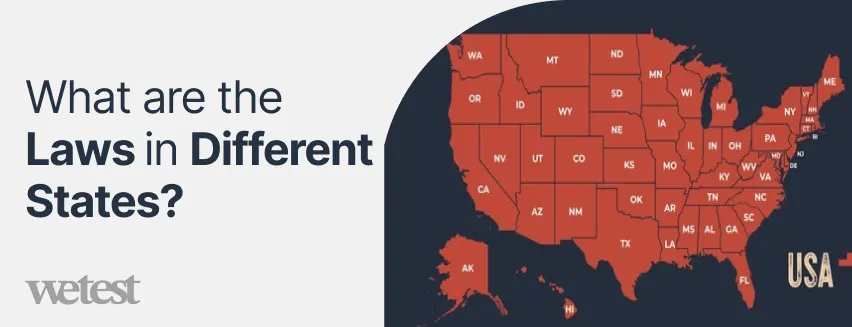
Even though the FLSA sets the baseline rules for the whole country, companies just cannot ignore state and local wage-and-hour laws.
Some states impose a higher salary threshold for exemptions than the federal rule, while others, such as California, Alaska, Colorado, and Nevada, require daily overtime after a set number of hours. This means staff must get overtime pay for working more than eight hours in one day, not just the typical 40 hours in a week.
Certain places have extra rules about recordkeeping or rest breaks that directly impact non-exempt employees. Because of this whole patchwork system, any employer operating in multiple states has to be super careful when applying classification rules.
A job that’s exempt federally might still be non-exempt under a specific state’s rules. The real deal is that compliance isn’t a one-time thing.
Key Differences in Pay and Benefits
One of the most obvious ways you can tell the difference between exempt and non-exempt employees is how they get paid and what kind of legal protections they have when it comes to overtime and other benefits.
Pay and Overtime Rules
Exempt employees get paid a salary, which means they get a fixed amount of money no matter how many hours they work in a week. The idea here is that their value comes from getting their job done instead of just counting the hours.
An exempt manager gets the exact same paycheck whether they put in thirty-five hours this week or fifty next week. But non-exempt employees are paid by the hour, and their pay is linked to the time they’re on the job.
Even if some non-exempt workers get a salary, they still have to be paid overtime if they work more than the standard limit. The big difference is around overtime pay.
Non-exempt workers have a right under the FLSA to time and a half for every hour they work over forty in a workweek. And don’t forget, some states are way tougher and demand overtime after just eight hours in one day.
Exempt workers have no legal right to overtime, even if they pull a ton of late nights. The company might give them bonuses or flexible time to make up for those long hours, but that’s a choice, not a rule.
Benefits and Workplace Protections
When you look at benefits, the big difference here is less about what the law says and more about what companies do. I mean, there’s nothing that forces employers to give exempt employees better health insurance, retirement plans, or PTO, but those exempt jobs are higher up, so they naturally come with better benefit packages.
Non-exempt employees are guaranteed minimum wage and overtime protections under the FLSA, but they often receive fewer discretionary benefits compared with exempt roles.
Another practical difference is tracking time. The law says employers have to keep accurate records of hours for non-exempt staff, and that’s why you see time clocks, punch-in systems, or time apps everywhere.
But exempt employees don’t have those strict rules, because their pay isn’t based on hours. This doesn’t mean you can overwork them, but it definitely means the paperwork is heavier for non-exempt employees.
The whole pay structure difference shows two completely different ways of working. Exempt jobs are all about the responsibilities and the final results, while non-exempt jobs are tied to the number of hours you put in.
A Quora Rundown
Here is a synthesis of real user perspectives pulled from Quora.
Real Pay Trade-Offs and Surprising Math
Several contributors pointed out how pay can shift in unexpected ways once overtime and scheduling realities are factored in.
Jeffrey Wieler notes the arithmetic many managers miss.
“An exempt employee may make more than a non-exempt (also known as hourly). For example a hourly employee making \$20/hour may easily make more than a manager/supervisor who makes \$40K/year, especially if the hourly employee works overtime.”
Promotions to exempt salary can temporarily reduce take-home pay for workers who rely on overtime.
Colin Jensen summarized the emotional trade-off.
“Exempt just means you don’t get paid for overtime. So it’s ‘worse.’”
On-call, Comp Time, and Creative Pay Practices
Users shared concrete examples of how employers handle on-call and compensatory time in practice.
Barry Christie described a regional practice in British Columbia.
“If I was to be on call I was paid at 1/4 my hourly rate for each hour on call whether I was called out or not. if I was called out then overtime rates applied.”
This example shows employers use tiered pay rules to manage costs.
Users note that some companies give time off in lieu rather than pay for managers, or use “salary non-exempt” roles where salaried workers still track time.
Promotion Pitfall as the Hidden Pay Cut
Multiple Quora users discussed promoting someone to management without matching their expected income.
Jeffrey Wieler and John Napoli both remark that hourly workers can end up earning more than newly promoted managers because overtime evaporates with exempt status.
Napoli explains the rationale employers use: exempt work is “hired to achieve specific results and not to fill specific hours,” but that doesn’t solve the immediate pay gap for employees used to overtime.
Employers should model pay scenarios before promoting and communicate the likely financial impact to candidates.
Burnout, Autonomy, and Company Culture

Dave Crisp warns about burnout.
“So much work is expected you’ll burn out.” KB echoed the ambivalence: “The benefit of being exempt is that your pay is not based on the number of hours you work per week. The drawback … is that your pay is not based on the number of hours you work per week.”
Unusual Cases and Edge Scenarios
Quora users called out edge cases that readers often miss.
Salaried non-exempt roles exist (Mark DeVries explained this), where employees draw a salary but still track time and receive overtime.
Public safety jobs have unusual overtime and scheduling rules that create high overtime pay despite a base salary (Colin Jensen’s point).
Professors doing committee work typically don’t get extra pay even when covering tasks outside class time (T.L. Brink’s experience).
Worker Advice and Remediation Strategies
Neil Kossler urged documentation. “Make sure you can prove how many hours you worked.” That’s step one for any potential claim.
Dennis Urban shared a worker’s stance after an abusive practice. He refused a pay cut masquerading as a promotion and left the employer.
Colin Jensen recommended legal counsel. “If you’re averaging less than minimum wage because of it … talk to an employment lawyer or at least your state labor board.”
Conclusion
Properly classifying employees keeps the company and the staff safe. The financial and legal problems you get from messing up a classification are way more expensive than just following the rules.
Doing regular audits and getting expert advice is how you avoid those pricey mistakes. The three-part test gives clear rules for making those classification decisions.
If you’re not sure, it’s always safer and more conservative to just classify them as non-exempt. When things get complicated, getting a lawyer’s opinion offers protection.
The trend is more enforcement and tougher standards. Having a proactive compliance plan puts your business in a good spot, no matter what rules change next.
This whole employee classification touches every single part of your business. Start right now with a full audit of how everyone is classified. Update all your job descriptions and policies as needed.
And make sure your management team gets trained on how classification works. Spending money on doing classification right pays off big time with legal safety and happy employees.
FAQs
What is the difference between exempt and non-exempt employees?
Exempt employees are not eligible for overtime pay under the FLSA, while non-exempt employees must receive overtime for hours worked over 40 per week.
How do I know if an employee is exempt or non-exempt?
Classifying employees correctly requires applying the salary basis, salary level, and duties tests.
Can a salaried employee be non-exempt?
Yes. A salaried employee who does not meet the FLSA exemption criteria must be classified as non-exempt and is eligible for overtime. Salary alone does not determine exempt vs non-exempt status.
What are the risks of misclassifying an employee?
Misclassification of exempt vs non-exempt employees can lead to back pay, fines, and lawsuits.
Do exempt employees receive overtime pay?
No. Exempt employees are excluded from federal overtime requirements. Only non-exempt employees are entitled to overtime.
Can exempt and non-exempt classifications change?
Yes. Job duties, salary, or legal thresholds can trigger a reclassification. Employers should regularly review positions to ensure compliance with guidelines.
How do state and federal laws affect exempt vs non-exempt classification?
Federal law sets the baseline rules for exempt and non-exempt employees, but states can have stricter salary thresholds, overtime rules, and recordkeeping requirements.
Hire the best candidates
with Wetest.
Create pre-employment assessments in minutes to screen candidates, save time, and hire the best talent.
Try for free