
Employee Status Change Form: What It Is and How to Use It
Human resources
Bonica
June 27, 2025
Behind every exciting career move within a company – from promotions to departmental shifts and schedule modifications – is a critical piece of paperwork: the employee status change form. This unsung hero of HR ensures your transition is officially documented, your pay is accurate, and the company stays on the right side of the law.
Proper documentation transcends mere paperwork; it provides essential security for both employees and the company. For HR professionals managing workforce changes and employees navigating career transitions, a clear understanding of the employee status change form can be the deciding factor between a smooth administrative process and a significant administrative burden.
Table of Contents
What Is an Employee Status Change Form?

An employee status change form is an official document that records and authorizes modifications to an employee’s work status within an organization. Think of it as your employment relationship’s paper trail—capturing the who, what, when, and why of workplace transitions.
These forms document critical changes including promotions, transfers, compensation adjustments, schedule modifications, leaves of absence, and employment terminations. Rather than relying on verbal agreements or email chains, a proper status change form centralizes all relevant information in one standardized document.
For HR departments, these forms are essential for:
- Creating an auditable record of employment decisions
- Ensuring consistent application of company policies
- Facilitating accurate payroll processing
- Maintaining compliance with labor laws and regulations
- Providing documentation to defend against potential disputes
Without proper status change documentation, organizations risk inconsistent employee treatment, payroll errors, and even legal liability. For employees, these forms provide confirmation of agreed-upon changes and protect their rights during transitions.
Key Components of an Effective Status Change Form

An ideal employee status change form is both comprehensive and user-friendly, capturing critical data without becoming cumbersome. We’ll now delve into the vital sections that are fundamental to every status change document.
Personal Information Section
This foundational section establishes who the change affects:
- Employee name (as it appears in company records)
- Employee ID number or identifier
- Current department and position title
- Direct supervisor/manager name
- Date of original hire
Current Status Documentation
Before documenting the change, the form should clearly record the employee’s present situation:
- Current employment classification (full-time, part-time, temporary)
- Regular scheduled hours/shifts
- Current compensation details (hourly rate or salary)
- Benefit eligibility status
- Job grade or level (if applicable)
New Status Details
The heart of the form details the specific changes being implemented:
- Nature of status change (promotion, transfer, compensation adjustment, etc.)
- Effective date of change
- New position title (if applicable)
- New department or reporting structure
- Updated compensation information
- Revised benefits eligibility
- Reason for the change (business need, employee request, performance-based)
Authorization Section
The approval section provides accountability and ensures proper authorization:
- Requesting manager signature and date
- Department head approval
- HR verification signature
- Payroll acknowledgment
- Upper management approval (for significant changes)
- Employee acknowledgment (when appropriate)
By including these essential components, organizations create a comprehensive record that protects all parties and facilitates accurate implementation of the requested changes.
6 Common Scenarios Requiring Status Change Forms

Promotions and Job Title Changes
When an employee moves up the career ladder, proper documentation ensures both recognition and appropriate compensation adjustments. An effective status change form for promotions should include:
- Old vs. new job title comparison
- Updated job responsibilities summary
- New reporting relationships
- Performance criteria that led to promotion
- Compensation adjustments (salary increase percentage)
- Changes to exemption status if applicable
- New access permissions or system requirements
For employees, promotion documentation provides clear expectations about new responsibilities. For employers, it creates a record of advancement opportunities provided and performance recognition.
Employment Type Transitions
Today’s workforce frequently moves between different employment classifications, whether converting from contractor to employee or shifting between full-time and part-time status. These transitions require careful documentation of:
- Previous employment classification
- New employment status
- Changes to hourly requirements or schedule
- Benefit eligibility modifications
- PTO/vacation accrual adjustments
- Tax withholding impacts
- Compliance with applicable regulations (ACA requirements, etc.)
These transitions often impact multiple systems, from payroll to benefits administration, making accurate documentation essential for backend operations.
Departmental Transfers Within the Organization
Internal mobility keeps talent within the organization while allowing employees to explore new challenges. When documenting interdepartmental moves, status change forms should address:
- Original and new department information
- Budget code or cost center transfers
- Training requirements for new role
- Knowledge transfer timeline
- Physical workspace changes
- System access modifications
- Introduction to new team members and resources
Proper documentation during a transfer helps prevent employees from getting lost in the shuffle and establishes clear expectations for both the employee and the relevant teams.
Salary and Compensation Adjustments
Money matters require crystal-clear documentation. When processing compensation changes, forms should detail:
- Current compensation rate
- New compensation amount
- Percentage or dollar amount of change
- Reason for adjustment (merit, market alignment, promotion)
- Comparison to compensation guidelines
- Budget approval confirmation
- Retroactive payment requirements (if applicable)
Detailed compensation documentation protects organizations against claims of discriminatory pay practices while ensuring employees receive promised adjustments.
Leave of Absence Documentation
When employees need extended time away, status change forms create clarity about expectations and return conditions:
- Leave type (FMLA, military, personal, sabbatical)
- Anticipated start and end dates
- Pay status during absence (paid vs. unpaid)
- Benefit continuation arrangements
- Communication expectations during leave
- Return-to-work requirements
- Interim coverage arrangements
Proper leave documentation ensures compliance with applicable laws while maintaining organizational continuity during the employee’s absence.
Separation and Termination Processing
When employment relationships end, documentation becomes even more critical. Termination forms should cover:
- Separation type (voluntary, involuntary, retirement)
- Last day of employment
- Return of company property requirements
- Final pay calculation and distribution
- Accrued PTO/vacation payout
- Continuation of benefits information
- Non-compete or confidentiality reminders
- Rehire eligibility status
Thorough separation documentation helps protect organizations from wrongful termination claims while providing clarity for departing employees about final arrangements.
How to Properly Complete a Status Change Form

Following these step-by-step guidelines ensures accurate processing of employee status changes:
1. Initiate the form as soon as a change decision is made (ideally 2+ weeks before effective date)
2. Gather all relevant details about the current status and planned changes
3. Complete all required fields with precise information
4. Double-check compensation calculations and effective dates
5. Obtain required signatures in the proper sequence
6. Submit to HR with supporting documentation (performance reviews, transfer requests, etc.)
7. Retain a copy for departmental records
8. Follow up if processing confirmation isn’t received within established timeframe
Common mistakes to avoid:
Missing signature approvals or improper authorization
Incomplete information about compensation changes
Vague or missing effective dates
Insufficient explanation of reason for change
Failure to consider impacts on benefits eligibility
Submitting changes after they’ve already taken effect
For most organizations, status changes should be submitted at least two weeks before the effective date to allow for proper processing across payroll, benefits, and HRIS systems.
Digital vs. Paper: Modern Status Change Documentation

While paper forms remain common in many organizations, digital status change systems offer significant advantages:
Benefits of Electronic Status Change Systems
- Real-time tracking of approval workflows
- Automatic routing to appropriate approvers
- Validation to prevent incomplete submissions
- Historical audit trails of all changes and approvals
- Reduced processing time (average of 65% faster than paper)
- Integration with HRIS, payroll, and benefits systems
- Automatic notification of affected departments
- Environmental benefits from reduced paper usage
Modern HRIS platforms like Workday, ADP, and BambooHR include built-in status change workflows that streamline the process while maintaining compliance. These systems can automatically trigger downstream actions like:
- Payroll adjustments
- Benefits enrollment changes
- Equipment provisioning
- Access permission updates
- Training assignments
However, digital implementations require careful attention to security protocols, including:
- Role-based access controls
- Secure electronic signature capabilities
- Encryption of sensitive personal data
- Compliance with data retention requirements
- Regular system audits
Organizations transitioning to electronic status change systems should develop clear policies regarding authorized requestors, approval chains, and documentation standards.
Legal Implications of Status Change Documentation

Status change forms aren’t just administrative tools—they’re legal safeguards that provide evidence of employment decisions and policy application.
Record Retention Requirements
Federal and state laws mandate specific retention periods for employment records:
- FLSA requires 3 years for payroll records and wage calculations
- ADEA requires retention of employment records for 1 year after action
- FMLA documentation must be maintained for 3 years
- I-9 forms must be kept for 3 years after hire or 1 year after termination
- Title VII records should be retained for at least 1 year
Best practice is to maintain status change documentation for the duration of employment plus 3 years to cover potential claims under various statutes.
Compliance Protection
Properly executed status change forms provide crucial evidence in employment disputes by:
- Documenting that changes were properly authorized
- Demonstrating consistent application of policies
- Proving timely notification of employment changes
- Showing legitimate business reasons for decisions
- Creating timeline evidence for discrimination claims
Many state laws impose additional documentation requirements, particularly around final pay provisions, paid sick leave eligibility, and independent contractor classifications. Organizations operating in multiple states should incorporate state-specific fields into their status change processes.
Creating an Efficient Status Change Workflow

A streamlined status change process balances efficiency with proper controls. Consider these key elements when designing your workflow:
Approval Chain Design
Different status changes require different levels of oversight:
- Minor schedule adjustments might need only departmental approval
- Compensation changes typically require HR and finance review
- Promotions often need approval one level above the hiring manager
- Separations may require legal review depending on circumstances
Design approval chains that provide appropriate oversight without creating unnecessary bottlenecks. Electronic systems can implement conditional routing based on change type, amount, or department.
Cross-Departmental Coordination
Effective status change processes notify all affected stakeholders, including:
- HR for record maintenance
- Payroll for compensation adjustments
- Benefits for eligibility changes
- IT for system access modifications
- Facilities for workspace assignments
- Training for new role requirements
Consider implementing a matrix that clarifies which changes trigger notifications to which departments, ensuring no downstream impacts are overlooked.
Manager Training and Resources
Managers initiate most status changes but often lack familiarity with proper procedures. Support them with:
- Clear step-by-step guides with examples
- Deadline reminders and processing timeframes
- Templates for common scenarios
- Calculation tools for compensation adjustments
- Access to HR support for complex situations
- Regular refresher training on policy changes
When managers understand the importance of proper documentation and how to complete forms correctly, the entire process runs more smoothly for everyone involved.
A Quora Rundown
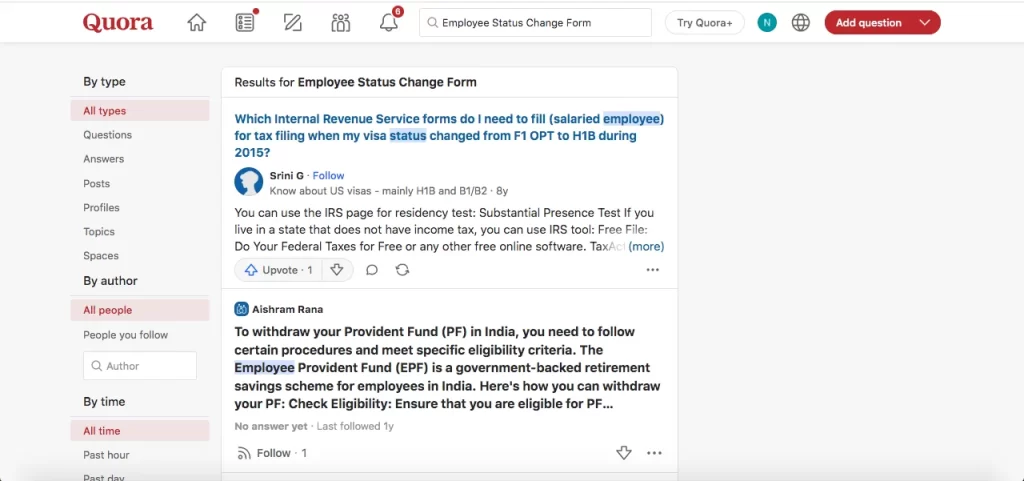
Here are perspectives from Quora users on when to inform an employee of an involuntary transfer.
Early Communication for Developmental Transfers
Many users agree that when a transfer is framed as a career development opportunity, providing substantial lead time benefits the employer and employee.
Rick Kitson stated, “If it is a development opportunity, or a need to get some specific experience not available at present location, I would give as much notice as possible. Most likely, it would be brought up as a suggestion first to make sure that it fits in their career plans… I have seen these sorts of transfers worked out a year or more in advance.”
Susanti added, “If the transfer involves moving to a branch in a different city or country, it’s recommended to inform them at least 6 months ahead of time so they can prepare for any changes that may impact their personal life…”
Wendy Sears believes “Any change which will mean the employee has to make some substantial alteration in their living arrangements… it is only right to make sure they have plenty of time to do that.”
Balancing Notice Periods with Operational Needs
Some managers emphasize shorter tactical notice periods in settings where rapid redeployment is crucial.
Kevin Murphy states, “I’d try to sit down with them a week or so in advance to tell them why I wanted to make the change. A week also gives them time to prepare for the change and make peace with it.”
Kevin’s experience in security services taught him that a one‐week heads-up mitigates resistance.
Susanti adds, “If it is within the same building, 2 weeks’ notice should be enough.”
Prioritizing Employee Consent and Avoiding Surprises
Several voices caution against springing transfers on employees after all paperwork is done. They argue that withholding news until the last moment damages trust.
Jacky Yu notes, “You should inform them before anything is official. They may not be able to accept. What will you do if they refuse?”
Richard Sams adds, “What if you go to all that trouble only to find out they don’t want to transfer and resign? You wasted a lot of time and effort.”
Juan Espinosa suggests, “As soon as the decision is made. You don’t want to continue working on doing a transfer not knowing if the employee will accept it or not.”
Conclusion
Employee status changes are inevitable in every organization. By implementing a thoughtful, well-documented process, you transform these transitions from administrative headaches into strategic opportunities.
Review your status change forms and processes annually to ensure they reflect the current organization structure, compensation practices, and legal requirements. Measure form accuracy rates and processing times to identify improvement opportunities.
Remember, effective status change documentation isn’t just about compliance—it’s about treating employees with respect during important career transitions. When handled properly, these forms become a reflection of your organization’s commitment to transparency, fairness, and professionalism.
Hire the best candidates
with Wetest.
Create pre-employment assessments in minutes to screen candidates, save time, and hire the best talent.
Try for free