
Disgruntled Employee: Signs, Causes, and How to Handle the Situation
Employee relations
Bonica
May 2, 2025
Every company faces challenges when an employee becomes unhappy. Disgruntled employees affect their own performance and disrupt team dynamics. They threaten the company’s productivity and reputation as well.
Understanding this behavior’s causes is critical to keeping a healthy work environment.
Many employers overlook the early warning signs! A drop in engagement or frequent complaints and even visible changes in behavior are small issues that escalate into larger conflicts soon.
Recognizing the signs early helps leaders intervene with strategies. This supports recognition and continuous improvement.
The cost of ignoring a disgruntled employee is huge. They harm both the team and the business operations.
Unresolved issues lead to high employee turnover. This increases recruitment costs. Managers must learn strategies for handling dissatisfaction before it turns into a crisis.
You should spot the warning signs and learn about the factors that increase their discontent.
Key Takeaways
- Employee dissatisfaction appears through behavioral changes like withdrawal and reduced productivity.
- It can stem from organizational issues such as poor management or lack of recognition.
- Addressing concerns early with open communication and regular feedback helps prevent disengagement.
- Leadership and HR support play a crucial role in resolving issues.
- Employee well-being ensures long-term job satisfaction and engagement.
Table of Contents
Defining and Addressing Disgruntled Employees

They are not just a complainer! A disgruntled employee feels dissatisfied with their job.
This dissatisfaction comes from poor management practices and a lack of recognition. Inadequate pay is among the reasons as well.
Some believe that a disgruntled employee is simply someone negative! The truth is that their behavior is a response to ongoing issues in the workplace.
One misconception is that all disgruntled employees are rebellious. These employees do not always express their discontent directly. They could be quietly disengaged or show signs of burnout.
The reality is that even one negative employee impacts overall team productivity. They lower the engagement levels of the entire team. Colleagues feel demotivated or even start doubting the effectiveness of their own work.
HR strategies must include plans for preventing workplace negativity. They should use effective employee conflict resolution methods and ensure fair treatment.
Early Warning Signals

Any company needs to understand the early warning signs that an employee is becoming disgruntled. You can take action before small issues become major conflicts.
Observable Behaviors
Unhappy employees show clear behaviors that stand out from the norm.
One of the most common indicators is when an employee starts to isolate themselves. They avoid social interactions and skip team lunches or refrain from participating in meetings. This withdrawal signals that they feel disconnected from the team.
Regularly voicing grievances about workload or company policies is another red flag. Occasional complaints are normal, but constant criticism without suggestions shows deeper dissatisfaction.
A noticeable decline in participation during meetings or a reluctance to volunteer for new projects is telling. Once active employees who suddenly show a lack of interest are showing a warning signal.
Frequent absences or taking longer breaks are strong indicators that something is off. This pattern signals that the employee is struggling with job satisfaction.
It is a sign of disengagement when an employee’s work output starts to suffer in quality. They might make more errors or show a decline in the creativity they once brought to their role.
Avoiding eye contact and crossed arms or looking generally sad are also early warning signals. These non-verbal indicators are the first signs that an employee is not feeling positive.
Emotional and Performance Red Flags
Performance and emotional changes are among employee warning signals.
Employees who are stressed or depressed display signs of emotional distress. They seem easily frustrated by once manageable tasks.
A steady decline in productivity is a serious red flag as well. They take longer to complete tasks, and their output diminishes regularly. This decrease in productivity eventually impacts the entire team.
It is a signal of their growing dissatisfaction when they begin to withdraw from open dialogue or give minimal feedback. Communication breakdowns affect the individual’s performance and also lead to misunderstandings.
An employee who used to be self-motivated but now waits for instructions is another warning sign. This loss of motivation shows that they no longer feel good in their role.
A defensive attitude during performance reviews also points to underlying issues. Avoiding feedback signals that they are struggling.
Early intervention helps in resolving individual issues and supports a healthier work environment for the entire team.
It is beneficial to use situational judgment tests before hiring to understand how an employee will react in different situations.
Root Cause Analysis

These causes are categorized into organizational factors and personal or external factors.
Organizational Factors
Many issues within a company lead to employee grievances. One common problem is poor management practices. Employees feel ignored when managers fail to communicate clearly.
This lack of effective leadership results in workplace dissatisfaction. Employees are left without clear direction.
A lack of recognition plays a significant role. Employees who put in effort and receive no rewards become disengaged rapidly. Recognition is not just bonuses or promotions! It is also about simple appreciation that improves positive behavior.
Another critical factor is inadequate career progression. Employees feel stuck in their current roles when they see no way to advance. This stagnation is frustrating for them.
Companies that fail to provide opportunities for skill improvement face higher turnover rates. Their employees look elsewhere for career growth.
Organizational culture is among the important factors as well. Inconsistent policies create a feeling of unfairness and fuel workplace negativity.
Personal and External Factors
Burnout is a major contributor! Prolonged stress without adequate rest or support leaves employees feeling disconnected from their work.
Health concerns or family issues also spill over into the workplace and affect an employee’s concentration. Financial strain or societal expectations add to the burden and make it difficult for employees to remain engaged.
Personal challenges combined with a less supportive work environment lead to employee grievances.
The interplay between internal and external pressures results in workplace dissatisfaction that is hard to reverse.
Hidden Triggers in Workplace Dynamics

There are hidden workplace triggers that quietly impact performance. These less obvious indicators are just as damaging.
Subtle Indicators
Not all warning signals are loud!
Microaggressions are unintentional words or actions that cause pain. They build up over time and cause employees to feel marginalized. Their cumulative effect leads to a sense of alienation.
Office politics is another subtle trigger that many overlook.
Trust quickly disappears when favoritism or cliques become common in the workplace. Employees feel that decisions are made not on merit. This leads to feelings of unfairness.
Old conflicts that were never resolved keep causing problems. These lingering issues create an undercurrent of tension that affects interactions.
Company Culture
A toxic company culture makes these hidden triggers even worse. Even minor issues snowball into major problems in a company that lacks an inclusive environment.
A culture that does not address microaggressions or discourages office politics leaves employees feeling that their grievances are not taken seriously.
This environment hinders efforts for an organizational culture shift toward a respectful workplace.
A culture that doesn’t change easily makes these problems worse.
Employees begin to feel that their suggestions for improvement are ignored. This is the reason why actively working on a healthy culture is crucial.
Companies mitigate these hidden workplace triggers by updating company policies and promoting a culture of respect.
Practical Prevention Techniques

Creating a positive work environment prevents employee dissatisfaction.
Regular feedback loops are essential. Employees know what is expected of them when they receive feedback. This clear communication builds trust and helps address issues.
Another key strategy is to use programs that focus on employee engagement.
Employees work better and stick around longer when they are engaged.
Wellness programs that bring physical and mental health help reduce stress and prevent burnout. Simple programs like mindfulness sessions or fitness challenges help a lot.
Mentoring is also a powerful tool for keeping employees motivated. A mentoring program connects less experienced employees with seasoned ones. This helps them develop new skills. It also creates a sense of belonging.
Skill development opportunities are equally important. Offering workshops or access to online learning platforms shows employees that the company is invested in their future. Learning helps employees bring innovative ideas.
Handling and Conflict Resolution

Timely intervention helps to reduce tensions early on.
Immediate intervention tactics suggest that managers listen to the employee’s concerns in a private space. They should be focused on the root cause of the dissatisfaction.
Another key technique is mediation. A neutral third party helps find mutually agreeable solutions.
HR professionals are often best positioned to provide support frameworks. The combined effort of leadership and HR teams ensures there is a collaborative approach to resolving tensions.
There is growing recognition of the benefits of peer support in mediating conflicts. Peer mediation programs provide employees with the tools to find a resolution.
Using employee resource groups and promoting mutual respect helps companies create a workplace where conflicts are seen as chances to learn and grow.
A Quora Rundown
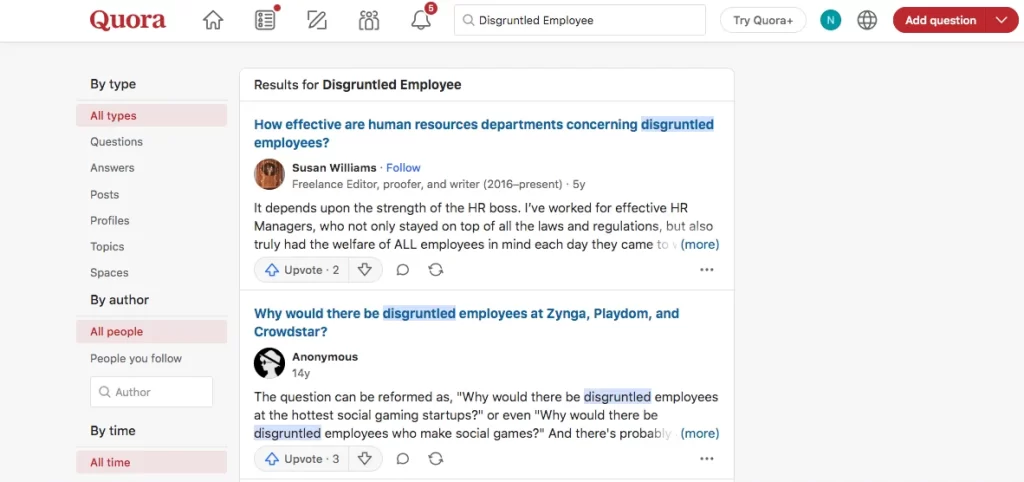
Managers have shared practical strategies on Quora about handling disgruntled employees.
Supervisory Responsibility
Allen Jones notes, “Figuring out why they’re disgruntled is, of course, key. Is it how their direct supervisor treats them and the work to be done? That’s the most common source.”
Allen points out that sometimes the real issue isn’t the employee at all. The supervisor creates a negative environment. He even suggests that replacing the problematic manager is the most effective solution.
George Smith adds another layer by advising managers to fully understand their company policies. He reminds us, “Since anything you do with this employee could be challenged at a later time, you need to become very familiar with your company’s policies… Remember you are the boss; don’t let their anger affect your position of authority.”
Job Design and Rewards
Lyonel Scapino advocates for a tailored approach to managing discontent.
He suggests: “Try to train the employee or give him another set of tasks/new challenge when possible. Set up a reward system… Separate the resources if nothing else works.”
Lyonel’s perspective reminds us that sometimes, the problem lies in the mismatch between the employee’s skills and the demands of the role.
Changing Perceptions

Joe Smith offers a unique take by challenging the conventional approach.
He argues that you should forget about fixing the disgruntled employee!
Managers need to reframe their perspective. “Common sense says, find out why they’re disgruntled, but I disagree. Adjust your perception of the problem. Treat a problem as an opportunity to show them why they are working in the right place.”
Constructive Dialogue
Chris stresses the need for respectful dialogue,
“That’s why they pay you the big bucks, right? Why is the employee disgruntled? What is your part in this issue? If you genuinely want to repair the working relationship, dialogue without attitude and with a desire to make things better is key.”
An Anonymous user offers a contrasting view on firing disgruntled employees,
“Most fire disgruntled employees, but I think that might be the wrong move. The employer should meet with the employee to find out what the issue is, whether it’s a management problem or a repetitive issue with a particular colleague.”
Taking Tough Measures

Terry Dinerman and Jesse Montgomery provide views that lean toward more decisive actions.
Terry advises a strict approach: “Immediately cut his access to all company IT resources, secure his workspace, and escort him out…”
His extreme approach is a reminder that firm measures are necessary to protect the company.
Jesse’s commentary touches on a similar point. He suggests that a more forceful response is warranted when an employee consistently shows a negative attitude and doesn’t improve. Jesse even hints at using at-will clauses to protect the company.
Conclusion
Key signs of employee dissatisfaction include observable behaviors as well as emotional and performance red flags.
Understanding both organizational factors and personal factors helps in identifying the root causes of disgruntlement.
Proactive measures are essential in preventing and managing employee dissatisfaction.
Creating a positive work environment improves trust. Implementing employee engagement and wellness programs improves retention.
Immediate intervention tactics and mediation are effective in addressing issues.
Hire the best candidates
with Wetest.
Create pre-employment assessments in minutes to screen candidates, save time, and hire the best talent.
Try for free