
Top 10 Company Policies to Keep Your Workplace Running Smoothly
Business strategy
Bonica
August 29, 2025
Want to transform your workplace into a well-oiled machine? The secret weapon isn’t fancy technology or expensive perks – it’s having the right company policies in place.
Research shows that organizations with clear, thoughtful policies experience 23% higher productivity and 31% better employee retention. But not just any policies will do.
In this guide, I’ll walk you through the 10 essential workplace policies that successful companies use to create structure without stifling creativity. You’ll discover exactly how to implement each one and avoid the common pitfalls that make policies feel like unnecessary bureaucracy.
Let’s turn your company handbook from a dusty afterthought into your competitive advantage.
Table of Contents
Introduction to Effective Workplace Policies

Think of company policies as your business’s operating system. When designed thoughtfully, they create the perfect framework for success – clear enough to provide structure, but flexible enough to adapt as your organization evolves.
According to a 2023 Gallup study, companies with well-communicated policies experience 27% lower turnover and 21% higher profitability than those with unclear guidelines. Why? Because good policies eliminate guesswork, reduce conflicts, and align everyone toward common goals.
In the sections that follow, I’ll break down the 10 most crucial policy areas that keep modern workplaces running smoothly – from attendance protocols to career development frameworks. You’ll get actionable templates, real-world examples, and implementation tips you can use immediately.
1. Clear Attendance and Time-Off Policies

Well‑defined attendance and PTO guidelines eliminate uncertainty around work hours and leave procedures, fostering accountability and trust.
How Structured Attendance Policies Reduce Uncertainty
An effective attendance policy serves as the foundation for workplace accountability. When employees know exactly what’s expected – from work hours to notification procedures for absences – it eliminates confusion and builds trust.
The best attendance policies define:
- Core business hours (e.g., “everyone available from 10am-2pm”)
- Flexibility parameters (can start between 7-9am, end between 4-6pm)
- Tardiness thresholds (occasional 5-10 minute delays vs. chronic lateness)
- Documentation requirements for absences
Remember: the goal isn’t perfect attendance, but rather predictability that allows teams to plan effectively.
Implementing Fair PTO Systems That Employees Appreciate
Modern PTO systems are moving beyond the traditional “10 vacation days, 5 sick days” model. Companies like Netflix, LinkedIn, and Buffer have adopted unlimited PTO policies with impressive results – when implemented correctly.
For most companies, a tiered PTO structure works best:
- Base PTO allocation (starts at 15-20 days annually)
- Tenure increases (add 1-5 days per year of service)
- Minimum usage requirements (must take at least 10 days annually)
- Request procedures (2 weeks notice for planned time off)
The critical factor isn’t the number of days – it’s the clarity around how and when employees can use them.
Balancing Flexibility With Accountability in Modern Workplaces
The most successful attendance policies acknowledge that work patterns have evolved. They focus on outcomes rather than rigid clock-watching, while still maintaining necessary structure.
Implement these accountability measures to maintain balance:
- Regular team calendar updates showing availability
- Core meeting times when all team members must be present
- Clear handoff procedures for ongoing projects during absences
- Performance metrics tied to deliverables, not hours logged
When flexibility is paired with clear expectations, you build a culture of responsible autonomy rather than micromanagement.
2. Comprehensive Onboarding Procedures for New Hires

A structured onboarding journey ensures new employees understand expectations, integrate into your culture, and ramp up productivity quickly.
Creating Welcoming First-Week Experiences That Set Standards
The first week determines how new employees perceive your company culture and expectations. A structured first-week onboarding process increases new hire productivity by up to 70% and boosts retention by 82% according to the Brandon Hall Group.
Effective first-week onboarding includes:
- Day 1 agenda sent in advance (no surprises)
- Workstation fully prepared before arrival
- Scheduled introductions to key team members
- Immediate access to essential tools and systems
- Clear explanation of first-month objectives
Remember that onboarding is about cultural integration as much as task training.
Essential Documentation Every Onboarding Process Should Include
Documentation forms the backbone of consistent onboarding. Beyond basic employment paperwork, your onboarding package should include materials that help new hires understand how your company operates.
Must-have onboarding documents include:
- Company handbook with policy summaries
- Department-specific process guides
- Organization charts showing reporting relationships
- Communication protocols (which channels to use for what)
- 30-60-90 day success metrics and milestones
Digitize these materials in an easily searchable knowledge base for ongoing reference.
How Proper Onboarding Dramatically Improves Employee Retention
Companies with structured onboarding programs retain 50% more new hires after one year compared to those with informal processes. The reason is simple: well-onboarded employees understand expectations and feel connected to the company mission faster.
To maximize onboarding’s impact on retention:
- Assign dedicated onboarding buddies/mentors
- Schedule regular check-ins during the first 90 days
- Collect feedback on the onboarding experience
- Address knowledge gaps identified during initial weeks
- Celebrate early wins to build confidence
Effective onboarding isn’t a one-week event but a carefully designed journey that transitions into ongoing development.
3. Transparent Communication Guidelines That Prevent Misunderstandings

Specifying channels, response times, and meeting protocols streamlines interactions and minimizes costly miscommunications.
Establishing Clear Channels for Important Workplace Communications
Communication breakdowns cost businesses an average of $62.4 million annually in lost productivity. The solution isn’t more communication – it’s more intentional communication through designated channels.
Effective communication policies clarify:
- Which platforms to use for different message types (urgent vs. FYI)
- Expected response timeframes for each channel
- Documentation requirements for important decisions
- Meeting protocols (agendas, notes, follow-ups)
- Escalation paths when communication stalls
Define your communication hierarchy clearly: chat for quick questions, email for documentation, video calls for complex discussions.
When and How to Use Different Communication Methods
Not all communication methods serve the same purpose. Your policy should guide employees on selecting the right channel for each situation.
Create guidelines around:
- When to use synchronous vs. asynchronous communication
- Which topics require face-to-face discussion
- How to document decisions made in verbal conversations
- Appropriate use of group messages vs. direct messages
- Communication expectations during non-business hours
The goal is efficiency: choosing the channel that resolves the matter with minimal disruption.
Building a Culture of Open Feedback Without Compromising Structure
Feedback is critical for growth, but unstructured feedback can create more problems than it solves. Your communication policy should establish feedback frameworks that promote honesty while maintaining professionalism.
Effective feedback structures include:
- Regular 1:1 meetings with managers (weekly or biweekly)
- Structured performance conversations separated from casual check-ins
- Anonymous feedback mechanisms for sensitive topics
- Clear distinction between developmental feedback and performance evaluation
- Training on delivering constructive feedback effectively
When feedback follows established protocols, it becomes more actionable and less personal.
4. Well-Defined Remote Work and Flexibility Options

Remote work policies that set clear boundaries, technology requirements, and outcome‑based metrics support both autonomy and accountability.
Setting Boundaries That Work for Both Employees and Management
Remote work policies need clear boundaries to prevent both burnout and disengagement. According to Buffer’s 2023 State of Remote Work report, the top challenges for remote workers are unplugging after work hours (27%) and loneliness (16%).
Effective remote work boundaries include:
- Core collaboration hours when all team members are available
- Expectations around response times during work hours
- Requirements for physical workspace setup and privacy
- Scheduled offline time for focused work
- Clear start/end signals for the workday
The most successful remote policies emphasize results while acknowledging the human need for connection and structure.
Technology Requirements for Successful Remote Work Policies
Technology forms the foundation of productive remote work. Your policy should clearly outline both required tools and security protocols.
Essential remote technology guidelines cover:
- Minimum internet speed and reliability requirements
- Required hardware specifications and company-provided equipment
- Approved software and collaboration tools
- VPN and security protocols for accessing company systems
- Technical support protocols for remote troubleshooting
Document these requirements clearly and provide setup assistance to ensure compliance.
Measuring Productivity Beyond Traditional Office Presence
Remote work success depends on shifting from presence-based to output-based performance evaluation. Your policy should establish clear metrics that focus on what matters – results, not activity.
Effective remote productivity measurement includes:
- Outcome-based goals rather than activity logging
- Regular deliverable check-ins (daily or weekly depending on role)
- Project management tools that track completion, not just hours
- Peer feedback mechanisms to evaluate collaboration quality
- Self-assessment components that encourage reflection
The best remote work policies make it clear that performance is measured by impact, not by time logged online.
5. Detailed Health and Safety Protocols for All Situations

Comprehensive emergency procedures, regular training, and review mechanisms keep your team prepared and protected in any scenario.
Creating Comprehensive Emergency Response Procedures Everyone Understands
Emergency preparedness isn’t just about legal compliance – it’s about ensuring your team knows exactly what to do when seconds count. Companies with well-practiced emergency protocols respond 70% more effectively during actual emergencies.
Essential emergency response components include:
- Designated emergency coordinators and backup coordinators
- Evacuation routes with clear signage and regular drills
- Communication protocols during emergencies (including remote workers)
- Documentation of medical conditions that may require special assistance
- Post-emergency assembly points and accounting procedures
Update these procedures annually and after any facility changes.
Regular Training Requirements That Actually Improve Workplace Safety
Safety training becomes ineffective when it’s treated as a checkbox exercise. Your policy should establish meaningful training that develops real skills and awareness.
Effective safety training policies include:
- Role-specific safety training requirements and refresh intervals
- Practical scenario-based exercises, not just theoretical knowledge
- Documentation of completed training with competency verification
- Safety observation programs that reward hazard identification
- Peer training components that build safety culture
The best safety training doesn’t just transfer information – it changes behavior.
How to Update Safety Policies as Workplace Needs Change
Static safety policies quickly become outdated. Your policy framework should include mechanisms for regular review and adaptation.
Build adaptability into safety policies through:
- Quarterly safety committee reviews of incident reports and near-misses
- Annual comprehensive policy review with stakeholder input
- Immediate updates following any safety incident or identified gap
- Benchmarking against industry standards and best practices
- Employee feedback channels for safety concerns and suggestions
Document policy changes clearly and communicate updates to all staff with explanation of the rationale.
6. Fair Compensation and Performance Review Systems

Transparent salary bands and merit‑based evaluation processes motivate employees by aligning rewards with clear, measurable performance criteria.
Structuring Merit-Based Evaluation Processes That Motivate Teams
Performance reviews drive accountability, but only when they’re perceived as fair and meaningful. According to Deloitte, 58% of executives believe their current performance management approach drives neither employee engagement nor high performance.
Create motivating review systems through:
- Clear performance criteria established at the beginning of review periods
- Balance of objective metrics and subjective assessment
- Self-assessment components that engage employees in the process
- Calibration sessions to ensure consistency across managers
- Direct connection between performance outcomes and compensation/advancement
The best systems make performance expectations transparent from day one.
Transparency in Salary Bands and Advancement Opportunities
Pay transparency reduces perceptions of unfairness and discrimination. While complete salary transparency isn’t right for every organization, clear compensation frameworks benefit all companies.
Effective compensation transparency includes:
- Defined salary bands for each role with clear progression steps
- Published criteria for moving between bands or levels
- Market benchmarking data showing competitive positioning
- Explanation of how variable compensation (bonuses, equity) is calculated
- Clear paths for cross-departmental moves and growth
Document these frameworks in accessible resources that employees can reference during career planning.
How Often Should Performance Reviews Actually Happen?
The annual performance review is increasingly obsolete. Research shows that more frequent, lighter-touch feedback improves performance more effectively than annual deep dives.
Modern performance review cadences typically include:
- Monthly 1:1 check-ins focused on near-term goals and obstacles
- Quarterly performance discussions with documented outcomes
- Annual comprehensive reviews that inform major compensation decisions
- Project-based reviews for roles with discrete deliverables
- Peer feedback collected at regular intervals (every 4-6 months)
Your policy should establish minimum frequencies while encouraging even more regular informal feedback.
7. Conflict Resolution Procedures That Actually Work

A dispute resolution framework with defined escalation paths ensures workplace disagreements are resolved promptly and fairly.
Step-by-Step Process for Addressing Workplace Disagreements
Workplace conflicts cost U.S. companies $359 billion in paid hours annually. A clear conflict resolution process reduces this drain by providing predictable paths to resolution.
Effective conflict resolution procedures include:
- Initial direct communication attempt between involved parties
- Structured mediation option with a neutral third party
- Clear documentation requirements for ongoing disputes
- Time limits for each resolution stage to prevent festering issues
- Defined escalation path if lower levels don’t resolve the matter
The policy should emphasize resolution at the lowest possible level while providing backup options when necessary.
When HR Should Intervene in Employee Conflicts
Not every disagreement requires HR involvement, but certain situations absolutely do. Your policy should clarify when HR intervention becomes necessary.
HR intervention is appropriate when:
- The conflict involves potential policy violations or legal issues
- Power dynamics make direct resolution difficult (manager/direct report)
- Multiple attempts at peer resolution have failed
- The conflict affects broader team functioning or morale
- Confidentiality concerns make direct conversation challenging
Document these thresholds clearly to avoid both premature escalation and delayed intervention.
Documentation Requirements for Dispute Resolution Situations
Proper documentation protects both employees and the company during conflict resolution. Your policy should establish clear record-keeping expectations.
Essential documentation elements include:
- Meeting notes from resolution attempts with agreed-upon next steps
- Written summaries of verbal discussions shared with all parties
- Evidence relevant to the dispute (communications, work products)
- Formal resolution agreements with specific commitments
- Follow-up documentation showing implementation of solutions
These records protect against misunderstandings and demonstrate the company’s good-faith efforts to address concerns.
8. Anti-Discrimination and Inclusion Policies With Teeth

Robust inclusion policies and evidence‑based training foster a genuinely diverse environment beyond mere legal compliance.
Beyond Basic Compliance: Creating Truly Inclusive Workplaces
Basic compliance-focused policies prevent lawsuits but don’t create inclusion. Effective policies go beyond legal requirements to actively build inclusive environments.
Comprehensive inclusion policies address:
- Explicit protections for all legally protected characteristics
- Additional company-specific commitments to aspects of diversity
- Inclusive language requirements for company communications
- Accommodation processes for different needs and working styles
- Specific prohibited behaviors with clear examples
Frame these policies as positive commitments rather than just restrictions.
Training Programs That Change Behaviors, Not Just Check Boxes
Ineffective diversity training can actually increase biases rather than reducing them. Your policy should require evidence-based training approaches that create real change.
Effective inclusion training includes:
- Scenario-based learning rather than just awareness building
- Small-group discussions rather than large lectures
- Skill development for inclusive behaviors (like interruption techniques)
- Ongoing reinforcement rather than one-time sessions
- Manager-specific content on fostering inclusive teams
Schedule these trainings regularly and update content based on emerging best practices.
How to Measure the Effectiveness of Inclusion Initiatives
What gets measured gets improved. Your inclusion policy should establish clear metrics to track progress and identify areas for growth.
Meaningful inclusion metrics include:
- Diversity demographics at different organizational levels
- Inclusion-specific questions on engagement surveys
- Promotion and retention rates across different groups
- Pay equity analyses with action plans for any gaps
- Incident reporting patterns and resolution outcomes
Review these metrics quarterly with leadership and share appropriate summary data with all employees annually.
9. Data Privacy and Security Guidelines for Everyone

Clear responsibilities for handling sensitive information and BYOD rules safeguard company and customer data from evolving threats.
Employee Responsibilities in Maintaining Information Security
Information security isn’t just IT’s job – every employee plays a crucial role. Your policy should clearly define each person’s security responsibilities.
Essential employee security responsibilities include:
- Password management requirements (complexity, changes, storage)
- Device security practices (locking, updates, approved software)
- Social engineering awareness and response protocols
- Clean desk requirements for sensitive information
- Reporting procedures for suspected security incidents
Frame security as a shared responsibility rather than a bureaucratic burden.
Clear Procedures for Handling Sensitive Customer Information
Customer data protection goes beyond legal compliance – it’s a business imperative. A data breach costs companies an average of $4.45 million and significant customer trust.
Effective customer data policies include:
- Classification system for data sensitivity levels
- Access controls based on legitimate business need
- Retention guidelines with secure disposal procedures
- Encryption requirements for different data types
- Client notification protocols for potential breaches
Regularly audit compliance with these procedures and update as regulations evolve.
BYOD Policies That Balance Convenience With Protection
Personal devices in the workplace create both productivity opportunities and security risks. Your policy needs to establish clear boundaries for their use.
Comprehensive BYOD policies address:
- Required security features on personal devices (encryption, passwords)
- Company rights to remotely wipe business data if necessary
- Separation of personal and business data and applications
- Support limitations for personal device issues
- Acceptable use guidelines for company data on personal devices
Review and update these policies annually as both devices and threats evolve.
10. Professional Development and Career Path Frameworks

Structured learning stipends, development plans, and alignment with business goals drive employee growth and retention.
Structured Approaches to Employee Growth and Learning
Professional development shouldn’t happen by accident. According to LinkedIn’s Workplace Learning Report, 94% of employees would stay longer at companies that invest in their career development.
Effective development policies include:
- Annual learning stipends with eligible use guidelines
- Minimum required professional development hours
- Documentation processes for completed learning activities
- Mechanisms to share knowledge across the organization
- Resources for self-directed learning between formal programs
The focus should be on applicable skills rather than just credentials.
Connecting Individual Development With Company Objectives
Development has the most impact when it aligns with organizational needs. Your policy should establish frameworks for this alignment.
Alignment mechanisms include:
- Skill gap analyses based on company strategic goals
- Development planning during regular performance conversations
- Internal mobility opportunities based on developed capabilities
- Project assignments that stretch existing skills strategically
- Recognition systems for applied learning that benefits the organization
Document these connections in individual development plans reviewed quarterly.
How Investment in Employee Skills Improves Retention Rates
Development investments pay dividends through improved retention. Companies that excel at internal mobility retain employees twice as long as those that don’t.
To maximize development’s impact on retention:
- Create clear growth pathways for different career trajectories
- Provide internal candidates meaningful advantages in hiring
- Celebrate employee growth milestones and achievements
- Connect compensation increases to skill development
- Allow time during work hours for learning activities
Track both development completion and subsequent retention to demonstrate ROI.
Implementing and Updating Your Workplace Policies

Regular review cycles, employee feedback loops, and phased rollouts ensure your policies stay relevant and embraced by the team.
How Often Should You Review Your Company Policies?
Policies become outdated faster than you might think. Establish regular review cycles to maintain relevance.
Effective policy maintenance includes:
- Annual comprehensive review of all policies
- Quarterly spot-checks of high-impact policies
- Immediate reviews following relevant legislation changes
- Post-incident evaluations to identify policy gaps
- Sunset provisions that force reconsideration of older policies
Document review dates and changes to maintain an audit trail.
Getting Employee Buy-In When Introducing New Guidelines
New policies fail without employee support. Your implementation process should focus on gaining acceptance, not just compliance.
Effective implementation strategies include:
- Preview periods for employee feedback before finalization
- Clear explanations of the problems policies aim to solve
- Examples of how policies benefit employees directly
- Manager training on communicating policy rationale
- Phased rollouts for significant policy changes
Remember that policies should solve real problems, not create additional ones.
Measuring the Impact of Policy Changes on Company Culture
Policy effectiveness goes beyond compliance – it affects how it feels to work at your company. Measure this impact systematically.
Cultural impact measures include:
- Pre/post policy implementation engagement surveys
- Focus groups to gather qualitative feedback
- Compliance rates as indicators of policy clarity
- Reduction in related incidents or complaints
- Manager feedback on policy implementation challenges
Use these insights to refine both the policies and their implementation approaches.
A Quora Rundown
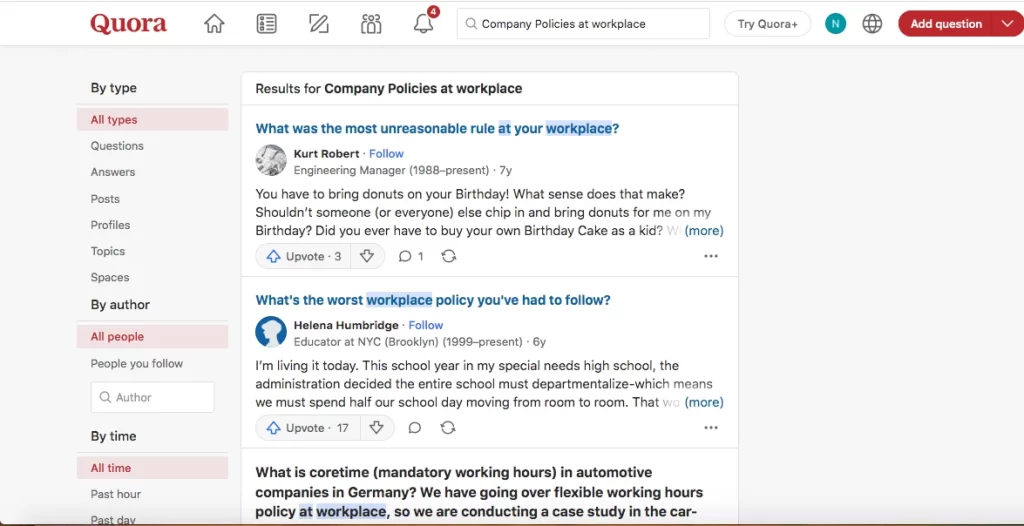
Here’s a roundup of innovative approaches that real employees from Quora have discussed.
Inclusive Leave Policies
Divya Sharma, “I really appreciate the policy of period leave at her company.”
Divya highlights a Gurugram-based firm offering dedicated menstrual leave, an acknowledgment that “everyone feels the pain differently.”
This policy removes the stigma around menstrual health, supports employees with conditions like PCOS, and demonstrates genuine empathy in action, while “also important that women do not misuse this policy,” per Divya’s balanced view.
Anis Al-Haris, “For every 10 months you get 45 days annual leave (could also accumulate limitlessly) with full pay.”
Anis describes a 1990s-era employer allowing employees to bank virtually unlimited vacation days at full pay, then return on basic salary after using half their leave. This model blends generous rest opportunities with a fair return-to-work structure.
Fair Expense Management
Achal, “If there is more than one employee at one place then the senior person would make the payment for the combined bill.”
In Achal’s current IT firm, the most senior team member is always the one to pay joint expenses.
The policy “prevents indirect approvals” and curbs misuse.
Flexible Work Arrangements
Shubham Jain, “Employees are given the option to choose one \[mode] at their convenience.”
Shubham applauds a policy offering both permanent work-from-home and hybrid tracks. Opting for full remote incurs a modest salary adjustment.
Employers benefit too, reducing real estate costs. This “sustainable policy” balances organizational needs with individual preferences.
Customer-Centric Empowerment
Jody LeBlanc, “All employees can give up to \$5 of free product to resolve customer complaints.”
Jody describes a pizza chain that entrusts every team member with up to \$5 worth of complimentary items to appease dissatisfied customers on the spot.
The company demonstrates trust in employees and prioritizes delighting customers immediately.
Employee Well-Being Initiatives
Ike Brant, “We started seeing metal boxes on each stairwell … They were installing defibrillators!”
After two colleagues decided to sprint 26 flights of stairs daily at lunch, management responded by placing AEDs in stairwells. While anecdotal, this reactive policy illustrates a willingness to invest quickly in life-saving equipment.
Conclusion
Strong workplace policies create the foundation that allows your business to scale efficiently while maintaining your culture and values. The best policies provide clarity without excessive rigidity, guiding behavior while empowering good judgment.
Start by evaluating your current policies against the ten areas we’ve covered. Identify the biggest gaps and prioritize addressing those first – particularly attendance, communication, and conflict resolution policies that prevent daily friction.
Remember that policies should evolve alongside your organization. Build review mechanisms into your framework and involve employees in the process. When people help shape the rules, they’re much more likely to follow them.
The ultimate measure of policy effectiveness isn’t compliance – it’s whether your workplace runs more smoothly with them than without them.
Hire the best candidates
with Wetest.
Create pre-employment assessments in minutes to screen candidates, save time, and hire the best talent.
Try for free