Bonica
Updated on: December 28, 2025
“Always remember, if you have been diagnosed with Complex PTSD, it is not a sign of weakness; rather, it is proof of your strength, because you have survived!
Many people may have some level of familiarity with Post-Traumatic Stress Disorder (PTSD), a mental health condition that arises from either experiencing or witnessing an extremely distressing incident.
It is associated with a range of symptoms including persistent, frightening memories, sleep problems, and disturbing thoughts and feelings related to the traumatic incident.
Table of Contents
Understanding Complex PTSD and Its Impact on Work
Living with complex PTSD can significantly impact daily functioning, but that doesn’t mean you can’t have a fulfilling career. Understanding how your symptoms may affect you at work is key.
Those with complex PTSD may struggle with memory, attention, and concentration, finding it difficult to perform efficiently.
They may also experience a chronically unstable mood state, making it challenging to manage professional relationships. However, with the necessary assistance and support, people with complex PTSD can effectively address these challenges and achieve success in their careers.
The key is to pursue a career that maximizes your unique skills and capabilities. There are jobs that highly value your creativity, compassion, and persistence.
What Is Complex PTSD?
Complex Post-Traumatic Stress Disorder (CPTSD) is closely related to PTSD. However, it usually develops due to repeated trauma over months or years rather than a single event. Living with complex PTSD means coping with symptoms that often disrupt your daily life and make certain jobs challenging or even impossible. However, there are careers out there that can be deeply fulfilling without making your condition worse.
What Triggers Complex PTSD?
Complex PTSD is triggered by experiencing long-term trauma, like childhood abuse or domestic violence, neglect and abandonment, or ongoing trauma in adulthood. It can cause problems regulating emotions, trouble connecting with others, low self-esteem, and physical health issues.
At work, this may show up as difficulty handling criticism, trouble focusing, or avoiding social interaction. The good news is, with treatment like therapy or medication, you can learn coping strategies to better manage symptoms.
Ideal Work Environments for People with Complex PTSD

Ideal work environments for people with complex PTSD are normally flexible, low-stress, and offer a sense of security. Some good options include:
Freelancing or consulting from home
Working remotely eliminates the stress of dealing with co-workers in the workplace. The flexibility and control can be very therapeutic.
Part-time work
A part-time job gives you the opportunity to have income while avoiding feeling overwhelmed. Look for the least stressful jobs that offer good work-life balance like a library assistant, gardener, or retail associate.
Non-profits
Helping others in a meaningful way can be highly fulfilling for someone with Complex PTSD. Roles like administrative assistant, program coordinator, or volunteer coordinator at a non-profit organization often have a supportive culture with like-minded co-workers.
The key is to find a job that is personally meaningful in a safe and inclusive environment. You deserve a job that enhances your recovery and mental well-being. With the right role and the right company fit, you will thrive at work.
Top Jobs for People with Complex PTSD

While the impact of complex PTSD can vary from person to person, jobs that provide a sense of safety, flexibility, and opportunities for self-care, such as remote work, freelance positions, creative fields, or jobs in supportive environments like counseling, may be a strong match for people with complex PTSD.
Best Jobs for Flexibility and Autonomy
If you have complex PTSD, jobs with flexibility and independence are likely to be the best fit for you. Some ideal options include:
Freelance writer or blogger
Writing from home on your own schedule allows maximum flexibility and control. You can choose topics you’re passionate about and set your own deadlines. The pay can vary but many people earn enough to cover their living expenses.
The U.S. freelance workforce reached 73 million in 2025, with the global freelance market valued at $8.39 billion, growing at a 14.5% CAGR from 2024.
This expansion shows how freelance writing from home offers maximum flexibility. It allows individuals with CPTSD to manage their environment and set deadlines that support mental health recovery.
Virtual assistant
The global virtual assistant market was valued at USD 3.75 billion in 2024 and is projected to surge to USD 23.57 billion by 2033, at a 22.3 percent CAGR. Remote administrative support roles are a strong match for people with CPTSD seeking structured yet flexible work.
The global virtual assistant market grew to $8.11 billion in 2025, with projections reaching up to $40.47 billion by 2030 at a 24% CAGR.
Handling low-stress tasks like emailing, data entry, and scheduling from home provides engaging with flexible hours. It is an ideal fit for those with CPTSD who need structure without overwhelming social demands.
Online tutor
Whether you tutor language, music, or academic subjects, online tutoring lets you teach from anywhere on your own timetable. You’ll need expertise in your subject area and patience working with students remotely.
Global online tutoring spending hit $12.8 billion in 2025. The U.S. market alone is projected to reach $8.08 billion by 2030 at an 11.1% CAGR.
Online tutoring allows expertise in subjects like languages or academics to be shared remotely on a personalized schedule. It offers meaningful interactions via platforms like Chegg and Varsity Tutors for individuals with CPTSD.
Pet sitter/dog walker
For animal lovers, pet sitting or dog walking can be an ideal flexible job. You set your own availability and rates and can work with as many or as few clients as you like.
With the global pet sitting market at USD 2.685 billion in 2024 and expected to hit USD 5.143 billion by 2030, caring for animals provides therapeutic benefits alongside income. It is helpful for grounding flashbacks and reducing hyperarousal symptoms.
Online seller
When selling goods on websites like eBay or Etsy, you have complete control over your work hours and inventory. You can operate the business from home and on your own schedule. However, you do need to handle shipping physical products and dealing with customers.
The global e-commerce market surged to $21.62 trillion in 2025. Retail e-commerce sales are exceeding $3.6 trillion worldwide.
Operating an online store on platforms like Etsy or eBay provides complete control over hours and inventory from home. This enables creative outlets and customer management that support CPTSD recovery.
Small‑Business Owner / Entrepreneur
In 2023, Americans filed a record 5.49 million new business applications. This was a new all‑time high and a 56.7 percent jump from 2019, reflecting entrepreneurial opportunities. Starting a micro‑enterprise lets you design every aspect of your work environment to suit your recovery needs.
Finding Meaning Through Helping Careers

If you struggle with complex PTSD, a career focused on helping others can be deeply fulfilling. Jobs such as social work, counseling, and healthcare provide opportunities to make a meaningful difference in people’s lives.
As a counselor or social worker, you can use your life experiences to empathize with and support those dealing with similar challenges. Providing mental health counseling to trauma survivors or helping connect people with critical resources can have a profound impact.
Roles in healthcare, like nursing, also allow you to care for others in a hands-on way. Your own experiences with the healthcare system may help you relate to patients and provide compassionate care. These jobs typically offer good pay and benefits, as well as flexibility to take time off when you need it.
Nonprofit work is another avenue where you can make a meaningful contribution. Helping raise funds and awareness for organizations that support causes like mental health, healthcare access, or victim advocacy may be a great fit. Though often lower paying, nonprofit jobs can be highly rewarding.
A career focused on helping people in need may be an ideal path for those with complex PTSD. Serving others through social services, healthcare, counseling, or nonprofit work can lead to a renewed sense of purpose and connections with those who share your experiences.
The flexibility and time of these roles typically help you establish a healthy work-life balance. Pursuing jobs that you find meaningful may be an important part of your journey toward healing.
Turning Your Struggles into Strengths
Complex PTSD can make certain jobs challenging, but it also gives you strengths that are useful in many careers. Your experiences make you resilient, empathetic, and able to see things from multiple perspectives.
Rather than viewing your complex PTSD as an obstacle, reframe it as an opportunity. The difficulties you’ve faced have given you a depth of understanding and ability to connect with others in similar situations.
Some ideal jobs for people with complex PTSD allow you to utilize these strengths to help others in a meaningful way. As a counselor or social worker, your experiences help you support clients dealing with trauma or mental health issues. Teachers can use their experiences to connect with students facing difficulties and become role models.
Creative jobs like writing, art, or music enable you to translate your experiences into something that inspires others. Your struggles give you a unique voice and story to share.
Starting your own business allows you to set your own schedule and environment. You can build a company around your strengths and values. Many successful entrepreneurs have overcome adversity that gave them determination and innovative thinking.
While complex PTSD brings challenges, it does not define you or limit your potential. Your experiences have shaped you into a sensitive, perceptive, and strong person with unique gifts to offer. Focus on your strengths and find work that allows you to use them to help others in a fulfilling way. With the right mindset and environment, you can thrive in your career and turn your struggles into strengths.
Remote jobs for those with Complex PTSD
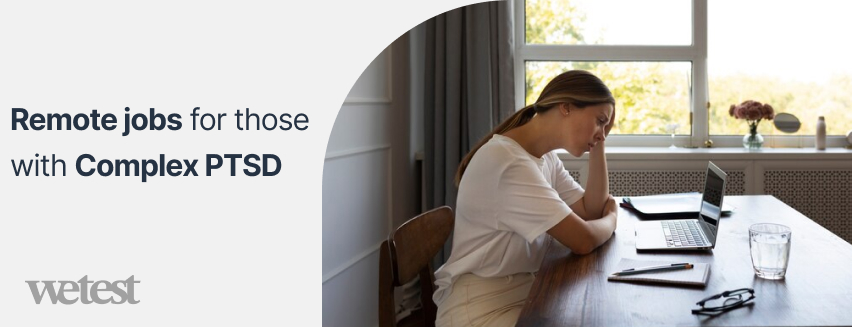
Many people with complex PTSD find traditional office environments triggering or stressful. Remote work from home can be an ideal solution. Several fulfilling careers are appropriate for remote work:
Online seller
If you have a knack for writing, consider freelancing. You can write for blogs, companies, or publishers on your own schedule. The key is finding editors and clients who respect your needs. You can promote your services on websites like Upwork and Fiverr.
Virtual Assistant (VA)
As a virtual assistant, you provide administrative support remotely to businesses. Many VAs work part-time for several clients. You can find openings on Indeed, AngelList, or by contacting small business owners directly.
You can find openings on Indeed, AngelList, or by contacting small business owners directly.
Many remote teams also use conversational AI tools to automate repetitive support tasks—making the VA role easier to manage and less mentally taxing for those with CPTSD.
Online Tutor
Use your teaching skills or expertise in a subject area as an online tutor. Sites like Chegg, TakeLessons, and Wyzant allow you to set your own hours and rates. Choose ages and subjects you feel comfortable with, like English, math, music, or coding.
Website Tester
Test websites or mobile apps for user experience and functionality issues. Then provide detailed feedback to help companies improve their digital products. Some testers work for dedicated user research firms while others freelance. Either way, you can do the work on your own schedule.
Online Survey Taker
Complete paid surveys in your spare time for market research companies like BrewSurvey, Survey Junkie, Swagbucks, and InboxDollars.. While you won’t get rich, you can earn some extra money and gift cards. Surveys are easy to do remotely on any connected device.
For those with complex PTSD, remote jobs can provide meaningful work without the added stress of an office environment. With some searching, you can find freelance or part-time work appropriate to your skills and experience. The key is setting healthy boundaries, communicating your needs, and not taking on more than you can handle.
Worst jobs for those with Complex PTSD

Some jobs can intensify the symptoms of PTSD or trigger traumatic memories. It is best for your mental health and recovery to avoid these types of occupations:
First responder roles like police officer and firefighter
Constant exposure to traumatic events and high-stress situations can worsen PTSD symptoms like intrusive memories.
Military positions
The rigid routine and possibility of combat or violence can be problematic for PTSD.
Healthcare workers in emergency medicine or critical care
Caring for severely ill or injured patients in a fast-paced environment may intensify anxiety, insomnia, and other issues.
News media and journalism
Repeatedly reporting on traumatic news stories and events could trigger painful emotions and memories.
Customer service representative
Dealing with demanding or abusive customers all day can feel distressing.
Public-facing retail or service roles
Constant customer interactions, abusive or demanding behavior, and high-pressure multitasking feel extremely triggering.
Teaching or childcare in high-stress settings
Exposure to students’ unaddressed trauma can cause vicarious trauma.
Corporate or tech jobs with toxic management
Micromanagement or hustle culture under narcissistic bosses can lead to burnout.
In general, jobs with chaotic schedules, trauma exposure, strict authority, or high stress tend to be poor choices for those living with complex PTSD. It is best to pursue careers that provide flexibility and stability. With the right treatment and self-care, you can find fulfilling work that complements your recovery rather than complicates it.
Self‑Care Strategies for the Workplace
Creating personalized rituals at work can help you weather symptom spikes. Schedule brief “grounding breaks” every 60–90 minutes. Set an alarm on your phone, then step away for a minute of deep breathing.
Keep a compact sensory kit at your desk so you can down‑regulate hyperarousal in seconds.
Build in a daily “walking pause”: even a five‑minute stroll around the block or down the hallway can reset your mind and body.
Over time, these micro‑interventions give you more control over flashbacks or racing heartbeats while on the job.
FAQs
Here are some of the Frequently Asked Questions about Best Jobs for Someone with Complex PTSD:
How do I explain my condition to employers?
You don’t necessarily have to disclose your diagnosis. Focus on your strengths, skills, and experience. If asked about gaps in your resume, speak about dealing with a health issue that is now being properly managed.
What accommodations can I request?
Accommodations may include a quiet workspace, flexibility with hours or time off, written instructions, or extra training. Make requests formally and provide documentation from your doctor or therapist.
Is remote work or freelancing better?
It depends on your needs and preferences. Remote roles and freelancing offer flexibility but may lack stability or social interaction. Traditional on-site roles provide routine and coworker support but less flexibility. Think about what will work best for your mental health and work-life balance.
How do I handle triggers or flashbacks at work?
Have a plan in place for when symptoms arise. Take short breaks to do grounding exercises, limit stimulation, or call your therapist. Let a manager know discreetly if your performance is significantly impacted. Focus on self-care to minimize disruptions, but don’t hesitate to make your health a priority if needed.
Will my symptoms improve over time?
With proper treatment and management, many people with complex PTSD see significant improvements in their symptoms and quality of life. However, it can take time and ongoing effort. The key is developing coping strategies, limiting stress, and making healthy lifestyle changes. While complex PTSD may still recur periodically, many people are able to live full and meaningful lives with the right treatment and self-care.
Can I get disability benefits if complex PTSD prevents me from working?
Yes! Complex PTSD (CPTSD) can qualify for disability benefits in many countries, including SSDI or SSI in the US if symptoms severely limit your ability to work. You’ll need medical documentation from a therapist or psychiatrist showing how CPTSD impacts daily functioning and employment. Consult a disability attorney or SSA resources for eligibility.
Should I disclose my CPTSD diagnosis when applying for jobs?
Disclosure is optional and personal. Under laws like the ADA (US), you don’t have to reveal CPTSD unless requesting accommodations. Focus on your skills during applications and interviews. If you need remote work or a quiet space, request accommodations after a job offer with medical documentation. Many find it helpful to disclose only to trusted employers for support.
Final Thoughts
As you explore new career options, remember that if you are diagnosed with complex PTSD, having a job that contributes to your personal growth and well-being is not out of reach. You still have valuable skills and qualities that can greatly benefit employers, you just need to find the right role and environment. The following are some final tips:
• Look for jobs with flexibility and autonomy: Having control over your schedule and tasks can help reduce stress and anxiety. Jobs like freelancing, consulting, and remote work may be good options.
• Consider part-time or contract work: Gradually transitioning into a new role can be easier. Starting part-time or on a temporary contract basis allows you to try out different jobs without committing to a full-time position.
• Focus on self-care. Managing complex PTSD symptoms at work requires ongoing self-care. Make sure to utilize coping strategies that work for you, like meditation, exercise, limiting alcohol/caffeine intake, and sticking to a routine.
With the right job and the right mindset, you can thrive professionally while also prioritizing your mental health and well-being. The career of your dreams may be closer than you realize.
The key is to find work that you truly care about and that also meets your needs. Don’t feel limited by what others expect or have done before. Your mental health and well-being should be the top priority in this situation.
The possibilities are endless if you keep an open and curious mind. While the path to overcoming trauma is long, choosing a supportive work environment and a job that motivates you can help make each day brighter.
Hire the best candidates
with Wetest.
Create pre-employment assessments in minutes to screen candidates, save time, and hire the best talent.
Try for free