How to Stay Motivated Every Morning at Work: Routines, Mindsets & More
Workplace
Bonica
September 2, 2025
Starting your workday with energy and enthusiasm can feel impossible some mornings. And you’re not alone in that struggle.
According to Gallup’s 2023 ‘State of the Global Workplace’ report, only a tiny 23% of employees feel engaged at work worldwide. So, these morning motivation challenges hit millions of workers globally.
When you just don’t have energy at the start of your day, it messes with your productivity and how happy you are at your job. But the good news is, you can change this pattern. This article’s going to show you practical ways to stay motivated every morning at work.
You’ll learn about morning routines that work. We’ll dig into psychological strategies that boost your energy. Plus, you’ll learn about ways to stay motivated for a long, long time.
These solutions are about three big things: making good morning routines, getting your mind right, and building habits that last.
Table of Contents
The Science Behind Morning Motivation at Work

Understand the biological and psychological factors that make mornings ideal for peak performance.
Circadian Rhythms and Peak Performance Hours
Your body has these natural energy patterns all day long. They’re called circadian rhythms. And get this: Harvard Business Review research shows that most people are super sharpest in the morning hours, cognitively speaking.
Your cortisol levels are highest between 8-9 AM. Cortisol helps you feel alert and motivated, so that natural hormone boost makes mornings perfect for tackling tough stuff. But not everyone’s the same.
Some people are ‘larks’ as they’re energized early. Others are ‘night owls’ who peak later in the day. Understanding your chronotype helps you work with your natural patterns instead of fighting them.
The Psychology of Fresh Starts
Mornings give you this psychological advantage called the ‘Fresh Start Effect’. Researchers at the Wharton School found that new beginnings motivate people to go after their goals way more actively.
Each morning basically resets your mental energy and how well you can make decisions. Your brain is, like, a recharged battery, ready for whatever comes your way. And this fresh start feeling can boost your motivation a lot.
Morning hours also help with neuroplasticity. That means your brain is more able to form new habits early in the day. So, starting positive routines in the morning makes them way more likely to stick.
Statistical Impact on Productivity
The numbers back up those morning motivation strategies. Employees who have structured morning routines show a whopping 31% higher productivity than those who don’t have routines.
There’s also a strong link between morning motivation and how happy you are at your job. Workers who start their day with intention report higher satisfaction rates throughout their whole careers.
These statistics just prove that small changes in the morning can create huge results in your work life.
Essential Pre-Work Morning Routines That Fuel Workplace Motivation

Practical body‑and‑mind preparation techniques set you up for a productive day.
Physical Preparation Strategies
Your body has to have the right food to stay motivated. Start with a 5-minute energy routine like jumping jacks or stretching.
Pick breakfast foods for steady mental energy. Eggs or Greek yogurt are better than sugary cereals. Whole grains also help.
Hydration is key for your brain. Drink water when you wake up. Your brain needs it to think clearly. A power shower can make you more alert.
Try alternating between warm and cool water for the last 30 seconds. That temperature change activates your nervous system and boosts energy.
One tech executive credits his 5 AM routine with bumping up his quarterly performance by 40%. His routine includes exercise, meditation, and planning his top three priorities for the day.
Mental and Emotional Preparation Techniques
Getting your head in the game is just as important as getting your body ready. Try a super quick 3-minute meditation to help clear your head for work. You know, apps like Headspace or Calm have these short guided sessions that are perfect for those crazy busy mornings.
And a little morning journaling? That can set some powerful intentions for your day. Try these three questions: What am I grateful for today? What’s my main priority? How do I want to feel at work today?
Visualization exercises help you mentally practice crushing daily challenges. Spend two minutes just imagining yourself succeeding at important tasks or meetings.
Gratitude practices? They shift your perspective before you even get to work. Try writing down three things you appreciate about your job, even when it’s a super tough day.
Oh, and get this: one marketing manager overcame imposter syndrome by just using morning affirmations. She just repeats positive statements about her abilities and worth before starting work each day.
Environmental Setup for Success
Get ready for motivated mornings the night before, seriously. Lay out your clothes, get your breakfast ready, and organize your work stuff. This totally cuts down on morning stress and that annoying decision fatigue.
Optimize your bedroom and workspace for natural energy flow. Open those curtains to let in natural light.
Keep your space clean and organized to help your mind stay clear. And create technology boundaries for your first 30 minutes awake.
Don’t check emails or social media right when you wake up. That saves your mental energy for more important tasks.
Also, develop morning playlists that energize and inspire you. Music can really mess with your mood and motivation levels. Choose songs that make you feel confident to tackle challenges.
Inspirational Morning Quotes and Affirmations for Daily Motivation

Powerful words and personal mantras kick‑start your confidence and focus.
Power Quotes for Professional Success
Starting your day with inspirational quotes? That can shift your mindset toward success. Here are some powerful ones from business leaders and motivational experts:
‘Success is not final, failure is not fatal: it is the courage to continue that counts.’ – Winston Churchill.
‘The way to get started is to quit talking and begin doing.’ – Walt Disney.
‘Your work is going to fill a large part of your life, and the only way to be truly satisfied is to do what you believe is great work.’ – Steve Jobs.
Different industries can benefit from specific motivational quotes.
For instance, salespeople might get into quotes about never giving up, and folks in healthcare often find a lot of inspiration in quotes about helping people and being kind.
You could make your own personal sayings out of quotes that mean something to you. Just pick one that speaks to where you’re at right now, you know? Then, just keep saying it during your morning routine and all through your day.
Daily Affirmation Practices
So, affirmations? They’re positive statements that build your confidence and motivation. You should create some for those different workplace challenges you’re facing.
- For self-confidence: Try saying, ‘I am capable and qualified for my role.’ or ‘I bring unique value to my team.’ And ‘I handle challenges with skill and grace.’
- For goal achievement: Go with things like, ‘I am making progress toward my career goals every day.’ ‘I take action that moves me forward.’ And ‘I celebrate small wins along the way.’
- For stress management: How about, ‘I remain calm under pressure.’ ‘I have the tools to handle any situation.’ And ‘I choose my response to stressful situations.’
For team leadership: You could use, ‘I inspire others through my example.’ ‘I communicate with clarity and compassion.’ And ‘I support my team’s growth and success.'”
Using Quotes Strategically Throughout Your Day
Make those inspirational quotes visible all through your workday. Set motivational images as your desktop wallpaper or screensaver, okay? This just gives you regular visual reminders of your positive intentions.
Program your phone to send timed motivational messages. These can be like gentle nudges to keep you motivated during busy times.
If you lead a team, think about putting inspiration in meeting rooms. This creates a positive environment that motivates everyone involved.
And keep a personal motivation journal where you collect meaningful quotes. Review it and add to it regularly to keep that source of inspiration going.
Psychological Mindsets for Sustained Morning Motivation

Adopting growth and purpose‑driven mindsets keeps your energy levels high.
Growth Mindset Implementation
Carol Dweck’s whole idea of a growth mindset is spot on for getting motivated at work. What it means is looking at challenges as ways to learn and get better. So, instead of going ‘Ugh, this is too hard,’ try thinking ‘Hey, this is an opportunity for me to grow.’ That little mental tweak can seriously make a huge difference in your motivation.
Also, make sure you do some morning self-talk to build up your resilience, reminding yourself that you can totally develop skills through hard work and by not giving up.
Purpose-Driven Work Approach
Connect your values to your daily tasks and projects. When you see how your work aligns with what matters to you, motivation just comes naturally. So, try using Simon Sinek’s whole ‘Why’ thing for morning motivation.
Just ask yourself: Why does my work matter? And how does it, like, contribute to something bigger than just me?
Research shows that a huge 73% of employees who really know their purpose feel way more engaged. Finding your ‘why’ can seriously boost your morning motivation.
Progress Tracking and Small Wins Philosophy
So, your brain releases dopamine when you hit goals, right? You should create systems that give you regular doses of this motivational chemical. Set daily micro-goals that you can accomplish throughout the day.
These small wins build momentum and keep you motivated over time. Develop celebration rituals for achievements, no matter how tiny. This might just be checking items off a list or sharing successes with a colleague.
One sales team boosted its performance by doing morning win-tracking sessions. Team members shared successes from the day before starting new tasks. This created a super positive momentum for the whole group.
A Quora Rundown
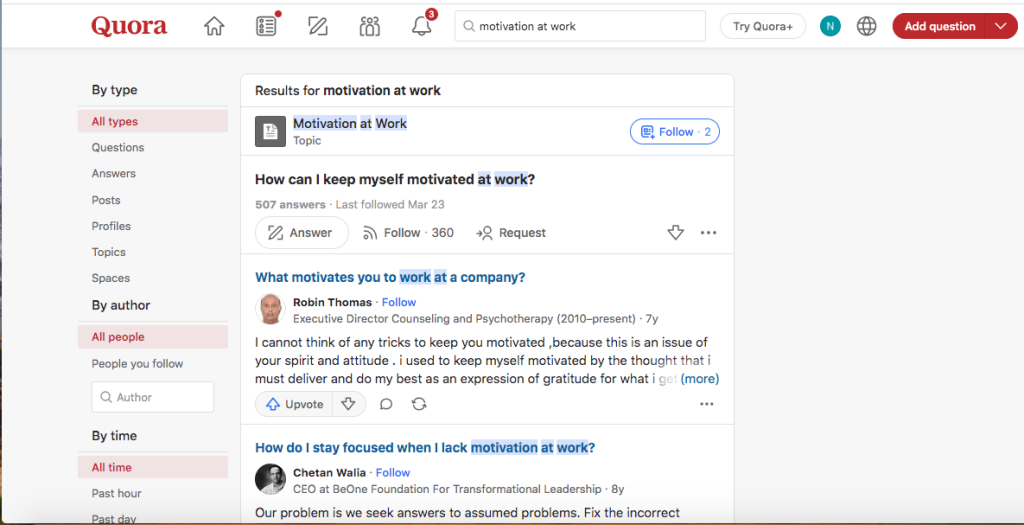
This section highlights fresh Quora users’ approaches to sustaining motivation at work, beyond routines.
Setting Personal Targets, Not Just Grinding
Anubhav Jain reminds us that “motivation” needn’t be about pushing yourself harder. He advises:
“Set targets for yourself every day and work with dedication. Don’t create a burden; take breaks, pursue what you like in between. Aim at giving your best every day.”
And when a task seems “impossible,” Anubhav says, “learn to let it go, and then perform without pressure.”
Reframing Failure as Fuel
An anonymous respondent shares a powerful motivator.
“My continuous failure. Because I believe that I am in the worst phase and from here only good things can happen to me.”
Viewing failure as a springboard fuels perseverance.
Using Boredom and Focused Environments
John L. Miller, with decades in tech recruiting, leans into boredom as a motivator.
“Sit at your desk and do nothing else. No web browsing… Work or nothing, period. Boredom is a surprisingly good motivator if you have the discipline to let it appear.”
He also suggests “minimizing distractions” by blocking meetings and even redesigning your workspace.
Cultivating a Clear “Why”
Rather than generic pep talks, Lane Belone urges:
“Ask yourself why you are going into work. If you don’t have an answer, then create your why and make it meaningful and powerful.”
A purpose-driven “why” acts like a tether!
Reward Systems and Treats
An anonymous user emphasizes simple incentives:
“Treat yourself: think ahead when you’re doing your tasks and tell yourself you’ll do something nice when a project is finished. This could be… getting something nice for lunch or doing a bit of online shopping.”
Pairing work with small rewards turns tasks into celebrations.
Drawing Motivation from Personal Relationships

For some, the strongest drive comes from loved ones. Akshay Dekonda credits his parents’ sacrifices:
“Whenever I feel lazy or demotivated to work, I just think about them and have one goal: they deserve to experience everything they sacrificed for my dreams.”
Aligning Work with Personal Enjoyment
Les Matheson takes ownership of his company’s goals:
“Take the company’s problems and goals personally. When I see those things as ‘my problem,’ that breaks down the separation of ‘I just work here’ and ‘they want me to get something done.’”
And Russell Mickler offers a straightforward test:
“Find work that you enjoy doing. If you hate what you do, change it.”
Mind-Body Techniques for Lasting Energy
Praneet recommends yoga and inner work.
“What you need is not motivation but clarity in life… The only way to become truly joyful and motivated with clarity is from the inside, not outside.”
Meanwhile, Shyaaam Meneen prescribes mindful breathing:
“Observe sensations of your incoming–outgoing breath… for 5–15 minutes anywhere, eyes open or closed—no deep breathing. Never meditate with expectations.”
Structured Planning and Accountability
Several users discuss the power of clear planning.
John L. Miller keeps a visible checklist and “crosses off” completed tasks to see tangible progress.
Hrishikesh Kamat maintains a distraction log and stores tools within arm’s reach, paired with 30–45 minute deep‑focus sprints.
Aeon‑Vex Frami argues that “motivation is a weakness” and urges step‑by‑step planning:
“Lay a step‑by‑step plan… fractionate steps where necessary. Follow through and refactor your path whenever an obstacle comes about.”
Building Team and Workplace Motivation Culture

Creating supportive environments and social rituals amplifies collective engagement.
Creating Motivational Workspace Elements
Personalize your workspace to boost psychological ownership. Add photos, plants, or meaningful objects that inspire you. This creates a positive environment that supports daily motivation.
Natural lighting and plants can enhance energy levels throughout the day. If possible, position your workspace near windows or add artificial light sources that mimic natural light.
Organize your workspace systems to reduce morning stress. When everything has a place and is easily accessible, you start your day with less friction and more motivation.
Social Motivation and Team Dynamics
Morning huddles and team energy-building exercises can boost group motivation. Start meetings with positive check-ins or brief energizing activities.
Create accountability partner systems for sustained motivation. Pair up with colleagues who share similar goals. Regular check-ins help maintain motivation over time.
Implement peer recognition programs that start the day positively. Encourage team members to acknowledge each other’s contributions and successes.
Research indicates that teams with structured morning check-ins show 25% higher goal achievement rates. Social motivation is a powerful tool for maintaining engagement.
Leadership’s Role in Morning Motivation
Managers play a crucial role in inspiring morning energy. Leaders should model positive morning behaviors and create environments that support motivation.
Recognition timing matters for maximum motivational impact. Acknowledge achievements early in the day when possible. This sets a positive tone that carries through the entire workday.
Create psychological safety that encourages daily engagement. Team members should feel comfortable sharing ideas and taking appropriate risks without fear of criticism.
Overcoming Common Morning Motivation Obstacles

Targeted strategies help you navigate low‑energy days and toxic environments.
Conquering the Sunday Night Blues
Weekend routine strategies can set up Monday success. Maintain consistent sleep schedules even on weekends. This prevents the Monday morning energy crash that many people experience.
Use Sunday evenings for gentle mental preparation. Review the upcoming week’s priorities without creating stress. Focus on what you’re looking forward to accomplishing.
Plan enjoyable Monday morning activities. This gives you something positive to anticipate and can counteract the typical Monday blues feeling.
Managing Low Energy and Seasonal Challenges
Seasonal Affective Disorder affects about 6% of the US population and impacts workplace performance. Light therapy integration can help maintain year-round motivation.
During busy periods and tight deadlines, focus on energy management rather than energy creation. Preserve your mental resources for the most important tasks.
Recognize that low energy periods are normal and temporary. Having strategies ready for these times prevents them from derailing your overall motivation.
Technology and Distraction Management
Social media can drain morning motivation and focus before you even start working. Consider avoiding social platforms during your morning routine.
Manage notifications to create distraction-free mornings. Turn off non-essential alerts during your first hour of work. This preserves mental energy for important tasks.
Practice digital wellness by setting boundaries around technology use. This protects your mental energy and maintains focus throughout the day.
Dealing with Workplace Negativity and Toxic Environments
Focus on factors within your control when facing workplace negativity. You can’t change other people, but you can protect your motivation and energy.
Build resilience against demotivating colleagues through strong personal routines. Having reliable sources of motivation makes you less dependent on external validation.
Know when to seek environment changes for sustained motivation. Sometimes the healthiest choice is finding a workplace that better supports your well-being and growth.
Industry-Specific Morning Motivation Strategies

Tailored routines ensure motivation works for remote, shift‑work, and high‑stress roles.
Remote Work and Home Office Motivation
Create physical boundaries between the home and work mindset. This might mean changing clothes, moving to a dedicated workspace, or performing a specific ritual that signals the start of your workday.
Virtual accountability and team connection strategies become crucial for remote workers. Schedule regular video check-ins with colleagues to maintain social motivation.
Combat isolation with structured morning routines that include human connection. This might involve calling a colleague, participating in online communities, or working from coffee shops occasionally.
Shift Workers and Non-Traditional Schedules
Adapt circadian rhythm research for night shifts by creating artificial “morning” routines before your shift starts. Use bright lights and energizing activities to signal to your body that it’s time to be alert.
Maintain consistency strategies across rotating schedules. Even when your start times change, keep certain routine elements constant to support ongoing motivation.
High-Stress Professions and Leadership Roles
Healthcare workers need morning resilience-building practices. This might include stress management techniques, positive visualization, or brief mindfulness practices.
Executives and managers under pressure can benefit from morning routines that include strategic thinking time. Use quiet morning moments to prioritize and plan.
Customer service and client-facing roles require energy management throughout the day. Start with practices that build emotional reserves for challenging interactions.
Building Long-Term Sustainable Motivation Systems

Habit formation and measurement tools turn morning routines into lasting success.
Progressive Habit Development
James Clear’s atomic habits principles apply perfectly to workplace motivation. Start with tiny changes and build gradually over time.
The reality is that habit formation takes an average of 66 days, not the commonly cited 21 days. Be patient with yourself as you develop new routines.
Use habit stacking techniques for busy professionals. Attach new motivational practices to existing habits to make them easier to remember and maintain.
Measuring and Optimizing Your Motivation System
Track key performance indicators for personal energy and engagement. This might include energy levels, task completion rates, or job satisfaction measures.
Conduct weekly and monthly motivation assessments. Regular check-ins help you identify what’s working and what needs adjustment.
Develop adjustment strategies for routine evolution and improvement. Your needs will change over time, and your motivation system should adapt accordingly.
Preventing Burnout While Maintaining High Performance
It’s important to distinguish between sustainable motivation and unsustainable intensity; high motivation should not equate to exhaustion.
Integrate recovery practices within high-motivation lifestyles, including adequate sleep, regular breaks, and activities that recharge your energy.
Long-term data indicates that companies implementing balanced motivation programs experience 40% less employee turnover. Sustainable practices, therefore, benefit both individuals and organizations.
Emergency Motivation: Quick Fixes for Difficult Mornings

Fast resets and backup plans rescue you on your toughest mornings.
The 2-Minute Motivation Reset
When you’re having a particularly difficult morning, try breathing techniques for instant energy. Take five deep breaths, inhaling for four counts and exhaling for six counts.
Power poses can provide a quick confidence boost. Stand tall with your hands on your hips for two minutes. This posture can change your hormone levels and improve your mood.
Practice quick gratitude for a perspective shift. Name three things you’re thankful for, no matter how small. This simple practice can reset your mental state.
Backup Plans for Disrupted Routines
Travel days require modified motivation strategies. Prepare portable routines that work in hotel rooms or unfamiliar spaces.
Sick days call for gentle, modified routines. Focus on rest and recovery while maintaining small elements that support your well-being.
Crisis management with minimal energy means having ultra-simple backup plans. Identify the one or two most important elements of your routine that you can maintain even on the worst days.
Recovery Strategies After Motivation Lapses
Getting back on track after missing routines requires self-compassion. Don’t abandon your system because of a few missed days.
Practice self-compassion for sustainable motivation. Treat yourself with the same kindness you’d show a good friend facing similar challenges.
Learn from low-motivation periods instead of judging them. What circumstances led to the lapse? How can you prepare better for similar situations in the future?
Conclusion
Staying motivated every morning at work is achievable with the right strategies. You’ve learned about morning routines that prepare your body and mind for success, and you’ve discovered psychological mindsets that sustain long-term motivation.
Remember that environmental factors and inspirational quotes also play important roles. The key is personalizing these approaches to fit your unique situation and needs. Start with just one technique today, perhaps reading a motivational quote or engaging in five minutes of morning exercise. Small changes can lead to significant improvements over time.
These strategies offer long-term benefits for both career success and overall life satisfaction; consistent morning motivation practices can transform not just your workdays but your entire professional trajectory.
FAQs
Answers to common questions help you customize strategies for your unique needs.
How long does it take to establish a morning motivation routine?
Research shows it takes an average of 66 days to form a new habit. Start with one simple technique, like 5-minute meditation or reading one inspirational quote, then gradually add elements. Most people see initial benefits within 7-14 days of consistent practice.
What should I do if I’m naturally not a morning person?
Work with your natural chronotype rather than against it. Night owls can still create motivation by: preparing everything the night before, using bright light therapy upon waking, having accountability partners, starting with micro-routines, and focusing on energy management rather than early wake times.
How can I stay motivated specifically on Mondays?
Combat Monday blues by ending Fridays with next week’s priorities listed, maintaining consistent sleep schedules on weekends, planning something enjoyable for Monday mornings, using Sunday evenings for gentle preparation, and reading Monday-specific motivational quotes.
What if my workplace environment is consistently demotivating?
Focus on controllable factors: personalize your immediate workspace with motivational quotes and images, build relationships with positive colleagues, communicate environmental needs with management, create portable motivation tools, and develop mental resilience practices.
How do I maintain motivation during extremely busy or stressful periods?
Simplify your routine to essential elements (1-2 key practices), use stress as a motivator rather than a barrier, practice 2-minute stress relief techniques, maintain perspective through micro-gratitude moments, and communicate workload concerns proactively.
Can these morning motivation techniques work for remote workers?
Yes, remote workers often benefit more from structured routines. Key adaptations include: creating physical boundaries between home and work spaces, scheduling virtual team motivation check-ins, using technology for accountability, establishing clear start-of-workday rituals, and combating isolation with connection practices.
What’s the best motivational quote for workplace challenges?
The most effective quotes vary by person, but universally powerful ones include: “Success is not final, failure is not fatal: it is the courage to continue that counts” – Winston Churchill, and “The way to get started is to quit talking and begin doing” – Walt Disney. Choose quotes that resonate with your specific challenges.
How do I motivate my team members who seem disengaged in the mornings?
Implement team morning motivation practices: start meetings with positive wins sharing, rotate inspirational quote sharing among team members, create morning ritual competitions, offer flexible start times when possible, and model high-energy morning behavior consistently.
Hire the best candidates
with Wetest.
Create pre-employment assessments in minutes to screen candidates, save time, and hire the best talent.
Try for free