
Bonica
October 24, 2025
One missed punch can snowball into chaos: wrong paychecks, short staffing, compliance risk. Attendance regularization is how you fix it: correct records after discrepancies by adjusting punch times, explaining absences, and aligning hours with payroll.
Modern workplaces face significant attendance challenges. According to a Circadian Workforce Solutions study, 77% of employees have unplanned absences. This creates problems for both workers and companies.
Poor attendance tracking affects many areas of business. It reduces productivity when teams are short-staffed. It creates payroll errors that cost time and money to fix. Companies also face compliance risks when attendance records are incomplete or wrong.
HR teams struggle with attendance management daily. They handle requests to fix missed punches. They process explanations for late arrivals. They ensure attendance data matches payroll requirements. Without good systems, this work becomes overwhelming.
This article covers best practices for attendance regularization. You will learn how to build effective processes. We will explore technology solutions that make the work easier. Both HR teams and employees will find practical guidance here.
The right approach balances flexibility with accountability. It helps employees when genuine mistakes happen. It also maintains workplace standards and legal compliance. Good attendance regularization supports both business needs and employee satisfaction.
Table of Contents
What is Attendance Regularization?
Attendance regularization fixes attendance records after problems occur. It differs from regular leave applications, which you submit before taking time off. Regularization occurs after attendance issues have already arisen.
The core components include the original attendance record, the correction needed, and valid reasons for the change. Most systems require employee requests, manager approval, and HR oversight.
This process must follow labor laws in your location. Companies need policies that protect both employee rights and business interests. Legal compliance prevents disputes and regulatory problems.
Types of Attendance Irregularities
Several situations require attendance regularization. Missed punch-in or punch-out times are most common. Employees forget to clock in when arriving at work. They also forget to clock out when leaving.
Late arrivals and early departures need explanations. Traffic problems, medical appointments, or family emergencies cause these issues. Partial day attendance happens when employees work some hours but miss others.
Wrong location check-ins occur in companies with multiple offices. Employees might clock in at the wrong building. GPS systems sometimes show incorrect locations.
Overtime and extra hours often need regularization. Employees work beyond normal hours for projects or emergencies. System glitches create false attendance records. Technical errors show employees as absent when they worked.
Emergencies require special handling. Family crises, medical emergencies, or natural disasters affect attendance. Remote work creates new challenges with traditional time tracking systems.
Who Can Request Attendance Regularization
Most companies allow employee self-service for basic regularizations. Workers can log into systems and submit requests themselves. This works well for simple missed punches or minor timing issues.
Managers can initiate regularization for their team members. This helps when employees cannot access systems. It also works for team-wide issues like meetings or training sessions.
HR administrators handle complex cases and system-wide problems. They process bulk corrections when technical failures affect many employees. They also manage disputes between employees and managers.
Attendance Regularization Policy and Workflow with Slas and Escalation Matrix
If you want a system where people don’t fight all the time about their hours, you should have a clear policy on how to fix attendance mistakes. It’s the single most important thing.
When everybody knows the deal, the work just flows. The policy should literally say what kind of proof is good enough, how long it’s going to take for someone to handle the request, and what happens if the manager says no.
Define the scope. Who exactly is covered? Which system has the official time record? You need a timeline for submitting a correction request, and then mention any exceptions.
Having a quick service level agreement for those fixes just takes the stress away. For a basic missed punch, try to get it done in one to three days, and make sure anything that messes with payroll is resolved before the cutoff.
Map out a simple approval flow so people don’t have to chase emails all over the place. Log every step in your HR system so you have a digital paper trail. You also need an escalation chart that tells people when to send a problem up to HR.
Issues like the manager and employee disagreeing, the same guy making mistakes constantly, or a big system error that hits everyone should all go straight to HR. That chart needs to name the person or role at each level and give them clear deadlines to respond.
Documentation is vital for keeping things fair. Acceptable proof can be a doctor’s note or travel receipts. Just make a short list of what you will and won’t accept.
You should explain the appeal process. If someone thinks their fix was wrongly denied, tell them how they can get a second look and who does that review.
Attendance Management System and Self-Service Attendance
Tech doesn’t replace a good policy, but it’s what makes a fair policy work for a huge company.
An attendance system takes all that manual work and turns it into a fast process you can audit.
When you’re choosing one, just focus on three practical things. The time tracking has to be rock solid. It needs to record punches from whatever device your staff uses.
The system has to talk to your payroll and HR systems, so adjustments happen without anyone having to type in the same thing twice.
It must keep a clean audit trail showing who asked for the change, who signed off on it, and exactly when payroll got updated.
Self-service attendance is awesome because it stops bottlenecks and makes employees more responsible. If your people can just log into a portal, submit their correction, attach the proof, and see the status, your HR team gets freed up for way more important stuff.
It also speeds things up because managers don’t have to go hunting for paperwork.
It’s also crucial to automate the sensible safety rules. The system should automatically flag weird stuff, like if the same person misses punching in every Monday. Automation can even suggest a likely fix to a manager based on what they approved last time.
Mobile features are a must-have for modern teams. People need to be able to fix their time sheet right from their phone if they’re traveling or working remotely and can’t get to a desktop.
Getting the system to talk to your scheduling and workforce planning tools is a huge plus. If the attendance system knows the planned shift, it can compare the time recorded to the time planned and instantly show exceptions with context.
Choose vendors that are good at reporting. Dashboards for looking at attendance data let HR spot systemic problems fast.
Attendance Analytics and Exception Management for HR
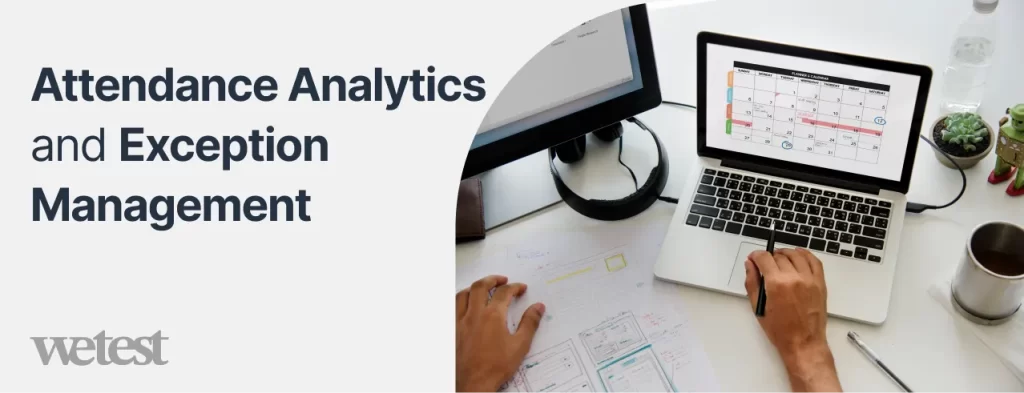
Come up with a small handful of meaningful metrics that everyone looks at all the time. Start with the number of regularization requests you get per 100 employees each month.
Track time-to-resolve so you can tell if you’re hitting your attendance SLA. Keep an eye on the rejection rate to figure out if managers are being consistent with the rules. And measure payroll adjustments to put a dollar figure on the cost of late corrections.
Attendance exception management is just the process of labeling, looking into, and fixing all those irregularities. Create a clear list of exception types like missed punch, wrong location, overtime that wasn’t approved first, or device failure. Tag every single regularization request with the right label. This easy step makes it simple to run monthly exception reports.
Auditing is essential for keeping people’s trust and protecting the company from outside scrutiny. You should schedule regular checks where you compare the raw time clock data with the final payroll entries.
Attendance analytics can also be proactive. Use simple dashboards to highlight the people who are constantly having issues, but do this while being careful about privacy. Look at patterns based on the day of the week and time of day.
Compliance means making sure your practices line up with wage and hour laws. Make sure your regularization policy doesn’t accidentally lead to someone getting paid less for the work they actually did or violating overtime rules.
A Quora Rundown
Below is a synthesis of advice from Quora users on handling employee attendance issues.
Cultural Fit and Voluntary Engagement
Mickie S highlights the importance of respecting personal boundaries around social events.
“Jim thinks if he does a fair day’s work for a fair day’s pay, that is all he owes you. He doesn’t think having a job means the company owns him, body and soul.”
She goes on to note that forcing after-hours activities can backfire, and suggests:
“If you want to ‘team build,’ either do it within regular working hours. Jim still won’t like it… but at least he is getting paid for it.”
Rigorous Documentation and Technology Enforcement
Greg Cook stresses the need for foolproof tracking and transparent policies.
“Have everything documented. A good employee you let slip by for 6 months could be the devil in 7.”
He recommends biometric clocks to prevent video spot checks.
“Video coverage and an old style is effective IF you spot check weekly a few employees.”
Finally, he advocates positive reinforcement.
“A great reward for 100% attendance is always a good signal that you value promptness!”
Clear Discipline Framework and Legal Awareness
Gordon Hood emphasizes caring but firm boundaries.
“There are reasons, and there are excuses… One rule I remember: the first time is a mistake, the second time is stupidity!”
He advises defining “excessive tardiness” concretely, “Being late… more than six times in any three-month period,” and communicating a grace period of five to seven minutes for emergencies.
Juan Espinosa recommends a classic progressive discipline ladder.
“Find the reasons for the absenteeism. If they are not solid, issue a verbal warning. If the problem persists, issue a written warning. If it’s not solved, terminate the employee.”
Empathetic One-on-One Conversations
Jill Bamford urges managers to diagnose root causes through dialogue.
“Talk to her. Ask lots of questions and listen. Try and really understand the situation and contributory conditions before you try to solve anything.”
She suggests adjustments and time-shifting before resorting to separation.
“Could she work part time for a short period? Could you get someone in to job share temporarily?”
Zero-Tolerance vs. Flexible Accommodation
Darryl Clements lays out a no-nonsense stance tempered by legal checks:
“I’ve never believed an employee is a good employee if they aren’t available when expected… Notify the employee that another absence may lead to discipline, including possible termination.”
Yet he balances that with empathy.
“Find out if there’s something going on… You might find that a situation outside the workplace is driving erratic behavior and a little help or leeway might be necessary.”
Kee Nethery similarly underscores reasonable accommodation.
“You first decide if they need some form of accommodation because of some protected disability… Then if it continues, you fire them.”
He also recommends partnering with a PEO to ensure legal compliance.
Flexible Scheduling and Remote Solutions
John Chen and Anonymous Learner both propose modern tactics.
“Try to set up a flexible schedule with her… put work in the cloud so that she can access and work on it from home.”
He adds that clear KPIs and deadlines help maintain accountability.
“Work in deadlines with her and set clear goals and KPIs to achieve them even when absent.”
Learner: “Some people do not like office parties… If they are working well and not deteriorating the work atmosphere, then it should not be treated as an issue to be handled.”
Reward and Recognition Programs

Perry Lyle presents a structured incentive scheme for perfect attendance.
“Cash incentives work. Smart organizations are willing to share profit incentives to earn employee loyalty.”
He cites studies showing cost savings when companies invest in recognition over penalties.
Managerial Presence and Role Modeling
Abduragiem Campbell and Edward Stephenson remind leaders that consistency begins at the top.
Abduragiem Campbell: “Ask yourself: Are they working for you, or are you employing them?… Discipline starts with management.”
Edward Stephenson: “If my most treasured employee puts my business in harm’s way for a less-than-acceptable reason, I will remind him who is the boss.”
They both argue that managers must adhere to the same attendance standards they set for their teams.
Creative Workarounds and Backup Plans
Murray Covert suggests simple backup procedures for unexpected absences.
“Give them a written warning that unapproved absence may result in being fired.”
But he also acknowledges that sometimes you need quick sign-in alternatives when technology fails.
Addressing Root-Cause Patterns
Kelley Sinclair highlights spotting repeating absentee patterns.
“People who miss the same day repeatedly—like every Monday—are a red flag. If you have a lot of absenteeism, the question is why and what is the solution?”
She recommends role manuals so teams can cover for absent members.
Conclusion
To do attendance regularization right, you need a balanced approach. It should be flexible and compliant. Simple policies are the best defense for everybody, employees and employers. And using tech solutions is the trick to making the whole process fast and not buried in paperwork.
Success hangs on a few things. Clear communication is key, so people know the procedures. Applying the rules fairly is how you build trust and get compliance. And getting regular feedback is what keeps everything getting better.
HR teams need to stop being reactive and start focusing on proactive policy management and making decisions based on data. Employees need to step up and take responsibility for understanding the policies and telling people right away if there’s an attendance issue.
Tech is going to keep changing attendance management a lot. Companies should get ready for AI solutions and predictive analytics. Technology is only good if it has clear policies and good communication backing it up.
The future is all about more flexible attendance systems. These tools will be way better at handling all the different ways people work now while still keeping everything compliant and accountable.
The companies that put in the effort for good regularization processes today are the ones that will be ready for whatever the workplace throws at them tomorrow.
FAQs
How long should employees have to submit attendance regularization requests?
Most companies allow 24-48 hours for regularization requests. However, emergencies may have extended deadlines of up to 7 days with proper documentation and manager approval.
Can employers legally reject attendance regularization requests?
Yes, employers can reject requests that don’t meet policy criteria or lack proper documentation. However, rejections must be consistent, documented, and comply with labor laws and company policies.
What is the difference between attendance regularization and leave application?
Attendance regularization corrects already-occurring attendance discrepancies, while leave applications are advance requests for planned time off. Regularization is reactive, while leave applications are proactive.
What documentation is typically required for attendance regularization?
Common requirements include medical certificates for illness, travel documents for delays, system screenshots for technical issues, and written explanations from employees and supervisors.
How do attendance regularization policies affect payroll processing?
Regularizations must be processed before payroll cutoff dates to ensure accurate salary calculations. Late regularizations may affect the current pay cycle and require adjustments in subsequent periods.
Hire the best candidates
with Wetest.
Create pre-employment assessments in minutes to screen candidates, save time, and hire the best talent.
Try for free