
Understanding Appraisal Letter Meaning with Examples and Tips
Human resources
Bonica
June 17, 2025
Ever scratch your head wondering what your boss means in that super formal appraisal letter?
But this formal document is no trivial matter. It’s a potent roadmap for your career, impacting salary and promotion. This guide offers the solution: clear explanations of appraisal letter meaning, real-world examples that clarify, and actionable strategies to leverage them for your advantage.
Whether you’re a nervous employee or a manager seeking to give better feedback, you’ll find practical insights to demystify performance documentation.
Let’s decode these important career documents together.
Table of Contents
Appraisal Letters in Professional Settings

Appraisal letters are those official documents that take a good look at how you’ve been doing at work over a set time.
Think of them like your professional report card. They capture your strong points and what you need to work on. Unlike those quick chats you might have with your boss, these letters create an official record of your performance that sticks with your employment history.
They are not merely feedback, but critical documentation influencing your long-term career trajectory.
Why should you care? Because these letters often determine:
– Whether you receive a salary increase
– Your eligibility for promotion
– Your standing during reorganizations or layoffs
– How your contributions are valued by the organization
Throughout this article, I’ll help you understand what these letters really mean, show you examples of effective appraisals, and provide strategies for both receiving and writing them.
What Is an Appraisal Letter and Its Core Purpose

An appraisal letter is a formal written assessment of an employee’s performance, skills, and contributions over a specific period—typically quarterly, bi-annually, or annually.
The appraisal letter culminates the performance review process, officially documenting management’s evaluation and feedback. It adheres to a structured format and becomes a permanent part of your employment record. It differs from other professional documents by focusing on performance evaluation rather than employment terms.
Organizations use appraisal letters strategically to:
– Create accountability through documented performance standards
– Provide legal protection by maintaining records of performance issues
– Support data-driven decisions about promotions and compensation
– Align individual goals with broader organizational objectives
– Track employee development over time
According to a recent Gallup study, employees who receive meaningful feedback are 3.5x more likely to be engaged at work, highlighting the importance of effective appraisal documentation.
Key Components That Make Appraisal Letters Effective
An effective appraisal letter is a communication tool that drives performance. Here are the essential elements every appraisal letter should include:
1. Performance metrics and KPIs: Specific, measurable achievements compared against predetermined goals (e.g., “Exceeded sales targets by 23% over two consecutive quarters”)
2. Competency assessments: Evaluation of job-specific skills and organizational competencies (e.g., technical abilities, leadership qualities, teamwork)
3. Specific examples: Concrete instances that illustrate performance patterns rather than vague generalizations
4. Future-focused development plans: Clear action items and growth opportunities for the coming period
5. Recognition of achievements: Acknowledgment of specific contributions and successes
6. Areas for improvement: Constructively framed development needs with practical suggestions
7. Overall performance rating: A standardized rating that places performance within the organization’s evaluation framework
The most effective appraisal letters meticulously balance recognition and constructive feedback. Harvard Business Review research indicates an optimal 5:1 ratio (five positive comments for every negative one) to sustain employee motivation while addressing performance deficiencies.
5 Common Types of Appraisal Letters You Should Know

Different work situations need different kinds of appraisal documents. Getting a handle on these variations helps you understand the feedback you get way more accurately.
1. Annual Performance Appraisal Letters
The most common type, these comprehensive evaluations review your performance across all job responsibilities over the past year. They typically include an overall rating and form the basis for compensation decisions.
- Example language: “Over the past 12 months, Jane has consistently demonstrated exceptional project management skills, completing 8 major initiatives on time and under budget.”
2. Promotion Recommendation Appraisal Letters
These specialized appraisals focus on readiness for advancement, highlighting leadership potential and expanded capabilities. They often compare your performance against the requirements of the higher position.
- Example language: “Based on Michael’s exceptional team leadership and strategic thinking demonstrated during the system migration project, I strongly recommend his promotion to Senior Developer.”
3. Salary Increment Appraisal Communications
Focused specifically on justifying compensation changes, these documents connect performance achievements directly to monetary rewards and often include market benchmarking information.
- Example language: “In recognition of Sarah’s outstanding customer satisfaction scores (97% positive) and efficiency improvements that saved the department $45,000, a 7% salary increase is recommended.”
4. Probation Completion Appraisal Documents
This is a critical point for new hires: evaluations at the end of their probationary period. They determine if initial performance expectations and cultural fit requirements are met for permanent employment.
- Example language: “During his 90-day probation period, David has demonstrated proficiency in all required technical skills and has integrated well with the team, warranting conversion to regular employment status.”
5. Project-Based Performance Evaluation Letters
These checks look at what you did for those specific jobs.
- Example language: “Amanda’s data analysis contributions to the Q3 marketing campaign directly resulted in a 15% increase in conversion rates and provided crucial insights for future campaigns.”
How Different Industries Approach Appraisal Documentation
Appraisal practices vary significantly across industries, reflecting different priorities and organizational cultures:
Corporate Sector Appraisal Letter Standards
Corporate environments typically employ highly structured, metrics-driven appraisal systems. Financial services and technology companies often use quantitative ratings scales (1-5 or similar) and emphasize measurable KPIs.
Tech companies like Google and Microsoft have pioneered calibration meetings where managers collectively review evaluations to ensure consistency and reduce bias. Their appraisal letters often include peer feedback components and focus heavily on innovation metrics.
Financial sector appraisals tend to emphasize revenue generation, client relationships, and risk management compliance. Their documentation is typically more formal and includes regulatory considerations.
Appraisal Practices in Educational and Non-Profit Sectors
These sectors generally take a more qualitative approach focused on mission alignment and impact measures.
Educational institutions often use peer review systems with longer evaluation cycles (sometimes 2-3 years) and emphasize student outcomes, research contributions, and institutional service.
Non-profits typically evaluate employees against mission fulfillment metrics and stakeholder feedback. Their appraisal letters often include sections on community impact and values alignment that would be uncommon in corporate settings.
Healthcare organizations blend quantitative metrics (patient outcomes, safety records) with qualitative assessments (bedside manner, team collaboration) in their appraisal documentation.
Decoding the Language: What Your Appraisal Letter Really Says

Appraisal letters often use carefully chosen language that requires interpretation. Understanding these professional communication codes helps you assess where you truly stand.
Understanding Positive Appraisal Terminology and Phrases
When you see phrases like “consistently exceeds expectations,” “demonstrates exceptional initiative,” or “serves as a role model,” you’re receiving top-tier feedback. These indicate performance well above average and often precede promotion or significant salary increases.
Mid-range positive feedback uses more measured language like “meets all requirements,” “reliable contributor,” or “solid performer.” While positive, these suggest satisfactory rather than standout performance.
Pay attention to specificity—detailed examples of your achievements indicate genuine appreciation, while vague praise might be diplomatic filler.
Recognizing Constructive Criticism in Professional Language
Constructive feedback is often cushioned in diplomatic language. When you see phrases like “opportunity for growth,” “would benefit from developing,” or “continuing to work on,” these are gentle indicators of performance gaps.
More serious concerns may be signaled by language like “needs improvement,” “does not consistently demonstrate,” or “falls below expectations in certain areas.”
The proximity of improvement areas to positive feedback also matters. If development needs are mentioned briefly after extensive praise, they’re likely minor concerns. If they dominate the assessment, they represent significant performance issues.
Reading Between the Lines of Corporate Feedback
Beyond the explicit language, context matters:
– Comparative language: “Among the top performers” is stronger than just “performs well”
– Future-oriented comments: Mentions of “leadership potential” or “readiness for additional responsibilities” signal promotion track
– Specificity level: Detailed accomplishments indicate genuine recognition, while generic praise may be perfunctory
– Action recommendations: Suggested training or development in specific areas highlights priorities for improvement
– Repeated themes: Issues mentioned in consecutive appraisals indicate persistent concerns requiring urgent attention
A 2023 survey by Gallup found that 70% of employees find performance review language confusing or ambiguous, so don’t hesitate to ask for clarification on feedback that seems unclear.
7 Red Flags to Watch For in Your Appraisal Letter
While most appraisal feedback deserves thoughtful consideration, certain patterns warrant special attention as they may signal serious concerns:
1. Sudden shifts in tone compared to previous appraisals, especially when not accompanied by explained performance changes
2. Vague criticisms without examples (“communication issues” or “attitude concerns”) which can indicate subjective bias or difficulty articulating specific problems
3. Missing acknowledgment of known achievements that you and others recognize as significant contributions
4. Disproportionate focus on a single incident rather than overall performance patterns
5. Drastically lower ratings without corresponding explanatory feedback
6. Recommendations for fundamental role changes suggesting poor fit rather than skill development
7. Inconsistency between verbal feedback you’ve received throughout the period and the written appraisal
How to Interpret Lukewarm Praise Professionally
Phrases like “satisfactory performance,” “meets basic requirements,” or “generally reliable” indicate adequate but unexceptional performance. While not negative, this language suggests you’re not standing out.
When lukewarm language appears consistently across multiple review cycles, it often indicates career stagnation risk. This is especially true in competitive industries where “meeting expectations” may not be enough for advancement.
The absence of forward-looking development suggestions alongside adequate performance ratings can signal limited growth potential in your current role or organization.
Real-World Examples of Effective Appraisal Letters

Seeing real examples of what makes an appraisal letter truly effective clarifies what to expect and gives you great models.
Sample Appraisal Letter for Outstanding Performance:
Performance Period: January-December 2023
Employee: Sarah Johnson
Position: Marketing Manager
Overall Rating: Exceeds Expectations (4.7/5.0)
Performance Summary:
Sarah has delivered exceptional results throughout this review period, demonstrating outstanding leadership, strategic thinking, and execution capabilities.
Key Achievements:
- Led the rebranding initiative that increased brand recognition by 32% according to our Q4 customer surveys
- Developed and implemented the social media strategy that grew engagement by 78% while reducing advertising spend by 15%
- Successfully managed a team of 5 marketing specialists, with all team members achieving or exceeding their individual targets
- Proactively identified and resolved potential campaign issues before launch, preventing an estimated $50,000 in wasted advertising spend
Development Areas:
- Continue developing data analytics capabilities to further strengthen campaign measurement methodologies
- Consider delegating operational tasks more frequently to create additional capacity for strategic initiatives
Future Development Plan:
Given Sarah’s demonstrated capabilities in strategic marketing and team leadership, we recommend:
1. Enrollment in the Advanced Marketing Analytics certification program
2. Expanded responsibility to include oversight of the international marketing initiatives in Q2 2024
3. Participation in the company’s leadership development program
Additional Comments:
Sarah has become an invaluable asset to the marketing department and the organization as a whole. Her combination of creative thinking and business acumen sets her apart as a potential candidate for senior leadership roles in the future.
Example of a Balanced Appraisal with Improvement Areas:
Performance Period: January-December 2023
Employee: Michael Chen
Position: Customer Support Specialist
Overall Rating: Meets Expectations (3.5/5.0)
Performance Summary:
Michael has demonstrated solid technical knowledge and customer service skills during this review period. His performance meets the core requirements of the role with particular strengths in technical problem-solving.
Key Achievements:
- Consistently maintained a customer satisfaction rating of 87%, meeting our department target
- Successfully resolved 93% of support tickets within the first contact, exceeding the team average of 85%
- Developed a troubleshooting guide for common technical issues that has been adopted by the entire support team
- Received specific customer commendations for patience and clear explanations (7 formal acknowledgments)
Development Areas:
- Response time metrics currently average 4.7 hours versus the team target of 3.5 hours
- Written communication in tickets sometimes lacks necessary detail for tracking purposes
- Could improve proactive identification of potential system-wide issues from individual tickets
Future Development Plan:
To address these areas and continue Michael’s professional growth, we recommend:
1. Time management workshop scheduled for Q1 2024
2. Bi-weekly review of written communication samples with team lead
3. Participation in cross-training with the systems monitoring team to improve pattern recognition
Additional Comments:
Michael has shown consistent improvement throughout the year and demonstrates a positive attitude toward feedback. With focused development in the identified areas, he has the potential to advance to a Senior Support Specialist role within the next review cycle.
Case Study: How Constructive Appraisals Lead to Growth
In 2022, a mid-sized software company implemented a revised appraisal system that emphasized specific, actionable feedback with measurable improvement goals. One junior developer received an appraisal highlighting both strengths in coding efficiency and weaknesses in documentation practices.
Rather than simply noting “poor documentation,” the appraisal provided concrete examples and recommended specific improvement actions: participating in the company’s technical writing workshop, implementing a personal documentation checklist, and weekly code review sessions focused specifically on documentation.
The employee implemented these recommendations and tracked progress. In six months, their documentation quality scores improved from 65% to 92%, and they were subsequently selected to help develop department-wide documentation standards.
This case demonstrates how specific, actionable feedback—rather than vague criticism—creates a pathway to improvement and career advancement.
Analysis of Appraisal Letter Structure and Tone
Effective appraisal letters follow recognizable patterns in structure and language:
Breaking Down Effective Language Patterns
The most impactful appraisal letters use the “situation-behavior-impact” framework:
1. Situation: Describes the specific context or circumstance
2. Behavior: Details the employee’s specific actions or approach
3. Impact: Explains the measurable results or consequences
For example: “When our largest client threatened to cancel their contract due to ongoing technical issues (situation), you personally led daily troubleshooting sessions and developed a comprehensive solution roadmap (behavior), which not only retained the $1.2M account but resulted in an expanded service contract (impact).”
Strong appraisals balance backward-looking assessment with forward-looking development. They typically allocate 60-70% to performance evaluation and 30-40% to growth opportunities and future expectations.
The most effective feedback follows the “specific-measurable-actionable” principle, avoiding generalizations in favor of concrete examples and data points.
How Tone Influences the Reception of Feedback
Research from the NeuroLeadership Institute shows that the tone of feedback significantly impacts how it’s received and implemented:
– Growth-oriented language (“here’s an opportunity to develop”) triggers less defensive reactions than fixed-mindset language (“this is a weakness”)
– Agency-promoting phrasing (“you might consider trying”) is more effective than directive language (“you need to do”)
– Achievement-focused feedback (“to reach your goal of promotion”) resonates better than deficiency-focused feedback (“to fix your weaknesses”)
The most effective appraisal letters maintain a consistent, professional tone throughout—even when addressing performance issues—and avoid emotional language or subjective judgments about personality traits.
How to Respond Professionally to Your Appraisal Letter

Receiving an appraisal letter is just the beginning. How you respond can significantly impact your professional development and relationship with management.
Constructive Approaches to Receiving Feedback
1. Practice emotional regulation before responding. Take 24 hours to process your initial reactions, especially if you feel disappointed or defensive.
2. Read for understanding, not validation. Focus first on comprehending the feedback, not on whether you agree with every point.
3. Identify patterns and themes rather than fixating on individual comments. Look for recurring feedback across different areas.
4. Compare against your self-assessment to identify perception gaps between how you view your performance and how others perceive it.
5. Prioritize actionable feedback that offers specific development opportunities rather than dwelling on general praise or criticism.
According to research from Columbia University, employees who respond constructively to feedback—even critical feedback—are 42% more likely to receive positive evaluations in subsequent review cycles.
When and How to Request Clarification on Appraisal Points
Request clarification when:
– Feedback is vague or lacks specific examples
– You don’t understand how to implement suggested improvements
– There seem to be contradictions within the feedback
– The assessment differs significantly from previous feedback
How to ask effectively:
– Schedule a dedicated follow-up meeting rather than responding immediately
– Frame questions as requests for guidance rather than challenges to the assessment
– Use specific language: “Could you help me understand what specific behaviors would demonstrate improved project management skills?”
– Take notes during clarification discussions to ensure shared understanding
Steps for Acknowledging Receipt and Planning Improvement
1. Acknowledge receipt formally within 1-2 business days, even if you’re still processing the feedback emotionally
2. Express appreciation for specific helpful feedback, regardless of whether it was positive or constructive
3. Develop an action plan that addresses key development areas with specific, measurable goals
4. Request resources or support needed to implement improvement plans (training, mentorship, additional feedback touchpoints)
5. Schedule progress check-ins rather than waiting for the next formal review cycle
6. Document your improvement journey by keeping a performance journal that tracks actions taken and progress made
Turning Negative Feedback into Professional Development Opportunities
Negative feedback, while sometimes difficult to hear, often contains the most valuable growth opportunities:
Strategic Approaches to Addressing Improvement Areas
1. Separate identity from behavior – Remember that feedback addresses your actions, not your value as a person or professional
2. Look for the legitimate core – Even if feedback feels unfair, identify the kernel of truth that can be used constructively
3. Reframe as growth opportunities – Mentally convert “weaknesses” into “development priorities” to maintain a growth mindset
4. Seek multiple perspectives – Consult trusted colleagues about how they’ve addressed similar feedback successfully
5. Connect improvement areas to career goals – Identify how addressing these challenges supports your broader professional aspirations
Setting Realistic Goals Based on Appraisal Feedback
Effective improvement goals follow the SMART framework but with additional considerations:
– Specific: Define exactly what success looks like (e.g., “Reduce report delivery time from 5 days to 3 days” rather than “Improve efficiency”)
– Measurable: Establish clear metrics that you and your manager agree represent improvement
– Achievable: Break larger development areas into manageable sub-skills that can be addressed individually
– Relevant: Prioritize improvements that align with both organizational needs and your career aspirations
– Time-bound: Set milestone checkpoints before your next formal review
– Visible: Ensure your manager and key stakeholders can observe your progress
– Supported: Identify specific resources, training, or mentorship needed
Psychologists at Stanford University found that employees who set structured improvement goals following critical feedback showed 37% greater performance improvements than those who approached development informally.
Best Practices for Managers Writing Appraisal Letters

Writing effective appraisal letters is a critical management skill that directly impacts employee performance and engagement.
Guidelines for Fair and Balanced Employee Assessments
1. Maintain a consistent evaluation framework across all team members to ensure equitable treatment
2. Focus on observed behaviors and results rather than assumed intentions or personality traits
3. Review the entire performance period, not just recent events (avoiding recency bias)
4. Use specific examples to illustrate patterns, not isolated incidents
5. Compare performance against established goals and standards, not against other employees
6. Acknowledge contextual factors that may have influenced performance, both positively and negatively
7. Seek input from multiple sources including project leaders, team members, and other stakeholders
8. Review draft appraisals for unconscious bias, particularly regarding gender, cultural background, or work styles
How to Document Performance Issues Constructively
When addressing performance concerns:
1. Clearly distinguish between skill gaps and effort issues, as they require different development approaches
2. Use objective, non-judgmental language that focuses on business impact rather than personal criticism
3. Provide specific examples with dates and contexts to support your assessment
4. Balance critique with acknowledgment of strengths and positive contributions
5. Outline clear, achievable improvement steps with reasonable timeframes
6. Express confidence in the employee’s ability to improve when appropriate
7. Document prior conversations about the performance issue to show the feedback isn’t new or surprising
8. Focus on future success rather than dwelling exclusively on past shortcomings
Techniques for Highlighting Achievements Effectively
To ensure accomplishments receive proper recognition:
1. Quantify achievements whenever possible with specific metrics and business outcomes
2. Acknowledge both results and methodologies that demonstrate valuable competencies
3. Recognize effort and persistence in addition to natural talent or abilities
4. Connect individual achievements to team or organizational goals to demonstrate relevance
5. Highlight improvements compared to previous performance periods
6. Recognize “invisible work” that may not be obvious but contributes to team success
7. Use strong, active verbs (e.g., “engineered,” “transformed,” “spearheaded”) rather than passive language
8. Incorporate direct quotes or feedback from clients, colleagues, or stakeholders when available
Common Mistakes to Avoid in Appraisal Documentation
Even well-intentioned managers can undermine their effectiveness by falling into these common traps:
Legal and Ethical Considerations in Appraisal Writing
1. Avoid protected characteristic references – Never include comments related to age, gender, ethnicity, religion, disability, or family status
2. Maintain documentation consistency – Significant discrepancies between verbal feedback and written appraisals create legal vulnerability
3. Exclude medical information – Never reference specific medical conditions, even when discussing accommodations or absences
4. Stick to job-relevant observations – Avoid comments about personal life, appearance, or other non-work factors
5. Use objective language – Phrases like “not a team player” or “bad attitude” are subjective and potentially discriminatory; instead, describe specific behaviors
6. Ensure all criticism is previously communicated – Avoid “surprise” negative feedback that the employee hasn’t had an opportunity to address
7. Maintain confidentiality – Secure appraisal documents appropriately and limit access to authorized personnel only
Ensuring Cultural Sensitivity in Feedback Delivery
1. Recognize cultural differences in feedback reception – Some cultures view direct criticism as appropriate while others expect more indirect approaches
2. Be aware of language barriers – For non-native language speakers, avoid idioms, colloquialisms, or ambiguous phrases that may be misinterpreted
3. Consider communication style preferences – Some employees benefit from straightforward feedback while others respond better to the “sandwich method” (positive-improvement-positive)
4. Acknowledge diverse working styles – Avoid penalizing approaches that differ from your preferences but achieve effective results
5. Examine potential impact of similarity bias – Managers often rate more favorably employees who share their background or working style
6. Use inclusive language – Avoid metaphors from specific cultural contexts (sports analogies, military terms) that may not resonate universally
7. Consider timing and delivery context – Cultural and individual differences affect preferences for public recognition versus private feedback
Leveraging Your Appraisal Letter for Career Advancement

Your appraisal letter isn’t just feedback—it’s a strategic document that can accelerate your career trajectory when used effectively.
Using Positive Appraisals in Salary Negotiations
1. Extract quantifiable achievements from your appraisal to build a compelling business case for compensation increases
2. Highlight language about exceeding expectations or performing above your current level
3. Reference specific commendations related to revenue generation, cost savings, or efficiency improvements
4. Connect your documented strengths to high-value skills in your industry or organization
5. Use comparative language (“among our top performers”) to support arguments for above-average increases
6. Timing matters – Initiate compensation discussions soon after receiving strong appraisals while the assessment is fresh
7. Address any potential objections by referencing performance improvements noted in your appraisal
Research from PayScale indicates employees who specifically reference documented performance achievements in compensation discussions receive 15-23% higher salary increases than those who make general requests.
How to Showcase Appraisal Feedback in Future Job Applications
1. Extract transferable accomplishments that demonstrate relevant skills for target positions
2. Incorporate manager commendations as third-party endorsements in cover letters or interviews
3. Translate internal achievements into industry-standard terminology that resonates with external employers
4. Create achievement statements using the Challenge-Action-Result framework supported by appraisal documentation
5. Reference specific metrics and results validated by your formal performance evaluations
6. Prepare to discuss development areas identified in appraisals and the steps you’ve taken to address them
7. Consider requesting a recommendation letter that expands on positive appraisal points when leaving a position
Documenting Your Progress Between Appraisal Cycles
To maximize the impact of your next review:
1. Create a performance journal to track achievements, challenges, and learning experiences throughout the year
2. Collect stakeholder feedback from clients, colleagues, and project partners as contemporaneous evidence
3. Maintain a “wins file” with emails, project results, and other documentation of successes
4. Schedule quarterly self-assessments using the same criteria as your formal appraisal
5. Track progress against development goals identified in your previous appraisal
6. Document additional responsibilities assumed since your last review
7. Request informal check-ins with your manager to ensure alignment and address any concerns proactively
According to research from Deloitte, employees who actively track their performance against appraisal criteria throughout the year receive ratings approximately 20% higher than those who focus on appraisal preparation only near review time.
A Quora Rundown
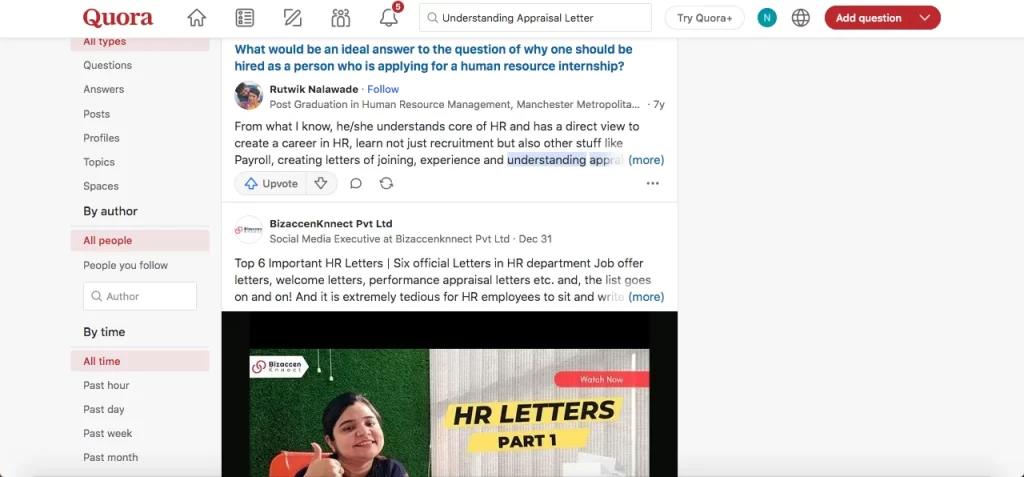
Below, we synthesize fresh perspectives from Quora users.
Updating Position Descriptions
Mark Harmon, a former Front-end Developer, emphasizes that accurate job descriptions are foundational:
“Before you begin reviewing an employee’s performance, you should double-check that employee’s description in your employment files. If the position’s requirements or functions have changed at all in the last few years, that description will need to be updated. It would be unfair to the employee to evaluate them based on outdated position descriptions.”
Identifying Core Job Functions and Expectations
Mark Harmon outlines the importance of clarifying essential performance functions before writing an appraisal,
“Identify expectations based on job roles/functions. Performance functions vary by job, but they generally include:
- Accountability: punctuality, reliability, meeting deadlines, respect for the organization
- Production standards: measurable accomplishments (e.g., picking 100 pieces/hour)
- Job knowledge: professional skills, willingness to develop, ability to assist coworkers
- Communication: ability to work collaboratively and seek feedback
- Interpersonal relations: how the employee treats colleagues, tact, respect
- Customer service: patience, approachability, follow-up commitment”
Choosing the Right Appraisal Format

Harmon describes three common appraisal formats, which differ in structure and scalability:
“1. Open-ended: An open-ended written evaluation without a rating scale. Preferable if you manage a small team.
2. Structured response: A middle ground with a series of topics or questions within set performance parameters. Responses must be based on observation of results, not speculation.
3. Checklist: Used for large teams, a list of performance categories with numerical rankings (e.g., 1–5). Ranking employees in groups can be effective for identifying low performers—many companies automatically terminate the lowest 10 percent if no improvement is made.”
Setting SMART Goals
Though SMART goals were covered previously, Quora users add nuanced suggestions for IT and cross-functional roles. Vishnu Sajeevan notes,
“Be more active on your work. Always market yourself. Try to showcase every good thing you do. Ensure your manager is aware of all the work you are doing—you’re not doing a free service. Try to showcase your management skill more than technical skills. Save all the appreciation mails you are getting from clients as well as internally. Take ownership of all the activities you do.”
Enhancing Self-Evaluations
Several Quora users share techniques for crafting compelling self-appraisals. Pranav Yuvraj notes,
“Writing a performance appraisal report is like assessing yourself. … Create a record of all your deliverables and their impact. If you did something that resulted in increased social media traffic or higher website performance, don’t forget to mention that. Always support your statements with stats and figures.”
Ayushi Mahant adds,
“If you follow KRAs/KPIs in your organization, be ready with the scores for the entire year. Present them in a graph or chart. If you received any feedback during the year, record it along with steps you took. Record all your challenges and solutions, and initiatives you’ve taken to streamline processes.”
Conclusion
Appraisal letters represent more than just administrative requirements—they’re powerful tools for professional growth when approached strategically. By understanding their real meaning, responding constructively to feedback, and leveraging positive assessments, you can transform these documents into catalysts for career advancement.
For employees, the key is balancing honest self-reflection with proactive improvement planning. For managers, effective appraisal writing combines fair assessment with development-focused guidance that motivates rather than discourages.
As workplace feedback continues evolving toward more frequent, conversational approaches, the fundamental principles remain constant: specificity, actionability, and a growth mindset. By applying the strategies outlined in this guide, you can navigate the appraisal process more confidently and use these important documents to accelerate your professional journey.
Hire the best candidates
with Wetest.
Create pre-employment assessments in minutes to screen candidates, save time, and hire the best talent.
Try for free