
Exit Interview Template: Key Questions to Ask Departing Employees
Employee relations
Bonica
May 27, 2025
Don’t let valuable employee opinions disappear when they leave. An effective exit interview template offers a proactive way to gather their feedback and learn from their experiences.
You should learn the essential questions to ask during exit interviews. I mean those that bring you candid feedback about your company’s strengths and areas needing improvement.
Don’t just see employee departures as a negative. Reframe them as an opportunity to gain valuable feedback that directly contributes to your organization’s growth.
Table of Contents
Introduction to Exit Interviews and Their Importance

Replacing an employee is costly. The expenses reach anywhere from half to twice their annual salary. This startling statistic explains why smart companies are obsessed with understanding why employees leave.
Exit interviews serve as your organization’s early warning system. When done right, they reveal underlying issues before they become company-wide problems.
Why Exit Interviews Matter for Company Growth
Exit interviews aren’t just administrative checkboxes—they’re strategic intelligence-gathering opportunities. They help you:
• Identify recurring reasons for departures
• Discover management issues that might otherwise remain hidden
• Gain honest feedback typically unavailable through other channels
• Create a feedback loop that fuels continuous improvement
Microsoft’s 2018 exit interview revamp revealed the high value departing employees placed on flexible work. As a direct result of this understanding, their employee retention saw an impressive 23% increase in the subsequent year.
The Strategic Value of Employee Feedback
Exit interviews give you unique insights. Departing employees, no longer bound by career considerations, can offer refreshingly honest perspectives on everything from company culture to management effectiveness and operational roadblocks.
This feedback becomes particularly valuable when analyzed collectively. Patterns emerge that highlight systemic issues requiring attention. For example, if multiple departing sales representatives mention insufficient training, you’ve just identified a clear area for improvement.
Setting Up an Effective Exit Interview Process
Before diving into specific questions, establish a consistent process that ensures you capture valuable data:
1. Schedule interviews during the employee’s final week
2. Choose a neutral location or virtual setting that promotes comfort
3. Guarantee confidentiality to encourage candid responses
4. Standardize your template while allowing for flexible follow-up questions
5. Document responses systematically for future analysis
The goal isn’t to change a departing employee’s mind.
Essential Components of an Exit Interview Template

An effective exit interview template requires consideration of format, timing, and personnel. These foundational elements impact the quality of information you’ll receive.
Digital vs. In-Person Exit Interview Formats
Both digital and in-person exit interviews offer distinct advantages:
Digital formats:
• Allow employees to respond at their convenience
• Often yield more thoughtful, detailed responses
• Provide anonymity that encourages honesty
• Streamline data collection and analysis
In-person formats:
• Enable follow-up questions and clarification
• Capture non-verbal cues and emotional context
• Show respect and appreciation for the employee
• Allow for a proper personal goodbye
Many companies prefer a hybrid approach! It includes a digital questionnaire followed by a brief in-person conversation. This captures both detailed data and emotional nuance.
Timing Considerations for Maximum Effectiveness
Timing significantly impacts the quality of exit interview responses:
• Too early: Employees may still be processing emotions
• Too late: Details and specific examples may fade
• Final week: Often provides the sweet spot of perspective with fresh details
Some companies also conduct follow-up surveys 30-90 days after departure. This happens when former employees have gained additional perspective on their experience.
Who Should Conduct the Exit Interview?
The person conducting the exit interview can dramatically affect its success. Consider these options:
• Direct supervisor: Typically not recommended; employees rarely feel comfortable providing criticism
• HR representative: The traditional choice, though employees may still have reservations
• Skip-level manager: Can be effective for uncovering management issues
• Third-party consultant: Provides maximum perceived neutrality and confidentiality
LinkedIn found that using neutral third parties increased candid feedback by 38% compared to internal HR representatives.
10 Must-Ask Questions About Job Role and Expectations

The gap between what employees expected and what they experienced often drives departures. These questions help uncover those misalignments.
Evaluating Initial vs. Actual Job Responsibilities
1. “How did your actual responsibilities compare to what was described during hiring?”
2. “Were there aspects of your role that surprised you?”
3. “Did you have the resources and support needed to fulfill your responsibilities?”
4. “How clear were your performance expectations?”
When asking these questions, listen for disconnects between promised and actual experiences. One study found that 48% of employees leave within 18 months when job reality doesn’t match expectations.
Questions to Uncover Role Satisfaction Issues
5. “What aspects of your job did you find most fulfilling?”
6. “Which responsibilities did you find most challenging or frustrating?”
7. “Did you feel your skills and talents were fully utilized?”
8. “Was there anything that consistently prevented you from doing your best work?”
Ask these to learn if the role itself was problematic or if external factors interfered with job satisfaction.
How to Phrase Questions About Workload Balance
9. “How would you describe your typical workload?”
10. “Did you feel the distribution of work across your team was fair and manageable?”
Rather than asking leading questions like “Was your workload too heavy?”, these neutral phrasings encourage honest reflection without suggesting a “correct” answer.
Frame follow-up questions to explore context: “What does a particularly challenging week look like?” helps quantify workload in specific terms rather than generalizations.
Questions to Assess Company Culture and Environment

Company culture impacts employee engagement and retention. These questions help evaluate the lived experience of your culture.
5 Effective Ways to Gauge Cultural Fit Experiences
1. “How would you describe our company culture to a friend?”
2. “Did you feel our stated values were actually practiced in daily operations?”
3. “Was your voice heard and respected in team discussions and decisions?”
4. “Did you feel recognized for your contributions?”
5. “Would you recommend our company as a great place to work? Why or why not?”
Notice these questions don’t explicitly ask about “cultural fit” but instead probe specific cultural experiences. This approach yields more actionable insights than general satisfaction questions.
Uncovering Team Dynamics and Management Relationships
6. “How would you describe your relationship with your manager?”
7. “Did you receive regular, constructive feedback about your performance?”
8. “Did you feel comfortable sharing ideas or concerns with leadership?”
9. “How effectively did departments collaborate on cross-functional projects?”
People don’t quit companies, they quit their managers! Glassdoor reports that 58% of employees value a great manager so much that they’d be willing to stay in a job that pays less.
Questions About Diversity, Inclusion and Belonging
10. “Did you feel included and respected as a team member?”
11. “Were there moments when you felt excluded or unable to bring your whole self to work?”
12. “How could our company improve its approach to diversity and inclusion?”
Ensure they are a standard part of the exit interview for all departing employees. Perspectives from majority group members reveal blind spots in diversity initiatives.
Career Development and Growth Opportunity Questions

Limited growth opportunities consistently rank among top reasons employees leave. These questions help identify gaps in your development offerings.
Evaluating Professional Development Opportunities
1. “How would you rate the growth opportunities available to you here?”
2. “Were there skills you wanted to develop that you couldn’t pursue here?”
3. “Did you have clear visibility into potential career paths within the company?”
Pay special attention to responses from high performers. When talented employees can’t see their future at your company, they’ll find it elsewhere.
Questions About Mentorship and Learning Resources
4. “Did you have access to mentorship that supported your professional goals?”
5. “How would you rate the training resources available to you?”
6. “Were you able to apply new skills and knowledge in your role?”
Effective learning programs don’t just offer training; they create opportunities to apply new skills. Look for disconnects between available resources and practical implementation.
How to Ask About Career Path Limitations
7. “What would your ideal next career step look like?”
8. “Did you see that opportunity existing within our organization? Why or why not?”
9. “What could we have done differently to support your career ambitions?”
These questions help identify structural issues in your advancement pathways and illuminate whether departing employees perceive invisible ceilings to their growth.
Compensation and Benefits Discussion Framework

Employees may not leave solely because of pay but it almost always plays a role. These questions help assess your competitive positioning.
Tactful Questions About Salary Satisfaction
1. “How competitive did you find our compensation compared to similar roles elsewhere?”
2. “Did you feel your compensation fairly reflected your contributions and value?”
3. “Was compensation a factor in your decision to leave? If so, how significant was it?”
Avoid asking specifically about their new compensation package, as this can feel invasive. Instead, focus on their perception of your compensation structure.
Benefit Package Evaluation Questions
4. “Which benefits did you find most valuable during your employment?”
5. “Were there benefits or perks you wish we offered?”
6. “How well did our benefits package meet your needs outside of work?”
Benefits preferences vary significantly across demographics. Parents might prioritize childcare support, while younger employees might value professional development stipends. Look for patterns among similar employee groups.
Work-Life Balance Policy Assessment
7. “How would you describe your work-life balance while employed here?”
8. “Did our flexible work policies adequately support your needs?”
9. “What additional work-life supports would have improved your experience?”
Deloitte research shows that companies with strong work-life balance policies experience 50% less turnover. These questions help identify whether your policies exist on paper but not in practice.
Questions to Identify Retention Improvement Areas

These direct questions get to the heart of what might have prevented the departure.
What Would Have Made You Stay?
1. “Was there a specific moment when you decided to look for other opportunities?”
2. “What changes might have convinced you to stay with the company?”
3. “If you were to return in the future, what would need to be different?”
This initial question pinpoints the specific events that led to the decision to leave.
Competitive Advantage Questions to Ask
4. “What does your new employer offer that we don’t?”
5. “Which competitors do you believe offer the best employee experience in our industry?”
6. “What unique advantages did you see in your new opportunity?”
These questions help identify where competitors might be outpacing you in attracting and retaining talent.
Red Flags to Look for in Departure Reasons
Pay special attention to these high-risk responses:
• Ethical concerns or integrity issues
• Harassment or discrimination experiences
• Disconnect between stated and actual company values
• Severe work-life balance challenges
Investigate and act on these responses without delay. They signal legal and reputational dangers that could impact your company.
Implementing a Standardized Exit Interview Process

A consistent process is key to gathering data comparably.
Creating Documentation and Templates
Develop standardized templates that include:
• Core questions asked of all departing employees
• Role-specific questions that address unique department concerns
• Rating scales that allow for quantitative tracking
• Open-ended questions that capture qualitative insights
• Demographic data fields (with appropriate privacy protections)
Store these templates in an accessible system that allows for easy updates as your organization evolves.
Best Practices for Data Collection and Analysis
1. Use a combination of rating scales and open-ended questions
2. Record responses verbatim rather than paraphrasing
3. Separate objective data from interviewer interpretations
4. Anonymize data when reporting to protect confidentiality
5. Analyze trends quarterly, not just after individual departures
Many organizations use specialized HR software with exit interview modules that streamline this process and automatically generate trend reports.
How to Track Patterns Over Multiple Interviews
Look for these indicators when analyzing exit interview data:
• Departures clustered within specific departments or teams
• Common themes in feedback from high performers
• Discrepancies between stated reasons for leaving and deeper issues
• Correlations between tenure length and specific complaints
The most valuable insights often emerge from comparing data across different employee segments—by tenure, performance level, department, and demographics.
Turning Exit Interview Insights into Action

Collecting exit interview data creates no value unless it drives meaningful change. Implement these strategies to ensure insights translate to improvements.
Establishing a Feedback Implementation System
1. Create a regular review cycle (quarterly works well for most organizations)
2. Establish cross-functional teams to address recurring themes
3. Set clear accountability for implementing specific changes
4. Communicate changes to current employees as “You spoke, we listened” initiatives
Companies that demonstrate they act on feedback experience 14.9% lower turnover rates, according to Glint’s Employee Well-Being Report.
Measuring the Impact of Exit Interview Changes
Track these metrics to evaluate the effectiveness of your changes:
• Turnover rates within impacted departments
• Employee engagement scores in previously problematic areas
• Cost-per-hire and time-to-fill metrics
• New hire retention rates
Set specific improvement targets based on your baseline data, and celebrate wins when changes lead to measurable improvements.
When to Revise Your Exit Interview Template
Your exit interview template should evolve as your organization changes. Consider revisions when:
• Major organizational changes occur (leadership, structure, strategy)
• New industry challenges emerge
• You’re consistently missing information about specific concerns
• Response rates or feedback quality declines
• You’ve addressed previous issues and need to identify new priorities
A good rule of thumb: review your template annually and after any major organizational change.
A Quora Rundown
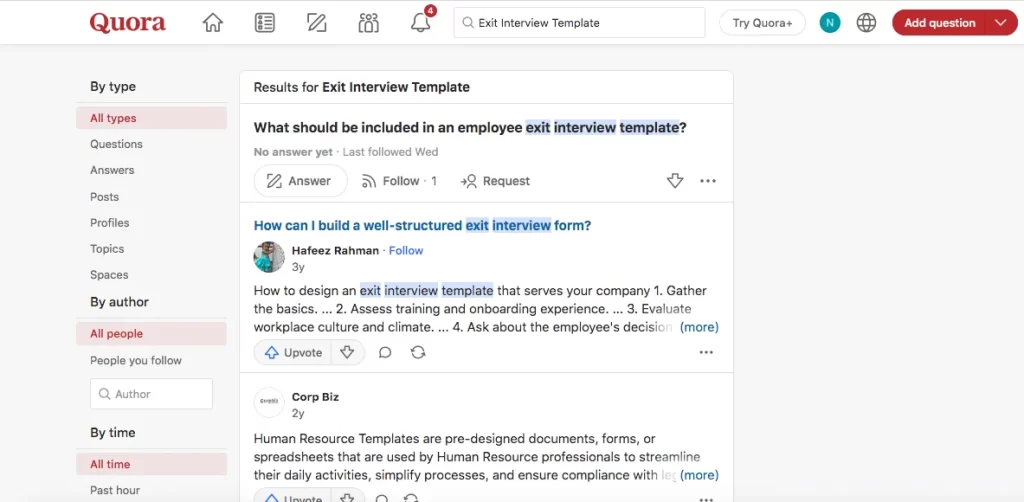
Employees and managers have candidly shared their experiences and opinions on exit interviews on Quora.
Do Employees Like Exit Interviews?
Dhall Phillips is a tech entrepreneur. He didn’t mince words! “There is no good reason for exit interviews. If HR really wants to find out how things are going with the employees, they need to be a lot more proactive, and responsive to employee complaints.”
He believes proactive engagement during employment is where the real value is.
William Collins added, “Nothing… this is a total waste of your time. These ‘interviews’ are nothing more than HR’s way to plug the leaks in the dam.”
Why Formal Interviews Fall Flat
Don Forcash is a retired aerospace engineering manager.
He believes exit interviews fail to elicit honest feedback: “Formal questions will seldom yield the desired level of candidness because most departing employees do not want to burn any bridges.”
Smart Questions
A few Quora users offered suggestions for more meaningful exit interview questions. Dileep Chakravarthi shared a few creative prompts.
“If you were given a magic wand, what would you fix in the company? What was your most frustrated moment? Would you consider working with us again in the future?”
Chakravarthi’s approach leans toward opening emotional dialogue.
How Employees Handle Exit Interviews

Pranjal Jain is a chartered accountant. He emphasized the strategy behind answering questions during an exit interview. Jain advises employees to frame their departure positively,
“Express your feelings for the company in a manner that may open the door of the company for you in the future, too.”
Karin Wills is an HR veteran. She questioned the foundation of the practice!
“If you need to ask someone who has decided to leave why they are leaving, the organization has a different problem that will be more effective to solve long term than the exit interview.”
Preparing for Exit Interviews the Smart Way

Stefan Lilienkamp pointed out that many employees do a poor job of preparing for exit interviews because they don’t understand the goals behind them.
He emphasized that departing employees should realize HR might be evaluating, “Their potential to cause future legal issues… their knowledge transfer risks…their rehiring potential.“
Conclusion
An effective exit interview process transforms departures from losses into learning opportunities. By implementing a structured template with thoughtful questions, you’ll uncover invaluable insights that help strengthen your organization.
Remember that exit interviews work best as part of a comprehensive employee feedback ecosystem. Combine their insights with engagement surveys, stay interviews, and regular check-ins to create a complete picture of your employee experience.
Most importantly, demonstrate that you value this feedback by taking visible action on the insights you receive. When current employees see you implementing changes based on exit interview feedback, they gain confidence that their voices matter—making them more likely to stay and contribute to your organization’s future success.
Resources for Further Exit Interview Development
• Society for Human Resource Management (SHRM) offers sample templates and best practices
• Culture Amp provides research-backed question libraries
• Harvard Business Review’s “Making Exit Interviews Count” offers advanced strategies
• Glassdoor’s annual Employee Satisfaction Benchmark Reports reveal industry standards
Legal Considerations for Exit Interview Questions
• Avoid questions that could be construed as discriminatory
• Never ask about protected characteristics or activities
• Consider having legal counsel review your template
• Document clear confidentiality protocols
Building a Continuous Improvement Culture
The most successful organizations view exit interviews as just one component of a broader continuous feedback culture. By normalizing feedback at all stages of the employee lifecycle—from onboarding to exit—you create an environment where improvement becomes part of your organizational DNA.
Hire the best candidates
with Wetest.
Create pre-employment assessments in minutes to screen candidates, save time, and hire the best talent.
Try for free