Who Pays for Unemployment: Funding, Taxes, and Employer Roles
Employment
Bonica
January 6, 2026
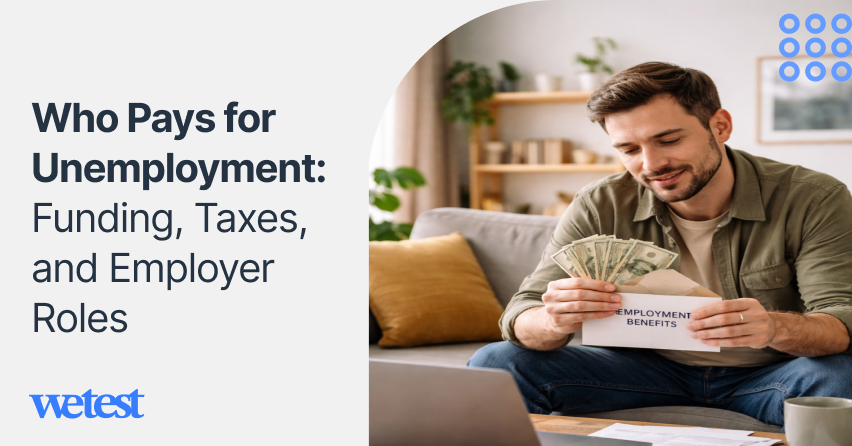
Who pays for unemployment benefits, and how does the whole insurance thing get funded?
Knowing where the money comes from is important for workers who lose their jobs and for employers and policymakers trying to figure out how the public sector should work.
Unemployment systems everywhere are funded by a mix of employer payroll taxes. Money comes from the government and other social insurance programs. It’s this confusing web of funding that determines if the system is fair and if it can last over time.
The biggest chunk of the money comes from the employers through payroll taxes and special unemployment taxes.
Contributions from the government or wider social contributions replace the payments made by the employer in some countries.
They use unemployment trust funds and federal unemployment taxes to make sure that money is there when people suddenly lose their jobs. These benefits are available if the job loss was due to a shrinking economy or to structural changes in the job market.
We’re going to look closely at different models around the world and what works with the current unemployment insurance systems.
Table of Contents
How Unemployment Insurance is Financed
Companies pay a tax on wages at both the federal and state levels. This spreads the cost of joblessness across all employers.
This helps prevent a huge financial burden from falling solely on the individual worker or on the one company that had layoffs.
This money all gets pooled into a central reserve called UTF. The money comes out of that central fund when workers qualify for benefits. This makes sure the system can pay the claimants.
The funding is based more broadly on social contributions in Europe. This includes the employer and the employee’s pay. These social contributions are a percentage of income, and they get pooled into the national social systems.
Public money from the state budget will be used to add to individual contributions if the payroll taxes are reduced.
The funding is based on contributions calculated from earnings under the French national unemployment scheme. The burden of the unemployment payments has mostly been shifted solely to the employers since 2019. The employee share has been largely removed.
Modern unemployment insurance works like a collective safety net instead of being funded randomly. Money flows regularly into a central trust fund.
Why Employers and Not Employees Often Bear the Cost
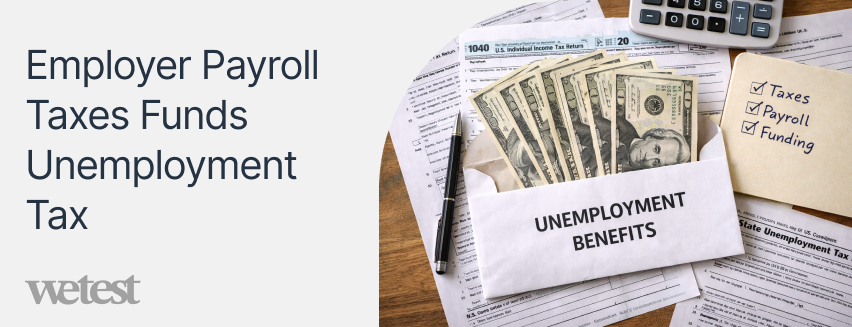
The reason you don’t see the unemployment tax coming out of your paycheck is that it’s funded through employer payroll taxes rather than money taken directly from employees.
This whole design has two main goals.
The system treats unemployment insurance more like a business overhead cost by making the employers pay the taxes. Employers pay money in advance into a shared pool so that the benefits are ready to go when they have layoffs.
Many systems figure out how much each employer has to contribute based on their history of layoffs. This is an experience rating. Companies whose former employees claim unemployment benefits a lot end up paying a higher unemployment-insurance tax rate than companies that keep their staff stable.
The employers who cause more layoffs are costing the unemployment system more money. They should pay proportionally more. You should pay a higher premium if you’re a higher risk.
Companies have a financial incentive to keep their employment stable and try to avoid layoffs when they can.
The experience system itself has limitations. A lot of systems have mandatory minimum and maximum tax rates set by law. So, the cost being spread across all employers means that the burden isn’t perfectly matched to the risk or the actual layoffs. Some companies end up subsidizing others. Part of that subsidy cost may get absorbed indirectly by workers through lower wages everywhere.
Limits, Challenges, and Coverage Gaps
The unemployment insurance systems run into some serious problems that impact their ability to last. A recent example of this is the case of Unedic. It is the group that runs unemployment insurance in France.
The recent forecasts show that the whole program’s finances have been under huge strain. The State keeps repeatedly taking money out of its resources. Unédic has had to resort to borrowing because of these withdrawals. It just makes it way harder for them to reduce their already huge accumulated debt.
These frequent withdrawals from the unemployment fund to pay for unrelated government expenses impact the core idea of having a safety net that’s paid for by contributions.
The result is that even when the unemployment insurance program has a normal year and collects a surplus, that surplus gets eaten up. This can prevent them from getting ready for the next time the economy tanks.
There are always coverage gaps in who is protected and under what conditions. Unemployment benefits based on insurance require you to have worked before.
You might have to prove you worked a certain number of hours over a defined period. They might find themselves with no protection at all once those insurance periods run out.
The balance between who pays, how much the benefit is, and who qualifies can shift and make things worse for the people who need the help.
The real danger is that what was supposed to be stable social insurance starts looking more like discretionary social assistance. It will depend completely on what the government wants to do and what the budget allows.
Unemployment insurance systems’ effectiveness can be threatened by not having enough money, rising debt, and excluding people who need help. These challenges can destroy the stability and the sense of solidarity that the entire idea of insurance-based unemployment protection is supposed to rely on.
Broader Role of the State and Public Funding
The state and public funding step in as a backup since systems based purely on insurance have limits to protect people who are out of work.
In many cases, after 2018, funding was left to the employers and to public money when they got rid of employee unemployment contributions.
Public funding acts like a stabilizer for when the economy and the job market fluctuate. Unemployment insurance programs would risk not giving people enough money if the government didn’t help pay. They might also just collapse into endless cycles of debt.
There are also welfare social safety nets that serve as a general last resort for people who have run out of insurance benefits or whose job history is just too fragmented.
These benefits or allowances are paid for entirely by the state budget and are explicitly designed to guarantee a minimum level of survival.
Insurance benefits plus welfare safety nets are what make social protection broader. This allows the government to support vulnerable groups who fall outside the standard unemployment coverage.
This reliance on welfare also means that the support becomes way more dependent on public budgets. When the state starts having money problems, social assistance is one of the first things at risk.
The constant balancing act between what social insurance covers and what the welfare system has to handle is a major point of policy tension.
Conclusion
A well-funded unemployment system is a huge layer of protection for workers. The benefits soften the blow and reduce financial hardship when layoffs happen.
This gives people the breathing room they need to hunt for a good job instead of just taking the first thing that comes along.
Studies show unemployed people are less likely to face food insecurity when the benefits are easy to get.
There’s a risk that some of those costs get passed on to you in the form of lower wage growth or fewer hiring opportunities because those employer contributions drive up the total cost of labor.
The system is a responsibility and a regulatory stick for employers. Payroll taxes and unemployment contributions act as a warning against constant layoffs.
Those extra costs can weigh down on companies with low profit margins. This could discourage them from hiring.
It acts as a crucial social safety net when it’s reliably funded and covers most people. But for the system to actually last, policymakers have to carefully balance contributions and the eligibility rules.
So, who pays for unemployment? The employers pay the official tax bill, workers, and society as a whole all share the benefits and the risks of how unemployment insurance is put together.
FAQs
Who pays for unemployment insurance?
Unemployment insurance is funded primarily by employer payroll taxes.
What is an unemployment trust fund, and how does it work?
An unemployment trust fund is a pooled fund where employer payroll taxes are collected. Unemployment benefits are paid out of that fund when eligible workers lose their jobs.
Can an employer’s layoffs affect how much they pay for unemployment insurance?
Yes. Many unemployment insurance systems use an experience rating mechanism. Employers with higher layoff rates may face higher unemployment insurance tax rates.
Do all unemployed people qualify for unemployment benefits?
No. Eligibility depends on prior employment history and the type of contract. People with very short contracts, intermittent work, freelance or gig workers may not be covered.
What happens if the unemployment fund’s resources become insufficient?
States may borrow to cover benefit payments, but that can increase debt and trigger delayed repayment obligations, or force cuts in benefits or stricter eligibility rules.
What role does the government play besides employer contributions?
The state plays a complementary role. Governments may inject funds to stabilize the unemployment insurance system. Unemployment insurance and welfare assistance are related but distinct.
Hire the best candidates
with Wetest.
Create pre-employment assessments in minutes to screen candidates, save time, and hire the best talent.
Try for free