What Are Pre-Tax Deductions and Contributions?
Employment
Bonica
December 30, 2025
According to the Internal Revenue Service (IRS), workers who use pre-tax benefits strategically can save up to 32% of their contributions, depending on their tax bracket in 2025. Pre-tax deductions and contributions are taken out of your paycheck before taxes, which can lower your taxable income and help you keep more of your hard-earned money each year.
Most workers can save between $2,500 and $6,000 annually by taking full advantage of pre-tax benefits, depending on income and tax bracket. By contributing before taxes, these amounts reduce your taxable income, helping you pay less in federal and state income taxes while still enjoying valuable benefits.
When you contribute to pre-tax benefits, your employer deducts these amounts from your paycheck before calculating taxes. This reduces your taxable income for federal, state, and Social Security taxes, helping you keep more of your earnings. At the same time, you continue to enjoy essential benefits such as health insurance, retirement savings, and commuter perks.
Knowing about pretax deductions can help you make better choices with your money. The article explains what you need to know about pre-tax deductions. You will read about health benefits, retirement plan payments, and transportation allowances. There are tips in it, and you can see some mistakes that people often make and how to do better when you sign up for these plans.
Table of Contents
What Are Pre-Tax Deductions? Definition and Basic Concepts
Pre-tax deductions do not work by themselves. You can best see their value when you look at them right next to post-tax deductions. These two types of deductions change your income in different ways.
Understanding Pre-Tax vs. Post-Tax Deductions
Pre-tax deductions take some money out of your income before taxes are worked out. This is not the same as post-tax deductions. Post-tax deductions take out money after the tax has already been paid.
When you use pre-tax deductions, you get to save some money depending on the tax bracket you are in. For example, if your tax bracket is 22%, you will save $220 on federal taxes for every $1,000 you put in as a pre-tax contribution.
Your employer takes out these amounts from your pay through payroll. This happens before any tax is taken out. The timing of this is important. It helps set the total income that will be taxed for the year.
Here’s an easy way to look at it: If you have $100 taken out of your pay before taxes, and you are in the 22% tax group, your pay only goes down by $78. This is because you save $22 on your taxes.
How Pre-Tax Deductions Work in Practice
Pre-tax deductions let you lower your total pay before the taxes get figured out. This way, you get tax savings with every paycheck you get.
Let’s look at an example. You make $50,000 each year. If you put $3,000 into pre-tax benefits, the money you pay taxes on goes down. Your taxable income will be $47,000, not the full $50,000.
This change impacts several taxes. There could also be a drop in your FICA taxes, depending on what kind of deduction you have.
The process works by itself through the payroll system at your job. Every pay period, your pre-tax money comes out first. After that, the company figures out how much tax you need to pay and takes it from what is left.
Legal Framework and IRS Regulations
Pre-tax deductions follow rules set by the IRS. Section 125 of the tax code lets people take part in cafeteria plans. These plans say a person can pick cash or certain kinds of benefits.
Your job provider must follow strict rules to run things right. They need to keep the right documents. They also have to check that all people in the program fit the needed rules.
Most pre-tax benefits ask that you be part of your company’s plan. This often means you have to work full-time or put in some minimum time on the job.
Transportation benefits come under Section 132 of the IRS code. These rules let employers give people commuter benefits, but only up to the monthly limits set by the IRS.
Types of Pre-Tax Deductions and Contributions
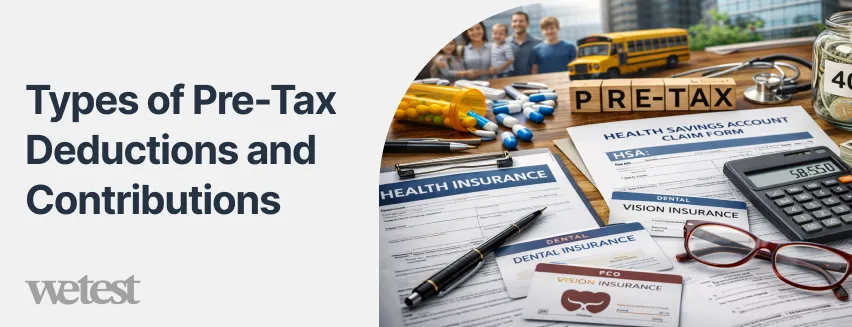
Pre-tax deductions cover many work benefits like health insurance, retirement plans, and costs for getting to work. Each of these has its own way to help you save on taxes.
Health and Medical Benefits
Health insurance premiums remain the largest type of pre-tax deduction for employees. In 2025, many workers can save between $1,300 and $3,200 annually when paying premiums with pre-tax dollars, depending on coverage and tax bracket.
Premiums for medical, dental, and vision insurance are deducted before taxes, reducing your taxable income. Individual coverage typically costs less than family coverage, but both offer the same tax advantages. Your employer must administer the plan through payroll to qualify for these pre-tax benefits.
Health Savings Accounts (HSAs) continue to offer powerful tax advantages. In 2025, the contribution limit is $4,300 for individual coverage and $8,550 for family coverage. HSAs provide three main tax benefits: contributions are tax-deductible, earnings grow tax-free, and withdrawals for qualified medical expenses are also tax-free. To be eligible, you still need a high-deductible health plan (HDHP).
Many HSA providers offer investment options, allowing your contributions to grow over time. HSAs remain an effective long-term strategy for managing healthcare costs and preparing for medical expenses in retirement.
Flexible Spending Accounts (FSAs)
Healthcare FSAs allow you to set aside pre-tax dollars for qualified medical expenses. In 2025, the contribution limit for a healthcare FSA is $3,250 per year.
FSAs generally follow a “use-it-or-lose-it” rule: funds must be spent within the plan year. Some employers offer a grace period of up to 2.5 months into the following year or allow you to carry over up to $650 to the next plan year.
You can use healthcare FSA funds for deductibles, copays, prescriptions, and many over-the-counter items. Keep receipts for all purchases, as they may be required for reimbursement.
Dependent Care FSAs help cover childcare or care for elderly dependents. In 2025, the limit remains $5,000 per year for married couples filing jointly or $2,500 for single filers.
For example, a parent contributing $5,000 to a Dependent Care FSA in the 25% tax bracket could save $1,250 in federal taxes, making approved childcare expenses more affordable while lowering taxable income.
Retirement Contributions

Traditional 401(k) and 403(b) plans continue to provide valuable pre-tax benefits. In 2025, you can contribute up to $23,500. If you are 50 or older, you can make catch-up contributions of $30,500 total.
Many employers offer matching contributions, which is essentially free money added to your retirement savings. Make sure you contribute enough to capture the full match your employer provides.
Starting early has a major impact. For example, a 25-year-old who contributes $3,000 annually with a 6% return could accumulate over $200,000 more than someone starting at 35.
Auto-enrollment and auto-escalation features in many plans gradually increase contributions over time, helping you save consistently without having to manage it actively.
You may also be able to deduct contributions to a Traditional IRA, depending on your income and participation in a workplace retirement plan. High earners may face phase-out limits.
Small business owners can use SEP-IRAs or SIMPLE IRAs to make larger pre-tax contributions, offering additional retirement benefits to employees while reducing taxable income.
Transportation and Commuter Benefits
Commuter benefits allow you to use pre-tax dollars for work-related transportation expenses. In 2025, you can contribute up to $320 per month for parking and $320 per month for transit passes, including buses, trains, subways, and vanpools.
Your employer must offer a qualified commuter benefits plan for you to participate. These plans are especially valuable in urban areas where commuting costs, such as public transportation and parking, can be high.
Some employers also offer incentives for biking to work or using alternative transportation. These programs not only provide tax savings but also promote environmental sustainability and healthier commuting options.
Additional Pre-Tax Benefits
Group term life insurance premiums are paid before taxes if the coverage is up to $50,000. If you have more than this amount, the extra coverage will be counted as income that you must pay tax on.
Short-term and long-term disability insurance costs can be paid before taxes through work plans. This helps keep your pay safe if you cannot work.
Employee Assistance Programs (EAPs), legal help plans, and help with adoption may also be good for pre-tax use. This will depend on what your job offers.
Benefits of Pre-Tax Deductions
Pre-tax deductions give you more than savings on taxes. They help you take home more pay, lower your payroll taxes, and make it easier to afford important benefits.
Immediate Tax Savings

Pre-tax deductions help you save money on taxes with every paycheck. If you are in the 22% tax bracket, putting $1,000 into pre-tax contributions will save you $220 on federal taxes.
Some pre-tax deductions can lower FICA taxes, too. These cover Social Security taxes. You get more savings besides what you save on your income taxes.
Reduced Taxable Income Impact
Lowering your taxable income can help you stay in a lower tax bracket. By making larger pre-tax contributions, you reduce taxable benefits, which may lead to greater overall tax savings.
If you have less money coming in, you may get income-based benefits and credits. This covers things like education credits, child tax credits, and some other programs that have income limits.
Student loan payment amounts often use your adjusted gross income. If you have lower income because you make pre-tax contributions, this might lower your required payments under income-driven repayment plans.
Cash Flow Improvements
Pre-tax payments cost you less out of your paycheck than what you put in. For example, when you put in $100 before taxes, your pay usually goes down by only about $75 to $80.
This helps you pay for important things like health insurance and saving for retirement. You get all the benefits but spend less of your own money.
Better cash flow can make it easier for you to manage your budget every month. You may be able to pay for more benefits without taking away too much from your spending money.
Long-term Financial Benefits
Tax-deferred retirement accounts help your money grow year after year. The growth adds up over time, and taxes are not taken out each year. This lets your savings get bigger faster.
Pre-tax benefits can help make your overall money situation better. Health insurance helps guard you against big medical bills. A retirement account is a good way to save money for your later years.
Contribution Limits and Restrictions
Each type of pre-tax deduction has an IRS-set limit for each year. This limit tells you how much you can add to it every year without getting a penalty.
Annual Limits by Deduction Type
The IRS sets a yearly limit for most pre-tax benefits. This limit usually goes up each year because of inflation.
People who make a lot of money at work might have more rules to follow in some plans. Employers need to make sure the benefits do not give too much to the people who earn the most.
Individual plans given by the employer can have lower limits than the IRS allows. You should read your plan details to find out the real limits for how much you can put in.
Use-It-Or-Lose-It Rules
Healthcare and dependent care FSAs have strict rules you need to follow. You have to use the money in the plan year. If you do not use it, you will not get back any amount left.
Some employers give you more time to use funds from the last year, and let you spend them until March 15th. Others let you keep up to $640 that you did not use in your healthcare FSA.
Be careful when you plan the amount to put in your FSA. You should look at your expected costs and guess on the low side. This way, you do not lose money.
Income and Employment Restrictions

Some pre-tax benefits don’t last if your income goes up. If you or your partner take part in a job’s retirement plan, you may not get a traditional IRA deduction after you make more money.
Job changes can change your benefits. COBRA lets you keep your health insurance, but you will lose things like FSAs and other benefits that come from your job.
Those who work part-time may not receive all pre-tax employee benefits, as eligibility often requires working a minimum number of hours or holding full-time status.
Payroll Tax Implications and Calculations
Pre-tax deductions take money out of your pay before taxes get taken. This means you pay less in federal income tax. It can help lower your total tax amount and give you more take-home pay.
Federal Income Tax Impact
Pre-tax deductions help lower your federal taxable income for every dollar you put in. You get to save tax equal to the money you put in at times your tax rate.
Think about changing your tax withholding if you make big pre-tax contributions. You may not need as much money taken from your paycheck. This can help you not pay in too much.
FICA Tax Considerations
Most health benefits before tax help cut down FICA taxes. This means you pay less for Social Security and Medicare taxes.
Retirement contributions do not lower FICA taxes. You still pay the full Social Security and Medicare taxes on the money you put in your 401(k).
Reduced FICA taxes can make your future Social Security benefits a bit lower. But for most people, the money you save on taxes now is usually more than this small drop in benefits.
Pre-Tax vs. Roth Contributions: Making the Right Choice
Knowing how pre-tax and Roth money is taxed, both when you add money and when you take it out, can help you pick the best choice for your money goals.
Tax Treatment Comparison
Pre-tax contributions help you get a tax break now, but you will have to pay tax on this money when you retire. Roth contributions do not give you a tax break right away. But, in retirement, you can take the money out tax-free.
Think about your tax rate now and what you think it will be when you retire. If you think taxes will be higher after you stop working, making Roth contributions might be a good idea.
Age and where you are in your job do matter. Young people working in jobs with low taxes often get more out of Roth contributions. People who earn more and are close to retirement often choose pre-tax savings instead.
Strategic Planning Considerations
Things that happen in life can change your choice between pre-tax and Roth. Marriage, having children, and job changes may move you to a better plan for you.
Professional tax advice helps you with hard situations. A tax professional can look at your own details and tell you what the best way is.
Economic conditions and changes in tax law can make things feel unsure. If you put money in both pre-tax and Roth accounts, you get options when taxes change. This mix of accounts helps you handle any new tax rules in the future.
Hybrid Strategies
Many people get help by using both pre-tax accounts and Roth accounts. This can give you different ways to pay tax when you stop working.
Think about putting in enough money to your 401(k) so you get the full match from your workplace. After that, if you can, put money into a Roth IRA too.
Change your plan as your income or taxes change over time. What you do now may not work as well in five years.
Enrollment and Administrative Process
Knowing when and how to join pre-tax programs helps you make the most of your money. You do not want to miss your chance to save and get the right coverage.
Open Enrollment Periods
Most employers have an open time each year for workers to change benefits. This usually happens in the fall before the next year starts.
If you miss the enrollment deadline, you will need to wait until next year unless you have a life change that lets you sign up early. So, mark your calendar and get ready before time runs out.
Online signup is now the main way to do things instead of using paper forms. Make sure you know how your employer’s system works before it is time to sign up.
Qualifying Life Events

Some changes in life let you change your benefits in the middle of the year. These changes are marriage, divorce, when a child is born or adopted, and if your spouse loses their job.
You usually get 30 days from the time something important happens to you to make changes. Give the needed papers on time so that the changes start right away.
Employer Responsibilities
Employers need to manage pre-tax plans the right way. They must follow IRS rules, keep good records, and make sure employees know about the plans.
Your HR department has to give people tools like calculators, help guides, and someone they can talk to in person. They should do this when it is time for enrollment.
Common Mistakes to Avoid
While pre-tax benefits can help you save a lot of money, mistakes like paying in too much or forgetting deadlines can make you lose money or face fines.
Over-Contributing to FSAs
A lot of people think they will need more money in their FSA than they end up using. They lose money because of the use-it-or-lose-it rule. In your first year, it is best to use low estimates.
Keep the bills and papers from the last years’ medical expenses. This helps you see how much you spend and makes it easier to know what the FSA money should be next year.
Plan big medical costs to fit your FSA plan year. Doing things at the right time can help you get the most out of your FSA.
Ignoring Employer Matching
If you do not put in enough money to get the full 401(k) match at work, you are saying no to free money. Always make sure to add at least enough to your 401(k) so that you get all of the matching money.
It’s important to know your plan’s vesting schedule. If you leave your job before you are fully vested, you could lose the money your company added for you.
Poor Record Keeping
Save every receipt for your FSA spending and for your statements from retirement accounts. Keeping them stored online and backed up in the cloud makes it easy to get to your files whenever you need them.
Put your records in order by each tax year and what type of account they are. This will make tax prep easier and help you if the IRS has any questions.
Enrollment Procrastination
Waiting until the last minute sets you up to make fast choices and possible mistakes. Look over your options early in the time for enrollment.
Default elections might not be right for what you need. If you pick your own benefits, you get the best value for your life. When you take time to choose, you know what will work best for you. It’s good to see all your options and make a choice that fits you.
How to Maximize Your Pre-Tax Benefits
Maximizing your pre-tax benefits is not just about signing up. You need to have a smart plan that fits your money goals and what you need right now.
Strategic Planning Approach
Check your benefits every year during open enrollment. Your needs can change, and the options you get could get better.
Think about any changes in your life that might happen soon when you decide. If you plan to have a baby or go for a big medical help, it can change what is best for you.
Get help from money and tax experts when things are not simple. The price you pay for good advice can help you save on taxes.
Coordination with Overall Tax Strategy
Connect planning before taxes with the main process of getting your taxes ready. Your tax preparer can help you find the best way to do it.
Think about planning for several years when you face big costs or changes in your income. At times, it helps to split your payments across a few years.
Employer Resource Utilization
Use the learning help from your place of work. Many have online calculators, classes, and one-on-one talks ready for you when you sign up.
Attend benefits fairs and join information sessions. You can ask questions at these events. They also help you compare your options.
Technology and Tools

Many employers offer mobile apps to help people manage FSAs and other benefits. The apps let you see your balance and send claims.
Online benefits platforms usually have tools to help you decide. You can use these calculators to compare different levels you put in.
Set up automatic increases for payments if the option is there. This grows your savings over time and you do not have to make choices every year.
Special Considerations for Different Life Stages
The worth and plan for using pre-tax deductions change as you move through different times in your life. This can be from when you first start working and building a family, all the way to when you begin to get ready for retirement.
Young Professionals
Try to save some money before taxes, but also make sure you build up your emergency fund. It is good to have cash you can get to when you are just getting started in your career.
Think about how student loans change your taxes. Some pre-tax money you give can change how your student loan payments are figured out.
Plan for more career movement. Some benefits stay with that company. You need to think about this before you choose to stay a long time at one job.
Mid-Career Employees
Family planning can change your benefit needs. Things like dependent care FSAs and family health coverage can be more useful to you.
The time when you earn the most can be the best time to save on taxes. When you are in higher tax brackets, putting money into pre-tax accounts can help you save more.
You can use catch-up contributions if you are 50 or older. This lets people save more money for retirement, even after reaching the normal limits.
Pre-Retirees
Plan for health insurance after you leave work but before you start Medicare. You may need to get COBRA or marketplace plans.
Think about when you want to get your Social Security benefits and when to take money out of your retirement accounts. Try to plan these steps together. This can help keep your taxes low.
Medical costs often go up when you retire. HSAs give you money that is not taxed to help pay these bills.
Final Thoughts
Pre-tax deductions and contributions help you lower how much tax you pay. You still get useful benefits. The money you pay for health insurance, money you put into retirement, and flexible spending accounts can help you save thousands each year.
The key to doing well is to know your choices and pick the right ones when it’s time to sign up. Take your time to work out how much you might save and think about what you want for your money in the future.
Many workers can save between $2,000 and $5,000 every year if they plan ahead with pre-tax options. The money you save this way can add up a lot over your work life.
Look over your current choices when it is time to sign up again. If you have big changes in your life or things feel hard to understand, talk with tax and money experts. They can help you know what to do.
FAQs about Pre-Tax Deductions and Contributions
What does it mean to be pre taxed?
A pre-tax amount is deducted from your salary before income taxes are calculated, which lowers your taxable income. This can help you save on taxes in the short term, as you’re taxed on a smaller portion of your earnings.
What best describes a pre tax contribution?
A pre-tax contribution is money taken from your paycheck before taxes are withheld and put into benefits like retirement plans or health savings accounts. This lowers your taxable income and can reduce how much income tax you pay now.
What is included in pretax income?
Pretax income includes all earnings before income taxes are deducted. This typically covers your wages or salary, bonuses, commissions, self-employment income, and any other income sources like rental or investment income, before subtracting federal, provincial, or local income taxes.
How to calculate pre-tax?
To calculate pre-tax income, simply take the total amount earned before any income taxes are deducted. If you have the after-tax amount and want to find the pre-tax value, divide the after-tax amount by (1 – tax rate).
Is it better to do Roth or pre-tax?
It depends on your current tax rate and your expectations for the future. Pretax contributions lower your taxable income now and are ideal if you expect to be in a lower tax bracket in retirement. Roth contributions are made with after-tax money, but withdrawals in retirement are tax-free, making them a smart choice if you expect your tax rate to be higher later. Many people benefit from a mix of both.
What happens if I want to waive a pre-tax deduction?
If you waive a pre-tax deduction, the money stays in your paycheck and is subject to income and payroll taxes. You won’t get the tax savings for that benefit, but you can often enroll later during open enrollment or after a qualifying life event.
Hire the best candidates
with Wetest.
Create pre-employment assessments in minutes to screen candidates, save time, and hire the best talent.
Try for free