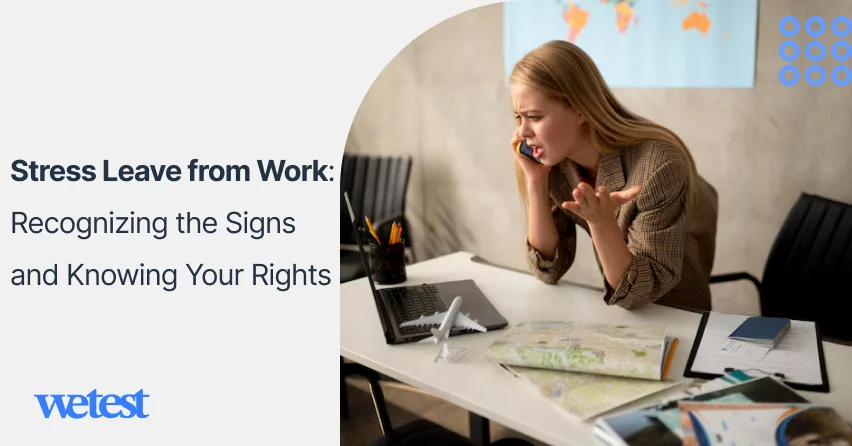
Stress Leave from Work: Recognizing the Signs and Knowing Your Rights
Employment
Bonica
May 30, 2025
Feeling utterly exhausted just thinking about work? Does the idea of another day on the job trigger anxiety? The American Institute of Stress indicates that a substantial 83% of US workers suffer from stress.
When this pressure jeopardizes your well-being, stress leave offers a necessary respite. The question then becomes, how do you discern when this step is essential? And what rights protect you when you need to step back?
This guide will lead you through the steps of identifying when a respite is necessary and detailing the process of taking such leave.
Table of Contents
Workplace Stress Definition

Stress is a serious condition with the potential to inflict damage on your health and negatively impact your relationships if left unmanaged.
The Impact of Chronic Stress on Body and Mind
Imagine your body’s stress response as an alarm system. Designed for short bursts of danger, it’s not meant to be blaring constantly. When workplace pressure is relentless, this alarm stays on, flooding your system with hormones that erode your well-being.
Physically, chronic stress can manifest as:
– Headaches and migraines
– Digestive issues and stomach pain
– Weakened immune system
– High blood pressure
– Chest pain and heart palpitations
– Muscle tension and pain
The mental health consequences are equally concerning:
– Anxiety disorders
– Depression
– Concentration difficulties
– Memory problems
– Decision-making challenges
– Emotional exhaustion
Former California Surgeon General Dr. Nadine Burke Harris describes how “repeated stress activation over time can lead to wear and tear on the body and brain,” a phenomenon she terms “toxic stress.” This isn’t just a feeling; it fundamentally alters bodily and brain functions.
The Rising Prevalence of Work-Related Stress
Workplace stress is reaching alarming levels across industries:
– 94% of American workers report experiencing stress at work (APA)
– 63% of US workers are ready to quit their job due to stress (APA)
– Workplace stress costs employers approximately $300 billion annually in absenteeism, turnover, and healthcare costs (American Institute of Stress)
Differentiating Between Normal Pressure and Harmful Stress
Not all workplace pressure is damaging. In fact, some stress can motivate us—psychologists call this “eustress” or positive stress.
Here’s how to distinguish normal workplace pressure from harmful stress:
Normal pressure:
– Is temporary and tied to specific projects or deadlines
– Subsides once the stressor is resolved
– May actually improve performance and focus
– Feels challenging but manageable
Harmful stress:
– Persists regardless of circumstances
– Interferes with your ability to function
– Causes physical and emotional symptoms
– Feels overwhelming and beyond your control
The key difference is recovery. As stress researcher Emily Nagoski explains: “The problem is not that we experience stress. The problem is that we get stuck there without completing the stress response cycle.”
When you can’t recover between stressful periods, that’s when workplace pressure crosses into harmful territory.
7 Warning Signs You May Need Stress Leave

Recognizing when you’ve crossed from manageable pressure into dangerous territory is crucial. Here are the key signals your body and mind might be sending.
Physical Symptoms That Indicate Workplace Stress Overload
Your body sounds the first alarms of excessive stress.
Ever feel that exhaustion that just won’t lift, no matter how many hours you clock in bed? Or find yourself catching every bug going around and struggling to shake them off? Constant headaches or muscle pain that just seem to be part of your daily life, even when you’re trying to rest?
Maybe your stomach’s always churning, your appetite’s all over the place, or your IBS is acting up when work is intense? And sleep becomes a battle – either you’re staring at the ceiling, waking up constantly, or sleeping way too much but never feeling rested.
Dr. Luana Marques at Harvard Medical School has a powerful way of putting it: “Physical symptoms are the body’s way of forcing you to pay attention to psychological stress you’ve been ignoring.”
Emotional and Psychological Red Flags to Monitor

Your mental state offers equally important warning signs:
It’s that nagging anxiety that just won’t leave you alone when it comes to work – the constant replay of decisions or worries about interactions.
You also feel this strange sense of being cut off, like you’re not present with your colleagues or engaged in your tasks, and those things that once fueled you now feel flat. You might find yourself getting easily frustrated and short with the people around you, even those you care about.
And the joy seems to have gone out of things – those hobbies or activities you used to love just don’t spark anything anymore. Then there’s that familiar sinking feeling on Sunday evening, that wave of dread as the workweek looms.
Psychologist Adam Grant describes this emotional state well: “Burnout is not just about being tired. It’s about becoming cynical about your work and feeling ineffective despite your efforts.”
How Declining Performance May Signal Burnout
Your work quality itself reflects excessive stress:
1. Concentration difficulties: Struggling to focus on tasks that previously came easily.
2. Reduced creativity: Finding it harder to generate ideas or solve problems creatively.
3. Memory issues: Forgetting important details, meetings, or deadlines that you would remember.
4. Decision paralysis: Being unable to make even simple decisions without overwhelming anxiety.
5. Dropping balls: Missing deadlines, making uncharacteristic mistakes, or letting responsibilities slip.
Productivity expert Cal Newport notes: “When high-performers start making unusual mistakes, it’s rarely about capability—it’s almost always about cognitive depletion from stress.”
When Sleep and Recovery Patterns Become Disrupted
Sleep disturbances are particularly telling signs of harmful workplace stress:
1. Sleep onset problems: Lying awake with racing thoughts about work.
2. Middle-of-night waking: Jolting awake with work anxiety or to-do lists cycling through your mind.
3. Stress dreams: Having frequent nightmares or dreams about work failures.
4. Weekend recovery failure: Finding that weekends no longer provide sufficient recovery from workweek stress.
5. Monday morning fatigue: Starting the week already exhausted despite rest attempts. Cortisol, the stress hormone, also plays a key role—when elevated late in the day. Cortisol can interfere with sleep rhythms and delay rest.
Sleep scientist Matthew Walker explains why this matters: “Sleep is the single most effective thing we can do to reset our brain and body health each day.”
When work stress consistently disrupts this reset mechanism, you’re in dangerous territory.
Your Legal Rights to Stress Leave Explained

Understanding your legal protections is essential before requesting stress leave. These frameworks can protect your job and provide financial support during recovery.
FMLA Protection for Mental Health Conditions
The Family and Medical Leave Act allows eligible employees to take up to 12 weeks of unpaid, job-protected leave each year for serious health conditions, including mental health.
You must have worked for your employer for at least 12 months and completed at least 1,250 hours in the last year. Your employer must have 50 or more employees in a 75-mile radius of your worksite as well.
For stress leave specifically, you’ll need:
– Documentation that your stress condition meets the “serious health condition” threshold
– Certification from a healthcare provider that you’re unable to perform essential job functions
– Evidence that treatment requires absence from work
Employment attorney Debra Friedman clarifies: “The FMLA doesn’t specifically mention ‘stress leave,’ but covers serious stress-related conditions like anxiety disorders, depression, or PTSD when properly documented by healthcare providers.”
Short-Term Disability for Stress Leave
Many employers offer short-term disability (STD) insurance, which can provide partial income replacement during stress leave. STD covers:
– 60-70% of your base salary
– Leaves lasting between 3-6 months
– Medically necessary absences certified by healthcare providers
Requirements vary by plan, but generally you’ll need:
– A diagnosed condition (not just “stress” but a specific disorder like Major Depressive Disorder or Generalized Anxiety Disorder)
– Documentation showing how your condition prevents you from performing your job duties
– Evidence of ongoing treatment
Insurance expert Laura Adams notes: “Many employees don’t realize their benefits package includes short-term disability coverage that can provide income during stress-related leaves. Always check your benefits handbook.”
ADA Accommodations for Stress-Related Conditions

The Americans with Disabilities Act (ADA) protects employees with disabilities—including certain mental health conditions—and requires employers to provide reasonable accommodations.
For stress-related conditions, these accommodations might include:
– Modified work schedules
– Reduced workload temporarily
– Changes to the physical work environment
– Remote work options
– Extended leave beyond FMLA provisions
To qualify for ADA protections:
– Your condition must substantially limit a major life activity
– You must be able to perform essential job functions with accommodations
– Your requested accommodations can’t pose “undue hardship” to your employer
Disability rights attorney Eve Hill explains: “The ADA doesn’t guarantee stress leave, but it does require employers to engage in an interactive process to find accommodations that might prevent the need for leave or ease your return.”
State-Specific Regulations You Should Know About
Beyond federal protections, many states offer additional leave rights:
– California: The California Family Rights Act provides leave similar to FMLA but covers employers with 5+ employees. Additionally, Paid Family Leave can provide partial wage replacement.
– New York: The NY Paid Family Leave provides paid time off and job protection for serious health conditions.
– Washington: The Washington Paid Family & Medical Leave program provides up to 12 weeks of paid leave.
– Massachusetts: The Paid Family and Medical Leave law provides up to 20 weeks of paid medical leave.
– Rhode Island: Temporary Disability Insurance provides partial wage replacement during medical leave.
Employment law specialist Catherine Ruckelshaus advises: “Always check state regulations, as they often provide more generous protections than federal law, particularly regarding paid leave options.”
How to Request Stress Leave Successfully

Approaching stress leave strategically increases your chances of approval and a smooth process.
Documenting Your Symptoms and Stress Triggers
Before requesting leave, build a clear record of your condition:
1. Keep a symptom journal: Document physical and emotional symptoms, noting dates, duration, and severity.
2. Track workplace triggers: Record specific incidents, deadlines, or interactions that worsen your symptoms.
3. Note performance impacts: Document how stress affects your work quality, including missed deadlines or errors.
4. Record treatment attempts: List strategies you’ve already tried, such as time management techniques or therapy.
5. Gather previous medical records: Compile relevant health records showing the progression of your condition.
Organizational psychologist Adam Grant recommends: “Be specific about how stress manifests in your work. Vague complaints are easily dismissed, but concrete examples of how stress impairs your performance are harder to ignore.”
Approaching the Conversation with Your Employer
How you initiate the stress leave discussion matters tremendously:
1. Request a private meeting: Choose a confidential setting without time constraints.
2. Focus on performance, not emotions: Frame the conversation around your desire to maintain work quality long-term.
3. Be direct but professional: Clearly state that you need time to address health issues affecting your work.
4. Avoid oversharing details: You’re not obligated to disclose specific diagnoses—focus on functional limitations.
5. Come with solutions: Present leave as part of a recovery plan that will ultimately benefit the company.
Communication expert Celeste Headlee advises: “When discussing sensitive topics like stress leave, prepare what psychologists call an ‘elevator pitch’—a clear, concise explanation that takes 30 seconds or less.”
Sample language: “I’ve been experiencing some health issues that are affecting my work performance. My doctor has recommended taking medical leave to address these problems properly. I’d like to discuss how we can manage this process to minimize disruption to the team.”
What Medical Documentation You’ll Need to Provide

Proper documentation is essential for leave approval:
1. Formal diagnosis: Documentation of a specific condition like Adjustment Disorder, Major Depression, or Anxiety Disorder.
2. Treatment plan: Outline of recommended therapy, medication, or other interventions.
3. Functional assessment: Description of how your condition impacts specific job functions.
4. Duration estimate: Projected timeline for leave and recovery.
5. Provider credentials: Ensure documentation comes from qualified healthcare providers like physicians, psychiatrists, or licensed psychologists.
HR consultant Sharon Armstrong notes: “Medical documentation should detail why working is currently detrimental to your health and why leave is medically necessary—not just beneficial.”
Navigating HR Procedures for Stress Leave Requests
Understanding your company’s process streamlines your request:
1. Review company policies: Check your employee handbook for leave procedures before initiating your request.
2. Identify the correct contact: Determine whether requests go through your direct manager, HR, or a third-party administrator.
3. Submit formal written request: Follow up verbal discussions with written documentation of your request.
4. Complete required forms: Be prepared to fill out specific forms for FMLA, short-term disability, or company-specific leave.
5. Set communication expectations: Establish how and when you’ll update the company during your leave.
HR specialist Josh Bersin advises: “Many companies use third-party administrators to manage leave requests to maintain confidentiality. Don’t be surprised if you’re directed to an external service rather than working directly with your HR team.”
Creating an Effective Recovery Plan During Leave

Stress leave is most beneficial when you use it strategically for recovery.
Setting Boundaries Between Work and Recovery Time
Creating true separation is essential for healing:
1. Establish email boundaries: Set an out-of-office message and avoid checking work communications.
2. Designate a contact person: Appoint one colleague to contact you only for genuine emergencies.
3. Remove work apps from personal devices: Temporarily delete email, Slack, or other work tools from your phone.
4. Create physical separation: If possible, avoid spaces associated with work stress.
5. Establish “no work talk” zones: Ask family and friends to avoid discussing your workplace during recovery periods.
Boundaries expert Nedra Glover Tawwab explains: “Recovery requires creating mental space that’s completely free from work concerns. Without true boundaries, you remain psychologically at work even while physically absent.”
5 Effective Stress Management Techniques to Practice
Use your leave time to build stress resilience:
1. Mindfulness meditation: Research shows just 10 minutes daily can reduce stress hormones significantly. Apps like Headspace or Calm offer structured programs.
2. Physical exercise: Even brief daily walks activate your parasympathetic nervous system, counteracting stress responses.
3. Sleep hygiene practices: Establish consistent sleep schedules and bedtime routines to repair disrupted sleep patterns.
4. Cognitive restructuring: Work with a therapist to identify and challenge negative thought patterns about work.
5. Progressive muscle relaxation: Learn techniques to release physical tension that accumulates during stress responses.
Stress researcher Robert Sapolsky notes: “The practices that seem simple—regular exercise, adequate sleep, social connection—are actually the most powerful interventions for chronic stress. Their simplicity belies their effectiveness.”
Building a Support Network During Your Leave

Isolation worsens stress conditions. Prioritize connection:
1. Professional support: Work with therapists, counselors, or coaches specializing in workplace stress.
2. Peer connections: Consider support groups for workplace burnout or stress-related conditions.
3. Family involvement: Educate close family about your recovery needs and how they can support you.
4. Friend time: Schedule regular activities with friends who energize rather than drain you.
5. Community engagement: Consider volunteer activities that provide purpose without pressure.
Psychologist Sherry Turkle emphasizes: “The antidote to workplace disconnection isn’t solitude—it’s meaningful connection in contexts outside work that remind you of your full identity beyond your job.”
When to Consider Professional Mental Health Support
Self-care may not be enough for severe stress conditions:
1. When to seek therapy: If symptoms don’t improve after two weeks of leave, or if you experience suicidal thoughts, severe anxiety, or inability to perform basic daily tasks.
2. Therapy options: Consider cognitive-behavioral therapy (CBT), which research shows is particularly effective for work-related stress.
3. Medication considerations: Discuss with a psychiatrist or primary care doctor whether short-term medication might help manage severe symptoms.
4. Specialized programs: Some areas offer intensive outpatient programs specifically for burnout recovery.
5. Alternative treatments: Evidence-based approaches like EMDR for trauma or biofeedback for anxiety might complement traditional therapy.
Psychiatrist Judson Brewer advises: “Professional help isn’t a sign of weakness—it’s like calling a plumber when your pipes burst instead of trying to fix a flood with paper towels. Some stress conditions require specialized expertise.”
Returning to Work After Stress Leave

A carefully planned return increases success rates and prevents immediate relapse.
Negotiating Accommodations for Your Return
Prepare for your return by requesting modifications:
1. Gradual reentry: Request a phased return beginning with part-time hours or limited responsibilities.
2. Environmental modifications: Ask for workplace adjustments like a quieter workspace or noise-canceling headphones.
3. Flexible scheduling: Request adjusted start/end times to avoid commuting stress or accommodate therapy appointments.
4. Task prioritization: Work with your manager to identify essential responsibilities versus tasks that can be delegated.
5. Regular check-ins: Establish scheduled meetings with your supervisor to assess how your return is progressing.
Occupational health expert Elaine Varelas suggests: “Frame accommodations as performance enhancers, not special treatment. You’re requesting changes that will help you perform optimally, which benefits everyone.”
Implementing New Boundaries to Prevent Recurrence
Return with clear limits to prevent falling back into harmful patterns:
1. Communication hours: Establish when you will and won’t respond to emails or calls.
2. Workload management: Practice saying “no” or “not now” to projects beyond your capacity.
3. Break scheduling: Block time for short breaks throughout your day rather than working continuously.
4. Meeting limits: Set parameters around meeting frequency, duration, and required preparation.
5. Recovery time: Schedule microrecovery periods during your workday and proper disconnection after hours.
Time management expert Laura Vanderkam notes: “The most resilient professionals aren’t those who work the most hours, but those who deliberately structure their time to include recovery periods.”
How to Handle Workplace Reactions and Questions
Prepare for curiosity or awkwardness from colleagues:
1. Prepare a simple explanation: Craft a brief, comfortable response about your absence that feels authentic but protects your privacy.
2. Redirect excessive questions: Politely shift conversations back to work matters when questions become too personal.
3. Address misconceptions: Correct any assumptions that stress leave indicates incompetence or weakness.
4. Educate selectively: Share information about workplace stress only with those who seem genuinely supportive.
5. Focus on the future: Emphasize your focus on current work rather than dwelling on your absence.
Workplace psychologist Amy Gallo suggests this approach: “Thank people for their concern, share what you’re comfortable disclosing, then redirect with a question about current projects. This acknowledges their interest while maintaining boundaries.”
Preventing Future Burnout: Long-Term Strategies

Prevent the need for future stress leave by implementing sustainable practices.
Redesigning Your Work-Life Balance for Sustainability
Create structures that support ongoing wellbeing:
1. Conduct a time audit: Track how you spend work hours to identify inefficiencies and stress points.
2. Establish hard stops: Set non-negotiable end times to your workday.
3. Create transition rituals: Develop routines that help you mentally disconnect from work, like changing clothes or taking a walk.
4. Schedule recovery: Treat rest as a non-negotiable appointment in your calendar.
5. Use technology intentionally: Employ tools like app blockers after hours or email batching to prevent constant connectivity.
Work-life balance researcher Brigid Schulte recommends: “Stop thinking of balance as a perfect 50-50 split each day. Instead, aim for ‘work-life harmony’—periods of intense focus followed by true recovery.”
Workplace Rights for Ongoing Stress Management
Understand protections for maintaining mental health:
1. Regular accommodations: You may qualify for ongoing accommodations under ADA even after returning from leave.
2. Workplace wellness benefits: Investigate stress management resources your company offers, from EAP services to wellness stipends.
3. Right to disconnect: Some jurisdictions now recognize employees’ rights to disconnect from work communications after hours.
4. Psychological safety protections: Workplace bullying and harassment laws may protect you from toxic environments.
5. Leave banking: Some employers allow banking smaller increments of time off for mental health needs.
Labor rights attorney Paula Brantner notes: “Many employees don’t realize they have legal protections for ongoing stress management, not just crisis intervention. Regular mental health days may be protected under various leave laws.”
When to Consider a Career Change for Mental Health
Sometimes a different path is the healthiest choice:
1. Signs your job may be fundamentally incompatible: Persistent stress despite accommodations, values misalignment, or toxic culture.
2. Exploring alternatives: Research roles or industries with better work-life balance before making changes.
3. Skill transferability: Identify how your current skills translate to lower-stress environments.
4. Financial planning: Create a transition fund to make career changes possible without additional stress.
5. Incremental shifts: Consider lateral moves within your organization before complete career changes.
Career coach Minda Harts advises: “A career transition doesn’t have to be dramatic. Sometimes shifting to a different team, manager, or project type within the same company can significantly reduce stress triggers.”
FAQs About Workplace Stress Leave
Understanding your rights and the process is key. Let’s consider some common questions.
Can My Employer Deny My Stress Leave Request?
Your employer cannot legally deny FMLA leave if:
– You meet all eligibility requirements
– You’ve provided proper medical certification
– You’ve followed notification procedures
However, they can deny requests if:
– You don’t meet FMLA eligibility criteria
– Your documentation doesn’t establish a “serious health condition”
– You’ve exhausted your 12 weeks of FMLA leave for the year
Employment attorney Jeff Nowak advises: “If your leave is denied, request the specific reason in writing. Many denials happen due to paperwork issues that can be corrected rather than outright rejection of your condition’s legitimacy.”
Will Taking Stress Leave Affect My Career?
While legal protections exist, practical concerns are valid:
– Federal law prohibits retaliation for taking FMLA leave
– However, 40% of employees in one survey reported subtle negative consequences after taking leave
– The impact varies significantly by company culture and industry
To minimize potential career impacts:
– Document all communications about your leave
– Maintain relationships with key colleagues during absence when appropriate
– Create a strong return plan that demonstrates your commitment
– Know your performance metrics before and after leave to counter any claims of decreased productivity
Career strategist Dorie Clark suggests: “Frame your leave as a responsible health decision that allows you to return as your best professional self, rather than as a retreat from responsibility.”
How Long Can Stress Leave Typically Last?
Duration varies by legal framework and medical needs:
– FMLA provides up to 12 weeks annually
– Short-term disability typically covers 3-6 months
– ADA accommodations might extend leave beyond these periods if reasonable
The appropriate length depends on:
– Severity of your condition
– Your doctor’s recommendations
– Treatment response timeframe
– Available alternative accommodations
Occupational health physician Dr. Tyler Arvig notes: “The ideal stress leave length isn’t about maximizing time off—it’s about providing sufficient recovery without creating reintegration difficulties. Sometimes a shorter leave with modified duties upon return is more effective than an extended complete absence.”
Is Stress Leave Paid or Unpaid Time Off?
The financial aspect of stress leave depends on several factors:
– FMLA leave is unpaid, though you can use accrued paid time off concurrently
– Short-term disability insurance typically pays 60-70% of your salary
– Some states (CA, NY, NJ, RI, WA) offer paid family and medical leave programs
– Employer policies may provide salary continuation or supplemental leave pay
To maximize financial security:
– Check if your employer allows using sick leave or vacation time during FMLA
– Investigate whether your company offers salary continuation benefits
– Apply for short-term disability as early as possible to avoid payment gaps
– Research state-specific paid leave programs
Financial planner Manisha Thakor advises: “Before taking leave, calculate your essential monthly expenses and identify which can be reduced temporarily. Having this financial clarity reduces one source of stress during your recovery period.”
Remember that your value isn’t measured by your ability to endure harmful stress. Sometimes the most productive thing you can do is step back, recover, and return with renewed clarity and boundaries.
A Quora Rundown
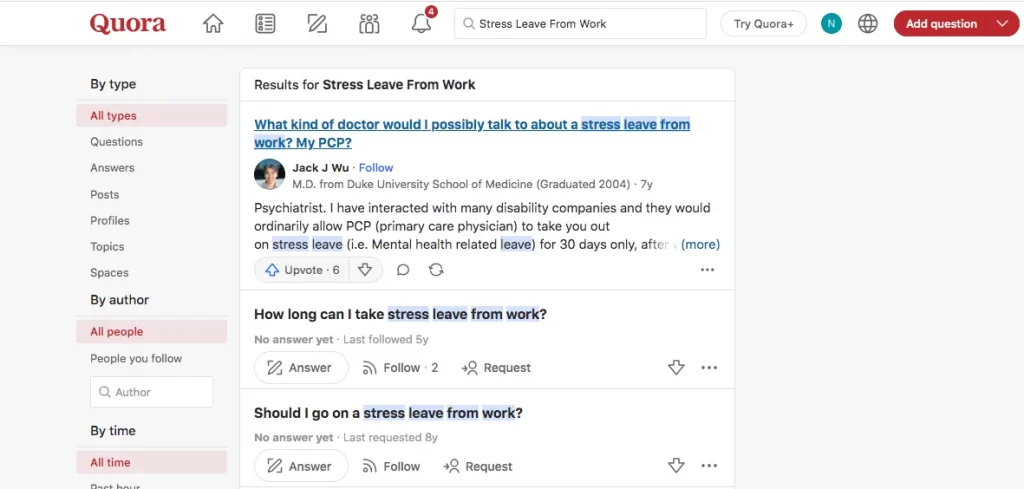
Quora users offer fresh perspectives on how workplace stress can lead to serious mental health challenges.
When “Weakness” Isn’t the Issue
BrutallyHonest challenges the notion that jobs have grown harder!
“If you can’t handle your job, you just aren’t really qualified to handle it, so find one that you are capable of doing, don’t bitch about the job just because YOU can’t do it.”
This viewpoint brings debate about personal resilience versus systemic pressures.
The Toll of Emotional Abuse
Oksana D reflects on how daily interactions erode wellbeing,
“When they hired you, they asked if you are adaptable and flexible; now they can use it against you, experimenting with emotional abuse.”
Her experience shows that ongoing mistreatment inflicts the same damage as physical pain.
Cognitive Breakdowns and Functional Impairment
Khadar Abdulahi Nur is a stress-management expert. He describes stress at its most extreme,
“This is the one that is rather destructive than constructive; it destroys your mental processes responsible for the execution of speech, walking, sleeping, emotions, etc.”
Spiritual and Mind-Body Reflections
Akansha offers a more holistic lens,
“Your bosses, colleagues and everyone around … are on their own life journey. When we forgive, we heal.”
She emphasizes forgiveness as a tool for releasing negativity and reclaiming a sense of purpose.
Extreme Environments

Ralph Pifer is a retired psychology professor. Ralph coins the term “crazy makers” for toxic cultures,
“Punitive, arbitrary, over-the-top punishment … threats—firing, ruination of career … high levels of drinking, substance abuse … back-biting, spying, attacks on coworkers.”
His list warns readers to forget companies where pathology at the top infects every level.
Unexpected Signs
Amidormi describes small mistakes as red flags,
“When I grabbed tartar sauce to go with celery instead of the correct dressing … I realized my job might be making me lose my marbles.”
Slip-ups signal deeper cognitive overload from juggling too many projects.
Practical Coping Strategies
OAJ AYURVEDA distills simple habits,
“Take breaks … Drink water properly … Do small tasks … Good sleep … Balanced diet … Regular exercise.”
Community and Organizational Change
Paul Seyfarth is a former mental health worker. He advocates systemic reforms,
“The return of breaks … revamping community mental healthcare … changing the employee-employer dynamic to promote dialogue … community building within the workplace.”
Personal Narratives

Polly Fukuhara shares a story of sudden loss,
“I walked into that office feeling totally horrid … I burst into tears … He sent me home and told me to come back when I felt better.”
Her experience shows how compassionate leadership transforms a traumatic return to work into healing.
Conclusion
In the end, taking stress leave isn’t a sign of weakness but a proactive step toward safeguarding your health, relationships, and long-term career success.
By recognizing the warning signs, whether they’re persistent exhaustion, sleep disruption, or emotional numbness, you empower yourself to seek timely support.
Understanding your rights under FMLA, short-term disability, and ADA ensures you can navigate the process with confidence and protect both your job and your income.
Once on leave, establishing clear boundaries, practicing evidence-based stress-reduction techniques, and building a strong support network lay the foundation for real recovery.
And when you return, thoughtful accommodations and self-managed limits help prevent relapse.
Managing workplace stress is an ongoing journey: it demands honest self-assessment and open communication.
By taking control of your stress today, you’re not only honoring your well-being, you’re investing in a more fulfilling professional life tomorrow.
Hire the best candidates
with Wetest.
Create pre-employment assessments in minutes to screen candidates, save time, and hire the best talent.
Try for free