
Let’s be honest: life can be hard, messy, and at times, too much to handle. When things feel confusing, the right words can help. That’s the beauty of inspirational quotes. They take deep ideas and turn them into simple advice that stays in our minds.
The right quote acts like a quick guide for our thoughts. It gives us clear understanding and motivation when we really need it. For many years, people have looked to these short pieces of wisdom for help with direction and courage. Unlike long advice or tricky ideas, quotes give us quick feelings and useful advice in only a few words.
In this collection, we have gathered special views on life that go beyond common sayings. These aren’t the usual “live, laugh, love” phrases. They are meaningful thoughts that can really change how you see your problems and chances.
Table of Contents
Why Inspirational Quotes Can Change Your Daily Mindset

These words can cause emotional reactions and activate parts of the brain linked to motivation and memory. This makes them more powerful and easy to remember.
The Science of Motivational Words and How They Affect the Brain
Have you ever thought about why some quotes stay with you for years while others are forgettable? There is real science behind this. When we read strong quotes, our brains handle them in a different way than regular text.
Neuroscience studies show that using inspirational words activates a part of the brain called the ventral striatum. This area is linked to feelings of pleasure and reward. Because of this, people feel good when they read motivational quotes, making them easier to remember and more powerful. A study in 2022 found that when people read inspiring quotes, it boosted their motivation and good feelings for as long as 24 hours after.
Also, when quotes use comparisons and images, they reach several parts of the brain at the same time. This helps build stronger connections in our minds. This is why strong quotes like “Life isn’t about waiting for the storm to pass, it’s about learning to dance in the rain” leave a lasting impact.
How Brief Wisdom Creates Lasting Mental Shifts
The short nature of quotes is what makes them strong. Author Daniel Pink says, “Shortness brings clarity.” When we break down wisdom to its core, it becomes easier to understand and use.
This brevity works in three important ways:
- Memorability: Short statements are easier to remember when you need them.
- Transferability: Simple quotes can fit many situations.
- Emotional impact: Simple words have a strong emotional effect.
Think about a quote like “The only way out is through.” It can fit many tough situations and offer quick emotional help. This ability to adapt makes quotes useful tools we can use anytime we need.
Finding Personal Meaning in Universal Truths
The strongest quotes often talk about shared human experiences. They express common struggles and dreams while letting us relate our own situations to them.
When a quote speaks to us, it often expresses feelings we have but can’t put into words. Recognizing this makes us feel a connection. It helps us feel understood and less alone in what we go through.
As you read the quotes in this collection, notice which ones feel familiar. The quotes that catch your attention are talking about something important in your life right now.
25 Profound Quotes About Embracing Life’s Journey
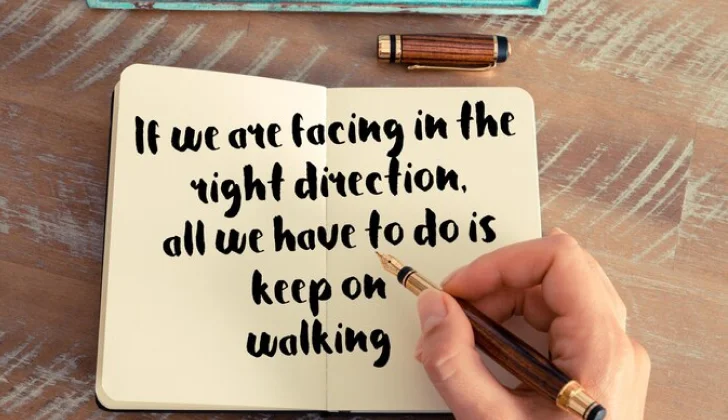
Living fully means appreciating both the journey and the present moment, finding wisdom in each step along the way.
Quotes That Celebrate Living in the Present Moment
- “The present moment is the only moment available to us, and it is the door to all moments.” – Thich Nhat Hanh
- “You must live in the present, launch yourself on every wave, find your eternity in each moment.” – Henry David Thoreau
- “Life is a dance between making it happen and letting it happen.” – Arianna Huffington
- “The real question is not whether life exists after death. The real question is whether you are alive before death.” – Osho
- “Presence is far more intricate and rewarding an art than productivity.” – Maria Popova
- “Normal day, let me be aware of the treasure you are… Let me not pass you by in quest of some rare and perfect tomorrow.” – Mary Jean Irion
Wisdom on Overcoming Life’s Unexpected Challenges
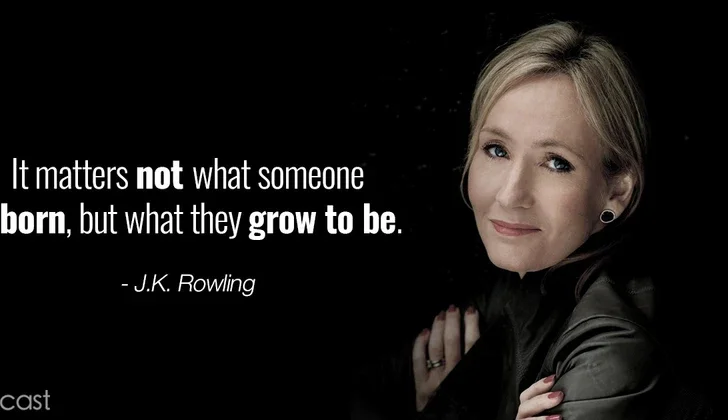
- “The obstacle is the path.” – Zen proverb
- “Life’s challenges are not supposed to paralyze you; they’re supposed to help you discover who you are.” – Bernice Johnson Reagon
- “Rock bottom became the solid foundation on which I rebuilt my life.” – J.K. Rowling
- “The problem is not that there are problems. The problem is expecting otherwise and thinking that having problems is a problem.” – Theodore Rubin
- “In the middle of difficulty lies opportunity.” – Albert Einstein
- “The wound is the place where the light enters you.” – Rumi
Inspirational Words About Personal Growth and Self-Discovery
- “We don’t see things as they are, we see them as we are.” – Anaïs Nin
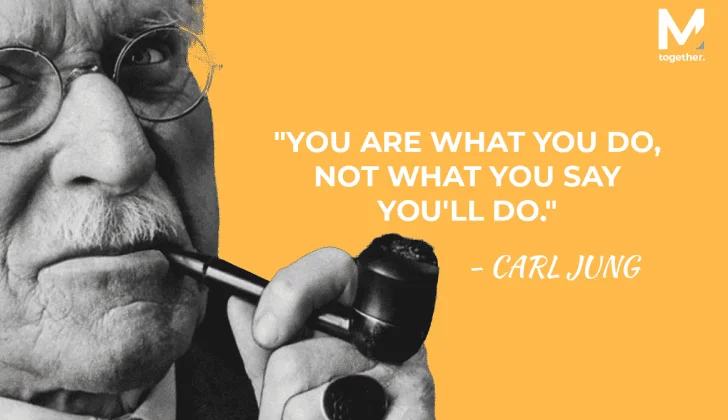
- “The privilege of a lifetime is to become who you truly are.” – Carl Jung
- “Life isn’t about finding yourself. Life is about creating yourself.” – George Bernard Shaw
- “The most important journey you will take in your life will usually be the one of self-discovery.” – Lolly Daskal
- “The greatest explorer on this earth never takes voyages as long as those of the man who descends to the depth of his heart.” – Julien Green
- “You cannot dream yourself into a character; you must hammer and forge yourself one.” – James A. Froude
Thought-Provoking Perspectives on Finding Your Purpose
- “The purpose of life is not to be happy. It is to be useful, to be honorable, to be compassionate, to have it make some difference that you have lived and lived well.” – Ralph Waldo Emerson
- “The meaning of life is to find your gift. The purpose of life is to give it away.” – Pablo Picasso
- “Purpose is the place where your deep gladness meets the world’s needs.” – Frederick Buechner
- “The mystery of human existence lies not in just staying alive, but in finding something to live for.” – Fyodor Dostoevsky
- “Don’t ask what the world needs. Ask what makes you come alive, and go do it. Because what the world needs is people who have come alive.” – Howard Thurman
- “A life isn’t significant except for its impact on other lives.” – Jackie Robinson
- “Your work is going to fill a large part of your life, and the only way to be truly satisfied is to do what you believe is great work.” – Steve Jobs
Famous Philosophers Who Changed Lives with Their Words
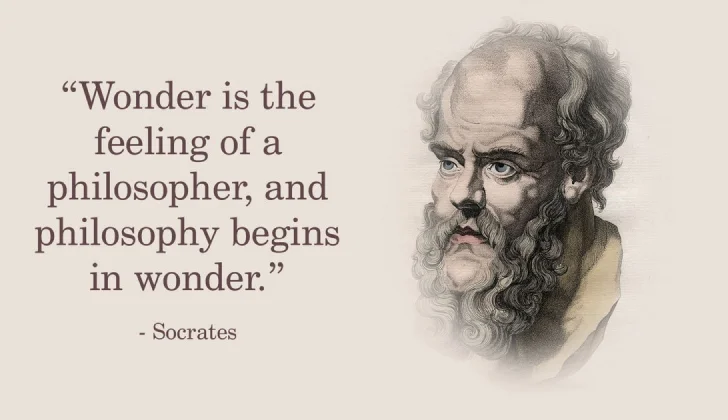
The words of history’s greatest philosophers continue to inspire, offering timeless wisdom that remains relevant in today’s world.
Ancient Wisdom That Still Resonates Today
The ancient philosophers weren’t just academic thinkers – they were practical guides to living well. Their insights on life’s fundamental questions continue to offer guidance thousands of years later.
Socrates (470-399 BCE) challenged us with “The unexamined life is not worth living.” This simple statement still serves as a powerful reminder to reflect on our choices and beliefs rather than moving through life on autopilot.
Marcus Aurelius (121-180 CE), the Roman emperor who journaled his personal philosophical reflections, wrote: “You have power over your mind – not outside events. Realize this, and you will find strength.” This core Stoic principle offers a practical approach to maintaining mental equilibrium in chaotic times.
Lao Tzu, the founder of Taoism, observed: “Nature does not hurry, yet everything is accomplished.” This perspective continues to counter our modern obsession with rushing and productivity, reminding us that natural timing often produces better results than forced progress.
Modern Thinkers and Their Revolutionary Life Insights
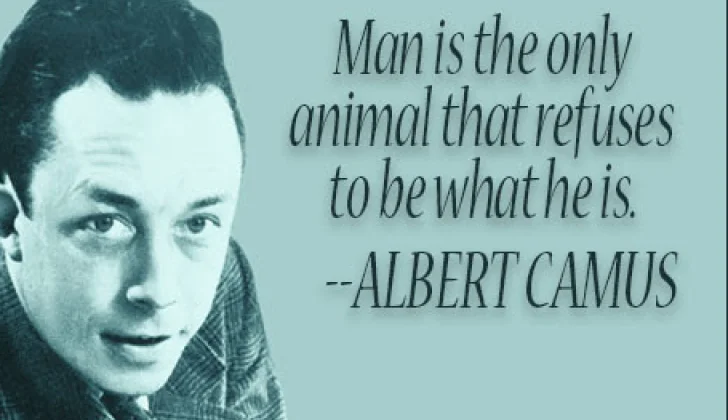
While ancient wisdom provides timeless principles, contemporary philosophers address the unique challenges of modern life.
Viktor Frankl (1905-1997), who survived Nazi concentration camps, developed an entire psychological approach from his observation that “Between stimulus and response there is a space. In that space is our power to choose our response. In our response lies our growth and our freedom.” This insight forms the foundation of much modern psychological resilience training.
Simone de Beauvoir (1908-1986) challenged conventional thinking with “One is not born, but rather becomes, a woman.” This revolutionary perspective on how we construct our identities continues to inspire people to question societal limitations.
Albert Camus (1913-1960) offered a unique approach to life’s inherent meaninglessness with “In the midst of winter, I found there was, within me, an invincible summer.” His existentialist philosophy provides a framework for creating personal meaning in an uncertain world.
How Philosophical Quotes Can Guide Everyday Decisions
Philosophy isn’t just for academics; these distilled insights can become practical decision-making tools in everyday life.
When facing difficult choices, Immanuel Kant’s categorical imperative – “Act only according to that maxim by which you can at the same time will that it should become a universal law” – offers a clear ethical framework. Simply asking “What if everyone did this?” can clarify many moral dilemmas.
For managing disappointment and setbacks, the Stoic perspective of Epictetus works wonders: “Make the best use of what is in your power, and take the rest as it happens.” This approach helps distinguish between what we can control and what we must accept.
When contemplating major life changes, Søren Kierkegaard’s insight that “Life can only be understood backwards; but it must be lived forwards” reminds us that perfect certainty is impossible, and action often must precede complete understanding.
7 Powerful Ways to Apply Inspirational Quotes Daily

Starting your day with the right words can set the tone for success, turning inspiration into action from the moment you wake up.
Morning Rituals Using Motivational Quotes for Success
Starting your day with intentional quote reflection can set a powerful tone for the hours ahead. Here’s how to build an effective morning quote ritual:
- Create a personalized quote rotation: Select 7-10 quotes that address your current challenges or aspirations. Rotate through them weekly to maintain their impact.
- Pair quotes with visualization: After reading your daily quote, close your eyes and spend 60 seconds visualizing yourself embodying its wisdom in specific situations you’ll face that day.
- Write and reflect: In a dedicated journal, copy your daily quote and write 2-3 sentences about how you can apply it specifically today. This transforms passive reading into active intention-setting.
A simple five-minute morning practice combining these elements can significantly influence your mindset throughout the day, priming your brain to notice opportunities aligned with your chosen wisdom.
Creating Visual Reminders of Your Favorite Life Wisdom

Environmental cues can reinforce quote wisdom throughout your day:
- Strategic placement: Identify where you make important decisions or face specific challenges, then place relevant quotes in those exact locations. A quote about patience on your computer monitor or one about self-compassion on your bathroom mirror creates contextual reminders.
- Digital integration: Change your phone wallpaper weekly to feature a new quote. Use apps like Momentum or Daily Quote to ensure fresh inspiration appears in your digital environment.
- Artistic expression: Transform meaningful quotes into personal artwork, whether through simple handwritten cards or more elaborate designs. The process of creating visual representations deepens your connection to wisdom.
These environmental cues serve as pattern interrupts, momentarily breaking you out of autopilot to reconnect with intentional wisdom exactly when needed.
Journaling Exercises to Personalize Inspirational Messages
To transform quotes from someone else’s wisdom to your own internalized truth:
- Quote expansion: Select a quote that resonates but feels somewhat abstract. Write for 10 minutes, exploring specific ways this wisdom applies to your current circumstances. This bridges the gap between universal truth and personal application.
- Experience mapping: Identify a powerful motivational quote, then list 3-5 past experiences where this wisdom would have been helpful. Next, identify 2-3 current situations where you can apply it. This creates a concrete action plan from abstract wisdom.
- Dialogue journaling: Write a conversation between yourself and the quote’s author, asking questions about their intended meaning and how they would advise applying it to your specific situation. This imaginative exercise deepens your engagement with the core concept.
Regular personalization practices ensure quotes become integrated wisdom rather than just appealing phrases you passively consume.
Finding Strength: Quotes for Life’s Most Challenging Moments
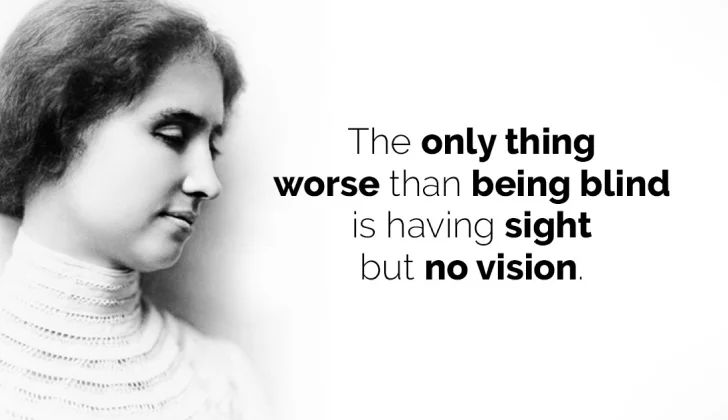
In difficult times, the right words can offer strength, hope, and a sense of comfort when they’re needed most.
Words of Comfort During Times of Loss and Grief
During periods of grief, the right words can provide genuine comfort without minimizing pain:
“Grief is the price we pay for love.” – Queen Elizabeth II
This profound observation acknowledges that our deepest pain comes from our capacity for connection, honoring both the suffering and the relationship that preceded it.
“What we have once enjoyed deeply we can never lose. All that we love deeply becomes a part of us.” – Helen Keller
Keller’s insight offers a perspective shift from focusing on what’s been lost to recognizing what remains within us, transformed but present.
“The reality is that you will grieve forever. You will not ‘get over’ the loss of a loved one; you will learn to live with it. You will heal and you will rebuild yourself around the loss you have suffered.” – Elisabeth Kübler-Ross
This quote provides permission to experience grief as an ongoing process rather than a temporary state, reducing the pressure to “move on” prematurely.
Motivation When Facing Career and Professional Setbacks
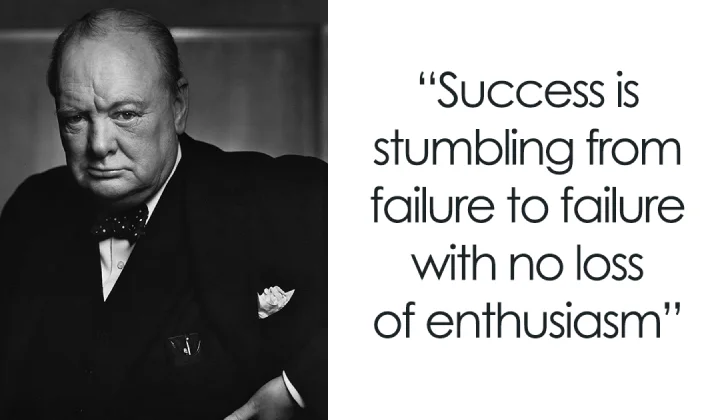
Professional challenges require specific kinds of encouragement:
“Success is not final, failure is not fatal: it is the courage to continue that counts.” – Winston Churchill
Churchill’s perspective normalizes both success and failure as temporary states, placing value instead on persistent effort.
“The only way to do great work is to love what you do. If you haven’t found it yet, keep looking. Don’t settle.” – Steve Jobs
This reminder helps reconnect with purpose during career transitions or disappointments, focusing on the search for meaningful work rather than immediate outcomes.
“The only limit to our realization of tomorrow will be our doubts of today.” – Franklin D. Roosevelt
Roosevelt’s insight directly addresses the self-doubt that often accompanies professional setbacks, highlighting how our internal dialogue shapes future possibilities.
Inspiring Thoughts for Rebuilding After Personal Failures
When personal mistakes or failures shake your foundation:
“Ever tried. Ever failed. No matter. Try again. Fail again. Fail better.” – Samuel Beckett
Beckett’s quote reframes failure as an iterative process rather than a final judgment, suggesting that improvement within failure itself represents progress.
“When we are no longer able to change a situation, we are challenged to change ourselves.” – Viktor Frankl
Frankl’s insight, born from extreme suffering, offers a path forward when circumstances cannot be altered, focusing attention on internal transformation rather than external control.
“You may encounter many defeats, but you must not be defeated. In fact, it may be necessary to encounter the defeats, so you can know who you are, what you can rise from, and how you can still come out of it.” – Maya Angelou
Angelou’s perspective transforms defeats from meaningless suffering into essential experiences that reveal our capacity for resilience.
How to Create Your Own Meaningful Life Quotes

Your own experiences hold valuable lessons—turning them into meaningful quotes can inspire both yourself and others.
Reflecting on Personal Experiences for Authentic Wisdom
The most powerful quotes often emerge from personal struggle and insight. To distill your own wisdom:
- Identify turning points: List 3-5 significant challenges you’ve overcome or insights that fundamentally changed your perspective. These experiences contain your most authentic wisdom.
- Extract the lesson: For each experience, ask: “What truth did I learn that might help others?” Focus on the universal principle rather than specific circumstances.
- Find the pattern: Look for recurring themes across different life experiences. The insights that appear repeatedly are likely your core wisdom.
Your personal history contains unique perspectives no one else can offer. By mining these experiences thoughtfully, you can articulate wisdom that rings with authenticity because it emerged from lived experience.
Techniques for Distilling Complex Thoughts into Quotable Words

Creating memorable quotes requires linguistic precision:
- Start expansive, then compress: Begin by writing a full paragraph explaining your insight. Then systematically reduce it, removing all but the essential elements, until you have a single powerful sentence.
- Employ contrast: Many memorable quotes use opposition or paradox: “In the middle of difficulty lies opportunity” (Einstein). Look for tension or apparent contradictions in your insight.
- Use concrete imagery: Abstract concepts become memorable through tangible images. Compare “Persistence is important” with “The persistent water drop hollows the stone not through force but through constancy” to see the difference.
- Apply the rhythm test: Read your quote aloud. Memorable quotes often have natural rhythm and sound patterns that make them satisfying to speak and hear.
These techniques transform important thoughts into language that sticks in the mind and compels sharing.
Sharing Your Unique Perspective to Inspire Others
Your personal wisdom gains power when effectively shared:
- Context matters: When sharing your quotes, briefly explain the experience that generated them. This adds credibility and helps others connect to the insight emotionally.
- Start small: Share your wisdom first with trusted friends or small communities who can provide feedback on what resonates most strongly.
- Embrace digital platforms: Platforms like Instagram, Twitter, and LinkedIn are designed for quote sharing. Experiment with pairing your words with simple visuals to increase their impact.
- Welcome adaptation: The most powerful quotes evolve as they spread. Be open to others rephrasing or applying your wisdom in ways you hadn’t anticipated.
Remember that the most influential quotes often emerge from specific voices addressing universal human experiences. Your perspective – shaped by your unique journey – offers value that generic wisdom cannot provide.
Conclusion: Living an Inspired Life Beyond the Words
Quotes can spark motivation and insight, but lasting transformation comes from integrating their wisdom into daily actions. The most meaningful quotes aren’t those we simply remember – they’re the ones that change how we live.
As you collect and create inspiring words, focus on those that translate directly into different choices and behaviors. After all, as Ralph Waldo Emerson wisely noted, “What you do speaks so loudly that I cannot hear what you say.”
Let the quotes that move you become visible in your actions, decisions, and interactions – that’s where their true power lies.
Hire the best candidates
with Wetest.
Create pre-employment assessments in minutes to screen candidates, save time, and hire the best talent.
Try for free