
What Is a PIP in a Job? Meaning, Process, and What to Expect
Human resources
Bonica
August 1, 2025
You know that feeling when your manager says, ‘Can we talk?’ and your stomach just drops? Your heart sinks. You see that quick chat request from your manager and you just know.
Getting a PIP is kind of like that, but intensified. It’s natural to immediately think, ‘Am I getting fired?’
We’re here to demystify the whole process. You should learn about these plans. I’ll give you some tips on getting through it.
Table of Contents
Performance Improvement Plans in the Workplace

Most people see a PIP as the beginning of the end. But if you understand its purpose, you can see it as a chance for a new beginning.
Definition and Purpose of a PIP
From a company’s standpoint, hiring is a huge investment of time and money. A PIP is a way to protect that investment.
It’s a structured, fair process to give a struggling employee a clear and supported chance to improve, which is almost always a better solution than starting from scratch with someone new.
As HR consultant Miranda Wilson explains, “PIPs, when implemented correctly, represent an investment in an employee’s development rather than a precursor to termination. The goal is success, not failure.”
When and Why Employers Implement PIPs
Companies put people on Performance Improvement Plans (PIPs) when they notice specific problems.
These often include consistent underperformance when it comes to their main job responsibilities, or just plain failing to meet the performance goals that were set.
PIPs might also kick off because of behavioral issues that are affecting how the team works, or if there are skill gaps that are impacting how well they do their job, or even problems with attendance or being on time.
Most organizations don’t jump to PIPs immediately. The process usually follows a series of informal coaching conversations, verbal warnings, or other attempts to address issues before formalizing concerns.
PIPs also serve an important legal function. Ultimately, it serves as a shield for the company by showing the company did its part to help solve the problem.
Common Misconceptions About Performance Improvement Plans
Myth: A PIP means you’re definitely getting fired. False!
Many employees successfully complete PIPs and continue their careers.
Myth: Performance Improvement Plans are only for poor performers. False!
Even top performers get a plan if their work has unexpectedly dipped.
Myth: PIPs are punitive measures. False!
PIPs are developmental tools designed to help employees succeed.
Myth: PIPs reflect personal failure. False!
Many things cause performance issues, like fuzzy expectations, bad training, personal problems, or company shifts.
The Key Components of an Effective PIP

Okay, so what makes a Performance Improvement Plan really work and actually be fair? There are some common things all good ones have. Knowing what these are helps you totally evaluate the quality of your own PIP.
Specific Performance Issues and Improvement Goals
Be super clear about what has to change.
Effective PIPs identify:
– particular behaviors or outcomes that are not quite hitting the mark
– Clear examples of the performance gap
– Precise descriptions of success
For example, instead of “improve customer service,” an effective PIP might state: “Reduce customer complaint rate from 15% to below 5% by implementing the company’s three-step resolution process for all customer interactions.”
This gives you a concrete target to work for.
Measurable Objectives and Clear Success Metrics
Every goal in your Performance Improvement Plan (PIP) has to have clear measurement criteria.
Without stuff you can measure, neither you nor your manager can objectively figure out if it’s a success.
Good PIPs specifically include quantitative metrics they can (that’s numbers, percentages, rates), qualitative assessments with defined ways to check them, baseline measurements to show your starting point, and target thresholds that define the lowest acceptable performance.
These metrics make expectations clear for everyone.
Timeline and Regular Check-in Schedules
A PIP always has a clear deadline; these usually range from one to three months, and that timing really depends on how tricky the issues are.
Effective PIPs break this period into smaller segments with:
– Clear deadlines for specific improvements
– Regular meetings to touch base, checking in every week or every other week
– Milestone reviews to assess progress
– A defined end date when final evaluation will occur
You will have plenty of regular chances to fix things if they are not quite right.
Resources and Support Provided During the Process
It’s just not right for an employee to be left to, you know, independently decipher a Performance Improvement Plan (PIP).
Quality PIPs specifically lay out all the support that’s being given, including: extra training opportunities, mentoring or coaching help, tools or systems that are made to boost performance, access to important documents or examples, and regular feedback from your manager.
When the company provides you with resources, it really shows they are genuinely interested in your improvement. It’s not just about going through the motions before letting you go.
6 Crucial Stages of the PIP Process

Knowing how a typical Performance Improvement Plan unfolds helps you move through each step effectively.
Initial Performance Concerns and Documentation
Before a formal PIP begins, managers typically document ongoing performance issues. This may include:
– Notes from previous coaching conversations
– Performance review feedback
– Examples of work that didn’t meet standards
– Customer complaints or peer feedback
– Missed deadlines or objectives
This documentation serves as the foundation for the PIP and establishes the pattern of concerns that necessitated formal intervention.
The Formal PIP Meeting with Management
The PIP process officially begins with a meeting between you, your manager, and often an HR representative. During this meeting:
– Your manager explains the specific performance concerns
– The PIP document is presented and reviewed in detail
– Expectations, timelines, and measurement criteria are discussed
– You have an opportunity to ask questions and seek clarification
– Next steps are established
This meeting can be intimidating, but approaching it as an information-gathering opportunity helps you understand exactly what you need to do to succeed.
Implementing Your Action Plan for Improvement

The actual execution part of your improvement plan? That totally needs a super strong focus on just, you know, getting it done.
This stage involves: making your own detailed action plan for each specific issue, prioritizing what needs your immediate focus, actively using all the resources the plan gave you, meticulously writing down every accomplishment, and proactively talking about any difficulties you hit.
Your success depends on how you make changes.
Mid-point Evaluations and Progress Assessments
Most PIPs include scheduled check-ins to evaluate progress. These meetings typically involve:
– Reviewing performance since the last check-in
– Measuring progress against established metrics
– Discussing obstacles or challenges encountered
– Adjusting strategies if certain approaches aren’t working
– Documenting achievements and remaining gaps
These scheduled reviews in the middle are excellent for gathering feedback and making any necessary adjustments along the way.
Final Review and Determination of Outcomes
At the conclusion of the PIP timeline, a formal review determines the outcome. This typically results in one of three decisions:
1. Successful completion: You’ve met all requirements and exit the PIP process
2. Extension: You’ve shown progress but haven’t fully met all requirements, so the PIP period is extended
3. Termination: Performance hasn’t improved sufficiently, leading to separation from the company
The final review should reference specific metrics and examples rather than subjective assessments.
Post-PIP Follow-up and Long-term Expectations
If you successfully complete your PIP, the process doesn’t simply end. The post-PIP period typically includes:
– Define future performance expectations.
– Set meetings to solidify improvements.
– Build a long-term development plan.
– Address any outstanding issues not fully resolved.
This phase helps ensure that improvements are sustainable and not just temporary fixes.
What to Expect When Placed on a Performance Plan

Receiving a PIP triggers both practical and emotional challenges that you’ll need to navigate.
Emotional Reactions and How to Manage Them
It’s normal to experience strong emotions when placed on a PIP:
– The immediate reaction is disbelief
– A sense of betrayal is possible
– Anxiety about your job’s future is natural
– A feeling of embarrassment arises
– You will find your drive lessened
These emotions are counterproductive. Strategies for coping include:
– Take a day or two to think before you answer
– Talk to trusted friends outside of work
– Look at the feedback as facts, not personally
– See the PIP as a chance to get better at your job
– Get help from a career coach or counselor
Manage your emotional response to address performance concerns.
Increased Scrutiny and Documentation Requirements
When you’re on a Performance Improvement Plan (PIP), you should totally expect heightened attention to your work.
This means more frequent check-ins with your manager, requests for detailed documentation of your activities, and just way more scrutiny of your work quality and output.
There will also be requirements to track and report your progress, and you might possibly be excluded from certain projects or responsibilities.
This increased oversight isn’t meant to be punitive but provides the data needed to fairly evaluate your progress.
Potential Outcomes: Success, Extension, or Termination
Understanding the possible endpoints of a PIP helps you prepare realistically:
– Success: You meet or exceed all requirements and continue in your role
– Partial success with extension: You show improvement but need more time
– Reassignment: You may be offered a different role better suited to your skills
– Voluntary departure: Some employees choose to resign during a PIP
– Termination: If performance doesn’t improve sufficiently
Studies generally show that about 40-60% of employees successfully finish their PIPs.
Legal Rights and Protections During the PIP Process
While PIPs themselves aren’t legally regulated, you do have certain protections:
– Protection against discrimination based on protected characteristics
– Right to be evaluated fairly against documented standards
– Entitlement to receive the support and resources promised in the PIP
– Right to access and respond to performance documentation
– Unemployment benefits may still be available if terminated (depending on circumstances)
Look, if you honestly believe your PIP is because of discrimination or retaliation, and not truly about your work, you might want to consider reaching out to an employment attorney.
How to Successfully Navigate and Complete a PIP

Many employees successfully overcome PIPs and continue their careers.
5 Strategies for Addressing Performance Concerns
1. Ruthless prioritization: Address the most critical PIP issues first, avoiding overwhelm.
2. Proactive communication: Share progress frequently, demonstrating commitment and documenting efforts.
3. Specific feedback seeking: Ask targeted questions like, “What does success look like here?” to ensure effective improvement.
4. Resource maximization: Fully utilize all training, mentorship, and tools for support.
5. Positive attitude display: Show openness to feedback and willingness to change to enhance success.
Documenting Your Progress and Achievements
You should put together your own detailed record of your improvement.
This means: keeping a daily log of all your work, what you got done, and any difficulties. Also, save any positive feedback you get from coworkers or customers.
Track those numbers related to your performance goals, too. Document that you have finished any required training or development.
And note down times when you’ve implemented suggested changes. This documentation helps for a few reasons: it aids focus, provides material for check-in meetings, and creates an evidence trail of your improvement efforts.
Effective Communication With Your Manager
Your relationship with your manager is crucial during a PIP:
– Schedule brief weekly updates even if not required
– Come to meetings prepared with specific examples of improvement
– Ask for immediate feedback when trying new approaches
– Be honest about challenges rather than hiding difficulties
– Express appreciation for specific guidance that has helped
This communication shows your commitment while ensuring you stay aligned with expectations.
Building Support Networks During Challenging Times
Don’t try to navigate a PIP in isolation:
– Ask trusted coworkers for informal advice
– Think about getting help from a mentor who has faced and beaten similar problems
– Join professional groups where you can learn best practices
– Seek work-life balance support from friends and family
– Consider professional coaching if available
Support networks provide both emotional reinforcement and practical strategies that can help you succeed.
PIPs from the Manager’s Perspective

Understanding how managers view PIPs can provide valuable insight into navigating them successfully.
Creating Fair and Effective Improvement Plans
From a management perspective, creating a PIP involves:
– Gathering comprehensive documentation of performance issues
– Get HR’s input on structure and timelines.
– Make sure goals are realistic and actually possible to achieve.
– Link PIP objectives to department and company goals.
– Hold people responsible.
Managers often feel stress when creating PIPs, knowing they impact employees’ careers and livelihoods.
Conducting Productive PIP Conversations
Effective managers approach PIP discussions with:
– Using clear examples without generalizations
– Focusing on behaviors leaving out personality
– Acknowledging strengths while talking about concerns
– Active listening to understand employee perspectives
– A genuine desire to see the employee succeed
It is good to remember that your manager might find this whole PIP process uncomfortable too. This understanding can help you have constructive talks instead of combative ones.
Supporting Employees Throughout the Process
Managers have responsibilities during PIPs that include:
– Providing timely, specific feedback
– Making themselves available for questions and guidance
– Removing obstacles to improvement when possible
– Connecting employees with appropriate resources
– Documenting both progress and continued concerns
If your manager is not providing this support, request guidance.
Evaluating Progress Objectively and Consistently
Fair evaluation requires managers to:
– Reference the specific metrics established in the PIP
– Compare current performance to both baseline and target levels
– Consider progress trends rather than isolated incidents
– Apply consistent standards across similar situations
– Separate personal feelings from performance assessment
This objective evaluation approach protects both the employee and the organization.
After the PIP: Moving Forward in Your Career

Whether you succeed in your PIP or ultimately move to a new position, the experience offers valuable lessons.
Rebuilding Professional Relationships and Trust
Successfully completing a PIP is just the beginning. Rebuilding trust requires:
To ensure your improved performance becomes a part of your work, you must consistently uphold it. Pay special attention to being highly dependable in the areas that were once concerns.
Open and proactive communication about your work will also be fundamental. Be prepared for the reality that it might take some colleagues a while to fully register and appreciate the positive shifts you’ve made.
Thus, actively seeking out opportunities to show your unique value to the team will be an ongoing effort.
Trust erodes quickly but rebuilds slowly—patience and consistency are essential.
Learning from the PIP Experience
Regardless of outcome, PIPs offer important insights:
PIPs serve as learning experiences. They promote greater self-awareness concerning your professional strengths and areas for improvement, alongside a more precise understanding of your company’s expectations.
The process often sharpens your ability to accept and act on feedback while improving your stress management and resilience skills. A PIP can provide a much clearer outlook on your career objectives and your alignment with the role.
These lessons serve you throughout your career, even if you move to a new organization.
When to Consider Job Alternatives
Sometimes, despite your best efforts, it becomes clear that your current position isn’t the right fit:
This happens if the performance expectations genuinely seem impossible to meet. It’s also a strong indicator when the company culture consistently conflicts with the way you prefer to work.
Even if you’ve successfully completed a PIP but still find yourself unhappy in the role, that’s a significant clue. It might be that your skills and interests simply align better with different kinds of jobs. And, sometimes, it’s just that trust has been damaged to a point where it can’t be fixed.
Starting a job search while on a PIP can be prudent, but focus on completing the PIP successfully regardless to preserve references and options.
Using the PIP as a Catalyst for Growth
Many professionals look back on PIPs as pivotal moments in their careersEven though the feedback was hard to hear, it helped them see things they were missing.
The whole experience made it clearer what they wanted out of their working lives. The process taught them important skills like sticking up for themselves and talking clearly.
The tough situation pushed them to learn new things and get better at them. In the end, what happened helped them find a job that truly matched their strengths.
With the right mindset, a PIP can become a launching pad rather than a setback.
Performance Improvement Plans are challenging but navigable experiences. By understanding the process, managing your emotional response, implementing effective improvement strategies, and learning from the experience, you can transform a potential career crisis into an opportunity for growth.
Whether you ultimately thrive in your current role or find a better fit elsewhere, the skills you develop through the PIP process will serve you throughout your professional journey.
A Quora Rundown
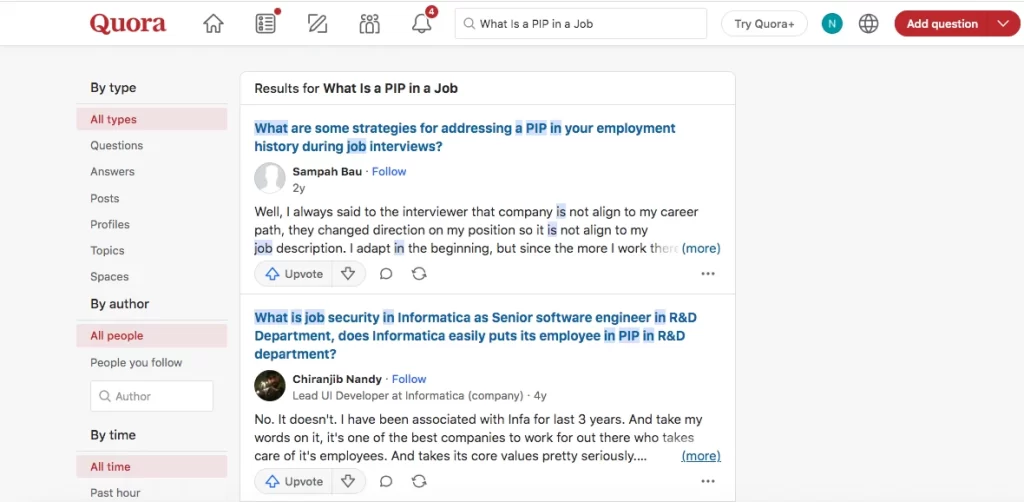
This rundown from Quora users on PIPs should give you a broader sense of how professionals experience and respond to PIPs in practice.
Harsh Realities and Hidden Agendas
Curly (User Experience Manager) paints a bleak picture of how PIPs can be weaponized,
“They will give you ambiguous directions and unobtainable performance goals. It’s a sadistic practice, especially in at-will states”
Curly warns that, in many cases, PIPs serve as a pretext to avoid paying severance. Their advice? “Endure it as long as possible … polish up your resume and start your job hunt!”
Similarly, Vishal Singhania bluntly states,
“PIP is the bread and butter of ethical sacking technique … gather mail and other documentary evidences … to put employees on PIP”
Strategic Responses and “Play the Game”
Many users advocate for parallel job-search strategies,
Cyberbatsu suggests a dual-track approach,
“Just chill … Plan on accomplishing the tasks in PIP, and keep giving interviews outside … work is not life, but a part of it.”
Anonymous shares a legal tactic,
“Do not sign the PIP … get a paper trail to prove that you are depressed because of an abusive boss … contact HR with all documents … HR will be very afraid of the legal consequences.”
Ethical and Legal Considerations
Several users call out the legal theater behind PIPs,
Carol Francis argues,
“HR’s main … function is to protect the company’s interests, not the employees’. A PIP is … a way for your employer to … later claim … they made every effort.”
She advises preparing for the worst, backing up personal data, forwarding emails to personal accounts, and packing personal belongings early, to avoid “the walk of shame” if termination occurs.
Likewise, Anonymous recommends,
“If you sue them, then they can say … we even put the guy on a PIP … go to your manager … tell him … you are looking out for other jobs … resign only at the end of the PIP duration … so that you will at least draw the pay.”
Insider Views on Organizational Mechanics

Two users from Accenture offer a peek behind the curtain,
CrazyLazyTechie explains how bottom-ranking and quotas drive PIPs,
“HR will be picking the candidates for PIP from bottoms as per company guidelines … PMs have to choose ratings thru moderation discussions.”
Devath Tikya Naik recounts being forced to fail a PIP candidate despite genuine training,
“My Managers said … I have to fail her even if she passes the exam. Now that’s not a good part.”
This shows that some PIPs are engineered outcomes, regardless of actual performance.
Benevolent vs. Bullying
Not all PIPs are malevolent. Diana Guzman (HR Manager) offers a contrasting perspective,
“For my organization … the purpose of the PIP is to help the employee improve. … supervisors and HR need to put in the time and resources … issue a PIP while maintaining the respect and dignity of the employee.”
Her view aligns with best-practice ideals, though she acknowledges some managers “treat employees in a terrible manner.”
Mental Health and Long-Term Outlook
Several voices emphasize well-being and future focus,
Cyberbatsy reminds us,
“Don’t let a PIP or 2 or 3 … ruin your mental health. … work is not life, but a part of it.”
Conclusion
A PIP in a job doesn’t have to spell the end of your career. It can be the beginning of a new chapter in your professional growth.
By understanding the process, setting clear goals, and using the support offered, you can turn performance challenges into opportunities for development.
Treat each feedback checkpoint as a chance to refine your skills, document your progress diligently, and maintain open communication with your manager.
Whether you emerge with renewed confidence in your current role or discover a better fit elsewhere, planning a PIP successfully equips you with resilience, self-awareness, and a proactive mindset that will serve you well throughout your career.
Hire the best candidates
with Wetest.
Create pre-employment assessments in minutes to screen candidates, save time, and hire the best talent.
Try for free