
New Employee Announcement: Welcoming Your Latest Team Member the Right Way
Human resources
Bonica
July 4, 2025
Did you know that nearly a quarter of new employees—20% to be exact—bail within their first 45 days? And here’s an eye-opener: companies with solid onboarding actually improve new hire retention by a whopping 82%!
How you welcome a new team member isn’t just about making a good first impression; it can literally decide if they stick around or head for the exit.
In this guide, I’ll show you precisely how to write new employee announcements that make folks feel genuinely valued from day one. You’ll learn the key ingredients for great welcome messages, smart timing tips, and common slip-ups to avoid.
Let’s turn your onboarding process into a powerful tool that keeps your best people and strengthens your whole company culture.
Table of Contents
Why Proper Employee Announcements Matter for Team Culture

Imagine walking into a party where nobody acknowledges you, introduces themselves, or makes space for you. That’s essentially what happens when organizations neglect proper new employee announcements.
The psychological impact of first impressions on new hires
First impressions aren’t just powerful—they’re lasting. According to research from the Aberdeen Group, 86% of new hires decide whether to stay with a company long-term within their first six months.
Dr. Amy Cuddy, a social psychologist from Harvard Business School, explains that when we meet new people, we quickly answer two questions:
– “Can I trust this person?”
– “Can I respect this person?”
For new employees, these questions apply to the entire organization. A thoughtful welcome announcement answers “yes” to both questions by demonstrating care and professionalism from day one.
“How organizations introduce new team members signals their true values more clearly than any mission statement,” notes organizational psychologist Adam Grant.
How thoughtful welcomes boost retention and engagement
The numbers don’t lie:
– Companies with structured onboarding programs experience 54% greater new hire productivity
– Employees are 69% more likely to stay with a company for three years if they experienced great onboarding
– Organizations with strong onboarding improve new hire performance by up to 11%
When employees feel welcomed and valued from the start, they develop stronger psychological connections to their workplace. This translates directly into higher engagement, which Gallup research consistently links to better business outcomes, including 21% higher profitability.
Building team cohesion through inclusive onboarding practices
A proper employee announcement does more than welcome the new person—it prepares the existing team to integrate them effectively.
When team members learn about a new colleague’s background, skills, and role before they arrive, it creates cognitive space for that person. Team members can begin thinking about potential collaborations, mentoring opportunities, and social connections.
Google, among others, found that psychological safety—that feeling where you can take a risk without fear of backlash—is the single biggest predictor of a team’s success. So, how do you start building that? A carefully put-together new employee announcement can kick things off. It helps by letting new folks know it’s okay to be vulnerable, and that this is a place where people genuinely support each other.
7 Essential Elements of an Effective New Employee Announcement

Now that you understand why proper welcomes matter, let’s explore exactly what information to include in your announcement.
Crafting a compelling introduction with personal details
The best employee introductions balance professional credentials with human connection. Start with their name and role, then add 2-3 personal details that help people connect on a human level.
Strong examples include:
– Hobbies that reveal personality (“When not analyzing data, Jamie’s an avid rock climber”)
– Origin stories that provide context (“After growing up in rural Montana, Priya brings a unique perspective to our urban planning team”)
– Surprising facts that spark conversation (“Fun fact: Carlos once cooked for Gordon Ramsay—and received a compliment!”)
Notice how these details create natural conversation starters for team members meeting the new hire.
Highlighting relevant experience and unique qualifications
This section should answer the implicit question: “Why is this person qualified for this role?”
Focus on:
– Previous achievements directly relevant to their new position
– Specialized skills or certifications they bring to the team
– Unique perspectives based on industry experience
For example, instead of saying “Sarah has 10 years of marketing experience,” try “Sarah led campaigns that increased customer acquisition by 37% at Company X, specializing in the same B2B sector we serve.”
Keep this section concise—2-3 sentences that establish credibility without reading like a resume.
Explaining their role and contribution to company goals
Clarity about someone’s role prevents confusion and helps the new hire integrate faster. Explain:
– Their primary responsibilities
– Which teams/departments they’ll collaborate with
– How their work connects to broader company objectives
For example: “As our new Customer Success Manager, Jamal will develop our client onboarding process and work closely with the Product team to ensure customer feedback influences our roadmap. His work directly supports our 2023 goal of improving customer retention by 15%.”
This clarity helps existing employees understand how to collaborate with the new person effectively.
Including a warm welcome message from leadership

A brief quote from a company leader adds legitimacy and demonstrates that the hire has support from the top. This should be:
– Authentic and specific (not generic)
– Forward-looking
– Personally attributed
Example: “Elena brings exactly the international perspective we need as we expand into European markets. Her strategic thinking impressed us throughout the interview process, and I’m personally excited to see how she’ll transform our approach to global partnerships.” —David Chen, CEO
Adding professional photo and contact information
A clear, professional photo helps team members recognize the new hire, especially in larger organizations or remote settings. Include:
– High-quality headshot (ideally matching the style of other team photos)
– Work email address
– Office location or time zone for remote workers
– Company phone number if applicable
Modern teams might also include links to internal communication platforms like Slack handles.
Mentioning start date and initial responsibilities
Practical information helps set expectations for both the new hire and the team:
– First day date
– Any onboarding activities the team should be aware of
– Initial projects or responsibilities
– Who they’ll be working with most closely
This information creates accountability and helps the new hire understand what success looks like in their first weeks.
Encouraging team interaction and support
End with a call to action for existing team members:
– Invite them to reach out with welcomes
– Suggest specific ways to support the new hire
– Create opportunities for interaction
For example: “Please stop by Ramesh’s desk next Monday to introduce yourself, or send a quick welcome message on Slack. We’ll be taking him to lunch at Café Luna at 12:30 if you’d like to join!”
When and Where to Share Your New Team Member Announcement

Timing and distribution channels significantly impact how your announcement is received. Strategic communication ensures maximum visibility and engagement.
Timing your announcement for maximum impact
The ideal timing follows this sequence:
1. Internal team notification: 1-2 weeks before start date
2. Company-wide announcement: 3-5 days before start date
3. External/social announcements: On or shortly after start date
This staggered approach ensures the immediate team has time to prepare, while broader announcements coincide with the employee actually joining.
Some companies make the mistake of waiting until after the person starts. This creates an awkward period where the new hire encounters people who don’t know who they are or why they’re there.
For executive or leadership roles, announcements may need to happen earlier to manage organizational change effectively.
Internal communication channels for employee introduction
Choose primary and secondary channels based on your company culture:
Primary (essential):
– Team email with complete introduction
– Announcement in company-wide meeting
– Post in relevant internal communication platforms (Slack, Teams, etc.)
Secondary (supportive):
– Feature in internal newsletter
– Digital signage in office spaces
– Intranet homepage feature
Microsoft’s research shows that employees typically need to see information at least three times before it’s fully internalized, so using multiple channels reinforces your message.
External platforms to showcase your growing team
External announcements serve both recruitment and brand-building purposes:
– Company blog (especially for key hires)
– Press releases for executive or strategic roles
– Industry publications for specialized positions
– Client/customer newsletters when relevant
If your company maintains a team page on your website, update it promptly with the new hire’s information.
Using social media to celebrate new talent acquisition
Different platforms serve different purposes:
– LinkedIn: Professional announcements for all roles
– Twitter: Brief welcomes with professional focus
– Instagram: Behind-the-scenes welcome moments
– Facebook: Community-focused announcements (especially for local businesses)
The most effective social announcements include:
– A professional photo or team picture
– Concise background information
– A personal touch from the company
– Appropriate hashtags for visibility (#NewHire, #TeamGrowth, industry-specific tags)
Mailchimp excels at creative social announcements by sharing unique illustrations of each new team member, reflecting their company culture while making the announcement memorable.
How to Create Personalized Welcome Experiences Beyond Announcements

The announcement is just the beginning of an effective welcome strategy. Follow through with these practical actions to create a comprehensive onboarding experience.
Convert your written welcome message into AI voice or text to speech format for an interactive audio welcome—great for remote or visually impaired team members.
First-day orientation strategies that make lasting impressions
The first day sets the tone for the entire employment relationship:
– Have their workspace fully prepared (computer, accounts, access cards)
– Provide a welcome kit with company swag and essential information
– Schedule a team lunch or coffee break
– Balance administrative tasks with meaningful work
– End with a clear plan for day two
Google’s research shows that new hires whose managers had a structured first-day plan were 25% more productive in their first quarter.
Create a standardized but customizable first-day agenda template that managers can adapt for each role while ensuring consistent quality.
Team-building activities to accelerate integration
Strategic social connections accelerate belonging:
– “Two truths and a lie” or other icebreaker activities
– Team lunches in smaller groups (3-4 people)
– Virtual coffee pairings for remote teams
– Project shadowing with different team members
Zapier, a fully remote company, schedules “pair buddies” where new hires have 30-minute video calls with team members across departments during their first month, creating cross-functional relationships early.
Mentor pairing programs for smoother transitions
Formal buddy systems provide new hires with someone who isn’t their manager to ask questions and seek guidance:
– Choose buddies who exemplify company culture
– Set clear expectations about the relationship duration
– Provide conversation prompts for initial meetings
– Check in with both parties after the first week
Buffer assigns three different buddies to each new hire:
1. A role buddy (same department)
2. A culture buddy (different department)
3. A leader buddy (someone in management)
This multi-buddy approach creates a support network rather than depending on one relationship.
Welcome packages and gifts that reflect company culture
Thoughtful welcome packages reinforce brand values:
– Personalized notes from team members
– Company-branded quality items they’ll actually use
– Resources tailored to their role
– Local treats for office-based staff
– Delivered care packages for remote workers
Etsy sends new employees a hand-crafted welcome kit that includes a custom-embroidered banner for their workspace, reflecting their commitment to craftsmanship and individuality.
Common Mistakes to Avoid When Announcing New Employees

Even well-intentioned welcome processes can go wrong. Avoid these frequent pitfalls that undermine your onboarding efforts.
Overlooking important personal details and achievements
Common errors include:
– Mispelling names or using incorrect pronouns
– Getting previous experience or education wrong
– Omitting significant achievements or skills
– Focusing exclusively on work history without personal elements
These mistakes signal carelessness and damage trust immediately. Triple-check all factual information and have the new hire review their announcement before sending it.
Using generic templates without personalization
Cookie-cutter announcements feel perfunctory rather than welcoming:
– Mail-merge style messages where only names change
– Vague descriptions that could apply to anyone
– Corporate jargon that obscures who they really are
– Identical formatting for every announcement
Instead, create a consistent framework that allows for meaningful personalization in key areas. One approach is to have the hiring manager write a brief personal welcome paragraph while maintaining company-standard formatting.
Failing to prepare the team for the new arrival
Announcement without preparation creates awkwardness:
– Team members caught off-guard by a new colleague
– Workspace or equipment not ready
– Uncertainty about reporting relationships or responsibilities
– No clear onboarding plan for the first week
Managers should hold brief team meetings before a new hire starts to discuss how team dynamics might change and how each person can help the new employee succeed.
Neglecting follow-up after the initial announcement
The announcement shouldn’t be the end of the welcome process:
– No check-ins during the first week
– Lack of introduction to key stakeholders
– Absence of feedback opportunities
– Assuming everything is fine without confirmation
Create a structured 30/60/90 day onboarding plan with specific touchpoints for feedback and adjustment. The most successful organizations treat onboarding as a process, not an event.
Measuring the Success of Your Employee Welcome Process

What gets measured gets improved. Implement these strategies to continually enhance your welcome process.
Gathering feedback from new hires about their experience
Collect both qualitative and quantitative data:
– Anonymous surveys after 30 days
– One-on-one check-ins with HR or department leaders
– Structured questions about specific aspects of onboarding
– Open-ended questions about improving the process
Effective questions include:
– “On a scale of 1-10, how welcome did you feel during your first week?”
– “What was the most helpful part of your onboarding process?”
– “What information do you wish you had received earlier?”
– “How could we have made your welcome experience better?”
Tracking engagement metrics after onboarding completion
Measurable indicators of successful integration include:
– Time to productivity (how quickly they reach expected output)
– Early participation in meetings and discussions
– System and tool adoption rates
– Social integration (inclusion in informal gatherings)
– Connection development (network analysis)
Microsoft tracks “dwell time” in different applications to identify when new employees have successfully adopted their primary work tools.
Comparing retention rates with welcome practice changes
The ultimate measure of onboarding success is retention:
– Compare 90-day, 6-month, and 1-year retention before and after implementing new welcome practices
– Track retention by department to identify best practices
– Analyze exit interview data for onboarding-related comments
– Calculate ROI by comparing onboarding investments against replacement costs
Companies with the most successful onboarding programs track these metrics religiously and can demonstrate clear financial benefits from their welcome processes.
Implementing continuous improvements to your welcome strategy
Use data to evolve your approach:
– Create quarterly review cycles for onboarding processes
– Implement A/B testing for different welcome approaches
– Form an onboarding committee with cross-departmental representation
– Share best practices between departments
The most successful organizations create feedback loops where new hire experiences directly inform improvements to the next round of welcomes.
Airbnb famously revamped their entire onboarding process after discovering that new hires who experienced a streamlined, consistent welcome were 15% more productive after three months.
A Quora Rundown
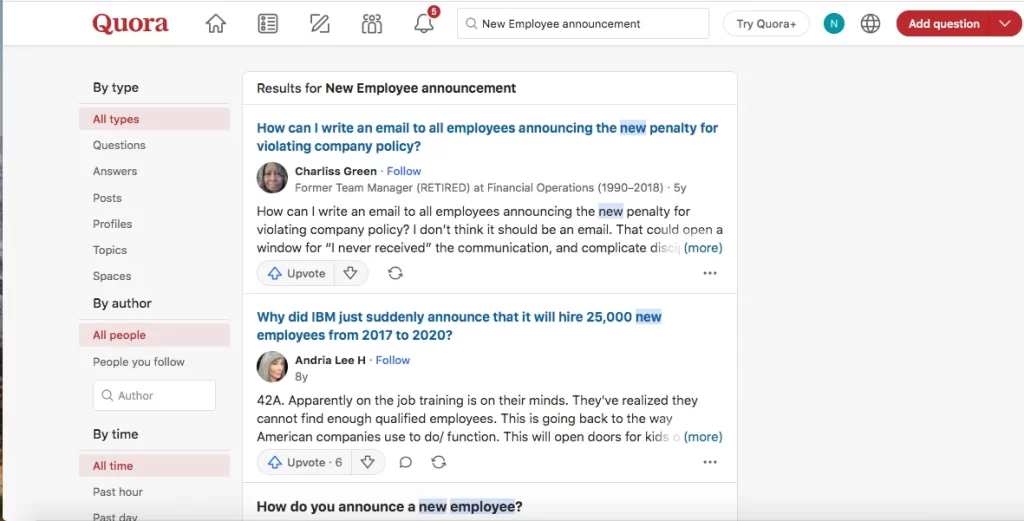
Here’s what real managers and colleagues on Quora are doing to welcome new team members.
Setting Clear Expectations and Transparency
Robert Cohn recommends kicking off with candid insights into the hiring process and role expectations,
“I tell them what I was looking for in the recruitment process and why I selected and hired them. Next…what I think they bring to the position and what they may need to develop. I’d explain the company’s vision, mission, and values and how this unit and they fit into that.”
Immersive Orientation Activities
Several responders stress hands‑on, facility‑wide immersion over passive tours,
Donald Doel suggests pairing inductees with mailing duties:
“A day or two in the mail room…gives a more productive introduction to the geography of the place and its various inhabitants.”
Jaysonne Montoya recalls an out‑of‑office press tour,
“We were taken out to the printing press…for a tour of the press, seeing it in action. They did this for all new hires, not just the actual pressmen.”
Personalized Social Integration
Building genuine connections often starts with informal gatherings and one‑on‑one time,
Harban recommends social meals before Day One,
“Get him/her to have lunch or dinner in advance of his first day…Introduce him to every member of the team & related personnel…find out more on his interests & appreciate them.”
Joanne Gambardella Meyerhoff describes coffee‑and‑doughnuts icebreakers,
“If budget allows, a coffee and doughnuts morning break…break the ice.”
Desmond Richmond keeps it light and social,
“Bring the person in to meet the team collectively…start introductions and have some refreshments…No business discussion. Just like a social outing.”
These low‑pressure meetups let new hires mingle naturally, fostering early bonds that strengthen psychological safety.
Continuous Managerial Engagement

Welcoming doesn’t end after Day One. Ongoing check‑ins matter!
Robert Cohn again emphasizes follow‑up scheduling,
“I conclude…by scheduling our next meeting to discuss progress…urge them to bring questions.”
Joanne Gambardella Meyerhoff urges managers to monitor pay and welfare,
“The manager should check with the employee for the first few weeks…answer questions and give guidance if necessary.”
Buddy and SPOC Systems
Having a dedicated welcoming partner ensures no newcomer feels lost,
Harban and Senthil Kumar K both champion this approach,
“If superior is outstation, appoint a buddy to accompany him for lunch…regardless if staff is introvert or extrovert. Assign a SPOC/Buddy who can welcome him/her in person…take care of joining formalities…initiate a video call…create a WhatsApp group…and send a welcome note.”
Conclusion
A thoughtful employee announcement isn’t just a courtesy—it’s a strategic investment in your team’s culture and performance. By implementing the practices outlined in this guide, you’ll create welcome experiences that contribute directly to higher engagement, faster productivity, and stronger retention.
Remember that your welcome process reflects your company values more authentically than any mission statement. When you prioritize making new team members feel valued from day one, you build the foundation for a more cohesive, productive workplace.
What changes will you make to your employee announcement process this week?
Hire the best candidates
with Wetest.
Create pre-employment assessments in minutes to screen candidates, save time, and hire the best talent.
Try for free