Looking back on my time in the classroom, I truly believe that the fun icebreaker activities we did on the first day set an important tone. As a teacher, it always amazed me how much of a difference they made.
Students seemed much more at ease chatting with each other after a quick introductory game or two. It was great to see connections starting to form between students who might not have interacted otherwise.
Introverted students especially seemed to come out of their shells. A little laughter and friendly competition went a long way in boosting their confidence levels.
The whole vibe in the class changed too. You could feel the nerves melting away. After that, getting them to participate in the learning process became much easier and they stayed engaged throughout the year.
Carving out 10 minutes at the start for team-building paid off more than I ever could have imagined. It set the class up for a really positive experience. Those small icebreakers were incredibly important.
In this comprehensive post of fun icebreaker activities for students, we will go over 10 simple and engaging activities to build a supportive community in the classroom.
Table of Contents
10 Fun Icebreaker Activities for Students

The following fun icebreaker activities work well for any grade and are enjoyed by both students and teachers. They are perfect for connecting classmates on the first day or anytime you want to energize the class. Here are some engaging icebreakers to try:
1. Human Bingo
Among the fun icebreaker activities for students is Human Bingo, which offers numerous benefits. Not only does it facilitate interaction and socialization among students, but it also helps establish commonalities. This assists in mitigating potential first-day anxieties while setting an encouraging tone at the outset.
The casual, conversational nature of interacting to discover shared interests or qualities helps establish a foundation of community organically. Students begin to feel at ease with one another through meaningful exchanges.
Objective: To encourage students to interact and learn about their peers.
Materials Needed: Bingo cards with different personal facts (e.g., “Has traveled to another country,” “Plays a musical instrument,” “Has a pet”).
Instructions:
- Prepare Bingo Cards: Create bingo cards with a variety of personal facts in each square. Ensure the facts are diverse enough to apply to different students.
- Distribute Bingo Cards: Give each student a bingo card and a pen or pencil.
- Explain the Rules: Instruct the students that their goal is to fill out their bingo cards by finding classmates who match the descriptions in each square. They must get a signature or initials from their classmate in the corresponding square.
- Start Interacting: Allow the students to circulate the room and interact with one another. Encourage them to ask questions to find out which classmates meet the criteria on their cards.
- Completing a Bingo: The first student to complete a row (horizontal, vertical, or diagonal) shouts “Bingo!” and wins the game. For added fun, you can continue the activity until multiple bingos are achieved or until the entire card is filled.
- Discussion: After the game, gather the students and discuss some of the interesting facts they discovered about each other. This can lead to a group conversation and further bonding.
2. Icebreaker Pictionary

Icebreaker Pictionary is a great team activity for developing collaboration skills in a fun way. By having groups work together to interpret drawings and uncover the words or phrases, students will subconsciously build communication and problem-solving skills.
They need to learn to listen to each other’s ideas and compromise on solutions. Through this process, bonds start forming within teams. In the long run, friendly rivalries may even emerge between groups.
The whole process gets students energized and excited while interacting in a low-pressure manner. Little social walls come down as laughter and light competition take over.
Icebreaker Pictionary has the potential to create camaraderie through creativity. It’s the perfect recipe for an engaged, supportive classroom culture.
Objective: To encourage teamwork and creativity.
Materials Needed: Whiteboard and markers (or chalkboard and chalk), paper and pencils for each team.
Instructions:
- Preparation: Prepare a list of words or phrases suitable for drawing. These can be related to the students’ interests, school subjects, or fun themes. Divide the class into small teams of 4-5 students each to ensure everyone has a chance to participate.
- Explain the Rules: Inform the students that one member from each team will take turns drawing a word or phrase while the rest of their team guesses what it is. Emphasize that no letters, numbers, or verbal clues are allowed; only drawings can be used to convey the word or phrase.
- Start the Game: Choose one student from each team to be the first “artist.” Provide the artists with a word or phrase to draw. They should not show the word to their teammates. Set a time limit (e.g., 1 minute) for the teams to guess the drawing.
- Drawing and Guessing: The artists draw the word or phrase on the whiteboard (or on paper if using pencils) while their teammates try to guess what it is. The team that guesses correctly first wins a point. If no team guesses correctly within the time limit, reveal the word and move on to the next round with a new artist and word.
- Rotate Roles: Rotate the role of the artist within each team so that different students get a chance to draw. Continue playing several rounds, keeping track of the points scored by each team.
- Declare the Winner: After a set number of rounds or when time is up, tally the points and declare the team with the most points as the winner. Consider offering a small prize or recognition for the winning team.
3. Story Chain
Story Chain is an engaging icebreaker that mainly emphasizes students’ creativity while also building their collaboration skills. During the activity, students need to listen to each other to continue the story logically.
Doing so helps them feel comfortable sharing their ideas and contributing to group work. It helps break the ice in a relaxed way too. Through this activity, students start bonding and getting to know their peers more casually. It is a fun way to form connections!
Objective: To enhance creativity and collaboration.
Materials Needed: None
Instructions:
- Explain the Activity: Introduce the concept of a story chain to the students. Explain that they will collaboratively create a story, with each student contributing one sentence at a time.
- Start the Story: Begin with an engaging opening sentence to set the scene. For example, “Once upon a time, in a land filled with magical creatures, there was a young adventurer named Alex.”
- Create the Story Chain: Go around the room in a circle or in an orderly manner, with each student adding one sentence to continue the story. Encourage students to listen carefully to the previous sentences to ensure the story flows logically. If the group is large, consider dividing them into smaller groups to ensure everyone gets a chance to participate and the story doesn’t become too long.
- Encourage Creativity: Encourage students to be imaginative and think creatively. They can introduce new characters, plot twists, and exciting events to keep the story interesting. Emphasize that there are no wrong answers and that the goal is to have fun and collaborate with their classmates.
- Monitor the Flow: As the teacher, gently guide the story if it starts to veer off course or if students need help coming up with ideas. This helps maintain the flow and coherence of the story. Ensure that each student’s contribution builds on the previous sentence, creating a cohesive and engaging narrative.
- Conclude the Story: Once every student has had a chance to contribute, or when the story reaches a natural conclusion, wrap it up with a final sentence. For example, “And from that day forward, Alex and the magical creatures lived happily ever after.”
- Discussion: After the story is complete, discuss it with the class. Ask questions like:
- What did you like about the story?
- What surprised you?
- How did you feel about working together to create it?
4. Common Ground
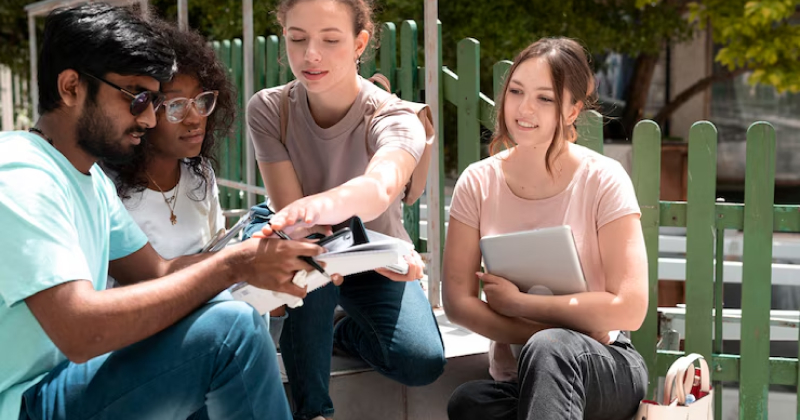
Common Ground is one of the fun icebreaker activities for students that helps them bond. Having meaningful conversations helps break down social walls. As students find shared interests, a sense of belonging and connection is automatically created. They are more likely to make friends and work well together for the rest of the semester.
It also boosts communication skills and listening, which builds a supportive learning environment. Overall, this activity is an engaging strategy to help form relationships through the discovery of similarities.
Objective: To discover shared interests among students.
Materials Needed: None
Instructions:
- Pair Up Students: Divide the class into pairs. You can randomly pair students or let them choose their partners. For larger classes, consider rotating partners multiple times to maximize interactions.
- Explain the Activity: Inform the students that the goal of the activity is to discover as many things as possible that they have in common with their partner within a set time limit (e.g., 5-10 minutes). These commonalities can range from hobbies, favorite foods, and books to more specific interests like favorite historical periods or sports teams.
- Set the Timer: Start the timer and let the pairs begin their discussions. Encourage them to ask open-ended questions to uncover shared interests and experiences. Examples of questions they can ask include:
- What are your favorite hobbies?
- Do you have any pets?
- What’s your favorite subject in school?
- Have you traveled to any interesting places?
- What kind of music do you like?
- Record Commonalities: Students should keep a mental or written note of each common interest they discover. Encourage them to explore a wide range of topics to find as many connections as possible.
- Share Discoveries: After the time is up, gather the class and invite pairs to share some of the interesting commonalities they discovered. This can be done in a quick round-robin format or by selecting a few pairs to present their findings to the class.
- Reflect: Lead a brief discussion on the activity. Ask students how it felt to find common ground with their classmates and how these shared interests can help build friendships and a positive classroom environment.
5. Personal Shield
The Personal Shield activity encourages self-expression and creative sharing. Students get to reveal meaningful parts of themselves. Presenting their shields provides great practice for public speaking, and seeing their peers’ experiences promotes appreciation and respect.
The whole activity promotes community spirit and mutual understanding. An environment where students feel safe connecting with each other. Overall, it is a fun way to build relationships.
Objective: To encourage self-expression and sharing.
Materials Needed: Paper, markers, crayons, colored pencils
Instructions:
- Distribute Materials: Give each student a piece of paper and access to markers, crayons, or colored pencils. You can provide a pre-drawn shield template or let students draw their own shield outline.
- Explain the Sections: Instruct the students to divide their shield into four sections. Each section will represent a different aspect of their life. Here are some suggested sections:
- Family: Include symbols or drawings that represent their family and home life. Hobbies and Interests: Illustrate activities or hobbies they enjoy.
- Achievements: Highlight personal achievements or things they are proud of. Goals and Dreams: Depict their future aspirations and dreams.
- Create the Shields: Allow the students time to creatively fill in each section of their shield. Encourage them to use a variety of colors and drawings that best represent their individual experiences and interests. Remind them that there is no right or wrong way to design their shield.
- Present the Shields: Once the shields are completed, have each student present their personal shield to the class. They should explain the meaning behind each section and what it represents about their life.
- Promote a Positive Environment: Encourage the class to listen respectfully and ask questions or give positive feedback after each presentation. This helps to build a supportive classroom atmosphere where students feel valued and understood.
- Display the Shields: If possible, create a display area in the classroom where all the shields can be showcased. This not only celebrates the students’ creativity but also allows them to learn more about each other through the displayed artwork.
6. Silent Line-Up

Silent Line-Up is an effective activity for enhancing non-verbal communication skills and promoting teamwork. It also improves problem-solving and teamwork as classmates work together silently. Building those soft skills is so valuable.
Moreover, the activity strengthens trust and cooperation among the group. As a fun icebreaker activity, Silent Line-Up builds a more connected classroom community.
Objective: To build non-verbal communication skills.
Materials Needed: None
Instructions:
- Explain the Activity: Introduce the concept of the Silent Line-Up to the students. Explain that they will need to line up in a specific order, but without using any verbal communication.
- Define the Order: Decide on the criteria for the line-up. Some examples include:
- By height (shortest to tallest or vice versa)
- By birthdate (from January to December)
- By alphabetical order of first names
- Set the Rules: Emphasize that talking is not allowed. Students must use gestures, facial expressions, and body language to communicate and organize themselves in the correct order.
- Start the Challenge: Give the signal to begin, and allow students time to organize themselves silently. Monitor the activity to ensure everyone is participating and adhering to the no-talking rule.
- Encourage Creativity: Encourage students to think creatively about how to communicate non-verbally. They can use hand signals, show fingers to represent numbers (e.g., for birthdates), or use other visual cues.
- Verify the Line-Up: Once students believe they are in the correct order, check the line-up to see if they have succeeded. If they have not, give them additional time to make adjustments without talking.
- Reflect: After the activity, gather the students and discuss the experience. Ask questions such as:
- What strategies did you use to communicate without talking?
- What was challenging about this activity?
- How did you feel working together in silence?
- What did you learn about non-verbal communication?
7. Would You Rather
Would You Rather is a lively and engaging activity that promotes conversation and decision-making among students. It gets lively conversations going and lets students practice decision-making. Explaining viewpoints openly is a good practice.
Hearing others out facilitates understanding between students as similarities and differences are revealed. Additionally, it encourages critical thinking and the ability to make choices based on personal values and preferences.
Objective: To promote conversation and decision-making.
Materials Needed: List of “Would You Rather” questions
Instructions:
- Prepare the Questions: Create a list of fun and thought-provoking “Would You Rather” questions. Examples include:
- Would you rather be able to fly or be invisible?
- Would you rather have a pet dragon or a pet unicorn?
- Would you rather travel to the past or to the future?
- Would you rather eat only pizza or only ice cream for the rest of your life?
- Introduce the Activity: Explain the rules to the students. Tell them that you will pose a series of “Would You Rather” questions, and they will need to choose their preferred option and explain their choice.
- Pose the Questions: Read each question aloud to the group. Give students a moment to think about their answers.
- Facilitate Discussion: When presenting the Would You Rather questions, it is important to have students articulate their choices and the critical thinking behind their decisions. By prompting them to explain their rationale, deeper insight and analysis emerges. For instance, if a student favors flying over invisibility, asking them to elaborate on their perspective enhances understanding. Creating a setting where respectful listening and discussion can occur also enriches this activity. Inviting follow-up questions or alternative views expands students’ consideration of topics.
- Rotate Participation: Ensure that different students have the opportunity to speak for each question. You can go around the room in a systematic way or randomly select students to share their answers.
- Reflect: After several rounds, discuss the activity with the class. Ask questions such as:
- Which question was the most difficult to answer and why?
- Did any of your classmates’ explanations change your perspective?
- How did it feel to share your thoughts and listen to others?
8. The Name Game

The Name Game provides an enjoyable means for students to become acquainted through meaningful association. By linking names with descriptive qualities, lasting mental connections take shape to facilitate recall.
This activity simultaneously develops skills like attentive listening, focus and remembrance through engaged participation. Pairing names with adjectives in a creative format makes the learning process engaging.
Encouraging an environment where students feel at ease interacting lays important social-emotional groundwork. As comfort and connection increase among peers, possibilities for positive relationships and experiences emerge.
Objective: To help students learn each other’s names.
Materials Needed: None
Instructions:
- Form a Circle: Have all students stand in a circle so everyone can see and hear each other clearly.
- Explain the Rules: Inform the students that they will be playing a game to learn each other’s names. Each student will say their name along with an adjective that starts with the same letter as their name. For example, “Happy Hannah” or “Joyful Jack.”
- Start the Game: Choose a student to start. This student says their name and an adjective that describes them or is simply fun. For example, “Happy Hannah.” The next student in the circle must repeat the first student’s name and adjective, and then add their own name and adjective. For example, “Happy Hannah, Joyful Jack.”
- Continue Around the Circle: Each subsequent student repeats all the previous names and adjectives in the correct order before adding their own. As the game progresses, the list of names and adjectives gets longer, making it more challenging to remember everyone.
- Encourage Creativity: Encourage students to choose adjectives that are unique and memorable. This not only helps with remembering names but also adds a fun and creative element to the activity.
- Assist as Needed: If a student has difficulty remembering the names and adjectives, gently assist them or have the group help out. The goal is to create a supportive and encouraging environment.
- Reflect: After everyone has had a turn, discuss the activity with the class. Ask questions such as:
- How did it feel to remember all the names and adjectives?
- Did you find any names or adjectives particularly memorable?
- How do you think this game helps us get to know each other better?
9. Two Truths and a Lie
The Two Truths and a Lie activity provides a fun quick icebreaker for students to gain intriguing insights into their peers. It enhances skills like attentive listening, critical reasoning, and interaction through thoughtful participation.
Sharing personal details in this inventive, structured manner helps uncover common interests and unique qualities among the group. As students learn more about one another on a human level, trust and community naturally develop.
The creative guessing work necessitated by the activity further sparks students’ mental engagement. Attempting to discern truth from fiction strengthens perceptiveness and focus.
Objective: To help students learn interesting facts about each other.
Materials Needed: None
Instructions:
- Introduce the Activity: Explain the rules of the game to the students. Each student will take turns sharing three statements about themselves. Two of these statements should be true, and one should be a lie. The goal is for the rest of the class to guess which statement is the lie.
- Give Examples: Provide a few examples to help students understand how to come up with their statements. For example:
- “I have a pet snake.”
- “I have visited three different countries.”
- “I am allergic to chocolate.”
- Start the Game: Choose a student to go first. They will stand up and share their three statements with the class. Encourage the student to keep a straight face and not give away the lie through their expression or body language.
- Guess the Lie: After the student shares their statements, the rest of the class will guess which one is the lie. They can raise their hands to vote or verbally share their guesses.
- Reveal the Truth: Once the guesses have been made, the student reveals which statement was the lie. This often leads to interesting discussions and follow-up questions about the true statements, allowing students to learn more about each other.
- Continue Around the Room: Move to the next student and repeat the process until everyone has had a chance to share their statements and have the class guess the lie.
- Reflect: After the game, discuss the activity with the class. Ask great icebreaker questions such as:
- Which truths surprised you the most?
- How did you decide which statement was the lie?
- What did you learn about your classmates that you didn’t know before?
10. Speed Friending
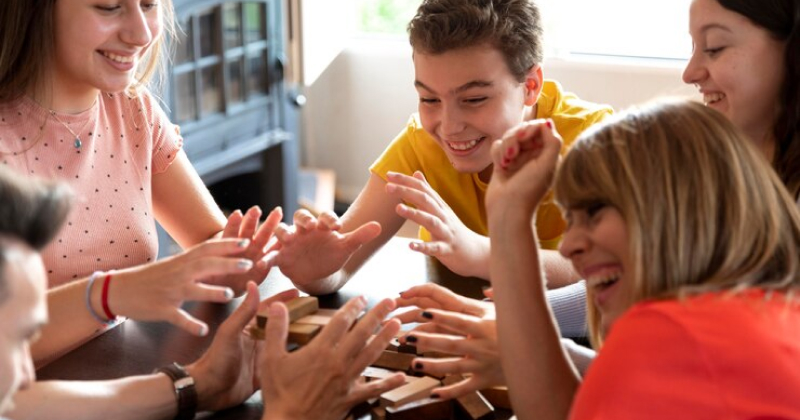
Speed Friending provides an efficient means of facilitating interpersonal exchange to help students commence the acquaintance process. It helps students get comfortable and creates a friendly atmosphere from the start.
Through structured yet succinct dialogue, participants practice communication skills like attentive exchange. Working within time constraints necessitates focus and clarity of expression.
This activity further promotes inclusion as common interests emerge. New connections form as classmates learn about one another on a personal scale.
Objective: To facilitate one-on-one interactions.
Materials Needed: Timer
Instructions:
- Set Up the Room: Arrange the classroom so that students can easily form pairs and rotate to new partners. This could be done by setting up two rows of chairs facing each other or having students stand in two lines.
- Explain the Activity: Introduce the concept of Speed Friending to the students. Explain that they will have a few minutes to chat with each partner before moving on to the next person. The goal is to meet as many classmates as possible and learn something new about each one.
- Form Pairs: Pair up the students to start. If there is an odd number of students, you can join in or create a group of three.
- Start the Timer: Set a timer for 2-3 minutes for each round of conversation. During this time, students should introduce themselves and discuss topics such as hobbies, favorite books or movies, and interesting facts about themselves.
- Rotate Partners: When the timer goes off, signal the students to switch partners. This can be done by having one row or line move one seat to the left while the other row or line stays in place. Continue this process until everyone has had a chance to meet multiple new classmates.
- Provide Conversation Starters: To help students who might be shy or unsure what to talk about, provide a list of conversation starters. Examples include:
- What’s your favorite thing to do on weekends?
- Do you have any pets? Tell me about them.
- If you could travel anywhere in the world, where would you go and why?
- What’s the best book you’ve ever read?
- Reflect: After the activity, gather the class and discuss the experience. You can ask the following questions:
- Which new friend did you find most interesting and why?
- What common interests did you discover?
- How did it feel to talk to many different classmates?
Additional Tips to Consider

Here are some additional tips to tailor activities to the age and interests of your students. Consider students’ stage and interests. Assess comfort and inclusion and remain adaptable to read dynamics to strengthen outcomes.
Tailor Activities to the Age and Interests of Your Students
Customize fun icebreaker scenarios to your students’ ages and interests to keep them engaging and suitable. Younger students often enjoy lighter, playful games. Whereas icebreaking activities for university students can be more complex, thought-provoking options. Matching activities to the developmental level maximizes relevance and fun.
Teachers can strength this customized approach by incorporating best math learning websites into their activity planning, creating a perfect blend of in-class engagement and digital learning.
Ensure All Students Are Included and Feel Comfortable Participating
Ensuring all students feel included is important when facilitating icebreakers. For those more reticent or anxious, attentiveness is key. Gentle reassurance allows fuller engagement without pressure. The aim is to welcome participation freely at each student’s pace, not forcing involvement.
Patience and understanding create a warm setting where all feel at ease. As comfort grows naturally, students will engage when ready in their own way. Forcing the issue could have the opposite effect.
Be Flexible and Ready to Adapt Activities Based on How the Class Responds
It is important to pay attention to how the students are responding to each game. If you notice they seem bored or like it is not going as intended, be ready to shift gears. Staying flexible lets you change course if needed. The last thing you want is for activities meant to energize the class to have the opposite effect!
If an icebreaker isn’t landing the way you hoped, don’t be afraid to switch to another option. The goal is to keep things light, upbeat, and engaging for the students. Being adaptable helps ensure you find what really clicks for your particular class. It preserves that positive, lively vibe you want to set the tone with.
Final Thoughts
Fun icebreaker activities for students set the foundation for a supportive classroom dynamic. Getting to know each other through low-key interactions helps build trust between students from the beginning. It creates a sense of community where students feel like part of a group. These activities naturally strengthen important soft skills while keeping things light and fun.
Teachers who take even just 10 minutes for an introductory game help establish an inviting, cooperative energy from day one. It is the perfect way to welcome students to learning in a supportive space where all feel valued.
It is worth mentioning that what works well for one group of students may not be as effective for another. Classroom icebreakers for adults are definitely different from those for children. Therefore, being adaptable allows for tailoring activities to better suit the dynamics of each individual class.
If an icebreaker isn’t working, tweak it or try a new one. Don’t be afraid to experiment until you find the right fit. That personalized touch goes a long way. When teachers take the time to explore options and modify approaches for their students, it strengthens the whole learning environment. Relationships form that fuel engagement and progress.
To sum up, icebreakers are well worth experimenting with to maximize their benefits. A little flexibility can reap big rewards through stronger connections and increasing motivation.
Hire the best candidates
with Wetest.
Create pre-employment assessments in minutes to screen candidates, save time, and hire the best talent.
Try for free