What Is an Employee Training System? Benefits, Features, and Tools
Employee relations
Bonica
August 15, 2025
An employee training system is basically a digital platform where companies can deliver, track, and manage all the learning materials for their team. These systems have totally flipped how organizations think about growing their employees.
Back in the day, it was all classroom sessions and printed handouts. Now, most businesses use these digital learning management systems (LMS) to train their employees. This shift makes training way more flexible and cheaper.
Companies are dropping billions on employee training every year. Recent studies show that businesses with good, all-around training programs get a huge return on their investment. These systems help companies stay competitive by keeping their workforce skilled and current.
This article will go over the big benefits of these systems, what features to look for, and the best tools out there.
You’ll also learn how to set them up right and what’s coming next. Having a solid plan for employee development is super important for a business to succeed. Training systems give you the structure and tools you need to build a skilled, engaged team that can roll with whatever changes come their way.
Table of Contents
Understanding Employee Training Systems

This section explains what employee training systems are, how they function, and the ways they integrate with other business tools.
What Are Employee Training Systems?
Employee training systems are these big platforms that basically get learning stuff to your workers. They’ve got tools to make courses, track how people are doing, and see the results. These are different from just regular learning management systems because they’re totally focused on what you need for workplace training.
You can do training in a bunch of ways: online courses are super flexible and easy, hybrid programs mix digital with in-person stuff, instructor-led sessions let you talk directly with someone, and microlearning breaks content into tiny pieces.
These systems also hook up with HR platforms and performance management tools. This connection helps make sure training lines up with what the business wants to achieve and people’s career plans. It all creates one smooth way to help employees grow.
Key Components of Modern Training Systems
Modern training systems? They’ve got a bunch of core parts.
Content management tools let you make and organize all your courses. User management features control who gets in and what they can do. Progress tracking shows how employees are moving through stuff.
Then you’ve got assessment modules to test what people know, and certification tools for giving out credentials and tracking achievements. Mobile learning capabilities mean you can train on your phone or tablet, and social learning features are all about getting people to work together and share what they know.
Finally, analytics dashboards give you insights into how well the training is actually working. These tools show things like how many people finish, how engaged they are, and if their performance is getting better. All that data helps companies make smart choices about their training.
Training System Categories
Training systems actually come in different flavors. Like, cloud-based solutions are super easy to get to and they update themselves automatically.
Then you have on-premise systems which give you more control, but you’ll need your own IT folks to handle them. There are even industry-specific platforms that come with specialized content and stuff to help you stay compliant.
For big companies, enterprise-level systems can handle thousands of users and all sorts of complicated needs, while small business solutions keep it simple and affordable.
And then you’ve got formal learning systems that follow a strict curriculum, and informal systems that are more about continuous learning and sharing knowledge amongst everyone.
How Training Systems Work
Employees sign up for courses either automatically or someone enrolls them manually. The system then gives them learning paths based on their job, what skills they need, or their career goals.
How the content is delivered changes to fit what each person needs and likes. And the system just automatically keeps track of everything they do and how far they’ve gotten.
Core Benefits of Employee Training Systems

Here you’ll learn about the organizational and employee-focused advantages that drive ROI and performance.
Organizational Benefits
Employee training systems amp up how productive people are and how well they perform across the whole company. IBM even found that businesses with solid training programs make a whopping 218% more revenue per employee than those without any real structured training.
These systems also make people stick around way longer. LinkedIn Learning says a massive 94% of employees stay put if their company invests in their learning and development. And that saves a ton on hiring new folks and getting them set up.
Plus, training systems make sure everyone gets the same info, no matter what department or where they’re located. This consistency means better quality and way less confusion. Dealing with compliance also gets easier with digital systems.
Companies can track all the required training, see who’s finished, and pull audit reports. That cuts down on legal risks and breaking rules. And of course, saving money is a huge benefit. Digital training means no travel costs, no paying for venues, and no printing stuff. Companies can train more people for less cash, and it’s still good quality.
Employee Development Advantages
Personalized learning paths are awesome for helping employees pick up skills that matter to them. The system basically customizes itself to fit each person’s needs, their learning style, and where they want to go in their career.
This tailoring boosts how engaged people are and how effective the training is. And hey, flexible scheduling means folks can learn when it suits them best. They can get to training during breaks, after work, or even squeezed in between meetings.
The self-paced options are great for different learning speeds and preferences too. Then, career advancement opportunities become super clear with these structured training programs. Employees can see exactly what skills are needed for a promotion and work towards specific certifications.
This clarity really motivates them to learn and makes them happier at their jobs. Lastly, having access to diverse learning resources makes the whole learning experience richer. Videos, interactive modules, documents, and simulations cater to different ways people learn, keeping the training engaging and effective.
Measurable ROI and Performance Metrics
Training systems provide clear metrics for measuring success. Completion rates show engagement levels and program effectiveness. Time-to-competency measurements track how quickly employees gain skills.
Knowledge retention tests evaluate long-term learning outcomes. Skill application assessments measure real-world performance improvements. These metrics help organizations refine their training programs.
Performance tracking post-training shows business impact. Companies can correlate training completion with productivity gains, error reduction, and customer satisfaction improvements. This data justifies training investments.
A retail company achieved 35% faster onboarding after implementing a training system. New employees reached full productivity sooner, reducing costs and improving customer service. Administrative costs also decreased by 40%.
Strategic Business Impact
Well-trained employees drive innovation and solve problems more effectively. Training systems help develop critical thinking and creativity skills. These capabilities give companies competitive advantages in their markets.
Customer service improvements result from consistent, quality training. Employees provide better support when they understand products, procedures, and communication skills. This leads to higher customer satisfaction scores.
Workplace safety improves through effective training programs. Employees learn proper procedures and safety protocols. This knowledge reduces accidents, injuries, and associated costs.
Leadership development becomes more systematic with training platforms. Companies can identify high-potential employees and provide targeted development programs. This creates stronger leadership pipelines for future growth.
A Quora Rundown
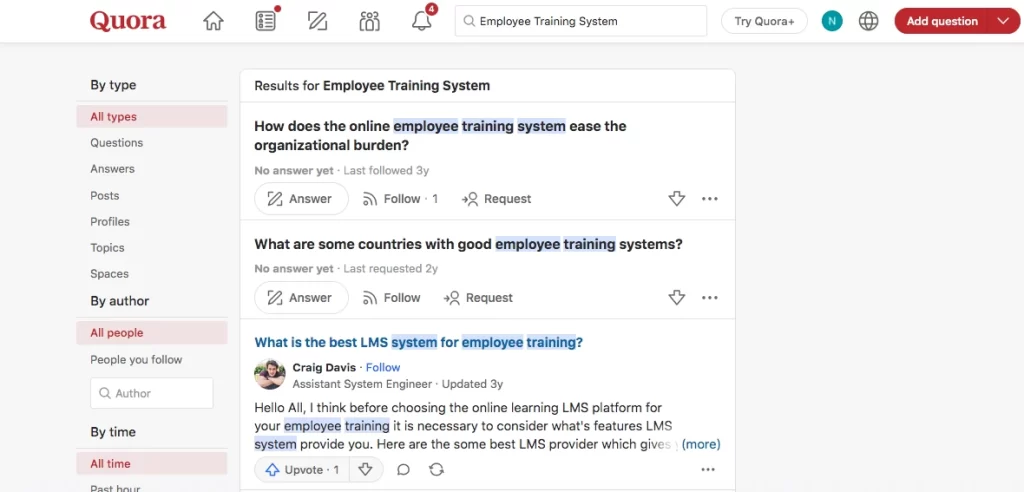
Drawing on real-world insights from Quora users, this section presents fresh perspectives on employee training software that go beyond the core benefits and features covered earlier.
Interactive Hands‑On Learning Environments
Or Hillel highlights the power of virtual sandboxes over passive video lectures.
“Interactive platforms are virtual environments where a current, safe, isolated copy of a software is available for trainees to practice on. … An employee can work on the software until they are confident in their abilities to work on the real thing.”
This approach, he argues, marries independent exploration with guided instruction; trainers can “take control to demonstrate a function or process to a single trainee or the whole group,” keeping engagement high and minimizing real‑data risks. Such systems include pre‑populated templates for realistic scenarios.
Catering to Different Learning Styles
While some learners thrive on structured, frontal instruction, others prefer self‑guided exploration. Or Hillel again notes that,
“Some people are naturally structured, frontal learners … But others often prefer to work on their own.”
Formalizing both pathways within the same platform by offering guided demos alongside sandboxed practice ensures no one is left behind. Quora voices emphasize that flexibility is crucial for accommodating diverse cognitive preferences and improving confidence.
Affordability and Hosting Options
John N. Townsend brings attention to cost and hosting considerations in LMS selection. Having used Tutor LMS on DomainRacer, he praises:
“Tutor LMS is one of the affordable and excellent \[options]. … Free 256 bit SSL certification … Live classes, training, and conferences with Zoom integration.”
His experience shows that small‑to‑mid market companies can balance budget constraints with assignments, quizzes, and certification by evaluating hosted LMS offerings that bundle security and live‑session tools.
Behavioral Science and “Arousal” States
Mike Brant discusses how emotional state impacts training retention. He cautions that mandated courses often fail because they ignore “hot” versus “cold” mindsets,
“When I say ‘arousal,’ it means that there is a ‘hot’ and a ‘cold’ state of mind. … We really have very poor memory of what we did in aroused states.”
Brant suggests that effective training borrows from military “stress inoculation,” gradually exposing learners to pressure so they retain knowledge when under duress. He admits such rigorous methods are rare outside specialized contexts.
In‑House Versus External Training Dynamics
Two perspectives from Harban on in‑house programs and Bob Warfield on development incentives illuminate organizational trade‑offs.
Harban (HR leader) on in‑house training:
“It is cheaper and can reach out to a greater audience … In-house training is more dynamic and adaptable allowing greater dimension and flexibility.”
He notes that using internal trainers speeds delivery, tightens alignment with business context, and improves a bench of future instructors.
Bob Warfield (University of Melbourne) on alternative strategies,
“One alternative is to recruit new talent regularly … A third way … is to provide on‑the‑job ‘development opportunities’ without actually paying for training.”
Warfield’s view prompts organizations to weigh formal training investments against recruitment and subsidized external courses.
Personalization and Career Pathing
Many users emphasize the training’s role in individual motivation and retention.
Peter Nolan (former Corporate Controller) sees programs as “a great incentive to retain educated, motivated employees” and “a great way to develop employees for promotion rather than looking for new employees outside.”
Alec Moffat (former Presidential Advisor) distills it succinctly,
“I cannot imagine a business surviving if they didn’t train their employees. … If a company can’t invest in itself, what message does that send to employees?”
Formalized Onboarding Versus “Fly‑By‑Night” Training
Claudette Perkins and Sheila Greenlee contrast structured programs with ad‑hoc methods.
Sheila Greenlee on formalization,
“Formalized training … allows for learning more efficiently and there will be less questions later about how to do something.”
Claudette Perkins (Social Worker) recommends starting by asking, “How would you, like to be trained?” then delivering clear, documented steps, “Smile, say hello, always be friends” to embed professional norms.
Business Outcomes Beyond Compliance
Avinash Deshmukh (Head of Marketing) and Karol Malinowski (ERP advocate) highlight strategic outcomes.
Avinash Deshmukh lists benefits like “improved work performance,” “enhanced customer service,” and “improved company image” that flow from ongoing development.
Karol Malinowski points out that a modern ERP‑integrated training suite gives companies “quick \[access] to data from previous months or years to quickly analyze the results,” extending value to customer success.
Essential Features of Effective Training Systems

This part outlines the must‑have capabilities from content creation to analytics that make a training platform successful.
Content Creation and Management
Effective training systems include user-friendly course builders. Drag-and-drop functionality lets non-technical users create engaging content. Multi-format support accommodates videos, audio files, documents, and interactive modules.
Content libraries provide shared resources across the organization. Version control ensures everyone accesses current information. SCORM and xAPI compliance allow content to work across different systems.
Content curation tools help organize external resources. Automated recommendations suggest relevant materials based on user preferences and learning history. This feature saves time and improves learning outcomes.
User Experience and Interface Design
Intuitive navigation makes systems easy to use. Clear menus and logical organization help users find what they need quickly. User-friendly dashboards provide at-a-glance progress information.
Mobile responsiveness ensures training works on all devices. Cross-device compatibility lets users start training on one device and finish on another. This flexibility accommodates modern work patterns.
Personalization options let users customize their learning experience. Customizable learning paths adapt to individual goals and preferences. Social learning features encourage collaboration and knowledge sharing.
Gamification elements increase engagement. Badges, leaderboards, and progress tracking make learning fun and motivating. These features encourage completion and participation.
Assessment and Certification Tools

Various question types support different assessment needs. Multiple choice, true/false, essay questions, and simulations test knowledge and skills effectively. Automated grading provides instant feedback to learners.
Certification tracking maintains records of achievements and credentials. Proctoring capabilities ensure test security and integrity. Skills gap analysis identifies areas needing improvement.
Continuous assessment through microlearning quizzes reinforces learning. Peer review features add collaborative elements to evaluation. These tools create comprehensive assessment programs.
Analytics and Reporting Capabilities
Real-time progress tracking shows current status and completion rates. Learner engagement metrics identify popular content and areas needing improvement. Performance analytics measure training effectiveness.
ROI measurement tools calculate training return on investment. Customizable dashboards let managers and administrators focus on relevant metrics. Predictive analytics forecast learning outcomes and identify at-risk learners.
Compliance reporting generates audit trails and regulatory reports. These features simplify compliance management and reduce administrative burden.
Integration and Technical Features
Single sign-on (SSO) simplifies user access and security. API integration connects training systems with existing HR and business platforms. This connectivity creates seamless workflows and data sharing.
Data security features protect sensitive information. GDPR and CCPA compliance ensure privacy protection. Scalable architecture handles growing user bases and content libraries.
Multi-language support accommodates global organizations. White-label options allow custom branding and appearance. These features make systems flexible and adaptable.
Advanced Learning Features
AI-powered recommendations suggest relevant content based on user behavior and preferences. Virtual and augmented reality support creates immersive learning experiences. These technologies enhance engagement and retention.
Microlearning capabilities deliver bite-sized content for busy schedules. Just-in-time training provides information when needed. Collaborative learning spaces encourage teamwork and knowledge sharing.
Types of Employee Training Programs

Discover the various program formats onboarding, skills development, compliance, and their intended outcomes.
Onboarding and Orientation Training
New hire integration programs help employees understand the company culture and values. Role-specific training develops job-related skills quickly. Compliance training ensures new employees understand policies and procedures.
Buddy systems and mentorship programs provide personal support. These approaches combine formal training with human connection. The combination improves retention and job satisfaction.
Skills Development Training
Technical skill enhancement keeps employees current with industry changes. Soft skills development improves communication, leadership, and teamwork abilities. Cross-functional training creates versatile, adaptable employees.
Professional development programs support career growth. Certification training provides recognized credentials. These programs increase employee value and job satisfaction.
Compliance and Safety Training
Regulatory compliance training ensures legal adherence. Industry-specific certifications maintain professional standards. Data security training protects sensitive information.
Anti-harassment and diversity training create inclusive workplaces. These programs reduce legal risks and improve company culture. Regular updates keep training current with changing regulations.
Performance and Remedial Training
Performance improvement programs address skill gaps and deficiencies. Corrective action training helps struggling employees succeed. Career development planning aligns individual goals with company needs.
Succession planning preparation develops future leaders. These programs ensure continuity and promote from within. They increase employee loyalty and reduce external hiring costs.
Customer and Product Training
Product knowledge training helps employees serve customers better. Customer service excellence programs improve satisfaction scores. Sales training increases revenue and customer relationships.
Technical support training develops problem-solving skills. Partner and vendor training extends knowledge beyond internal staff. These programs create comprehensive customer support networks.
Top Employee Training System Tools and Platforms

An overview of leading enterprise, mid‑market, and niche solutions to help you evaluate the best fit for your needs.
Enterprise-Level Solutions
Cornerstone OnDemand offers comprehensive talent management integration. AI-powered learning recommendations personalize the experience. A global corporation reduced training costs by 40% using this platform.
SAP SuccessFactors provides seamless HR system integration. Performance management alignment connects training to business results. The platform handles complex organizational structures effectively.
Docebo features AI-driven learning capabilities and social collaboration tools. Multi-domain architecture supports complex organizations with multiple divisions. The platform adapts to various business needs.
Workday Learning integrates with unified HCM platforms. Skills-based learning and development align with career planning. The system provides comprehensive workforce development tools.
Mid-Market Training Platforms
TalentLMS offers user-friendly interfaces and affordable pricing. Branch management supports multiple locations efficiently. Extensive integration options connect with existing business systems.
LearnUpon provides white-label solutions for client training. Customer education and partner training capabilities extend beyond internal staff. Compliance tracking simplifies regulatory management.
Absorb LMS offers extensive customization options and industry-specific features. Advanced reporting provides detailed analytics. Mobile-first design ensures accessibility across devices.
Litmos enables rapid deployment and includes a content marketplace. Built-in course libraries save development time. Salesforce integration supports sales organizations effectively.
Specialized and Niche Solutions
Articulate 360 provides content creation and authoring tools. Rise 360 creates responsive courses that work on all devices. Storyline develops interactive, engaging content.
Adobe Captivate supports multimedia training content development. VR and AR capabilities create immersive learning experiences. Responsive design ensures mobile compatibility.
Coursera for Business offers university-quality courses and recognized certifications. Skills-based learning paths align with career development. Industry partnerships provide current, relevant content.
Degreed focuses on skills-based learning and career development. Skill measurement and gap analysis identify improvement areas. The platform connects learning to business outcomes.
Comparison Matrix and Selection Criteria
When selecting platforms, consider feature sets, pricing models, and implementation complexity. Total cost of ownership includes licensing, implementation, and ongoing support costs. Customer support quality affects long-term success.
User reviews and satisfaction ratings provide real-world insights. Security certifications ensure data protection. Scalability accommodates future growth and changing needs.
Implementation Best Practices

Best practices for planning, selecting, rolling out, and optimizing a training system to ensure adoption and impact.
Planning and Strategy Development
Needs assessment identifies training gaps and priorities. Clear learning objectives define success criteria. Stakeholder buy-in ensures support throughout implementation.
Budget planning includes all costs, not just software licensing. Timeline development sets realistic expectations. Success metrics establish measurement frameworks.
Platform Selection and Evaluation
RFP processes ensure thorough vendor evaluation. Pilot programs test functionality with real users. User feedback guides final selection decisions.
Technical requirements assessment ensures compatibility. Security verification protects sensitive data. Scalability planning accommodates future growth.
Content Development and Migration
Existing content audits identify reusable materials. Migration planning ensures smooth transitions. Subject matter experts provide content expertise.
Quality assurance processes maintain standards. Accessibility reviews ensure inclusive design. Content maintenance procedures keep materials current.
Rollout and Adoption Strategies
Phased implementation reduces risks and allows adjustments. User training ensures effective platform use. Communication plans build awareness and excitement.
Change management addresses resistance and concerns. Super user programs create internal champions. Feedback collection enables continuous improvement.
Ongoing Management and Optimization
Regular content updates maintain relevance. User engagement monitoring identifies issues early. Performance analytics guide optimization efforts.
Continuous improvement processes drive evolution. Technology updates add new capabilities. Vendor relationships support long-term success.
Challenges and Solutions
A look at common implementation obstacles and practical strategies to overcome them.
Common Implementation Challenges
User adoption remains the biggest challenge for training systems. Employees may resist new technology or lack time for training. Content quality concerns arise when materials are outdated or irrelevant.
Technical integration difficulties can delay implementation. Budget constraints limit features and support options. Measuring effectiveness proves challenging without clear metrics.
Solutions and Best Practices
Gamification strategies increase engagement and motivation. Regular content reviews ensure relevance and accuracy. Proper change management processes address resistance effectively.
Phased implementation approaches reduce complexity and risk. Clear measurement frameworks track progress and success. Dedicated content management resources maintain quality.
Overcoming Resistance to Change
Leadership involvement demonstrates organizational commitment. Clear communication explains benefits and addresses concerns. Comprehensive training and support help users succeed.
Regular feedback collection identifies and addresses issues. Celebrating early wins builds momentum and confidence. A continuous improvement mindset encourages adaptation and growth.
Future Trends in Employee Training Systems

This section explores emerging technologies and shifting workplace dynamics shaping tomorrow’s learning environments.
Emerging Technologies
Artificial intelligence and machine learning personalize learning experiences. Virtual and augmented reality create immersive training environments. These technologies improve engagement and retention.
Microlearning delivers bite-sized content for busy schedules. Adaptive learning technologies adjust to individual needs and progress. Voice-enabled interfaces provide hands-free access.
Blockchain technology may revolutionize credential verification. Secure, tamper-proof certificates build trust and portability. This advancement could change how qualifications are managed.
Changing Workplace Dynamics
Remote and hybrid workforces require flexible training solutions. Continuous learning cultures replace traditional annual training programs. Skills-based approaches focus on practical application.
Personalized learning experiences adapt to individual preferences. Social and collaborative learning leverage peer knowledge. Just-in-time training provides information when needed.
Industry Evolution
Integration with performance management systems creates unified development approaches. Focus on measurable business outcomes to drive training decisions. Soft skills development gains importance alongside technical training.
Sustainability and environmental training reflect corporate responsibility. Diversity, equity, and inclusion programs create inclusive workplaces. Wellness and mental health training support employee wellbeing.
Conclusion
Employee training systems have become essential tools for modern organizations. They provide efficient, scalable ways to develop workforce skills and capabilities. The benefits extend beyond cost savings to include improved performance, retention, and competitiveness.
Key features to prioritize include user-friendly interfaces, comprehensive analytics, and strong integration capabilities. Content creation tools and mobile accessibility ensure broad adoption and effectiveness.
Successful implementation requires careful planning, stakeholder engagement, and ongoing optimization. Organizations should focus on user adoption, content quality, and measurable outcomes.
Future trends point toward more personalized, technology-enhanced learning experiences. AI, VR, and adaptive learning will continue transforming employee development. Organizations that embrace these changes will build more skilled, engaged workforces.
The investment in employee training systems pays dividends through improved productivity, reduced turnover, and enhanced competitiveness. Companies should evaluate their current training approaches and consider how modern systems can support their goals.
FAQ
Quick answers to common questions on costs, integrations, ROI, and measuring training effectiveness.
How much does an employee training system typically cost?
Costs vary widely based on features, user count, and deployment model. Small business solutions start at $3-5 per user per month, while enterprise platforms can range from $15-50+ per user monthly. Consider implementation, customization, and ongoing support costs.
What’s the difference between an LMS and an employee training system?
LMS (Learning Management System) is a broader term encompassing all learning platforms. Employee training systems are specifically designed for corporate training with features like compliance tracking, skill gap analysis, and performance integration.
How long does it take to implement a training system?
Implementation typically takes 2-6 months, depending on complexity, customization needs, and organizational size. Simple cloud-based solutions can be operational within weeks, while enterprise deployments may require 6-12 months.
Can training systems integrate with existing HR software?
Yes, most modern training systems offer API integrations with popular HR platforms like Workday, BambooHR, and ADP. This enables seamless data sharing, automated user provisioning, and unified reporting.
What ROI can organizations expect from training systems?
Studies show 200-300% ROI within 12-18 months through reduced training costs, improved productivity, and higher retention rates. Specific returns depend on implementation quality and user adoption rates.
Are employee training systems suitable for remote teams?
Absolutely. Modern training systems are designed for distributed workforces with mobile apps, offline capabilities, and virtual collaboration tools. They’re particularly valuable for maintaining consistent training across remote locations.
How do you measure the effectiveness of employee training systems?
Key metrics include completion rates, knowledge retention scores, performance improvements, time-to-competency, user engagement levels, and business impact measures like productivity gains and reduced errors.
What security features should I look for in a training system?
Essential security features include data encryption, user authentication, role-based access controls, compliance certifications (SOC 2, ISO 27001), regular security audits, and GDPR/CCPA compliance capabilities.
Hire the best candidates
with Wetest.
Create pre-employment assessments in minutes to screen candidates, save time, and hire the best talent.
Try for free