Free Applicant Tracking System Tools for Startups: Track Candidates Without Paying a Dime
Hiring & recruiting
Bonica
March 26, 2026
Early-stage hiring usually breaks for simple reasons. Applicants get lost in email, follow-ups slip, notes are scattered, and nobody owns the next step. A free applicant tracking system helps you avoid that by giving you one place to track candidates, move them through stages, and keep a basic history of what happened.
This guide is built for startups hiring their first 5–20 people, small teams that need lightweight collaboration, and anyone who wants a simple system without paying for a full recruiting stack.
You’ll get a list of the best free ATS tools for startups, plus a few lightweight tracker options if you’re not ready for a full ATS yet. I’ll also show you how to set up a clean pipeline, so candidates don’t slip through the cracks.
Table of Contents
What Free ATS Really Means and the Hidden Costs Startups Miss
Free ATS isn’t always really free. Some tools stay free but limit basics like how many jobs, candidates, or users you can have. Others are free trials that work great until they expire. And some are free only for tracking, while the useful stuff (automations, integrations, branding) is paid.
The real cost is often time. Startups lose hours setting up stages and templates, cleaning duplicate candidates, and chasing follow-ups when the tool doesn’t support a simple workflow.
Before you commit, check three things: Will it handle your current hiring volume? Can you export your data cleanly later? And does it have the privacy controls you need for personal or sensitive data?
Do You Really Need an ATS or Just a Lightweight Private Database
Startups often over-engineer their hiring process too early. If you are hiring for a role every six months, a full ATS might actually slow you down with its rigid stages and required fields. Use this checklist to determine if you need a dedicated system or a simple database:
- Volume: Are you getting more than 20 applications per week?
- Roles: Are you hiring for 3 or more distinct positions simultaneously?
- Collaboration: Does this process need a shared history where three or more contributors can review and provide feedback?
If you answered no to most of these, a private database like a structured Notion page or Airtable is likely faster and more flexible.
Evaluation Criteria That Actually Matter for Free ATS Plans
Candidate intake and capture
Look for solid job posts and application forms, decent resume parsing, duplicate detection, and simple inbound capture like email forwarding. If intake is messy, everything downstream gets messy too.
Workflow control
You want stages you can customize, basic automations, reminders/SLAs, and low-friction interview scheduling. If it takes constant babysitting, you won’t use it.
Collaboration boundaries
Check role-based access, private notes, and who can see which candidates. Bonus if it works well in solo mode when you don’t want a shared database.
Search and speed
Prioritize fast entry, strong filtering/tagging, boolean search, and low latency as records grow. If search is slow, you’ll stop logging things.
Integrations and escape hatches
At a minimum you need email, calendar, Slack, and webhooks by Zapier. Also verify export quality. It should include clean CSVs plus attachments and full activity logs, not just names and emails.
Compliance and trust basics
Even on free plans, sanity-check GDPR/CCPA basics, retention controls, consent tracking, audit logs, and obvious security signals you can verify quickly (permissions, access controls, and basic vendor transparency).
The Best Free ATS Tools for Startups
Dover: Best for the All-in-One Startup Experience
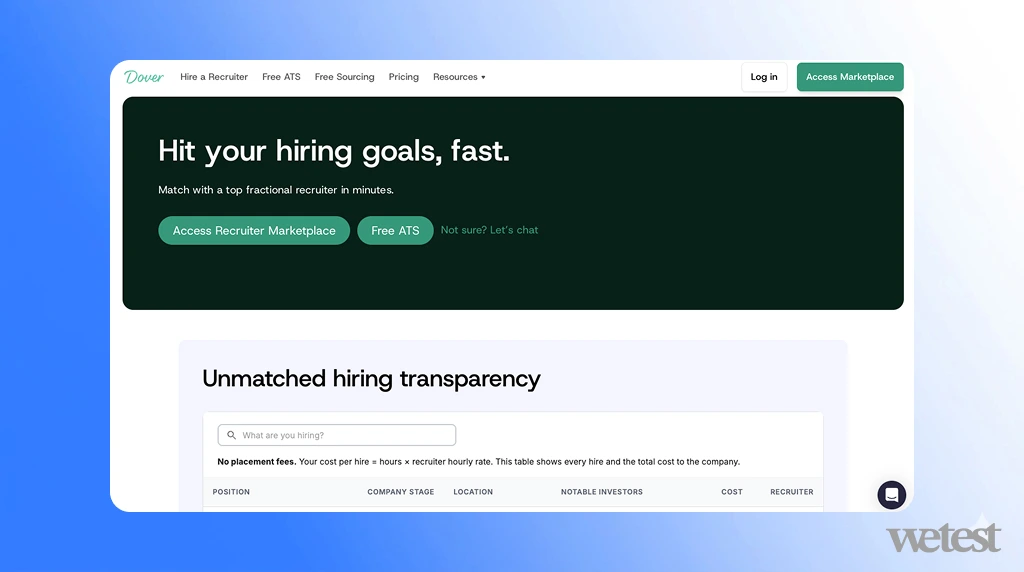
Dover is mainly built for the high-velocity, lean-team environment of a tech startup. While many legacy tools feel like record-keeping software, Dover feels like an automation layer that sits on top of your hiring process.
- The All-in-One Positioning: Dover centralizes everything. It provides a no-code careers page, automated job board distribution like LinkedIn or Indeed, and a clean Kanban pipeline. Its standout feature is the AI-powered applicant sorting, which helps with checking top-tier resumes so you don’t have to manually screen every entry.
- The Ideal Team Shape: This is perfect for founders and early-stage leadership teams with around 1–20 employees, where the person hiring is also the person running the company.
- The Limitations: Dover is a poor fit for large internal HR departments or highly complex corporate structures that require permission hierarchies and extensive custom integrations. It is also not ideal if you hire for highly niche, non-tech roles where AI calibration might struggle, or if your team is strictly wedded to Microsoft Outlook (as its best features are currently optimized for Google Workspace).
Zoho Recruit: Best for Mature Processes and Scaling
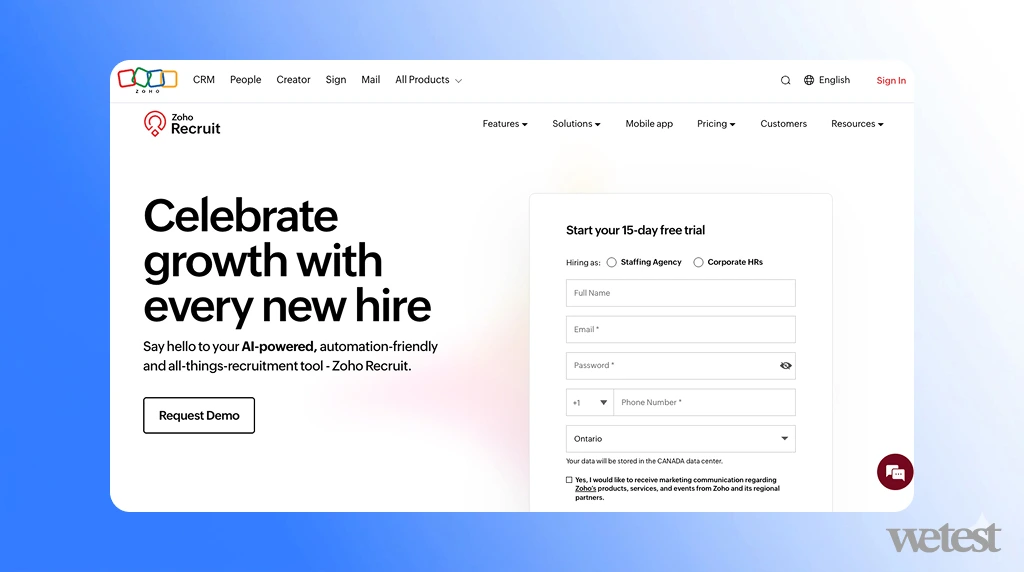
If you want a system that looks and acts like a real enterprise tool, but for free, Zoho Recruit is the go-to. It is essentially a professional-grade database with a startup-friendly entry point.
- Structured Process & Workflows: Unlike lightweight trackers, Zoho focuses on data integrity. You can customize specific fields, set mandatory candidate status updates, and build out a long-term database that stays organized even as you hit thousands of records. It supports both internal hiring and staffing agency workflows, making it the best choice if you plan on building a searchable talent pool over several years.
- Long-Term Scalability: The forever free plan is generous, but the real value is the upgraded version. As you grow, you can easily unlock advanced automations, background check integrations, and AI matching without having to transfer your data to a new platform.
- The Limitations: It’s a mismatch for founders who want simplicity above all else. The interface can feel heavy and corporate, requiring more setup time than Dover or Breezy HR. If you just want to drag-and-drop a few resumes, Zoho might feel like overkill.
Breezy HR: Best for Visual Collaboration and Reducing Bias
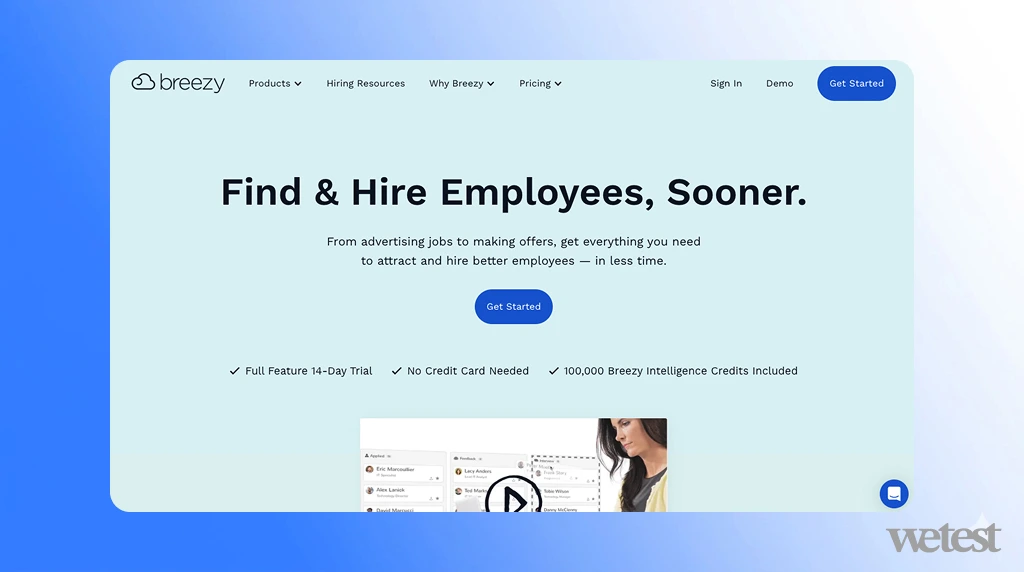
Breezy HR is famous for its Trello-like interface that makes the hiring pipeline feel intuitive for non-recruiting team members.
- Consistency & Bias Reduction: Breezy is great at structured collaboration. It encourages the use of scorecards and interview guides directly within the platform. This ensures that every interviewer is asking the same questions and grading on the same rubric, which is important to prevent vibe-based hiring mistakes that lead to early churn.
- Pipeline Clarity: The platform automates the boring parts of candidate experience. You can set up automated stage-gate emails so candidates never feel ghosted, even when you’re too busy to reply manually.
- The Limitations: The free plan is usually limited to one active job opening at a time. If you are in a blitz-scaling phase and need to hire for five different roles simultaneously, you will hit the paywall almost immediately.
Airtable: Best for Custom Systems
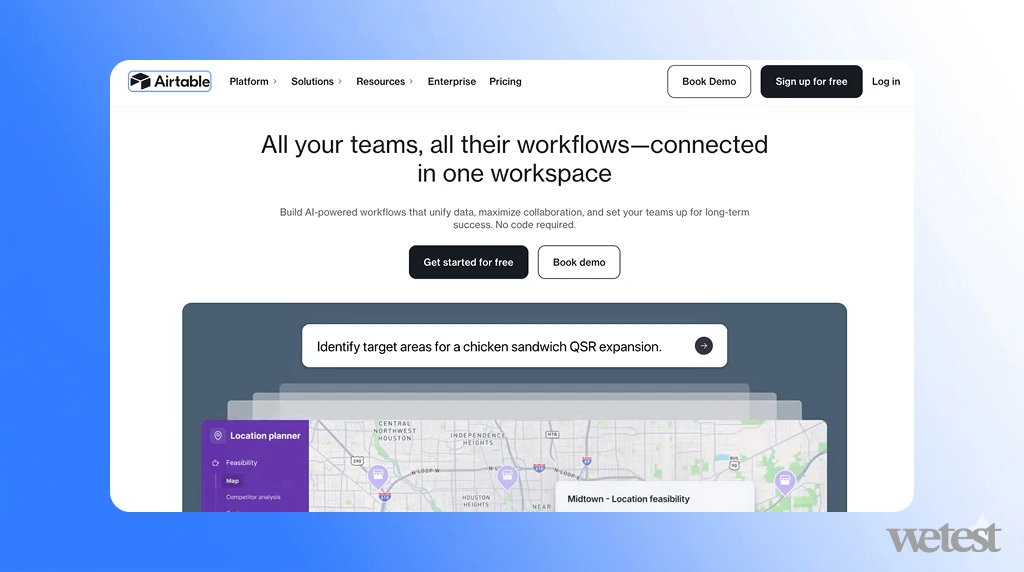
Airtable isn’t a true ATS, but for a startup with unique needs, it’s often the best private database solution.
- Build Your Own Tracker: You can create a candidate tracker that perfectly matches your brain. Use Forms for intake, Gallery View to see candidate headshots and portfolios, and Kanban View to track the pipeline. It’s the fastest way to get a customized resume stash up and running without being forced into someone else’s workflow.
- The Hidden Trap: Airtable lacks native resume parsing. If you upload a PDF, Airtable treats it as an attachment and won’t automatically extract the candidate’s name, phone number, or work history into text fields. You also won’t get one-click job board posting.
- The Limitations: If you have high application volume, the manual data entry will break your spirit. Stick to Airtable only if your hiring is low-volume, high-touch, and requires a level of that standard tools don’t support.
MightyRecruiter: Best for Active Sourcing and High Volume
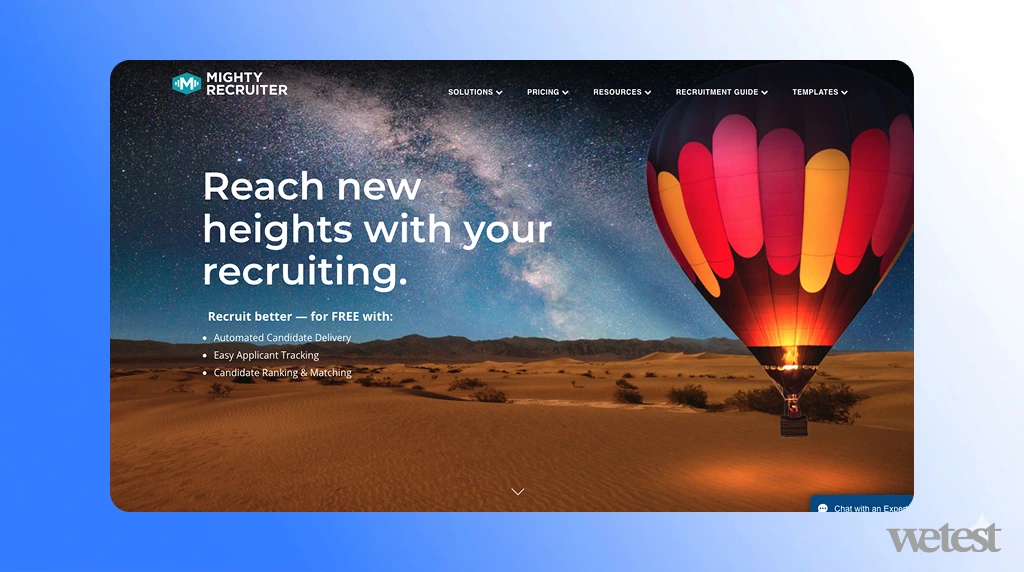
MightyRecruiter is a rare truly free outlier, offering features that most competitors lock behind high-tier paywalls. It is built for founders who don’t want to wait for candidates to find them.
- Discovery and Outreach Focus: The platform provides access to a massive searchable resume database which is one of the largest available for free. It functions more like a sourcing engine than a passive tracker, allowing you to proactively find talent and manage relationships via automated email drip campaigns.
- Behavior with Multiple Roles: Unlike freemium tools that cap you at one active job, MightyRecruiter is exceptionally generous, offering unlimited open jobs and unlimited user accounts. This allows a small startup to run 5–10 parallel searches without ever hitting a seat limit.
- The Limitations: It is a poor choice if you need advanced internal collaboration. While it excels at external outreach, its internal feedback tools and interview scheduling are less polished than Breezy or Dover. If your team relies on heavy slack-like discussion around candidates, this may feel clunky.
Loxo: Best for Candidate Experience and CRM Behavior
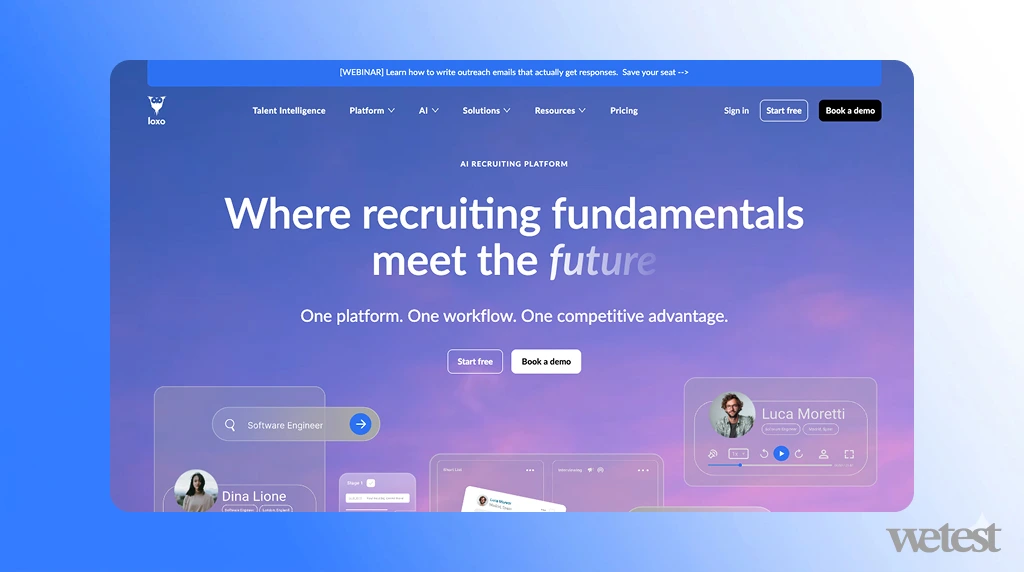
Loxo is designed as a Talent Intelligence Platform, blending the organized pipeline of an ATS with the long-term relationship tracking of a high-end CRM.
- ATS + CRM Synergy: Loxo is built for the long game, allowing you to see every interaction a candidate has had with your company over the years. Its smart grid and activity logging ensure you treat candidates like humans rather than rows in a spreadsheet, perfect for building a long-term talent community.
- Operationalizing Candidate Experience: In Loxo, experience is about communication pace. The system helps reduce candidate drop-off by automating follow-ups and providing a high-speed interface for move-forward decisions, ensuring candidates are never left in a black hole.
- The Limitations: The free version is strictly limited to one user. If you are a founding team of three who all need to jump in and screen candidates together, Loxo’s free tier will be a bottleneck unless you’re willing to share a single login, which we don’t recommend for security.
Jobsoid: Best for Multi-Channel Sourcing and Branded Credibility
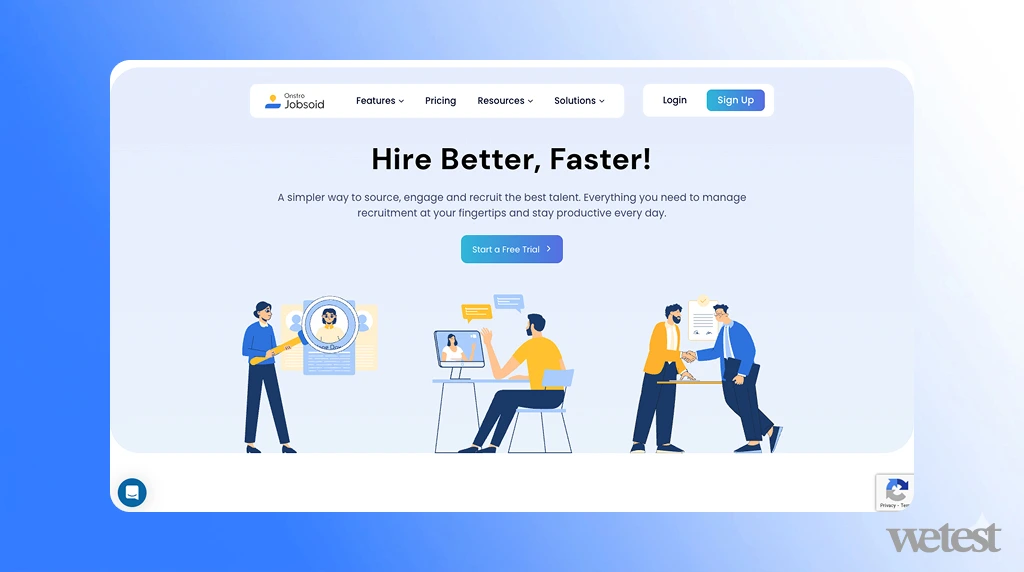
Jobsoid is the growth hacker’s ATS, designed to maximize your reach across the internet with minimal manual effort.
- Multi-Channel Reach: Jobsoid’s core strength is its one-click job distribution, automatically pushing roles to 20+ free job boards and social channels. It captures these inbound sources cleanly, so you know exactly which channel is providing your best leads.
- Early-Stage Credibility: The free plan includes a branded careers portal. For a tiny startup, having a mobile-optimized Join Us page with your logo and company culture photos gives you instant legitimacy in the eyes of top-tier talent.
- The Limitations: It is not a fit if you are hiring for more than one role. The free plan typically limits you to one active job posting. If you need to hire an Engineer and an Ops Lead at the same time, Jobsoid will force an upgrade.
Recruit CRM: Best for the Private Side-Database Use Case
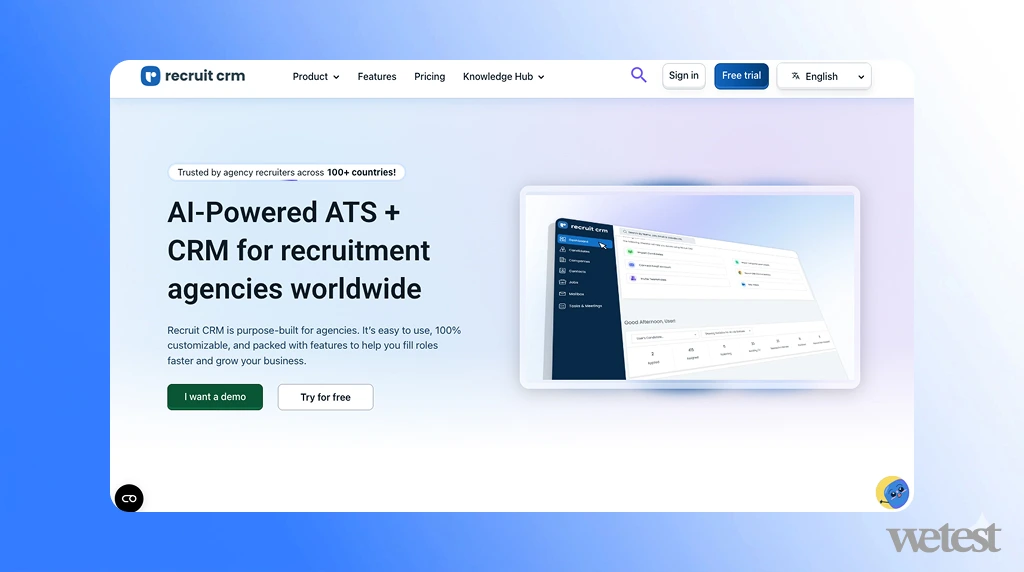
This is a suitable option for the solo founder or recruiter who needs a private, lightning-fast database that lives alongside, but separate from, the main company system.
- The Private Resume Stash: This tool solves the private database problem by offering a dedicated space for resume storage, interaction logs, and tagging. Using its Chrome Sourcing Extension, you can clip a LinkedIn profile in seconds without it cluttering up the official company pipeline.
- Safety and Separation: It provides a side-of-company sanctuary where you can store passive leads or silver medalists you want to own personally. The low-friction note-taking ensures you can find a contact from six months ago in seconds.
- The Limitations: If your priority is a seamless internal transition from candidate to employee (like automated offer letters and HRIS syncing), Recruit CRM’s agency-first design might feel like it’s missing the human side of HR.
Common Problems with Free ATS Tools and How to Fix Them for Free
Free plans don’t have much smart automation, but most hiring problems come from process gaps, not missing features. Use the fixes below to keep your pipeline moving without paying.
We’re drowning in applicants
Use knockout questions in your application form so you stop reviewing obvious mismatches. If you want to reduce resume review even more, add a work-sample gate. Send a short Wetest assessment to candidates who pass the knockouts, and only review the ones who show the skills. Also, stop checking the ATS all day. Set two batching times per week to clear the queue.
Candidates fall through the cracks
Free tools often don’t warn you when someone has been stuck too long. Fix that with an SLA. That can be something like every candidate must be moved forward or rejected within 48 hours of applying. Then assign a single stage owner for each pipeline column so someone is always responsible for keeping that stage clean.
The team keeps disagreeing
When feedback is vague, decisions slow down. Use scorecards with a simple 1–5 rubric for specific competencies. To reduce vibe-based decisions, share calibration examples before interviews. Review a few sample profiles together and agree on what a clear yes and a clear no look like.
Search is slow and data entry is painful
Messy data kills speed. Use a controlled vocabulary for tags. Pick a strict list of 5–10 tags and stick to it instead of mixing coder, dev, engineer, and similar duplicates. Keep data entry minimal by removing required fields you don’t use to make decisions. If the database feels slow or cluttered, it’s usually because the tagging and fields aren’t disciplined.
We need privacy so other teams don’t poach candidates
Some free tools have all-or-nothing access. If the tool supports it, use separate workspaces for sensitive roles like executive search. If you’re using Airtable or Notion, share filtered views that show only the candidates an interviewer needs to see, instead of giving access to the full database. This keeps your long-term leads private.
When to Upgrade From a Free ATS
The right time to upgrade isn’t about headcount. It’s when the free tool starts costing you more in wasted time and missed candidates than the subscription would cost in cash.
Upgrade when hiring gets complex across multiple roles and people: A clear trigger is hiring for 3+ roles at the same time with different interview loops. The breaking point is usually when more than 5 interviewers need to coordinate and the free plan can’t support enough seats or fast feedback. That’s when decisions slow down, feedback lags, and strong candidates drop because your team can’t align quickly.
Upgrade when compliance and privacy stop being optional: If you hire in the EU (GDPR) or California (CCPA) and you need automated retention or faster handling of privacy requests, free plans often don’t hold up. If deleting resumes is a manual chore, a “Right to be Forgotten” request takes 30 minutes, or you can’t produce a full audit trail of who accessed candidate data, you’ve outgrown free.
Upgrade when you feel the copy-paste tax: The trigger is needing your ATS to connect to the rest of your stack. The breaking point is when you’re manually emailing background-check links (Checkr or GoodHire), re-typing candidate info into your HRIS/payroll (Rippling or Gusto), or your IT lead pushes for SSO because password sprawl is now a real security risk.
Upgrade when you need real analytics, not guesswork: Once you’re paying for job boards like LinkedIn or Indeed, you need to know what’s working. If you can’t answer which channel produces the highest percentage of onsite interviews, you’re missing the data. You need to improve source ROI, recruiter productivity, and predictable time-to-hire for leadership or board discussions.
Add Value Beyond ATS: Where Wetest Helps
An ATS rarely tells you if a candidate can actually do the job. This is where Wetest acts as a high-fidelity hiring signal layer. Instead of replacing your tracking system, Wetest plugs directly into your workflow to validate skills before you spend expensive founder hours on interviews.
Where to Use Wetest in Your Funnel
You don’t need to test everyone. Strategic startups use Wetest at three specific friction points:
- Post-Screen: If you are drowning in applicants, send a short assessment immediately after the initial resume screen. This ensures only the top 10% of performers make it to a live conversation.
- Pre-Onsite: Use it before a final “Super Day” or onsite interview to ensure the candidate has the technical baseline required, saving your team from awkward, failed technical loops.
- The Finalist Tie-Breaker: When you have two stellar candidates and only one headcount, a targeted Wetest challenge provides the objective data needed to make a confident, unbiased decision.
Take Away
Finding the perfect ATS is less important than finding the one that matches your current hiring velocity. Whether you need a high-speed sourcing engine like MightyRecruiter, a beautifully branded portal like Jobsoid, or a private talent stash in Recruit CRM, the goal is the same: move candidates through a fair, fast, and organized process.
While your ATS organizes the who, Wetest validates the how. A resume tells you where someone has been, but a Wetest assessment shows you what they can actually do. By integrating objective skill-testing early in your workflow, you eliminate vibe-based hiring and focus your energy only on the candidates who have the technical grit your startup needs.
Ready to see your candidates in action? Start your free trial with Wetest today and turn your hiring pipeline into a high-performance engine.
FAQs
What is an ATS and what problems does it solve for startups?
An applicant tracking system is a hiring database that helps you manage candidates from the moment a job is posted to the moment an offer is accepted. For startups:
- it keeps resumes from getting lost across email
- gives your team one shared place to leave feedback
- creates a record of decisions that can protect you if questions come up later.
What’s the simplest free ATS for a solo founder hiring a first employee?
If you want something that works quickly with minimal setup, Dover or Breezy HR are strong options. Both use a simple kanban board so you can move candidates from applied to interviewing to hired.
How do I keep a private candidate database separate from my company’s ATS?
Use a personal side database so you control who can see it. Good options include Recruit CRM or a private Airtable base. A simple workflow is to use a browser extension to clip LinkedIn profiles into your private stash, so you still own the relationship even if you change companies or the company ATS gets cleaned out.
What features are non-negotiable if I’m hiring remotely across multiple time zones?
You want scheduling that works across time zones, and you want a way for teammates to leave feedback that others can review later. You should also be able to track basic hiring details like where a candidate is located and whether they have work authorization, since remote hiring has some legal requirements.
Are forever-free ATS tools reliable?
Yes, they can be reliable, but free tiers usually come with limits.
Hire the best candidates
with Wetest.
Create pre-employment assessments in minutes to screen candidates, save time, and hire the best talent.
Try for free