
Top 10 Common Reasons for Leave and How to Write Them Professionally
Human resources
Bonica
June 20, 2025
Knowing how to ask for time off like a pro isn’t just polite; it’s a big deal for your career. Seriously, whether you’ve got a health thing, a family emergency, or just need a holiday, how you tell your boss changes their perception of you.
Employee leave requests have been on the rise for the third consecutive year. 57% of employers reported an increase in requests during 2025, and many organizations experiencing 21% or more growth in volume.
HR research shows that positive leave experiences correlate strongly with retention and employee engagement.
Let’s dive into the top reasons people request leave and exactly how to write these requests to maximize approval chances while maintaining professional relationships.
Table of Contents
Why Writing Professional Leave Requests Matters

Your leave request isn’t just a procedural formality, it’s a reflection of your professional brand. A thoughtfully crafted request demonstrates respect for your team’s time and operations while protecting your professional reputation.
Research shows that 83% of managers report that timely and well-drafted leave letters increase approval rates. Effective internal communication improves employee retention by up to 4.5 times.
Professional leave requests also set clear boundaries. By communicating thoroughly yet concisely, you establish expectations about your availability while respecting workplace protocols.
1. Medical Leave: Balancing Privacy and Transparency

Illness and injury continue to be main causes of absences in 2025. Absenteeism rates reaching 3.2% in 2025, up from 3.1% the previous year. Mental health concerns are also rising. You need to provide enough information to justify your absence.
Key Elements to Include in Medical Leave Requests
When writing a medical leave request, include:
1. Clear timeframe with specific start and end dates
2. General nature of the medical situation (without detailed symptoms)
3. Documentation references (if required by your company)
4. Availability during leave (if any)
5. Transition plan for your responsibilities
Your goal is to provide enough context for approval without turning your email into a medical history.
Professional Language for Describing Health Concerns
Instead of: “I’ve been diagnosed with severe bronchitis and am coughing constantly.”
Try: “I’m dealing with a respiratory condition requiring medical attention and rest.”
Use phrases like “medical appointment,” “health matter,” or “following doctor’s recommendation” rather than specific diagnoses or symptoms.
Sample Templates for Medical Leave Applications
Short-Term Medical Leave:
Subject: Medical Leave Request: [Dates]
Dear [Manager’s Name],
I’m writing to request medical leave from [start date] to [end date] due to a health matter requiring treatment and recovery. My doctor has advised this absence is necessary.
During this time, I’ve arranged for [colleague] to handle [specific responsibility]. All current projects are documented in our shared drive, and I’ll complete [urgent task] before my leave begins.
I’ve attached the required documentation from my healthcare provider. While I’ll have limited availability for urgent matters, I’ll check email once daily when possible.
Thank you for your understanding. I look forward to returning on [return date].
Regards,
[Your Name]
2. Family Emergency Leave: Communicating Urgent Needs

Family emergencies often arise suddenly, requiring immediate attention and rapid communication with your employer.
How to Explain Family Emergencies Appropriately
When communicating a family emergency:
1. Be direct about the urgency while maintaining appropriate privacy
2. Indicate the general nature without unnecessary personal details
3. Provide your best estimate of time needed (with the understanding it may change)
4. Suggest a communication plan during your absence
Remember that “family emergency” covers numerous situations, from accidents to sudden illnesses or care requirements.
Setting Expectations for Emergency Communication
Clearly communicate:
- How reachable you’ll be during the emergency
- Who can handle your urgent work matters
- When you’ll provide updates about your return
- Any flexibility in your availability (partial remote work, etc.)
Professional Templates for Family Emergency Leave
Urgent Family Emergency:
Subject: Urgent Family Emergency Leave Request
Dear [Manager’s Name],
I need to request emergency leave effective immediately due to a serious family situation requiring my presence. Based on current circumstances, I anticipate needing [timeframe] away from work.
I’ve asked [colleague] to cover my immediate responsibilities, and I’ve outlined critical pending matters in the attached document.
While attending to this family matter, I’ll be checking messages [frequency] and can be reached by [preferred contact method] for truly urgent matters.
I’ll update you on my return timeline by [specific date/time] and appreciate your understanding during this difficult time.
Sincerely,
[Your Name]
3. Vacation Leave: Planning and Requesting Time Off

Vacation request approval is heavily influenced by optimal timing and clear presentation.
Timing Your Vacation Request for Higher Approval
Updated benchmarks from 2025 shows that submitting vacation requests 4-8 weeks in advance aligns better with current HR practices.
- During known busy periods or major deadlines
- When team members with similar responsibilities are already scheduled off
- Immediately after starting a new position
- Just before or after other personal leave
Consider using tools like vacation heatmaps (available in many HR systems) to identify low-impact periods for your role.
The most critical factor in vacation leave approvals continues to be early notice and clear coverage planning.
Detailing Coverage Plans During Your Absence
Don’t just ask for time off—demonstrate you’ve thought through the impact:
1. Name specific colleagues handling different responsibilities
2. Mention projects that will be completed before departure
3. Outline how you’ll prepare documentation for interim coverage
4. Suggest check-in plans if absolutely necessary
Professional Vacation Request Email Templates
Planned Vacation Request:
Subject: Vacation Leave Request: [Dates]
Dear [Manager’s Name],
I’d like to request vacation leave from [start date] through [end date], returning to the office on [return date]. This timing aligns with our department’s projected lighter workload following the [project] completion.
To ensure smooth operations during my absence:
– [Colleague 1] has agreed to manage [responsibility]
– I’ll complete [deliverable] before departure
– All project documentation will be updated in [location]
– I’ll be unavailable during this period as I’ll be [general location/situation]
Please let me know if you approve this request or if you need any additional information.
Thank you for your consideration,
[Your Name]
4. Bereavement Leave: Requesting Time for Grieving
Bereavement leave requires sensitivity in both its request and its corresponding response.
Appropriate Details to Share About Loss
When requesting bereavement leave, you generally should include:
- Your relationship to the deceased
- General timeframe needed for funeral arrangements/travel
- Return date expectation
- Preference for how the news is shared with colleagues (if at all)
Keep your communication brief and focused on the practical aspects of your absence rather than emotional details.
Standard Bereavement Policies and Expectations
Most organizations provide 5-7 days for immediate family members and 1-2 days for extended family. Before submitting your request, review your company’s bereavement policy to understand:
- What relations qualify for leave
- If documentation is required
- Whether the leave is paid or unpaid
- If additional time must come from vacation days
Compassionate Bereavement Leave Request Examples
Bereavement Leave Request:
Subject: Bereavement Leave Request
Dear [Manager’s Name],
I regret to inform you that my [relationship] passed away yesterday. I need to request bereavement leave beginning immediately through [end date] to attend the funeral services and be with family.
According to our company policy, I understand I’m eligible for [number] days of bereavement leave. I’ve arranged for [colleague] to handle my urgent matters, and I’ve updated our team project board with status notes.
Regarding my absence, I’d prefer [your preference for sharing/not sharing information with colleagues].
Thank you for your understanding during this difficult time.
Sincerely,
[Your Name]
5. Personal Development Leave: Educational Opportunities

Professional development leave can benefit both you and your organization when properly positioned.
Connecting Professional Growth to Company Benefits
Frame your request around mutual benefit by:
1. Explicitly connecting the learning opportunity to your current role
2. Highlighting specific skills you’ll bring back to the team
3. Explaining how this development aligns with department/company goals
4. Proposing how you’ll share knowledge upon return
This approach transforms your request from a personal benefit to a company investment.
Highlighting Return Value of Your Development
Quantify the value where possible:
- Industry certifications you’ll obtain
- Specific projects you’ll be better equipped to handle
- Processes you can improve with new knowledge
- Competitive advantages your training provides the team
Educational Leave Request Templates and Examples
Professional Development Leave:
Subject: Professional Development Leave Request: [Program Name]
Dear [Manager’s Name],
I’m writing to request [number] days of professional development leave to attend [program/course/conference] on [dates].
This opportunity directly relates to our upcoming [project/initiative] in these specific ways:
– [Specific skill] training will help us implement [specific benefit]
– The [particular session] addresses our current challenge with [issue]
– Networking opportunities with [industry leaders] could open partnership possibilities
My attendance would require [number] days away from the office. I’ve already arranged for [colleague] to cover [responsibility] during this period, and I’ll complete all pending deliverables before departing.
Upon return, I plan to conduct a lunch-and-learn session to share key insights with our team and document best practices for our knowledge base.
The registration cost is [amount], which [is/isn’t] within my allocated professional development budget. I’ve attached the program details for your review.
Thank you for considering this professional growth opportunity.
Regards,
[Your Name]
6. Parental Leave: Preparing for Extended Absence

Parental leave requires extensive planning and clear communication due to its longer duration.
Planning Transition for Maternity/Paternity Leave
Start planning early:
- Begin transition conversations 2-3 months before your anticipated leave
- Create detailed documentation for each responsibility
- Identify multiple backup resources for different functions
- Schedule training sessions with covering colleagues
- Establish graduated handoff of responsibilities
Communicating Timeline and Return Expectations
Clearly outline:
- Your due date or adoption timeline
- Requested leave start date
- Expected return date and any phase-back plans
- Communication expectations during leave
- How urgent matters should be handled
Professional Parental Leave Request Examples
Parental Leave Request:
Subject: Parental Leave Request – [Start Date] to [End Date]
Dear [Manager’s Name],
I’m pleased to inform you that I’m expecting a child with an anticipated arrival date of [date]. I’m requesting parental leave under [company policy/FMLA] from [start date] through [end date], with a planned return to work on [return date].
To ensure a smooth transition:
1. I’ve created detailed process documentation for my primary responsibilities (attached)
2. [Colleague 1] has agreed to manage [responsibility A]
3. [Colleague 2] will handle [responsibility B]
4. I’ll conduct handoff meetings during [timeframe] before my departure
5. I’ve prepared status reports for all active projects
During my leave, I plan to be completely unavailable for the first [timeframe]. After that, I’m willing to be contacted for critical issues through [method] with the understanding that responses may be delayed.
I’ve scheduled a meeting with HR on [date] to complete necessary paperwork and understand benefits. Please let me know if you require additional information.
Thank you for your support during this important life transition.
Regards,
[Your Name]
7. Religious or Cultural Observance Leave

Respecting religious diversity requires thoughtful accommodation in the workplace.
Respectfully Explaining Religious Obligations
When requesting religious observance leave:
- Name the specific holiday or observance
- Briefly explain its significance (don’t assume knowledge)
- Clarify exactly which dates/times you’ll need off
- Mention whether this will be a recurring annual request
Focus on the practical aspects of your absence rather than detailed religious explanations.
Legal Rights for Religious Accommodation
U.S. law in 2026 continues to require reasonable accommodations for religious observances without undue hardship. Employers are encouraged to document requests formally to comply with evolving EEOC guidelines. Understanding your rights helps frame your request appropriately:
- Be clear about the religious nature of your request
- Suggest reasonable accommodations if full time off isn’t possible
- Document your requests in writing
- Follow company procedures for religious accommodation
Cultural Sensitivity in Leave Request Writing
Religious Observance Leave Request:
Subject: Religious Observance Leave Request – [Holiday/Observance]
Dear [Manager’s Name],
I’m writing to request time off for [religious holiday/observance], an important [religious tradition] holiday occurring on [specific date(s)].
This observance requires [brief explanation of requirements – fasting, attendance at services, travel, etc.]. I’m requesting [full day(s) off/specific hours] on [date(s)].
To minimize workflow disruption:
– I’ll complete [tasks] ahead of schedule
– [Colleague] has agreed to cover time-sensitive matters
– I’ll be available [before/after] the observance to address any questions
This is [a one-time/an annual] observance for me. I appreciate your understanding and support of religious diversity in our workplace.
Thank you for your consideration,
[Your Name]
8. Mental Health Leave: Breaking the Stigma

Mental health leave remains stigmatized despite growing acceptance, requiring particularly thoughtful communication.
Professional Language for Mental Health Concerns
Use these approaches to communicate mental health needs professionally:
- Focus on your need for time to “restore,” “recharge,” or “address health matters”
- Reference “following medical advice” if you’re working with a professional
- Emphasize your commitment to returning at full productivity
- Avoid oversharing specific symptoms or diagnoses
Confidentiality vs. Necessary Disclosure Balance
You’re entitled to privacy regarding mental health. Consider:
- Using “medical leave” as your official request category
- Sharing only with direct manager and HR when necessary
- Requesting confidentiality about the specific nature of your leave
- Focusing communication on your return plan rather than reasons for departure
Templates for Requesting Mental Health Days
Mental Health Leave Request:
Subject: Request for Medical Leave: [Dates]
Dear [Manager’s Name],
I’m writing to request [number] days of medical leave from [start date] through [end date].
I need this time to address a health matter that requires my attention. Taking this leave now will enable me to return focused and fully productive. I’ve consulted with a healthcare provider who supports this brief absence.
During my leave:
– [Colleague] will handle [specific responsibility]
– I’ve documented current project statuses in our shared system
– I’ll complete [urgent task] before beginning leave
– I’ll be unavailable during this period to focus on recovery
I appreciate your understanding and discretion regarding this request. I look forward to returning refreshed on [return date].
Regards,
[Your Name]
9. Jury Duty and Civic Responsibility Leave

Jury duty and civic service leaves are legally protected but require clear communication due to their unpredictable nature.
Legal Requirements for Jury Duty Accommodation
Most employers must provide time off for jury duty, though policies on payment during service vary:
- Federal law prohibits terminating employees for jury service
- Many states require employers to provide unpaid leave
- Some states require paid leave for jury duty
- Documentation requirements vary by employer
Communicating Uncertain Timelines Professionally
Jury duty presents unique challenges because you often won’t know exactly how long you’ll be needed. Best practices include:
- Informing your employer immediately upon receiving summons
- Providing the initial date(s) you’re required to appear
- Establishing a daily update protocol if selected for a jury
- Discussing partial workday possibilities if court dismisses early
Sample Civic Duty Leave Request Letters
Jury Duty Notice:
Subject: Jury Duty Leave Notice – Starting [Date]
Dear [Manager’s Name],
I’ve been summoned for jury duty beginning [date] at the [court name/location]. I’m writing to inform you of this civic obligation and request the necessary time off.
The summons (attached) indicates jury selection begins at [time] on [date]. While I’m required to be available for [initial timeframe], the actual service length will depend on whether I’m selected for a jury and the trial duration.
To manage this uncertainty:
1. I’ll notify you immediately after each day regarding next-day requirements
2. I’ll work remotely during any downtime if permitted by the court
3. [Colleague] has agreed to cover time-sensitive matters
4. I’ve prepared handover notes for current projects (attached)
I understand our company policy [provides paid leave/requires using PTO/etc.] for jury service. Please let me know if you need any additional documentation beyond the attached summons.
Thank you for your understanding with this civic responsibility.
Regards,
[Your Name]
10. Sabbatical or Extended Leave Requests

Sabbaticals and extended leaves require the most thorough planning and compelling justification.
Building a Compelling Case for Extended Leave
When requesting a sabbatical:
- Connect the experience to specific professional growth outcomes
- Highlight how your enhanced skills will benefit the company
- Propose a timeline that minimizes operational disruption
- Offer a detailed return plan with renewed commitments
- Consider proposing reduced compensation if appropriate
Addressing Potential Impact on Team Operations
Demonstrate you’ve thoroughly considered the operational impact:
- Create comprehensive documentation for all responsibilities
- Develop training plans for interim coverage
- Suggest restructuring certain responsibilities temporarily
- Propose milestone check-ins if appropriate
- Outline a reintegration plan for your return
Long-term Leave Request Framework and Examples
Sabbatical Request:
Subject: Sabbatical Leave Proposal: [Dates]
Dear [Manager’s Name],
I would like to propose a [duration] sabbatical leave from [start date] to [end date] to [primary purpose].
During this period, I plan to [specific activities] which will enhance my professional capabilities in [areas directly relevant to role]. This experience aligns with our department’s goals by [specific connection to company objectives].
I’ve developed a comprehensive transition plan to ensure minimal disruption:
1. Detailed knowledge transfer documentation (attached)
2. Training program for [colleague(s)] to assume key responsibilities
3. Project timeline adjustments showing minimal impact
4. Client relationship transition strategy
5. Regular milestone completion dates during my absence
Upon return, I’ll bring [specific skills/perspectives] that will directly benefit our [specific projects/initiatives]. I’m committed to a minimum [timeframe] return period following this sabbatical.
I’m requesting [paid/unpaid/partially paid] leave and am flexible regarding [aspects you’re willing to negotiate]. I’m happy to discuss modifications to this proposal that would better accommodate team needs.
Thank you for considering this professional development opportunity.
Sincerely,
[Your Name]
Best Practices for All Leave Request Types

Regardless of your leave reason, these universal best practices will improve your chances of approval and maintain professional relationships.
Timing: When to Submit Various Leave Requests
- Planned vacations: 3-6 weeks in advance
- Medical procedures: As soon as scheduled (ideally 2+ weeks)
- Parental leave: Initial notification at 3-4 months, formal request 6-8 weeks before leave
- Professional development: 4+ weeks before registration deadlines
- Religious observances: Annual calendar at year start, specific requests 2-3 weeks prior
- Emergency leave: As soon as the situation allows, with follow-up documentation
Documentation: What Supporting Materials to Include
Different leave types require different documentation:
- Medical: Doctor’s notes (only if required by policy)
- Jury duty: Court summons
- Bereavement: Obituary or service program (if required)
- Professional development: Event registration, agenda, costs
- Parental: Expected due date verification from healthcare provider
- Religious: Company religious accommodation forms if available
Always check your company’s specific requirements before submitting.
Follow-up: Professional Communication During Leave
Set clear expectations for your availability during leave:
- Provide emergency contact protocol if appropriate
- Specify check-in frequency (if any)
- Identify who should be contacted instead of you
- Set up appropriate auto-responders with return dates
- Update return timing if circumstances change
A Quora Rundown
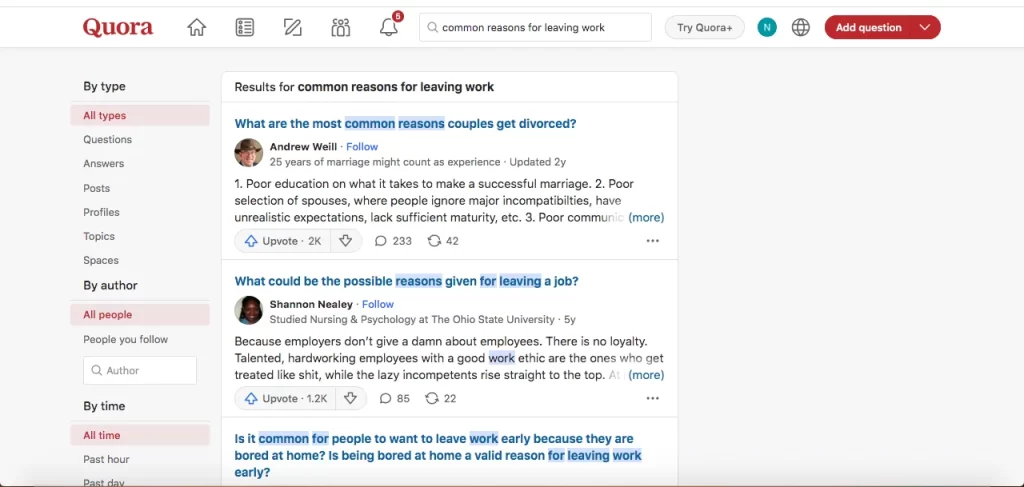
Below is a selection of real Quora anecdotes showing some of the most unexpected and amusing reasons people have requested leave.
Sporting Spectacle Fervor
Mallikarjuna Bmr, “I WANT TO WATCH AUSTRALIA vs INDIA WORLD CUP SEMI-FINAL MATCH.”
As a three-month newbie on 25/03/2015, Mallikarjuna bluntly asked for leave solely to catch a cricket semi-final, drawing bewildered stares.
When the manager refused, fate intervened: the company set up a big screen in the cafeteria, and even that same manager took the day off to watch the game himself.
Personal Grooming Emergencies
Preeti Rathour, “Sir, mere baal bahut jhad rahe hain aj.” (“Sir, I am having hairfall today.”)
In a Monday morning call, Preeti’s colleague confessed to severe hair fall as the reason for her absence. The boss’s initial “viral fever?” quickly gave way to incredulity when hair loss was revealed.
Outlandish Office Performance Art
Ahana Singh, “I was pretending to be a light bulb so that the Boss might think I was ‘Crazy’ and give me a few days off.”
Ahana’s stunt involved hanging upside-down on the ceiling and mimicking a light bulb. When the boss found her, he diagnosed “stress” on the spot and sent her home, lighting the way for her coworker to follow suit because “I can’t work in the dark!”
Career-Building Cover Stories
Nagaraj S: “Sorry Anna, just I completed my interview and coming.”
Nagaraj candidly phoned his manager to say he’d be late because of a job interview. Instead of reprimanding him for job-hunting, the manager told him to rest at home, citing concern for his well-being rather than betrayal.
“Just Because” Leave Philosophy
Aman Nagar: “Just because you want to! Nobody in your office can stop you from taking leave, if you have some in your bag.”
Aman’s list of valid leaves included “not feeling well,” “urgent family issue,” “friend’s marriage,” but also simply wanting time off. He reminds us that leave is a right, not a privilege.
Consulting the Court of Public Opinion

Synoverge Technologies: “Tell the truth (if you can confide in your boss)… Just go an emergency leave.”
This company profile answer boiled down to two options: absolute honesty or a fabricated emergency, each with trade-offs.
Legal Loophole Exploits
Nazeem, “Say you deadlifted more weight than you thought and your back is killing you… your boss cannot argue with ‘facts.’ IT IS THE LAW!!!”
Nazeem advocates a pseudo-medical ruse: limp into a GP’s office after a fake gym injury to secure a week’s sick leave backed by a doctor’s note.
Cultural and Legal Commentary
Jonatan Hedborg, “Needing an ‘acceptable reason’ for taking leave sounds like your country needs to stop letting corporations mess with how people live.”
From a Swedish perspective, Jonatan finds it absurd that employees must justify use of earned vacation days at all.
Conclusion
Mastering professional leave requests is a valuable career skill that demonstrates your professionalism and respect for workplace operations. By clearly communicating your needs while addressing operational concerns, you transform what could be an awkward conversation into a straightforward professional exchange.
Remember these key principles:
- Be direct but appropriate about your reason for leave
- Provide specific dates whenever possible
- Outline coverage plans for your responsibilities
- Follow company policies and submission timelines
- Express appreciation for consideration
For streamlined leave management, consider using templates like those provided in this guide, customized to your specific situation and company culture. If your request is denied, respond professionally by seeking to understand concerns, proposing alternatives, or adjusting your timing when possible.
With thoughtful planning and professional communication, you can successfully navigate leave requests while maintaining your professional reputation.
FAQs
How do I write a one-day leave application for the office?
Start with a clear subject line, address your manager politely, state the reason briefly, mention the date, outline any handover plans, and close with thanks.
What are some common reasons for casual leave?
Casual leave is used for personal errands, minor health issues, family commitments, or social obligations like attending events. Keep reasons general and professional.
How should I format a half-day leave application?
Include a salutation, specify the date and time period, explain the reason concisely, note coverage for responsibilities, and end politely. Submit it at least a day in advance.
Can I request leave for marriage or wedding-related reasons?
Yes! Marriage leave is a common reason under personal or casual leave. Provide details like dates and relation, and check your company’s policy for duration.
How far in advance should I submit a leave application?
For planned leaves like vacations, submit 2-4 weeks ahead. For casual or one-day leaves, 1-2 days notice is sufficient.
What if I need leave for an emergency?
Inform your manager immediately via email or call, stating the urgency. Follow up with a formal application, including estimated duration and handover details.
What’s the difference between paid and unpaid leave?
Paid leave compensates you during absence based on company policy or law. Unpaid leave doesn’t provide salary but protects your job.
Hire the best candidates
with Wetest.
Create pre-employment assessments in minutes to screen candidates, save time, and hire the best talent.
Try for free